
Generative AI Music Therapy: Personalization for Mental Well-being
In an era defined by rapid technological advancements, the intersection of artificial intelligence and therapeutic practices is opening new frontiers for mental health support. Generative AI, a branch of AI capable of producing novel content, is now being harnessed to create adaptive music specifically tailored for therapeutic interventions. This innovative approach promises to revolutionize how individuals engage with music for emotional regulation, stress reduction, and overall psychological well-being.
Traditional music therapy has long recognized the profound impact of sound on the human psyche. However, its scalability and personalization have often been limited by human capacity. Generative AI offers a solution by enabling the creation of dynamic, responsive soundscapes that can adapt in real-time to an individual's physiological and psychological state, offering an unprecedented level of customization and effectiveness in therapeutic settings.
- Understanding Generative AI in Music Therapy
- The Mechanics of Adaptive Music Generation
- Personalization: The Core of AI Music Therapy
- Key Benefits for Mental Well-being
- Ethical Considerations and Challenges
- The Future Landscape of AI-Driven Therapeutic Music
- Comparative Analysis: Traditional vs. AI Music Therapy
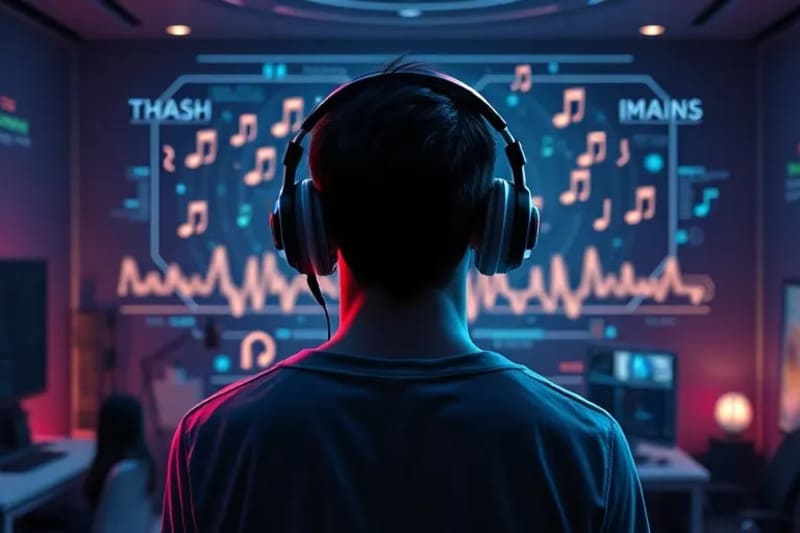
Conceptual representation of AI-driven music generation, symbolizing the integration of technology and therapeutic soundscapes for mental well-being.
This visual concept, rendered by advanced AI algorithms, illustrates the potential of artificial intelligence to create personalized and adaptive musical environments for therapeutic purposes.This article delves into the transformative potential of generative AI in adaptive music therapy, exploring its underlying mechanisms, the benefits it offers, and the challenges that must be addressed for its widespread adoption. We will examine how this technology moves beyond mere playlists to create truly interactive and personalized musical experiences designed to foster mental well-being.
The goal is to provide a comprehensive overview for anyone interested in the convergence of artificial intelligence, neuroscience, and therapeutic practices, highlighting the emergent possibilities for enhancing human health through innovative sound design. As technology continues to evolve, the boundaries of what is possible in mental health support are constantly being redefined, with AI at the forefront of this exciting revolution.
Understanding Generative AI in Music Therapy
Generative AI refers to algorithms capable of producing new data, such as images, text, or in this case, music, that resembles the data they were trained on. In the context of music therapy, these AI models learn from vast datasets of musical compositions, identifying patterns, harmonies, rhythms, and emotional cues. This allows them to generate original pieces of music that are not simply reproductions but novel creations.
The application of generative AI in therapy moves beyond static background music. Instead, it involves systems that can create music dynamically, responding to real-time inputs. These inputs might include physiological data from wearables, such as heart rate variability or skin conductance, or even psychological assessments and user preferences, ensuring the music is always relevant and effective for the individual's current state.
This adaptive capability is what sets AI-driven music therapy apart. Unlike pre-composed tracks, which offer a one-size-fits-all approach, generative AI can continuously adjust musical parameters. This includes tempo, key, instrumentation, and melodic complexity, to maintain an optimal therapeutic effect, whether the goal is relaxation, focus, or emotional processing.
Early research in this field, as highlighted by institutions like the Quantum Cybersecurity for Critical Infrastructures: Digital Future, suggests that personalized sensory inputs can have a more profound impact on neurological pathways. The brain's response to music is highly individual, making the adaptive nature of generative AI particularly valuable. It allows for a nuanced interaction that can cater to unique neurological and emotional profiles.
The Mechanics of Adaptive Music Generation
The process of adaptive music generation typically involves several sophisticated components working in tandem. At its core are machine learning models, often neural networks, trained on diverse musical styles and theories. These models learn the underlying rules of music composition, enabling them to generate coherent and aesthetically pleasing soundscapes.
Input data is crucial for adaptation. Wearable sensors monitor physiological indicators like heart rate, respiration rate, and galvanic skin response, which are then fed into the AI system. Advanced algorithms interpret these biometric signals to infer the user's emotional state or level of arousal, providing real-time feedback for musical adjustments.
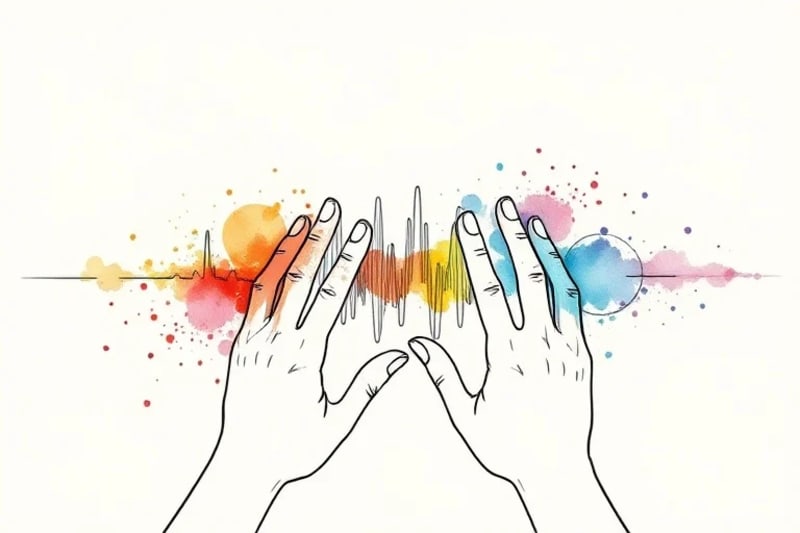
Abstract visualization of personalized sound waves interacting with an individual, representing the tailored nature of AI-generated therapeutic music.
Beyond physiological data, some systems incorporate user feedback through explicit ratings or implicit interactions, further refining the personalization process. For instance, if a user consistently skips certain types of melodies, the AI learns to avoid those patterns, gradually optimizing its output to better suit individual preferences and therapeutic goals.
The output is not just a single track but an evolving composition. The AI can manipulate various musical elements:
- Tempo: Adjusting speed to either calm or energize.
- Harmony: Shifting between major and minor keys to influence mood.
- Instrumentation: Selecting instruments that evoke specific emotional responses.
- Rhythm: Modifying rhythmic complexity to maintain engagement or promote relaxation.
- Dynamics: Controlling volume and intensity to match the user's internal state.
Personalization: The Core of AI Music Therapy
The true power of generative AI in music therapy lies in its unparalleled ability to personalize the experience. Unlike traditional methods, which often rely on a therapist's interpretation and a limited repertoire, AI can process vast amounts of data to create a musical profile unique to each individual. This profile considers not only explicit preferences but also subtle physiological responses.
This deep level of personalization allows for interventions that are far more precise and effective. For someone experiencing anxiety, the AI might generate calming ambient soundscapes with slow tempos and soft harmonies. Conversely, a user needing to boost focus might receive more rhythmic and stimulating compositions, all tailored to their real-time needs.
The concept extends beyond mere genre selection. It involves understanding how specific musical elements interact with an individual's unique neurological wiring and emotional history. For example, a particular harmonic progression might be soothing for one person but unsettling for another, and the AI learns these nuances over time.
This adaptability is critical for conditions where emotional states can fluctuate rapidly. The AI acts as a dynamic musical companion, constantly adjusting to support the user through their emotional journey. This contrasts sharply with static music, which might quickly become irrelevant or even counterproductive as a person's mood shifts.
Key Benefits for Mental Well-being
The integration of generative AI into music therapy offers a multitude of benefits for mental well-being, addressing various psychological and emotional challenges. These advantages stem from the technology's ability to provide highly personalized, accessible, and consistent therapeutic support.
One of the primary benefits is enhanced stress reduction. Personalized calming music can significantly lower cortisol levels and promote relaxation, making it an effective tool for managing chronic stress and anxiety disorders. The adaptive nature ensures the music remains effective even as stress levels fluctuate, providing a continuous anchor of calm.
Improved mood regulation is another significant advantage. By generating music that aligns with or gently steers emotional states, AI can help individuals navigate feelings of sadness, anger, or apathy. This can be particularly useful for those struggling with depression or emotional dysregulation, offering a non-pharmacological intervention that is always available.
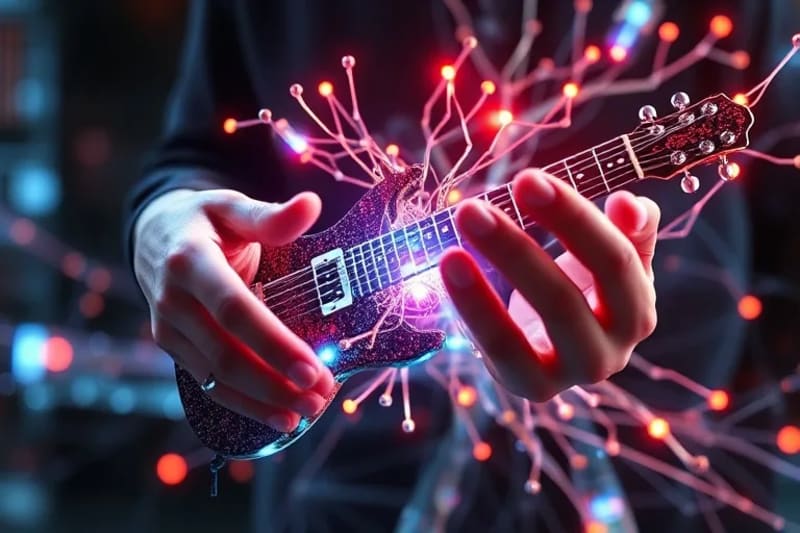
Complex 3D rendering illustrating the symbiotic relationship between neural networks and musical elements in the creation of adaptive therapeutic sound.
AI music therapy also shows promise in boosting cognitive function and focus. Certain types of music, particularly those with specific rhythmic patterns or binaural beats, can enhance concentration and memory. The AI can generate such music on demand, adapting it to the user's current cognitive load, which is beneficial for students or professionals seeking to optimize their mental performance.
Furthermore, accessibility is greatly improved. AI-driven platforms can provide therapeutic music to individuals who might not have access to traditional music therapists due to geographical, financial, or physical barriers. This democratizes access to a powerful healing modality, making mental health support more inclusive and reaching underserved populations.
The continuous availability of personalized music also supports consistent self-care routines. Users can engage with their adaptive soundscapes whenever and wherever needed, fostering a sense of autonomy and empowerment in managing their mental health. This aligns with the growing trend of digital health solutions and proactive wellness management, offering a tool that integrates seamlessly into daily life.
Beyond these direct benefits, AI music therapy can also facilitate emotional expression and creativity. By providing a safe and responsive musical environment, individuals may find it easier to explore and process complex emotions, or even engage in co-creation with the AI, fostering a unique therapeutic bond with the generated soundscapes.
Ethical Considerations and Challenges
While the potential of generative AI in music therapy is immense, its implementation is not without ethical considerations and technical challenges. Addressing these issues is crucial for ensuring responsible development and widespread acceptance of this technology.
One primary concern revolves around data privacy and security. AI systems rely on sensitive physiological and psychological data, raising questions about how this information is collected, stored, and used. Robust encryption and strict data governance policies are essential to protect user confidentiality and prevent misuse.
The role of human therapists also needs careful consideration. AI is a tool, not a replacement for human connection and expertise. The challenge lies in integrating AI as a supplementary aid that enhances a therapist's capabilities, allowing them to focus on deeper emotional processing, rather than automating the entire therapeutic process. This is a topic often discussed in the context of Animal-Assisted Therapies: Physical and Mental Health Benefits, where human interaction is paramount.
Another challenge is ensuring the quality and safety of AI-generated music. While AI can produce aesthetically pleasing compositions, guaranteeing their therapeutic efficacy and avoiding potentially detrimental effects requires rigorous testing and validation by qualified music therapists and neuroscientists. The psychological impact of algorithmic music needs thorough investigation.
Bias in AI algorithms is also a concern. If the training data for generative music models is not diverse, the resulting music might inadvertently reflect biases, potentially limiting its effectiveness across different cultural backgrounds or individual preferences. Developers must strive for inclusive datasets to ensure equitable therapeutic outcomes.
Finally, the issue of over-reliance on technology for emotional regulation needs to be addressed. While AI music can be a powerful tool, it should encourage self-awareness and coping skills, not foster a dependency. Education on balanced technology use and the importance of human interaction remains vital.
The Future Landscape of AI-Driven Therapeutic Music
The future of generative AI in adaptive music therapy is poised for significant expansion and innovation. As AI models become more sophisticated and data collection methods more refined, the capabilities of these systems will undoubtedly grow, offering even more nuanced and effective therapeutic interventions across a broader spectrum of conditions.
One key area of development will be the integration with virtual and augmented reality environments. Imagine a personalized soundscape adapting to your emotional state while you navigate a calming virtual forest or engage in a guided meditation within a serene digital space. This immersive experience could amplify therapeutic effects dramatically, creating multi-sensory healing environments.
Further research into neurofeedback loops will also play a crucial role. By directly analyzing brainwave patterns (EEG) and feeding this data into the generative AI, systems could create music that directly influences neural activity, potentially targeting specific brain states associated with relaxation, focus, or pain management. This aligns with advanced concepts in Epigenetic Biohacking: Gene Expression Modulation for Health, where precise biological interventions are sought to optimize human performance and well-being.
The development of hybrid models, combining AI-generated music with human-composed elements, could also emerge as a powerful approach. This would leverage the creativity and emotional depth of human artists while benefiting from the adaptive and scalable nature of AI, creating a best-of-both-worlds scenario that offers both algorithmic precision and human artistry. Such collaborations could lead to entirely new musical genres designed for therapeutic impact.
Moreover, the application of AI music therapy could extend to broader public health initiatives, such as personalized sound environments in hospitals, schools, or workplaces to reduce stress and improve productivity. The potential for widespread positive impact on societal mental well-being is immense, making this a field to watch closely in the coming years as it moves from niche application to mainstream adoption. This widespread integration could fundamentally reshape our daily sound environments.
Innovations in sensor technology and AI's ability to interpret subtle biometric cues will further refine the adaptive capabilities. Imagine systems that can predict emotional shifts before they fully manifest, proactively adjusting the music to maintain a state of equilibrium. This predictive power could be a game-changer in preventative mental health care.
Comparative Analysis: Traditional vs. AI Music Therapy
To fully appreciate the innovations brought by generative AI, it is useful to compare its characteristics with traditional music therapy approaches. While both aim to leverage music for healing, their methodologies and capabilities differ significantly.
The integration of AI in therapeutic practices represents a paradigm shift, offering new avenues for personalized care that complement, rather than replace, established human-centric approaches. Understanding these distinctions is key to maximizing the benefits of each modality.
The goal is to enhance the therapeutic landscape, providing more tools for mental health professionals and greater accessibility for individuals in need of support.
Here's a comparative overview:
| Feature | Traditional Music Therapy | Generative AI Music Therapy |
|---|---|---|
| Personalization Level | High, based on therapist's assessment and interaction. Limited by human capacity and available repertoire. | Extremely high, real-time adaptation to physiological and psychological data. Unlimited musical output. |
| Adaptability | Manual adjustments by therapist during session. Limited real-time responsiveness. | Dynamic, continuous real-time adjustment of musical parameters based on biometric feedback. |
| Accessibility | Limited by availability of qualified therapists, geographical location, and cost. | Highly accessible via digital platforms, available 24/7, potentially lower cost. |
| Human Interaction | Core component, essential for emotional processing, guidance, and rapport building. | Minimal direct human interaction; AI acts as a musical facilitator. Best used as a supplementary tool. |
| Scalability | Low, one-on-one or small group sessions. | High, can serve a vast number of users simultaneously. |
| Data-Driven Insights | Qualitative observation by therapist. Limited quantitative data. | Extensive quantitative data collection (biometrics, user interactions) for continuous improvement. |
In conclusion, generative AI for adaptive music therapy represents a significant leap forward in personalized mental health support. By combining the power of artificial intelligence with the proven benefits of music, this technology offers a scalable, accessible, and highly individualized approach to enhancing well-being. While challenges related to ethics, data privacy, and the integration with human expertise remain, the future promises a synergistic relationship where AI empowers both therapists and individuals to unlock the full therapeutic potential of music.
As research progresses and technology matures, we can anticipate a future where personalized soundscapes are an integral part of daily self-care and clinical interventions, fostering a healthier and more emotionally balanced society. The journey towards this future requires careful development, interdisciplinary collaboration, and a steadfast commitment to ethical innovation.
Explore More on AI and Well-being
Delve deeper into related topics and expand your understanding of how technology and innovative approaches are shaping our future:
- Consumer Psychology in E-commerce: Patterns, Personalization, and Ethics
- Chakra Healing Basics: Energy Centers Guide
Source: Hybrid content assisted by AI and human editorial supervision.


Comentarios