
NFTs Metaverse Intellectual Property Legal Challenges
The convergence of Non-Fungible Tokens (NFTs) and the metaverse is rapidly reshaping our understanding of digital ownership and intellectual property (IP). As virtual worlds expand and digital assets gain tangible value, the legal frameworks governing creation, distribution, and ownership within these new frontiers face unprecedented challenges. This article delves into the intricate relationship between NFTs, the metaverse, and intellectual property, exploring the current landscape, emerging legal dilemmas, and potential pathways for future regulation.
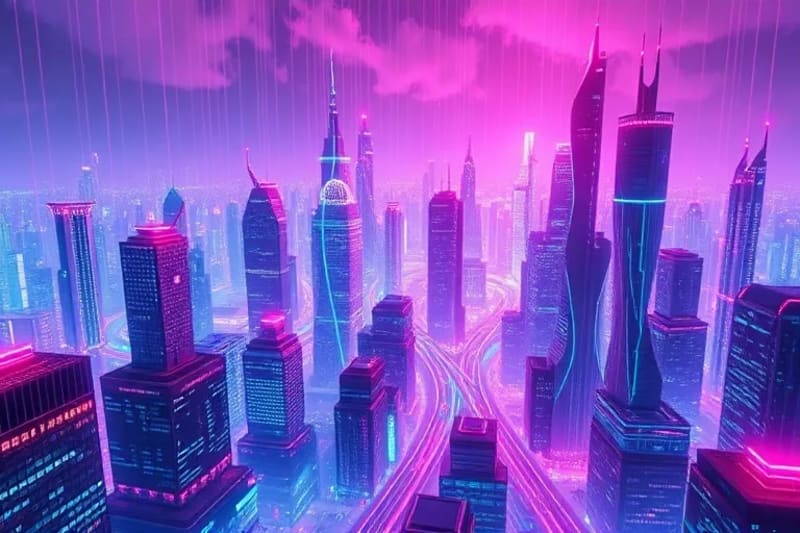 A futuristic metaverse cityscape, symbolizing the new digital frontier where NFTs and intellectual property converge.
The metaverse, an immersive and persistent virtual environment, promises a new era of digital interaction, commerce, and creativity. Within this digital realm, NFTs have emerged as a foundational technology, enabling verifiable ownership of unique digital items. From virtual land and avatars to digital art and collectibles, NFTs provide a cryptographic certificate of authenticity and ownership, transforming how value is perceived and exchanged in the digital sphere.
Table of Contents
- Understanding NFTs and the Metaverse
- Intellectual Property Basics in the Digital Age
- The Intersection: NFTs, Metaverse, and IP
- Legal Challenges and Dilemmas
- Enforcement and Jurisdiction
- Future Outlook and Regulatory Frameworks
- Best Practices for Creators and Users
Understanding NFTs and the Metaverse
Non-Fungible Tokens are unique digital assets stored on a blockchain, representing ownership of a specific item or piece of content. Unlike cryptocurrencies, which are fungible (interchangeable), each NFT is distinct and cannot be replaced by another. This inherent uniqueness makes them ideal for proving ownership of digital art, music, collectibles, and even virtual real estate within the metaverse.
The metaverse, on the other hand, is not a single platform but rather a concept encompassing interconnected virtual spaces where users can interact, socialize, work, and play. It is characterized by persistence, real-time interaction, and an economy driven by digital assets. The vision for the metaverse includes interoperability, allowing users to seamlessly move their avatars and digital possessions across different virtual environments. This concept aligns with the broader discussions around the Metaverse Dictionary: A Guide for Digital Navigators, which seeks to define the evolving terminology of this new digital frontier.
- NFTs: Unique digital identifiers recorded on a blockchain, used to certify ownership and authenticity of a digital asset.
- Metaverse: A collective virtual shared space, created by the convergence of virtually enhanced physical reality and physically persistent virtual space, including the sum of all virtual worlds, augmented reality, and the internet.
- Virtual Assets: Any digital representation of value that can be digitally traded or transferred and used for payment or investment purposes.
Intellectual Property Basics in the Digital Age
Intellectual property refers to creations of the mind, such as inventions, literary and artistic works, designs, and symbols, names, and images used in commerce. The primary forms of IP relevant to digital assets include copyright, trademarks, and patents. Copyright protects original literary, dramatic, musical, and artistic works, granting creators exclusive rights to reproduce, distribute, and display their work.
Trademarks protect brand names, logos, and slogans used to identify goods and services, preventing consumer confusion. Patents protect inventions, granting exclusive rights to make, use, and sell the invention for a limited period. In the digital age, these traditional IP concepts have been adapted to cover software, digital content, and online brands, but the advent of NFTs and the metaverse introduces new complexities that challenge existing legal frameworks.
 A conceptual visualization of digital contracts and legal symbols, highlighting the complexities of intellectual property in virtual spaces.
The Intersection: NFTs, Metaverse, and IP
The core issue at the intersection of NFTs, the metaverse, and IP is distinguishing between ownership of an NFT and ownership of the underlying intellectual property rights. When someone buys an NFT, they typically acquire ownership of the token itself, which points to a specific digital asset. However, this does not automatically transfer the copyright or other IP rights to the underlying artwork, music, or virtual item.
For example, purchasing an NFT of a digital painting usually grants the buyer the right to display that specific tokenized image, but not necessarily the right to reproduce it, create derivatives, or use it for commercial purposes. These rights typically remain with the original creator, unless explicitly transferred through a separate license agreement. This distinction is crucial and often misunderstood by new participants in the NFT market.
In the metaverse, this becomes even more complex. If a user owns an NFT representing a virtual garment, do they have the right to modify it, sell it on another platform, or use it in a different metaverse? The answer depends heavily on the terms and conditions set by the NFT creator, the platform, and potentially the underlying IP holder. The concept of Augmented Reality Art: Interaction, Creation, and Future highlights how digital art forms are evolving, making these IP questions even more pertinent.
Legal Challenges and Dilemmas
Several significant legal challenges arise from the integration of NFTs and IP in the metaverse:
- Unauthorized Minting: One of the most prevalent issues is the unauthorized minting of NFTs based on existing copyrighted or trademarked works. Scammers often create NFTs of popular artwork, brand logos, or celebrity images without permission, misleading buyers into thinking they are acquiring legitimate items.
- Derivative Works: The creation of derivative works in the metaverse poses another challenge. If a user modifies an NFT they own, or creates a new virtual item inspired by an existing one, does this infringe on the original creator's IP rights? The line between inspiration and infringement can be blurry in digital spaces.
- Licensing and Rights Management: The lack of standardized licensing terms for NFTs creates confusion. Many NFT sales do not explicitly define the scope of rights transferred, leading to disputes over commercial use, reproduction, and adaptation of the underlying assets.
- Counterfeiting and Fraud: The decentralized nature of NFTs, while offering transparency, also presents opportunities for sophisticated counterfeiting. Verifying the authenticity of the original creator and preventing the sale of fraudulent NFTs remains a significant hurdle.
Enforcement and Jurisdiction
Enforcing IP rights in the metaverse is complicated by its global and decentralized nature. Traditional legal systems are often bound by geographical borders, whereas the metaverse operates without such constraints. Determining which jurisdiction's laws apply when an IP infringement occurs between parties in different countries, within a virtual world hosted on servers across the globe, is a complex question.
The anonymity often associated with blockchain transactions further complicates enforcement, making it difficult to identify infringers. Metaverse platforms themselves face the challenge of moderating content and responding to IP claims, often without clear legal precedents. This echoes some of the ethical and legal dilemmas seen in other emerging technologies, such as those discussed in Moral Dilemmas in Autonomous Robotics: Legal Responsibility and Decision Criteria, where new technologies outpace existing legal frameworks.
 An abstract visualization depicting the creation, transaction, and ownership of virtual assets within the metaverse.
Future Outlook and Regulatory Frameworks
The future of IP in the metaverse will likely involve a combination of technological solutions, industry self-regulation, and evolving legal frameworks. Blockchain technology itself could offer solutions, such as embedding IP rights directly into NFT smart contracts, specifying usage rights and royalties for creators.
International cooperation will be essential to establish consistent legal principles for cross-border IP disputes in the metaverse. Governments and international bodies are beginning to explore regulatory approaches, but the rapid pace of technological development often outstrips legislative processes. The development of Circular Business Models for Regenerative Startups in the Green Economy offers a parallel example of how new economic paradigms require innovative regulatory thinking.
Industry standards and best practices, perhaps driven by major metaverse platforms and NFT marketplaces, could also play a crucial role. This might include standardized licensing agreements, robust content moderation policies, and clear dispute resolution mechanisms. The goal is to foster an environment where creators are protected, consumers are informed, and innovation can thrive without fear of widespread infringement.
Best Practices for Creators and Users
For creators, it is paramount to clearly define the scope of rights granted when selling an NFT. Using explicit licensing terms in smart contracts or accompanying documentation can prevent future disputes. Registering underlying works with traditional IP offices (e.g., copyright registration) also provides a layer of protection that NFTs alone cannot offer.
For users and collectors, due diligence is critical. Researching the authenticity of an NFT, understanding the rights associated with its purchase, and verifying the creator's identity are essential steps. Buyers should always read the terms and conditions carefully, as simply owning an NFT does not equate to owning the full intellectual property rights of the underlying asset.
The evolution of NFTs and the metaverse presents both immense opportunities and significant legal challenges for intellectual property. As these digital frontiers continue to expand, a collaborative effort between technologists, legal professionals, creators, and policymakers will be necessary to build robust and fair frameworks that protect innovation and foster a thriving digital economy.
Key Takeaways:
- NFT ownership does not automatically transfer underlying IP rights; explicit licensing is crucial.
- Unauthorized minting and derivative works are major challenges in the current landscape.
- Jurisdictional issues and anonymity complicate IP enforcement in the global metaverse.
- Future solutions involve smart contracts, international cooperation, and industry standards.
- Creators must define rights clearly; buyers must perform due diligence.
The journey to a fully regulated and harmonious digital economy in the metaverse is long, but the foundational work being done now will shape its future. Understanding these complexities is the first step towards navigating this exciting new world responsibly and effectively.
Legal scholars and policymakers are actively debating how existing intellectual property laws, primarily designed for physical or traditional digital goods, can be adapted or reinterpreted for the unique characteristics of NFTs and metaverse assets. This includes discussions on the applicability of copyright fair use doctrines to virtual creations and the establishment of new digital rights management protocols.
The World Intellectual Property Organization (WIPO) has initiated studies and discussions on the implications of blockchain technology and NFTs for intellectual property rights, acknowledging the need for international harmonization and innovative solutions to protect creators in the evolving digital landscape.
Explore More Topics
Metaverse Insights
Legal & Ethical Tech
Source: Hybrid content assisted by AI and human editorial supervision.


Comentarios