
Neuro-rights: Protecting Digital Consciousness in the AI Era
The rapid advancements in artificial intelligence (AI) and neurotechnology are ushering in an era where the human mind, once considered the last bastion of privacy, is becoming increasingly accessible and potentially manipulable. This unprecedented technological frontier has given rise to the urgent need for a new set of ethical and legal principles known as neuro-rights. These rights aim to protect the fundamental aspects of human consciousness, identity, and free will in a world where brain-computer interfaces (BCIs) and sophisticated AI algorithms can interact directly with our neural processes.

Precursors intellectuales, diagramas fundamentales y representaciones conceptuales que forjaron la visión de Neuro-rights sobre la conciencia digital.
Fuente visual sujeta a disponibilidad del ecosistema: Wikimedia Commons bajo licencia CC BY-SA 4.0 o renderizado conceptual IA.
As AI systems become more sophisticated, capable of not only processing vast amounts of data but also inferring and even predicting human thoughts and intentions, the traditional boundaries of privacy are being challenged. Neuro-rights seek to address these emerging threats by establishing a framework that ensures human autonomy and dignity remain paramount. This article delves into the concept of neuro-rights, their critical importance in the age of AI, and the challenges and opportunities in their implementation.
Table of Contents
- Understanding Neuro-rights: A New Frontier
- The Five Pillars of Neuro-rights
- AI and Neurotechnology: The Catalyst for Neuro-rights
- Ethical Dilemmas and Societal Impact
- Developing Legal and Regulatory Frameworks
- The Future of Digital Consciousness and Human Autonomy
- Challenges and Opportunities in Implementation
Understanding Neuro-rights: A New Frontier
Neuro-rights represent a nascent but critical field of human rights law and ethics, designed to protect the brain and its activity from the potential misuse of neurotechnology and artificial intelligence. These rights acknowledge that as technology advances, our mental processes, emotions, and even our very sense of self could be vulnerable to external manipulation, surveillance, or alteration. The concept was first popularized by neuroscientists and ethicists who recognized the profound implications of technologies that can read, write, and modulate brain activity.
The core idea behind neuro-rights is to extend existing human rights principles, such as privacy and freedom of thought, to the neural domain. This extension is not merely a theoretical exercise; it is a proactive measure to anticipate and mitigate risks posed by technologies that are no longer science fiction but rapidly becoming reality. From advanced brain-computer interfaces that allow control of external devices with thought, to AI algorithms that can decode neural signals, the landscape of human consciousness is undergoing a profound transformation.
The urgency for neuro-rights stems from the understanding that without explicit legal and ethical protections, individuals could face unprecedented threats to their mental integrity. Imagine a scenario where personal thoughts are commodified, emotional states are influenced by external algorithms, or cognitive processes are augmented in ways that create new forms of inequality. Neuro-rights aim to prevent such dystopian outcomes by establishing clear boundaries and responsibilities for the development and deployment of neurotechnologies and AI.
The Five Pillars of Neuro-rights
While the specific definitions and scope of neuro-rights are still evolving, leading experts have proposed a framework typically comprising five key pillars. These pillars address the most pressing concerns arising from the intersection of neuroscience, AI, and human rights.
- Right to Mental Privacy: This right protects individuals from unauthorized access, collection, use, or dissemination of their neural data. As BCIs become more common, the information extracted from brain activity could reveal highly sensitive personal details, including thoughts, emotions, and memories. Protecting this data is paramount to maintaining personal autonomy and preventing mental surveillance.
- Right to Mental Identity: This ensures that individuals retain control over their sense of self and personal identity, preventing external alteration or manipulation of their neural processes. Neurotechnologies could potentially modify a person's personality, beliefs, or decision-making processes, thereby eroding their authentic self. This right safeguards the continuity and integrity of one's identity.
- Right to Free Will and Self-Determination: This protects individuals from neuro-manipulation that could undermine their capacity for independent decision-making. AI algorithms, especially when combined with neurofeedback, could subtly influence choices without conscious awareness. This right aims to preserve the fundamental human capacity for autonomous thought and action.
- Right to Cognitive Liberty (or Mental Augmentation): This right encompasses both the freedom to choose whether or not to augment one's mental capacities through neurotechnology and the right to equal access to such enhancements. It also addresses the potential for a "cognitive divide" where only a select few can afford advanced neural enhancements, creating new forms of social inequality.
- Right to Protection from Algorithmic Bias: As AI systems are trained on vast datasets, they can inherit and amplify existing societal biases. When applied to neurodata, this could lead to discriminatory outcomes, for example, in medical diagnoses or even in predicting behavior based on neural patterns. This right seeks to ensure fairness and non-discrimination in the application of neurotechnologies and AI.

A conceptual representation of mental privacy, illustrating the digital protection of individual thoughts and consciousness from external intrusion.
AI and Neurotechnology: The Catalyst for Neuro-rights
The emergence of neuro-rights is directly linked to the rapid convergence of artificial intelligence and neurotechnology. Neurotechnology, encompassing devices that interact directly with the brain, such as BCIs, neuro-implants, and advanced neuroimaging, provides the means to access and manipulate neural activity. AI, on the other hand, provides the computational power and algorithmic sophistication to interpret complex neural data, identify patterns, and even generate targeted interventions.
For instance, AI algorithms are now capable of decoding speech from brain signals, predicting intentions before actions are taken, and even generating images from visual cortex activity. This capability, while offering immense potential for medical applications like restoring communication for paralyzed individuals, also opens doors for unprecedented surveillance and manipulation. The data generated by neurotechnologies is not just personal; it is intimately linked to our cognitive and emotional core, making its protection even more critical than traditional digital data. The challenges in securing this data are similar to those faced by behavioral biometrics and digital identity, but with far deeper implications for human autonomy.
Moreover, AI's ability to learn and adapt means that neurotechnological interventions could become increasingly personalized and potent. An AI system could, in theory, learn an individual's unique neural "signature" and tailor stimuli to influence their mood, attention, or even political opinions. This raises profound questions about the nature of free will and whether our choices are truly our own when exposed to such advanced forms of influence. The intersection of these technologies necessitates a robust ethical and legal framework to ensure they are used for human betterment, not for control or exploitation.
Ethical Dilemmas and Societal Impact
The ethical dilemmas posed by neurotechnology and AI are multifaceted and touch upon fundamental aspects of human existence. One primary concern is the potential for cognitive inequality. If neural augmentation becomes a reality, those who can afford it might gain significant advantages in terms of intelligence, memory, or emotional regulation, creating a new form of social stratification. This could exacerbate existing inequalities and create a divide between augmented and non-augmented humans.
Another critical issue is the erosion of mental privacy. Companies or governments could potentially access and analyze neural data to infer sensitive information, leading to new forms of discrimination or targeted manipulation. The concept of "thought crime" or being judged for one's unexpressed thoughts, while still speculative, becomes a chilling possibility in a world without strong mental privacy protections. This also extends to the realm of AI in collective bargaining, where understanding cognitive biases could be used to influence negotiations.
Furthermore, the potential for altering mental identity and free will raises questions about human dignity and autonomy. If external forces can subtly or overtly influence our decisions, what does it mean to be a free agent? This challenge is particularly acute in areas like advertising, political campaigning, or even military applications, where influencing cognitive processes could have widespread societal consequences. The ethical implications demand careful consideration and proactive regulation to prevent unintended harm.
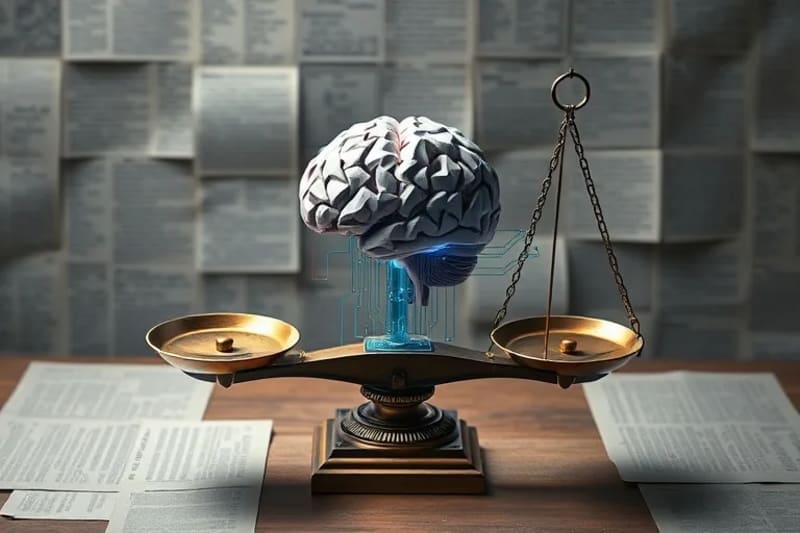
An artistic interpretation of the delicate balance between human consciousness and artificial intelligence, highlighting the profound ethical considerations.
Developing Legal and Regulatory Frameworks
The development of robust legal and regulatory frameworks for neuro-rights is a complex but essential undertaking. Several countries and international bodies are already beginning to explore how existing human rights laws can be extended or new ones created to address these challenges. Chile, for example, has been at the forefront, proposing constitutional amendments to protect neuro-rights, making it the first country to consider such a move.
International organizations like the United Nations and UNESCO are also engaging in discussions to establish global guidelines and ethical principles for neurotechnology and AI. These efforts aim to create a common understanding and a framework that can be adopted by different nations, recognizing the global nature of technological advancement. The challenge lies in balancing innovation with protection, ensuring that beneficial neurotechnologies can still be developed while safeguarding fundamental human rights.
Key areas for regulation include data governance for neural information, informed consent for neurotechnological interventions, and accountability mechanisms for AI systems that interact with the brain. Furthermore, there is a need to address the ethical implications of cognitive enhancement and ensure equitable access to beneficial technologies. Just as Metaverso Propiedad Intelectual Desafíos Legales Virtuales, new frameworks are needed for ownership and control over neural data and its derivatives.
The Future of Digital Consciousness and Human Autonomy
The future of digital consciousness and human autonomy hinges significantly on how effectively neuro-rights are implemented and enforced. Without these protections, the potential for unprecedented control over individuals and populations becomes a tangible threat. Conversely, with a strong ethical and legal foundation, neurotechnology and AI could unlock incredible opportunities for human flourishing, from treating neurological disorders to enhancing cognitive abilities in a responsible and equitable manner.
The ongoing dialogue about neuro-rights is not just about preventing harm; it's also about shaping a future where technology serves humanity's best interests. It requires a multidisciplinary approach, involving neuroscientists, ethicists, legal scholars, policymakers, and the public. Education and public awareness are crucial to ensure that society understands the implications of these technologies and participates in shaping their future trajectory.
Ultimately, the goal is to preserve what makes us human in an increasingly digital and interconnected world. Protecting our mental privacy, identity, and free will is essential for maintaining our dignity and the very essence of our being. The conversation around neuro-rights is a testament to humanity's foresight in anticipating the challenges of technological progress and striving to safeguard fundamental values.
Challenges and Opportunities in Implementation
Implementing neuro-rights presents several significant challenges. One of the primary hurdles is the rapid pace of technological development, which often outstrips the ability of legal and ethical frameworks to keep up. By the time a regulation is drafted, the technology it aims to govern might have already evolved significantly, rendering the regulation obsolete. This necessitates agile and adaptive regulatory approaches that can evolve alongside technological advancements.
Another challenge is the global nature of neurotechnology and AI. Brain-computer interfaces and AI algorithms are developed and deployed across borders, making unilateral national regulations insufficient. International cooperation and harmonization of laws are crucial to create a consistent framework that prevents "neuro-havens" where less stringent regulations might allow for unethical practices. This global perspective is also vital for initiatives like neuroarchitecture for cognitive well-being, which benefits from shared research and ethical guidelines.
Despite these challenges, the opportunities presented by neuro-rights are immense. By establishing clear ethical boundaries, we can foster responsible innovation in neurotechnology and AI, driving advancements that genuinely benefit humanity. Neuro-rights can act as a guiding star for researchers, developers, and policymakers, ensuring that the pursuit of technological progress is always aligned with human values and dignity. They offer a chance to proactively shape our future, rather than reactively address unforeseen consequences.
Moreover, the discussion around neuro-rights can raise public awareness about the profound implications of these technologies, empowering individuals to make informed decisions about their use. It can also encourage greater transparency from companies developing neurotechnologies and AI, fostering trust and accountability. Ultimately, the successful implementation of neuro-rights will be a testament to humanity's commitment to protecting its most fundamental aspects in the face of transformative technological change.
Explore Further: Related Insights
- Startups Social Impact: Circular Sustainable Business Models
- Astrodynamics Interplanetary Travel: Solar Conquest Routes
- Green Bonds: Sustainable Investment for the Future
- Bad: Musical Legacy, Cultural Impact and Pop Reign
- Hedy Lamarr: Hollywood Glamour Disruptive Wi-Fi Innovation
- Happiness Neurotransmitters: Science of Emotional Well-being
- Physical Activity Chronic Diseases: Prevention and Therapy
- Virgo Holistic Health: Diets, Exercises, Complementary Therapies
- Chiron Astrological Cycle: Healing Karmic Wounds
- Virtual Reality Astral Travel: Conscious Cosmos Exploration
- Archangels Modern Spiritual Battle Divine Protection
- End Times Prophecies: Spiritual Preparation Christian Hope
- Nature Prophetic Message: Divine Signs Climatic Phenomena
- Retrograde Planets: Natal Chart Lessons
- Astrocartography Soulmate Connections: Ideal Relationship Lines
- Moon Phases Birth Chart: Emotional Blueprint
Source: Hybrid content assisted by AI and human editorial supervision.


Comentarios