
AI Judge Algorithm: Legal, Ethical Predictive Justice
The AI Judge Algorithm: Legal and Ethical Implications of Predictive Justice
The advent of artificial intelligence (AI) has begun to reshape numerous sectors, and the legal system is no exception. The concept of an "AI judge algorithm" refers to sophisticated computational systems designed to analyze vast amounts of legal data, predict outcomes, and even assist in or make judicial decisions. This innovative application, often termed "predictive justice," promises enhanced efficiency, consistency, and potentially, reduced human bias in legal processes. However, its integration into such a fundamental pillar of society raises profound legal and ethical questions that demand careful consideration and robust debate.

A holographic AI judge presides over a technologically advanced courtroom, symbolizing the shift towards predictive justice.
Predictive justice systems leverage machine learning algorithms to process historical case data, statutes, precedents, and even social and economic factors. The goal is to identify patterns and correlations that can inform decisions related to bail, sentencing, parole, and even the likelihood of reoffending. Proponents argue that by removing subjective human elements, AI can lead to more objective and standardized rulings, potentially addressing systemic inequalities and inefficiencies within the justice system.
Nevertheless, the deployment of such powerful technology in matters of human liberty and rights is fraught with challenges. The "black box" nature of some AI models, the potential for embedded biases in training data, and the fundamental questions about accountability and human agency in judicial proceedings are critical concerns. This article delves into the intricate legal and ethical landscape surrounding the AI judge algorithm, exploring its mechanics, implications, and the path forward for responsible implementation.
Table of Contents
- How the AI Judge Algorithm Works
- Key Legal Implications of Predictive Justice
- Profound Ethical Concerns and Societal Impact
- Current Applications and Real-World Examples
- Developing Regulatory Frameworks and Policies
- The Future of Law and AI: Challenges and Opportunities
How the AI Judge Algorithm Works
At its core, an AI judge algorithm operates by ingesting and processing massive datasets. These datasets typically include historical court records, sentencing guidelines, police reports, demographic information, and even social media data, depending on the system's design and purpose. The algorithms then employ various machine learning techniques, such as supervised learning, to identify patterns and correlations between inputs and outcomes.
For instance, in the context of bail decisions, an AI system might analyze thousands of past cases to determine which factors (e.g., prior arrests, type of crime, community ties) correlate with a higher or lower likelihood of a defendant appearing in court or committing another crime. This analysis generates a risk score, which is then presented to a human judge or, in more advanced conceptual models, used to make automated recommendations.
- Data Collection and Preprocessing: Gathering diverse legal and socio-economic data, followed by cleaning and structuring it for algorithmic consumption.
- Feature Engineering: Identifying relevant variables (features) from the data that are most predictive of legal outcomes.
- Model Training: Using machine learning algorithms (e.g., neural networks, decision trees) to learn from the processed historical data.
- Prediction and Risk Assessment: Generating probabilities or risk scores for specific outcomes, such as recidivism rates or sentencing recommendations.
- Output and Integration: Presenting the AI's findings to human decision-makers or integrating them into automated legal processes.
The complexity of these algorithms can vary significantly. Simple models might use linear regression, while more advanced systems could employ deep learning architectures capable of identifying subtle, non-obvious patterns. The effectiveness and fairness of these systems are heavily dependent on the quality, representativeness, and ethical sourcing of their training data. Any biases present in historical data, such as disproportionate arrests or convictions for certain demographic groups, can be amplified and perpetuated by the AI, leading to discriminatory outcomes.

Digital art illustrating the intricate connection between Metaverse Digital Law: Property, Identity, Jurisdiction and legal documentation.
Key Legal Implications of Predictive Justice
The introduction of AI into judicial decision-making brings forth a host of significant legal implications, challenging established principles of justice and procedural fairness. One of the primary concerns revolves around the concept of due process. Traditional legal systems emphasize the right to a fair hearing, the ability to confront evidence, and the right to an impartial judge. When AI algorithms contribute to decisions, the "black box" problem — where the internal workings of the algorithm are opaque even to its creators — makes it difficult for defendants to understand or challenge the basis of a decision.
Another critical issue is algorithmic bias. If the historical data used to train AI models reflects societal biases (e.g., racial profiling in policing, socio-economic disparities in sentencing), the AI will learn and perpetuate these biases. This can lead to discriminatory outcomes, undermining the principle of equal protection under the law. For instance, studies have shown that some predictive policing tools and risk assessment algorithms have disproportionately flagged individuals from minority groups as higher risk, even when controlling for other factors.
Furthermore, questions of accountability and responsibility become complex. If an AI system makes a flawed or unjust recommendation, who is to blame? Is it the developer of the algorithm, the judge who relied on it, or the data scientists who curated the training data? Existing legal frameworks are often ill-equipped to assign liability in such multi-layered technological systems. The role of human oversight also needs clear definition: should AI serve as a mere advisory tool, or can it eventually become an autonomous decision-maker?
The Colombian Commercial Code (Código de Comercio Colombiano), for example, outlines principles of commercial law that are foundational to contractual agreements and business operations. As AI-driven systems become more prevalent in commerce and legal practice, their interaction with established codes becomes critical. The principle of legal certainty, enshrined in such codes, could be challenged by opaque algorithmic decision-making, necessitating a re-evaluation of how AI outputs are integrated and validated within existing legal frameworks.
This highlights the broader challenge for jurisdictions worldwide: adapting centuries-old legal principles to the rapid advancements of artificial intelligence, particularly in areas affecting fundamental rights and economic stability.
The **right to privacy** is also at stake. Predictive justice systems often require access to vast amounts of personal data, raising concerns about data security, surveillance, and the potential for misuse. Balancing the perceived benefits of AI efficiency with fundamental privacy rights is a delicate act that requires robust legal safeguards and transparent data governance policies.
Profound Ethical Concerns and Societal Impact
Beyond the strictly legal implications, the AI judge algorithm raises deep ethical questions about the nature of justice, human dignity, and societal values. The core of justice often involves concepts of fairness, equity, and the right to rehabilitation. An AI system, by its very nature, operates on statistical probabilities and pattern recognition, which may not fully capture the nuances of individual circumstances or the moral dimensions of a case.
One major ethical dilemma is the potential for dehumanization of the justice system. If decisions are increasingly made or heavily influenced by algorithms, it could diminish the role of empathy, compassion, and human judgment, which are traditionally considered vital components of judicial review. The idea of being judged by a machine, without the possibility of genuine understanding or mercy, can erode public trust in the justice system.
The concept of free will and determinism also comes into play. If an AI predicts a high likelihood of recidivism based on past data, does that prediction become a self-fulfilling prophecy? Does it undermine an individual's capacity for change and rehabilitation? Ethicists argue that focusing solely on statistical risk can lead to a deterministic view of human behavior, neglecting the potential for personal growth and societal intervention.
- Fairness and Equity: Ensuring that AI systems do not perpetuate or amplify existing societal inequalities and biases.
- Transparency and Explainability: The need for algorithms to be understandable and their decisions justifiable, even if complex.
- Human Dignity and Autonomy: Preserving the human element in justice and respecting individual rights against purely statistical determinations.
- Accountability: Clearly assigning responsibility for AI-driven errors or injustices.
- Societal Trust: Maintaining public confidence in a justice system that increasingly relies on automated tools.
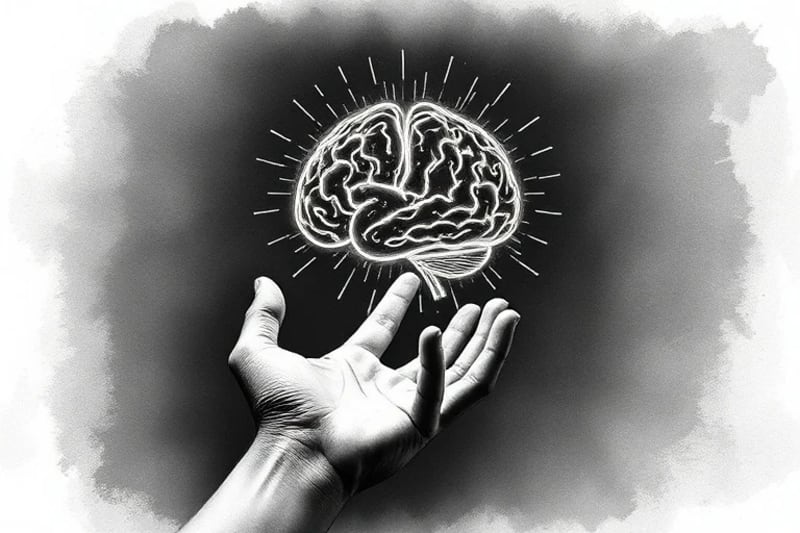
A conceptual 3D render exploring the ethical considerations of human-AI interaction in legal contexts, highlighting the delicate balance.
Moreover, the widespread adoption of predictive justice could lead to a shift in judicial philosophy, moving from a focus on individual culpability and rehabilitation to one centered on risk management and statistical control. This could have profound implications for how society views crime, punishment, and the role of the state in managing its citizens.
Current Applications and Real-World Examples
While fully autonomous AI judges are still largely theoretical, predictive justice algorithms are already being deployed in various capacities across the globe. These applications typically serve as decision-support tools for human judges and legal professionals, rather than replacing them entirely.
One of the most common applications is in risk assessment for bail and sentencing. Systems like COMPAS (Correctional Offender Management Profiling for Alternative Sanctions) in the United States generate risk scores to help judges determine whether a defendant is likely to flee or commit another crime if released on bail, or to inform sentencing recommendations. However, COMPAS has faced significant criticism for exhibiting racial bias, highlighting the dangers of unexamined algorithmic outputs.
In other jurisdictions, AI is used for predictive policing, identifying areas or individuals with a higher statistical likelihood of criminal activity. While proponents argue this can optimize resource allocation, critics warn of potential for surveillance creep and the reinforcement of existing biases against certain communities. AI is also assisting in fraud detection in financial crimes, analyzing transactional data to flag suspicious activities with high accuracy.
Beyond criminal justice, AI tools are being used in civil law for tasks such as e-discovery (reviewing vast amounts of electronic documents for relevance in litigation), legal research (identifying relevant cases and statutes), and even predicting litigation outcomes. These applications, while less impactful on individual liberty, still raise questions about access to justice and the potential for a "two-tiered" legal system where those with access to superior AI tools might gain an unfair advantage.
Developing Regulatory Frameworks and Policies
Given the profound implications of AI in justice, there is a growing international effort to develop robust regulatory frameworks and policies. The goal is to harness the benefits of AI while mitigating its risks, particularly concerning fundamental rights and ethical principles. These efforts often focus on several key areas:
- Transparency and Explainability: Mandating that AI systems used in justice be transparent about their data sources, methodologies, and decision-making processes. This includes requiring "explainable AI" (XAI) to provide human-understandable justifications for their outputs.
- Bias Detection and Mitigation: Implementing rigorous auditing and testing mechanisms to identify and correct algorithmic biases before deployment and throughout their lifecycle. This may involve diverse training data, fairness-aware algorithms, and continuous monitoring.
- Human Oversight and Control: Establishing clear guidelines for human intervention and ultimate responsibility. AI systems should primarily serve as decision-support tools, with human judges retaining the final authority and discretion.
- Data Governance and Privacy: Developing strict rules for the collection, storage, use, and deletion of data by AI justice systems, ensuring compliance with privacy regulations like GDPR and protecting sensitive personal information.
- Accountability Mechanisms: Creating legal frameworks that clearly assign liability for errors or injustices caused by AI systems, whether to developers, deployers, or oversight bodies.
- Ethical Guidelines and Principles: Integrating ethical principles, such as fairness, non-discrimination, human dignity, and public trust, into the design, development, and deployment of AI in justice.
Organizations like the European Commission have proposed comprehensive AI regulations, including specific provisions for "high-risk" AI systems, which would undoubtedly include those used in justice. These regulations aim to establish a common framework for trustworthy AI, emphasizing human-centric approaches and fundamental rights. The challenge lies in creating policies that are flexible enough to adapt to rapid technological advancements while being strong enough to protect societal values.
The Future of Law and AI: Challenges and Opportunities
The trajectory of AI in the legal field suggests an increasing, rather than decreasing, integration. The promise of greater efficiency, consistency, and potentially, the reduction of certain types of human bias remains a powerful driver. However, the path forward is not without significant hurdles. The development of truly unbiased AI requires not just technical prowess but also a deep understanding of societal injustices and a commitment to address them through careful data curation and algorithmic design.
One of the main challenges will be fostering public acceptance and trust. For AI to be a legitimate tool in justice, citizens must believe that it enhances, rather than undermines, fairness and due process. This necessitates open dialogue, transparent implementation, and continuous evaluation of AI systems' real-world impact. Furthermore, legal professionals will need new skills to understand, interpret, and challenge AI-generated evidence and recommendations.
The opportunities, however, are also considerable. AI could democratize access to legal services by making legal research and advice more accessible and affordable. It could help alleviate backlogs in court systems, allowing human judges to focus on the most complex and nuanced cases. Moreover, by revealing patterns in legal data, AI could provide valuable insights for legal reform, identifying areas where laws or policies are having unintended discriminatory effects.
Ultimately, the future of the AI judge algorithm will depend on a delicate balance between technological innovation, ethical considerations, and robust legal safeguards. It is not a question of whether AI will be part of the justice system, but how it will be integrated responsibly to uphold the foundational principles of justice in an increasingly digital world.
Fuente: Contenido híbrido asistido por IAs y supervisión editorial humana.


Comentarios