
Greek Abacus Legacy: Ancient Computing to Quantum AI
The Enduring Legacy of the Greek Abacus: From Ancient Calculation to Quantum Concepts
The history of computing is often traced back to the invention of electronic devices in the 20th century. However, the foundational concepts of calculation and data processing have roots much deeper in antiquity. Among the earliest and most influential tools developed for this purpose is the abacus, a device whose origins can be found in various ancient civilizations, including Mesopotamia, Egypt, and notably, Greece.
The Greek abacus, while seemingly primitive by today's standards, represented a significant leap in human intellectual development. It provided a tangible, systematic method for performing complex arithmetic operations, laying the groundwork for more sophisticated computational thinking. Its principles, though physical, resonate with abstract logical structures that underpin even the most advanced modern technologies, from artificial intelligence to the nascent field of quantum computing.
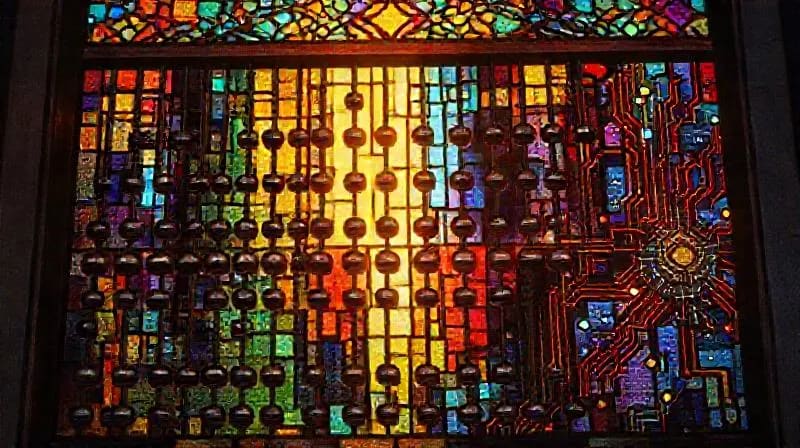
Precursors, diagrams, and conceptual representations that forged the vision of ancient Greek mathematicians on the principles of mechanical calculation and scientific inquiry.
This image is a conceptual render, drawing inspiration from historical artifacts and theoretical constructs, potentially generated by AI or sourced from public domain archives like Wikimedia Commons under a CC BY-SA license.The Greek Abacus: Origins and Design
The term "abacus" itself is believed to derive from the Greek word "abax" or "abakon," referring to a flat surface or tablet. Early forms of the abacus in Greece were often simple boards covered with dust or sand, on which lines were drawn and pebbles (calculi) were used for counting. This rudimentary method allowed for the representation of numbers and the execution of basic arithmetic operations.
Over time, the design evolved into more sophisticated versions, such as the Salamis Tablet, discovered in 1846 on the island of Salamis. Dated to around 300 BCE, this marble slab features engraved parallel lines and columns, indicating a structured system for calculations. It is considered the oldest surviving counting board and provides invaluable insight into the practical mathematics of ancient Greece.
The Greek abacus typically operated on a base-10 system, much like our modern decimal system. Each column or line on the board represented a different power of ten (units, tens, hundreds, etc.), and pebbles were moved within these columns to add, subtract, multiply, and divide. This positional notation was a crucial development, enabling efficient manipulation of larger numbers without requiring complex mental arithmetic.
From Manual Calculation to Mechanical Logic
While the abacus was primarily a manual tool, its systematic operation embodied principles that would later be central to mechanical and electronic computing. The act of moving beads or pebbles according to specific rules is analogous to executing an algorithm. This deterministic process, where inputs lead to predictable outputs, is a cornerstone of computational logic.
The shift from purely mental calculation to using a physical aid like the abacus allowed for greater accuracy and the ability to tackle more complex problems. It externalized the cognitive load, transforming an abstract mathematical problem into a series of physical manipulations. This externalization is a fundamental concept in tool-making and technological advancement, extending to all forms of computing.
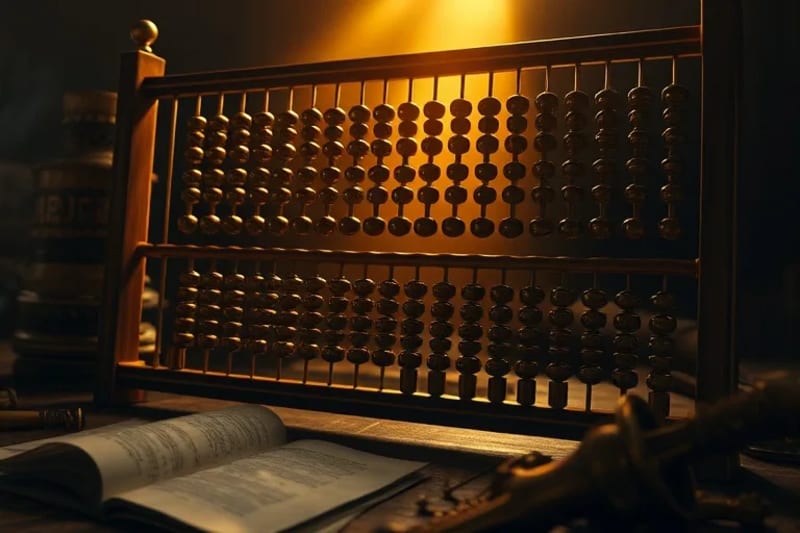
A conceptual still-life depicting the historical journey of computational tools, from the tangible abacus to the abstract principles of logic.
The conceptual leap from the abacus to early mechanical calculators, like those developed by Pascal and Leibniz centuries later, involved automating these physical manipulations. These early machines were essentially mechanized abaci, designed to perform arithmetic operations without direct human intervention for each step. The underlying logic, however, remained remarkably similar: representing numbers and performing operations through discrete states and movements.
This progression highlights a continuous thread in human innovation: the desire to offload repetitive tasks to tools, freeing up cognitive resources for higher-level problem-solving. This drive for efficiency and automation is a recurring theme throughout the history of technology, from the simplest counting devices to the most complex supercomputers.
Conceptual Roots: Abacus and Early Digital Computing
The abacus operates on a principle of discrete states: a bead is either in one position or another, representing a specific value. This binary, or at least discrete, nature of information representation is a fundamental concept that directly prefigures digital computing. Early digital computers, with their reliance on switches being either "on" or "off" (representing 1 or 0), share this core characteristic.
The systematic arrangement of columns and rows on an abacus also mirrors the structured memory and processing units of modern computers. Each column can be seen as a register, holding a specific part of a number, and the movement of beads as the execution of an instruction. This abstract modularity is a design principle that has been refined but never abandoned in computing.
Even figures like Hedy Lamarr, a pioneer in wireless communication, contributed to the intellectual lineage of modern technology through innovation that required structured, logical thinking, echoing the systematic approach first fostered by tools like the abacus. Her work, though far removed from ancient Greece, exemplifies the continuous human endeavor to encode and transmit information efficiently.
The abacus teaches us that computation is not just about electronics; it's about the manipulation of symbols according to rules. This symbolic manipulation is the essence of algorithms, the step-by-step procedures that define all computational tasks. From a simple addition on an abacus to a complex machine learning algorithm, the underlying principle of following a set of instructions remains constant.
The Abacus in the Age of AI
At first glance, the ancient abacus seems utterly disconnected from the sophisticated world of Artificial Intelligence. However, a deeper look reveals conceptual parallels. AI, at its core, involves algorithms that process data to make decisions or predictions. These algorithms are structured sequences of operations, much like the steps taken to solve a problem on an abacus.
The abacus trains the human mind to think algorithmically, to break down complex problems into manageable steps. This cognitive training is invaluable for understanding and developing AI. While AI operates at speeds and scales unimaginable to ancient Greeks, the fundamental idea of a system that takes inputs, processes them according to rules, and produces outputs, remains a common thread.
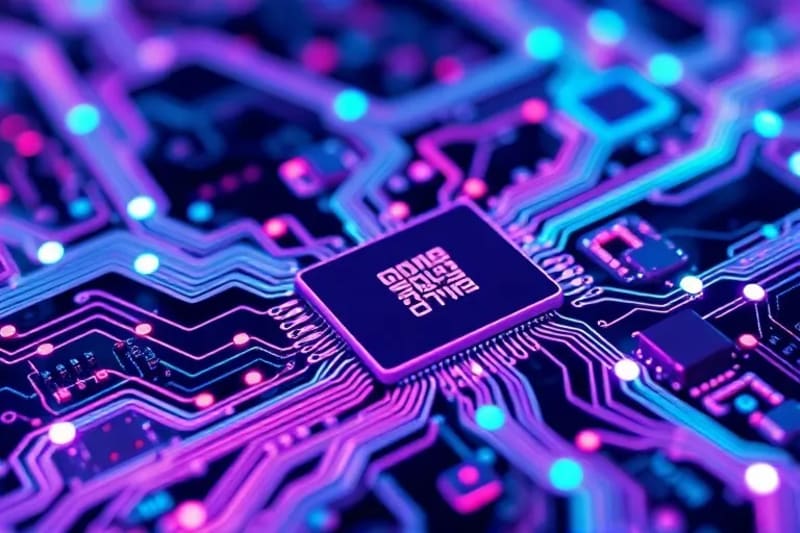
A conceptual artwork illustrating the profound connection between ancient computational tools and the complex, evolving landscape of modern AI and quantum mechanics.
Furthermore, the abacus demonstrates the power of representation. Numbers are not just abstract entities; they can be represented physically and manipulated. AI systems do something similar by representing complex real-world data in numerical or symbolic forms that can then be processed by algorithms. This abstraction and representation are key to both ancient and modern computational paradigms.
The development of AI also highlights the iterative nature of problem-solving. Just as an abacus user might refine their technique, AI models learn and improve through repeated training and adjustments. The pursuit of optimal solutions, whether through manual dexterity or complex algorithms, is a shared objective across these vastly different eras of computing.
Quantum Computing: A New Paradigm, Ancient Echoes
The leap from classical computing to quantum computing represents one of the most profound shifts in computational theory. While classical computers rely on bits (0 or 1), quantum computers use qubits, which can exist in a superposition of both 0 and 1 simultaneously. This, along with phenomena like entanglement, allows quantum computers to process vast amounts of information in parallel.
Even in this futuristic domain, one can find distant echoes of the abacus's conceptual legacy. The abacus, by allowing for the physical manipulation of numbers, introduced the idea of a system where states could be changed to represent different values. While not analogous to superposition, it established the concept of a configurable physical system for computation.
The idea of parallel processing, where multiple calculations happen concurrently, is a core advantage of quantum computing. While the abacus is a sequential device, its ability to represent multiple digits simultaneously on different rods can be seen as a very rudimentary conceptual precursor to handling multiple data points at once. This abstract connection, although indirect, underscores the continuous evolution of computational thought.
Furthermore, the challenge in quantum computing lies not just in building the hardware, but in developing algorithms that leverage its unique properties. This algorithmic thinking, the structured approach to problem-solving, is a direct descendant of the logical processes first formalized and practiced with tools like the abacus. The very act of designing a quantum algorithm requires a deep understanding of how information is represented and manipulated, a skill honed over millennia of computational tool development, even reaching into esoteric areas like Astro-Botanical Quantum Elixirs, which, while distinct, hint at the complex interplay of abstract concepts.
The abstract nature of quantum computing also finds a conceptual parallel in how the abacus abstracts numerical values into physical beads. Both require a mental model that goes beyond simple counting, engaging with the underlying logic of the system. The transition from a physical abacus to the abstract realm of quantum states represents the ultimate evolution of this representational power.
The Enduring Relevance of the Abacus
Despite the advent of calculators, computers, and AI, the abacus continues to be used in various parts of the world, particularly for teaching arithmetic and mental calculation. Its tangible nature provides a concrete understanding of number systems and operations, which can be invaluable for cognitive development. This practical application underscores its enduring pedagogical value.
Beyond its direct use, the legacy of the Greek abacus lies in its contribution to the very idea of computing. It demonstrated that complex problems could be broken down into simpler, repeatable steps, and that tools could extend human intellectual capabilities. This fundamental insight paved the way for every subsequent computational innovation.
The abacus reminds us that technology is not just about speed or power, but about conceptual frameworks. The shift from a physical abacus to the abstract world of algorithms, data structures, and virtual assets, such as those discussed in intellectual property in the Metaverse, highlights a continuous evolution of how we represent and interact with information. The underlying principles of logical manipulation and systematic processing remain constant, bridging millennia of human ingenuity.
In essence, the Greek abacus was more than just a counting device; it was a conceptual blueprint for computation itself. Its simple design encapsulated profound ideas about number representation, algorithmic thinking, and the power of externalizing cognitive processes. These ideas continue to resonate, influencing the design and understanding of even the most cutting-edge technologies today.
Explore More on Computational History and Innovation
- Growth Hacking B2B Startups: Rapid Expansion Strategies
- Alchemical Sounds: Cellular Regeneration Frequencies and Energy
- Cryptoassets for Generation Z: Savings, Retirement, and Financial Future
Source: Hybrid content assisted by AI and human editorial supervision.


Comentarios