
Templar Legacy Myths Wealth Influence Medieval Europe
The Knights Templar, officially known as the Poor Fellow-Soldiers of Christ and of the Temple of Solomon, remain one of history's most fascinating and enigmatic organizations. Founded in the early 12th century, this Catholic military order quickly rose to prominence, becoming a formidable force in the Crusades and a pioneering institution in medieval finance. Their legacy is a complex tapestry woven with threads of religious fervor, military might, immense wealth, and enduring mystery.
From their humble beginnings as protectors of pilgrims in the Holy Land, the Templars evolved into a powerful transnational entity, wielding influence that extended far beyond the battlefield. Their story, however, is not just one of triumph and piety; it is also one of dramatic downfall, fueled by accusations, political machinations, and the insatiable greed of powerful monarchs. This article delves into the origins, rise, myths, and ultimate demise of this legendary order, exploring their profound impact on medieval Europe and their lasting presence in popular culture.
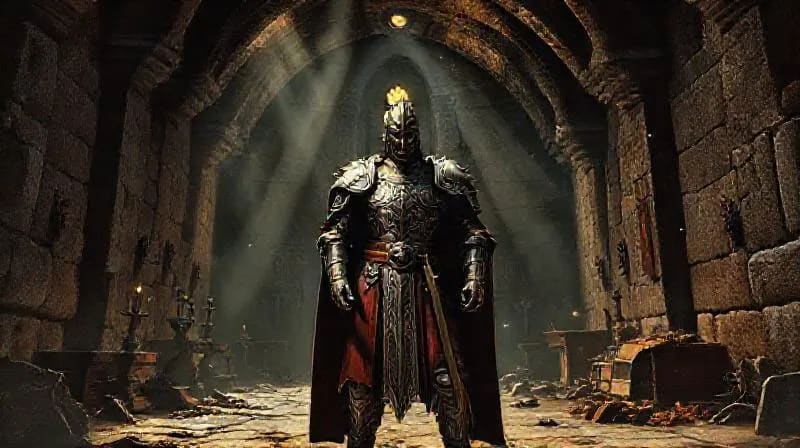
Historical depictions, conceptual artistry, and symbolic representations that illustrate the enduring mystique and influence of the Knights Templar throughout medieval Europe.
Fuente visual sujeta a disponibilidad del ecosistema: Wikimedia Commons bajo licencia CC BY-SA 4.0 o renderizado conceptual IA.
The Templars' story is a testament to the intricate interplay of faith, power, and human ambition. Their dramatic end, marked by persecution and dissolution, only served to amplify the legends surrounding them, ensuring their place in history as much for their mythical status as for their tangible achievements.
Table of Contents
- Origins and Rise to Power
- Military Prowess and the Crusades
- Financial Innovations and Immense Wealth
- Myths, Legends, and Hidden Treasures
- The Downfall: Persecution and Dissolution
- Enduring Legacy and Modern Interpretations
Origins and Rise to Power
The Knights Templar were founded in 1119 by Hugh de Payens, a French knight, and eight companions. Their initial mission was to protect Christian pilgrims traveling to the Holy Land after the First Crusade. They were granted quarters on the Temple Mount in Jerusalem, from which they derived their name, "Knights of the Temple." For their first nine years, they were a small, relatively obscure group, living in poverty and relying on donations.
Their fortunes changed dramatically in 1129 at the Council of Troyes, where Bernard of Clairvaux, a highly influential abbot, championed their cause. Bernard drafted their Rule, a monastic code that combined military duties with monastic vows of poverty, chastity, and obedience. This unique blend of warrior and monk resonated deeply with the religious fervor of the era, granting them papal endorsement and widespread support across Europe.
The papal bull Omne Datum Optimum (1139) further solidified their status, granting them significant privileges. These included exemption from local laws and taxes, direct obedience to the Pope, and the right to collect tithes. This unprecedented autonomy, coupled with their reputation for piety and bravery, led to a massive influx of donations, land, and recruits. Within decades, the Templars transformed from a small band of knights into a powerful, well-organized, and wealthy international organization, establishing preceptories (local administrative units) across Europe.
Military Prowess and the Crusades
The primary role of the Knights Templar was military. They were elite shock troops of the Crusader armies, renowned for their discipline, courage, and distinctive white mantles adorned with a red cross. Their military doctrine emphasized unwavering commitment to battle, often fighting to the last man rather than retreating. This ferocity made them both feared by their enemies and admired by their allies.
Templar knights were at the forefront of many major battles and sieges throughout the Crusades, including the Battle of Harim, the Battle of Montgisard, and the Siege of Acre. They built and maintained an extensive network of fortifications in the Holy Land, such as the formidable castles of Safed and Tortosa, which served as strategic strongholds and bases of operation. Their military organization was highly structured, with a Grand Master at the helm, overseeing various ranks of knights, sergeants, and chaplains.
Despite their military prowess, the Templars, along with other Crusader forces, ultimately failed to permanently secure the Holy Land. The fall of Acre in 1291, the last major Crusader stronghold, marked the end of their military presence in the Levant and forced the order to relocate its headquarters to Cyprus. This retreat from the Holy Land significantly diminished their original purpose and began to erode public and papal support.
Financial Innovations and Immense Wealth
Beyond their military role, the Knights Templar developed an sophisticated economic infrastructure that made them one of the wealthiest and most powerful entities in medieval Europe. Their network of preceptories across Europe and the Middle East functioned as a proto-banking system, allowing pilgrims and nobles to deposit funds in one location and withdraw them in another using a form of letter of credit, effectively inventing a precursor to modern checks.

A conceptual representation of the vast financial resources accumulated by the Knights Templar.
They managed vast estates, engaged in extensive trade, and lent money to kings and nobles, often acting as treasurers and financial advisors to European monarchs. This financial acumen, combined with their religious immunity and organizational efficiency, allowed them to accumulate immense wealth in land, gold, and other assets. Their wealth was not merely for their own enrichment; it funded their military operations, maintained their castles, and supported their charitable activities.
The Templars' financial power made them indispensable but also vulnerable. Kings, particularly those heavily indebted to the order, viewed their wealth with envy and their autonomy with suspicion. This economic leverage, while a source of strength, ultimately became a significant factor in their downfall. The ability to manage such complex financial operations across vast distances highlights their advanced organizational capabilities, a form of corporate change management far ahead of their time.
Myths, Legends, and Hidden Treasures
The dramatic and mysterious end of the Knights Templar fueled countless myths and legends that persist to this day. Perhaps the most famous is their supposed discovery and guardianship of the Holy Grail, the cup used by Christ at the Last Supper, or other sacred relics like the Ark of the Covenant. These stories often depict the Templars as keepers of profound spiritual secrets, hinting at a deeper, esoteric purpose beyond their military and financial roles.
Another pervasive myth concerns the vast hidden treasures they allegedly spirited away before their arrest. Tales of Templar gold, jewels, and ancient artifacts being concealed in secret locations, from Scottish islands to French cathedrals, have captivated treasure hunters and historians for centuries. While historical evidence for these specific treasures is scarce, the sheer scale of their documented wealth makes such stories plausible in the popular imagination.
The Templars are also often linked to the origins of Freemasonry and other secret societies, with theories suggesting that surviving Templars went underground, preserving their knowledge and rituals. While direct historical links are tenuous, the mystique of the Templars undeniably influenced the symbolism and narratives of later esoteric groups. These legends, whether true or not, underscore the profound impact the order had on the collective consciousness of Europe.
The Downfall: Persecution and Dissolution
The downfall of the Knights Templar was swift and brutal, orchestrated primarily by King Philip IV of France. Deeply indebted to the Templars and coveting their immense wealth, Philip launched a coordinated attack on the order on Friday, October 13, 1307. Thousands of Templars across France were arrested simultaneously, accused of heresy, idolatry, sacrilege, and various moral offenses.
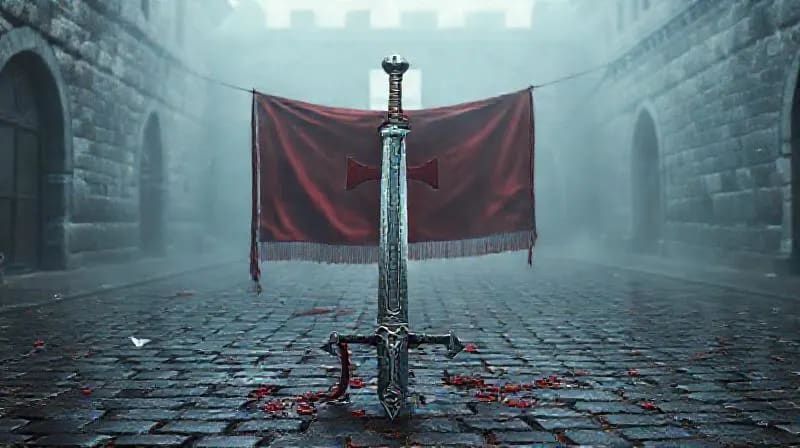
A symbolic depiction of the betrayal and dissolution that led to the end of the Knights Templar.
Under torture, many Templars confessed to the fabricated charges, including denying Christ, spitting on the cross, and worshipping an idol known as Baphomet. These confessions, extracted under duress, were used by Philip to pressure Pope Clement V, who initially resisted but eventually succumbed to the king's demands. The Pope issued the papal bull Vox in excelso in 1312, officially dissolving the order, not by condemnation but "for the good of the Church."
The assets of the Templars were largely transferred to the Knights Hospitaller, another military order, though Philip managed to seize a significant portion for himself. The last Grand Master, Jacques de Molay, along with other senior Templar leaders, was burned at the stake in 1314, famously cursing Philip IV and Clement V from the flames. This dramatic end solidified the Templars' place in history as victims of political and financial ambition, rather than genuine heresy.
The dissolution of the Knights Templar by Papal decree in 1312, as documented in historical records, marked a pivotal moment in European history.
While the official reason cited was the alleged heresy, many historians point to the immense wealth and political influence of the order as the true motivators behind their persecution.
Enduring Legacy and Modern Interpretations
Despite their official dissolution, the legacy of the Knights Templar has continued to fascinate and influence generations. Their story has been retold in countless books, films, and video games, often portraying them as guardians of ancient secrets or as the progenitors of modern secret societies. From Umberto Eco's "Foucault's Pendulum" to Dan Brown's "The Da Vinci Code," the Templars remain a powerful symbol of mystery and hidden knowledge.
In academic circles, research continues to shed light on their true historical role, separating fact from fiction. Modern historians emphasize their significant contributions to military strategy, financial systems, and the development of international law in the medieval period. Their innovative banking practices, for instance, laid groundwork for future economic systems, demonstrating a sophisticated understanding of valuable assets and their management.
The Templars' enduring appeal lies in their unique blend of religious devotion, martial prowess, and tragic fate. They represent a powerful historical archetype—the warrior monk—whose ideals and downfall continue to resonate with contemporary audiences. Their story serves as a cautionary tale about the dangers of unchecked power and the vulnerability of even the most formidable institutions to political intrigue and avarice.
In conclusion, the Knights Templar were far more than just a military order; they were a multifaceted institution that profoundly shaped the political, economic, and cultural landscape of medieval Europe. Their rise was meteoric, their influence immense, and their downfall spectacular, leaving behind a legacy that continues to inspire awe, speculation, and scholarly inquiry. The mystique surrounding them ensures that the legend of the Templars will continue to captivate for centuries to come.
Explore Further: Related Topics
- Quantum Cybersecurity Strategies: Post-Quantum Defenses for Critical Infrastructure: Discover how modern organizations protect their assets, echoing the Templars' need for secure financial systems.
- Sustainable Social Entrepreneurship: Global Impact Strategies: Learn about organizations that combine social mission with economic activity, a distant echo of the Templars' dual role.
- Space Law: Sovereignty and Extraterrestrial Resources: Delve into the complexities of international law and resource control, a modern parallel to the Templars' transnational influence.
- Blood of Christ New Covenant: Implications for the Current Church: Explore religious doctrine and its interpretation, a core aspect of the Templars' spiritual foundation.
- Sagittarius Decans Deep Dive: The Archer's Expansive Nature: Uncover insights into human nature and destiny, reflecting the Templars' ambitious pursuits and ultimate fate.
Source: Hybrid content assisted by AI and human editorial supervision.


Comentarios