
Music Brain Neuroscience: Learning Emotion Power
Music, Brain, and Neuroscience: Unlocking Melody's Power in Learning and Emotion
Music, an omnipresent force in human culture, transcends mere entertainment, acting as a profound catalyst for cognitive and emotional processes. From ancient rituals to modern therapy, its influence on the human brain has captivated scientists and philosophers alike. Neuroscience, the study of the nervous system, now offers compelling insights into how melodies, rhythms, and harmonies intricately shape our learning capabilities, regulate our emotional states, and even foster neuroplasticity, the brain's ability to reorganize itself.
This article delves into the fascinating intersection of music and the brain, exploring the neural mechanisms that underpin music's power. We will examine how different musical elements activate specific brain regions, influencing everything from memory formation to stress reduction. Understanding these connections not only enriches our appreciation for music but also opens new avenues for therapeutic interventions and educational strategies.
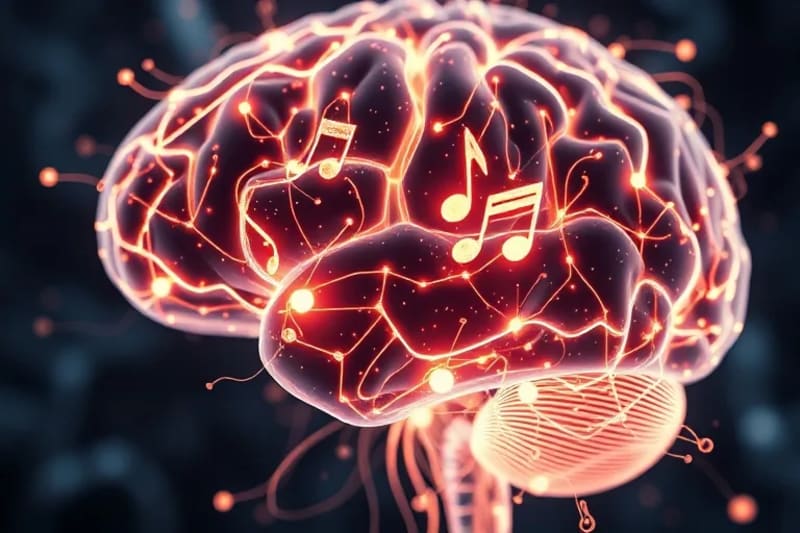 Precursors intellectuales, diagramas fundamentales y representaciones conceptuales que forjaron la visión de la neurociencia sobre la interacción entre la música y el cerebro.
Fuente visual sujeta a disponibilidad del ecosistema: Wikimedia Commons bajo licencia CC BY-SA 4.0 o renderizado conceptual IA.
The Brain's Symphony: How Music Engages Neural Networks
When we listen to music, our brains don't just passively receive sound; they actively engage in a complex dance of neural processing. Various brain regions work in concert, each contributing to our perception and experience of music. This intricate interplay highlights why music is considered a "whole-brain" activity, capable of stimulating multiple cognitive functions simultaneously.
Key brain areas involved in musical processing include the auditory cortex, which decodes pitch, timbre, and loudness; the cerebellum, crucial for rhythm and timing; the hippocampus, involved in musical memory; and the amygdala, which processes the emotional responses evoked by music. The prefrontal cortex, responsible for executive functions, also plays a role in appreciating complex musical structures and making judgments about music.
Rhythm, Melody, and Harmony: The Building Blocks of Brain Activation
Each fundamental element of music triggers distinct, yet interconnected, neural responses:
- Rhythm: The temporal organization of sounds, rhythm engages motor areas of the brain, even when we are not physically moving. This connection between rhythm and movement explains why music often makes us want to tap our feet or dance. Studies show that rhythmic entrainment can synchronize brain waves, potentially enhancing focus and attention.
- Melody: The linear succession of musical tones, melody is primarily processed in the auditory cortex, but its emotional impact involves deeper limbic structures. The recognition and anticipation of melodic patterns are key to our enjoyment and understanding of a piece of music.
- Harmony: The simultaneous combination of tones, harmony evokes rich emotional responses. Consonant harmonies are often perceived as pleasant and stable, while dissonant harmonies can create tension or unease, engaging brain regions associated with emotional processing and conflict resolution.
Music's Role in Learning and Cognitive Enhancement
The cognitive benefits of music extend far beyond mere enjoyment. Research consistently demonstrates music's capacity to enhance various aspects of learning, from language acquisition to mathematical reasoning. This is particularly evident in early childhood development, where musical training has been linked to improved academic outcomes.
Language and Literacy Development
Music and language share deep structural similarities, both relying on the processing of pitch, rhythm, and temporal patterns. Learning a musical instrument or engaging in singing can improve phonological awareness, a critical skill for reading and language comprehension. Children with musical training often exhibit enhanced auditory discrimination, making it easier to distinguish between different speech sounds and learn new vocabulary. This connection is so strong that some therapeutic approaches use music to aid individuals with speech and language disorders.
Memory and Attention
Music's ability to evoke vivid memories is a common human experience. This phenomenon is rooted in the brain's capacity to link musical cues with specific events, emotions, and contexts. The hippocampus, a brain region vital for memory formation, is highly active during musical engagement. Furthermore, music can serve as a powerful mnemonic device, helping individuals remember information when it's set to a tune or rhythm. For instance, the use of jingles in advertising or songs to teach the alphabet are prime examples of this principle in action. The focused attention required for musical performance or active listening can also strengthen attentional networks in the brain.
 Visualizing the intricate relationship between learning processes and emotional states, influenced by the power of melody.
Spatial-Temporal Reasoning and Problem-Solving
The "Mozart Effect," though often oversimplified, sparked significant interest in music's impact on spatial-temporal reasoning – the ability to mentally manipulate objects and understand relationships in space and time. While direct causation remains debated, studies suggest that musical training, particularly instrumental practice, enhances these skills. This is likely due to the complex cognitive demands of music, such as reading scores, coordinating movements, and understanding musical structures, which engage similar neural circuits used in mathematical and scientific problem-solving. These cognitive benefits can even extend to areas like understanding complex systems, much like those involved in augmented reality in retail, where spatial awareness and dynamic interaction are key.
Music and Emotion: A Direct Line to the Soul
Perhaps the most universally recognized power of music lies in its profound ability to evoke and regulate emotions. A melancholic tune can bring tears, while an upbeat rhythm can lift spirits. This emotional connection is not merely subjective; it is deeply rooted in the brain's reward system and limbic structures.
The Dopamine Connection and Reward Pathway
Listening to music, especially music we enjoy, triggers the release of dopamine, a neurotransmitter associated with pleasure, motivation, and reward. This explains the "chills" or "frissons" some people experience when listening to particularly moving pieces. The anticipation of a musical climax, followed by its resolution, creates a powerful reward loop in the brain, reinforcing our desire to listen to music. This same reward system is implicated in various forms of motivation and engagement, including the drive for personal growth often explored in guided meditation for planetary transits.
Emotional Regulation and Stress Reduction
Music serves as a powerful tool for emotional regulation. Upbeat music can elevate mood and increase energy, while calming melodies can reduce anxiety and stress. Studies have shown that listening to relaxing music can decrease cortisol levels, the body's primary stress hormone, and lower heart rate and blood pressure. This makes music an invaluable aid in managing stress, improving sleep, and promoting overall mental well-being. The deliberate use of sound and rhythm to influence mood is also a core principle in practices like esoteric aromatherapy, where specific scents are paired with intentions to achieve harmony.
 An abstract rendering of sound waves interacting with conceptual emotional states, illustrating music's profound influence.
Therapeutic Applications of Music Neuroscience
The scientific understanding of music's impact on the brain has paved the way for its widespread use in therapeutic settings. Music therapy, a recognized health profession, utilizes music to address physical, emotional, cognitive, and social needs of individuals.
Neurological Rehabilitation
For patients recovering from stroke or brain injury, music therapy can be instrumental in regaining motor skills and speech. Rhythmic auditory stimulation (RAS), for example, uses rhythmic cues to improve gait and balance in individuals with Parkinson's disease. Singing can help stroke patients with aphasia (speech impairment) to recover their ability to communicate, as different brain areas are involved in singing versus speaking, offering alternative pathways for language production.
Mental Health and Well-being
Music therapy is increasingly used to treat conditions such as depression, anxiety, and PTSD. It provides a non-verbal outlet for emotional expression, helps reduce feelings of isolation, and promotes relaxation. Group music therapy sessions can also foster social connection and improve communication skills. The structured yet flexible nature of music therapy allows for personalized interventions that cater to individual needs, promoting a holistic approach to mental health.
The Future of Music and Brain Research
As neuroscientific tools become more sophisticated, our understanding of music's profound impact on the brain continues to deepen. Advanced imaging techniques, such as fMRI and EEG, allow researchers to observe brain activity in real-time, revealing the intricate neural dance that occurs during musical engagement. Future research promises to unlock even more secrets, potentially leading to novel treatments for neurological disorders, enhanced educational methodologies, and a deeper appreciation for the universal language of music.
The integration of music into daily life, whether through active listening, learning an instrument, or participating in group singing, offers tangible benefits for cognitive health and emotional well-being. From childhood development to aging gracefully, music remains a powerful ally in nurturing the human mind. Its ability to connect us, heal us, and inspire us is a testament to its enduring power, a power that neuroscience is only just beginning to fully comprehend.
The ongoing exploration of music's effects on the brain also aligns with broader discussions about human potential and the optimization of cognitive functions, similar to how we consider the future of remote work and how to integrate new technologies for enhanced productivity and well-being. Both fields seek to understand how environmental factors and structured activities can shape our mental landscape and improve our quality of life.
"The brain's response to music is not merely an auditory phenomenon; it is a complex, multi-modal integration of perception, emotion, and cognition, deeply rooted in our evolutionary history."
- Dr. Daniel J. Levitin, Author of 'This Is Your Brain On Music'
Frequently Asked Questions about Music and the Brain
Here are some common questions regarding the neurological impact of music:
- Can music make you smarter? While music doesn't directly increase IQ, musical training has been shown to enhance cognitive skills like memory, attention, and spatial-temporal reasoning, which can indirectly contribute to academic and intellectual performance.
- How does music affect mood? Music influences mood by activating the brain's reward system, releasing dopamine, and modulating neurotransmitters associated with stress and pleasure. Different musical elements like tempo, key, and harmony can evoke a wide range of emotional responses.
- Is listening to music while studying beneficial? For some, background music (especially instrumental or classical) can improve focus and reduce distractions. However, for complex tasks requiring deep concentration, silence or specific types of ambient sounds might be more effective, as lyrical music can interfere with verbal processing.
- What is music therapy? Music therapy is a clinical and evidence-based use of music interventions to accomplish individualized goals within a therapeutic relationship by a credentialed professional. It addresses physical, emotional, cognitive, and social needs.
The journey into understanding the brain's relationship with music is ongoing, revealing new layers of complexity and potential. As we continue to unravel these mysteries, music's role in human health, education, and well-being will only grow.
Related Searches & Further Reading
To deepen your understanding of music's impact on the brain and related fields, explore these topics:
- Law of Artificial Intelligence: Legal Personality of Robots and Algorithms
- Sports Technology: Wearables, Data Analysis, and Performance
- Bumblebees: Navigation, Communication, Biological Complexity
- Quantum World Predictions: Astrological Ages and Consciousness
- Black or White: Symbolism, Transformation, and Inclusion
- Regenerative Companies: Beyond Ecosystem Restoration
- Chinese Zodiac Conflicts: Turning Challenges into Growth
- Beyond Zodiac Elements: Advanced Elemental Interactions in Compatibility
- Mountain Sports: Hiking, Mountaineering, Nature
Source: Hybrid content assisted by AI and human editorial supervision.


Comentarios