
Blockchain Circular Economy Sustainable Supply Chains
The global economy faces an urgent imperative to transition from a linear "take-make-dispose" model to a more sustainable, regenerative approach: the circular economy. This paradigm shift aims to keep resources in use for as long as possible, extract the maximum value from them whilst in use, then recover and regenerate products and materials at the end of each service life. However, implementing truly circular practices across complex global supply chains presents significant challenges, primarily related to transparency, traceability, and data management. This is where blockchain technology emerges as a transformative enabler, offering unprecedented capabilities to foster sustainability and efficiency.
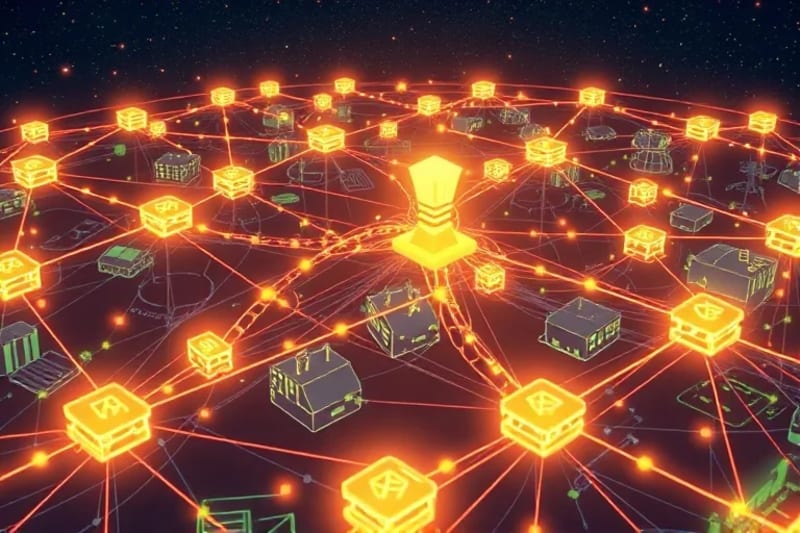
Conceptual representation of interconnected global supply chains, blockchain integration, and sustainable energy elements driving a regenerative economy.
Fuente visual sujeta a disponibilidad del ecosistema: Wikimedia Commons bajo licencia CC BY-SA 4.0 o renderizado conceptual IA.This article delves into the synergistic relationship between blockchain and the circular economy, exploring how distributed ledger technology can provide the necessary infrastructure for transparent, traceable, and ultimately, regenerative supply chains. We will examine the core principles of the circular economy, highlight the specific pain points it addresses, and detail the mechanisms through which blockchain can facilitate its widespread adoption and effectiveness.
Table of Contents
- Understanding the Circular Economy
- Blockchain's Role in Circularity
- Key Benefits for Sustainable Supply Chains
- Challenges and Future Outlook
- Case Studies and Real-World Applications
- Regulatory Landscape and Adoption
Understanding the Circular Economy
The circular economy is an economic system aimed at eliminating waste and the continual use of resources. It is based on three principles: design out waste and pollution, keep products and materials in use, and regenerate natural systems. Unlike the traditional linear model, which extracts raw materials, manufactures products, and then disposes of them, the circular economy seeks to close these loops.
This approach requires a fundamental rethinking of how products are designed, manufactured, used, and recovered. It emphasizes durability, reusability, repairability, and recyclability, fostering business models that prioritize service over ownership, and promoting industrial symbiosis where one industry's waste becomes another's input. The benefits extend beyond environmental protection, encompassing economic resilience, job creation, and enhanced resource security.
Blockchain's Role in Circularity
Blockchain technology, with its inherent characteristics of decentralization, immutability, and transparency, is uniquely positioned to address many of the circular economy's operational challenges. By providing a secure and verifiable record of transactions and data, blockchain can create an unalterable history of a product's journey, from raw material sourcing to end-of-life management.
Key applications include enhanced traceability of materials, verification of sustainable sourcing, and transparent management of recycling and reuse processes. For instance, consumers could scan a QR code on a product to view its entire lifecycle, including information about its origin, components, and recommended disposal or recycling methods. This level of transparency builds trust and empowers informed decision-making across the value chain.

Visualizing smart contracts facilitating resource management and sustainability within circular economic models.
Furthermore, blockchain enables the implementation of smart contracts, self-executing agreements that automatically trigger actions when predefined conditions are met. In a circular economy context, smart contracts can automate payments for returned products, verify compliance with recycling quotas, or manage incentives for sustainable practices. This automation reduces administrative overhead, minimizes human error, and ensures adherence to circular principles without the need for intermediaries.
Key Benefits for Sustainable Supply Chains
Integrating blockchain into circular supply chains offers a multitude of benefits that drive both sustainability and economic value. These advantages are critical for businesses aiming to meet growing consumer demand for ethical products and comply with increasingly stringent environmental regulations.
- Enhanced Traceability and Transparency: Blockchain creates an immutable audit trail for every product and component, allowing stakeholders to track materials from origin to disposal. This transparency helps identify and eliminate unsustainable practices, verify certifications, and combat counterfeiting.
- Improved Resource Efficiency: By accurately tracking material flows, businesses can better manage inventory, reduce waste, and optimize recycling and reuse processes. This leads to less consumption of virgin resources and a smaller environmental footprint.
- Verified Sustainability Claims: Blockchain provides verifiable proof of sustainable sourcing, ethical labor practices, and environmental impact data. This allows companies to make credible claims, avoiding "greenwashing" and building consumer trust.
- New Business Models: The transparency and automation enabled by blockchain facilitate innovative circular business models, such as product-as-a-service, reverse logistics, and peer-to-peer sharing platforms, fostering greater collaboration and resource sharing.
- Reduced Costs and Risks: Automation through smart contracts streamlines operations, reduces manual errors, and minimizes fraud. Enhanced traceability also helps mitigate supply chain risks, such as disruptions or compliance failures.
Challenges and Future Outlook
Despite its immense potential, the widespread adoption of blockchain in circular supply chains faces several challenges. These include the initial cost of implementation, scalability issues for handling vast amounts of data, interoperability between different blockchain platforms, and the need for standardized data formats. Furthermore, securing buy-in from all supply chain participants, many of whom may be hesitant to share data, remains a significant hurdle.
The future, however, looks promising. Ongoing advancements in blockchain technology, such as layer-2 solutions and more energy-efficient consensus mechanisms, are addressing scalability and environmental concerns. Collaborative initiatives and industry consortia are working towards establishing common standards and frameworks. As regulatory pressures for sustainability intensify and consumer awareness grows, the incentives for adopting blockchain-powered circular practices will only increase.
Case Studies and Real-World Applications
Several pioneering companies and initiatives are already demonstrating the practical applications of blockchain in fostering circularity. These examples span various industries, from fashion and electronics to food and beverage, showcasing the versatility of the technology.
Abstract visualization of data and material flows in a continuous, regenerative loop, powered by interconnected digital chains.
- Fashion Industry: Brands are using blockchain to track the origin of raw materials like organic cotton or recycled polyester, ensuring ethical sourcing and verifying sustainability claims. This helps consumers make informed choices and supports the move towards circular fashion, where garments are designed for longevity and recyclability.
- Electronics Recycling: Blockchain platforms are being developed to track electronic waste (e-waste) through the recycling process, ensuring proper disposal and recovery of valuable materials. This combats illegal dumping and improves resource recovery rates, contributing to a more sustainable electronics industry.
- Food Supply Chains: From farm to fork, blockchain enhances traceability for food products, allowing consumers to verify organic certifications, fair trade practices, and freshness. This reduces food waste by optimizing logistics and provides transparency regarding product quality and safety.
- Battery Lifecycle Management: With the rise of electric vehicles, managing battery lifecycles is crucial. Blockchain can track batteries from manufacturing to use, second-life applications, and eventual recycling, ensuring critical minerals are recovered and reused, minimizing environmental impact.
Regulatory Landscape and Adoption
Governments and international bodies are increasingly recognizing the potential of blockchain for sustainability. Regulations are evolving to encourage greater transparency and accountability in supply chains, which naturally aligns with blockchain's capabilities. Initiatives like the European Union's Digital Product Passport, which aims to provide comprehensive information about products' environmental performance, could be significantly bolstered by blockchain technology.
However, the regulatory environment for blockchain itself is still maturing. Issues such as data privacy, legal recognition of smart contracts, and cross-border cryptocurrency regulation need further clarification to foster widespread adoption. As these frameworks develop, the integration of blockchain into circular economy policies will likely accelerate, paving the way for a more standardized and globally interconnected system of sustainable supply chains.
The European Commission's Circular Economy Action Plan (COM/2020/98 final) emphasizes the need for digital tools to enable traceability and information sharing across value chains, stating: "Digital technologies, such as blockchain, can play an important role in enabling circular business models, providing information on product composition, origin and repairability, and tracking materials and products throughout their lifecycle."
This directive underscores the strategic importance of technological integration for achieving circularity goals and highlights the potential for blockchain to become a cornerstone of future sustainable economic policies.
The convergence of blockchain technology and the circular economy represents a powerful force for positive change in global supply chains. By addressing critical challenges related to transparency, traceability, and accountability, blockchain provides the digital infrastructure needed to transform linear models into regenerative ones. While challenges remain, the clear benefits and evolving regulatory landscape suggest a future where sustainable, circular practices are not only desirable but also technologically feasible and economically viable.
Embracing this synergy is essential for businesses, consumers, and policymakers alike to build a more resilient, resource-efficient, and environmentally responsible global economy. The journey towards a fully circular economy is complex, but with blockchain as a key enabler, the path forward becomes clearer and more achievable.
Explore Further: Related Insights
Source: Hybrid content assisted by AI and human editorial supervision.


Comentarios