
Generative AI and Intellectual Property: The Digital Art Authorship Battle
Generative Artificial Intelligence (AI) has revolutionized numerous industries, with its impact on the creative arts being particularly profound. The ability of algorithms to produce novel images, music, and text has blurred traditional lines of artistic creation. This technological leap, while exciting, has ignited a complex legal battle concerning intellectual property (IP) rights, specifically the authorship and ownership of digital art generated by AI systems. The core of this dispute lies in reconciling established copyright laws, designed for human creators, with the unprecedented capabilities of autonomous algorithms. This article delves into the intricate legal landscape, examining the challenges, current interpretations, and potential future frameworks for intellectual property in the age of generative AI.
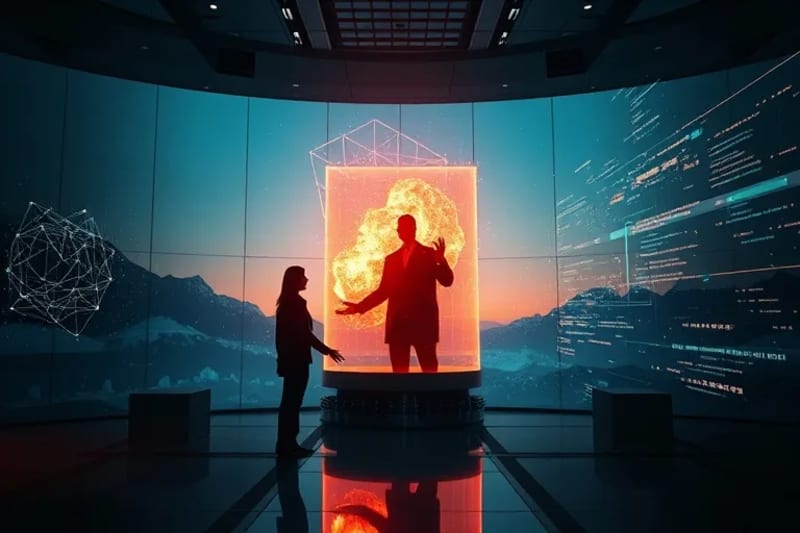
A futuristic courtroom setting where the intricate legal battle for authorship of digital art created by generative AI unfolds, highlighting the tension between human creativity and algorithmic output.
Table of Contents
- 1. The Rise of Generative AI in Art
- 2. Traditional Copyright Frameworks vs. AI
- 3. Key Legal Challenges and Debates
- 4. International Perspectives and Emerging Jurisprudence
- 5. Potential Solutions and Future Frameworks
- 6. Ethical Considerations
- 7. Conclusion
The Rise of Generative AI in Art
Generative AI models, such as Generative Adversarial Networks (GANs) and diffusion models, operate by learning patterns from vast datasets of existing human-created works. These sophisticated algorithms can then synthesize new content that often exhibits remarkable originality and aesthetic quality. The process typically involves a user providing a text prompt or initial parameters, which the AI interprets and transforms into a visual output. This collaborative, yet often opaque, creation process complicates the traditional understanding of who or what constitutes the "author" of a work.
The rapid evolution and accessibility of these tools mean that AI-generated art is no longer a niche curiosity but a significant and growing segment of the digital creative economy. The capabilities extend beyond static images to dynamic animations, interactive experiences, and even entire virtual environments. This technological expansion, similar to the advancements seen in Virtual Reality Rehabilitation, necessitates a re-evaluation of established legal and ethical boundaries, particularly concerning ownership and creative rights.
Traditional Copyright Frameworks vs. AI
Copyright law, fundamentally, is designed to protect the original expressions of human authors. The foundational principles of copyright universally require a human creator, originality, and fixation in a tangible medium. The concept of "originality" typically implies a minimum degree of creativity and independent effort by a human mind. This human-centric approach forms the bedrock of intellectual property regimes across most jurisdictions, including the United States, the European Union, and beyond.
The legal framework struggles to accommodate AI-generated works because AI lacks legal personhood and, by definition, does not possess consciousness or intent. This absence of human agency directly challenges the prerequisite of human authorship. Consequently, many copyright offices worldwide have maintained that works created solely by an AI, without significant human creative input, are not eligible for copyright protection. This stance creates a significant legal vacuum for a rapidly expanding category of creative output.
Key Legal Challenges and Debates
The question of authorship is perhaps the most contentious issue. When a user inputs a text prompt into a generative AI system, is the user the author, the developer who trained the AI, or the AI itself? Current legal interpretations largely dismiss the AI as an author due to its non-human nature. However, attributing authorship solely to the user who provided a prompt can be problematic if the AI's contribution is substantial and unpredictable. The debate often centers on the "spark of creativity" and whether the user's prompt constitutes sufficient creative control over the final output.
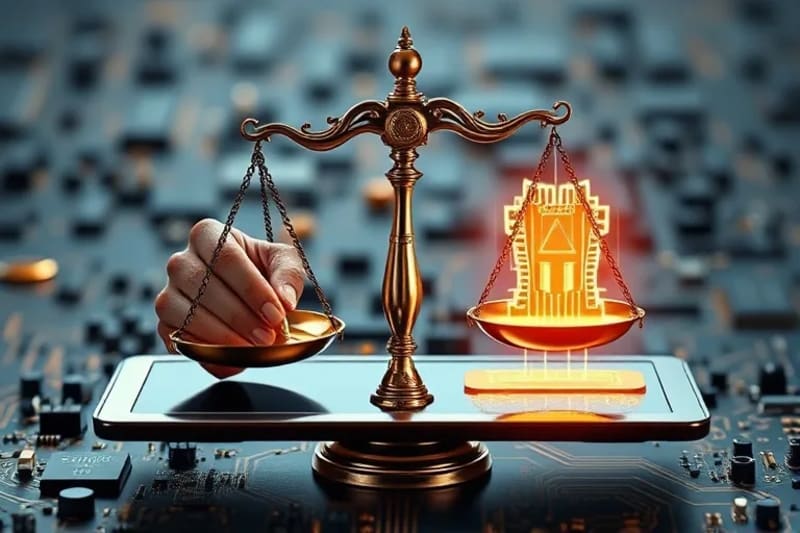
A visual representation of the legal scales of justice, balancing the creative input of a human artist against the algorithmic generation of artificial intelligence.
Another critical challenge revolves around the concept of originality. For a work to be copyrightable, it must be original, meaning independently created and possessing a modicum of creativity. If an AI generates art by recombining elements from its training data, does this meet the originality threshold? Critics argue that AI art is inherently derivative, while proponents contend that the transformative nature of AI algorithms can indeed produce genuinely novel expressions. This debate often intersects with the concept of fair use or fair dealing, particularly when AI models are trained on copyrighted material without explicit permission.
The issue of copyright infringement also arises at two main stages: during the training of AI models and in the output generated by these models. Training AI on vast datasets, which often include copyrighted works, raises questions about whether this constitutes copyright infringement. Legal arguments often hinge on whether such use is transformative or falls under fair use exceptions. Furthermore, if an AI generates an output that is substantially similar to an existing copyrighted work, who is liable for the infringement? These complex questions highlight the inadequacy of existing legal frameworks to address the nuances of AI-driven creation.
International Perspectives and Emerging Jurisprudence
Globally, copyright offices are grappling with these issues, often adopting cautious approaches. The U.S. Copyright Office has explicitly stated that it will only register works that contain sufficient human authorship. In a landmark decision, it denied copyright registration for a work created by an AI system named DABUS, affirming that copyright protection requires human creation. This position has been reinforced in subsequent rulings and guidance, emphasizing the human element as indispensable.
In the European Union, directives like the Copyright Directive (DSM Directive) have introduced provisions for text and data mining (TDM), which could impact how AI models are trained. However, the question of authorship for AI-generated works remains largely unresolved, with member states interpreting existing laws. Jurisdictions like the UK have provisions that allow the author of computer-generated works to be considered the person who made the arrangements for the creation of the work, offering a slightly different perspective. These varied approaches underscore the lack of international consensus and the ongoing need for harmonized legal frameworks.
Several legal cases are currently testing these boundaries. For instance, artists have filed lawsuits against AI companies, alleging copyright infringement due to the use of their works in training datasets. These cases, such as those involving Stability AI, Midjourney, and DeviantArt, are pivotal in shaping future interpretations of fair use, derivative works, and the scope of copyright in the AI era. The outcomes of these litigations will undoubtedly set precedents for how generative AI art is treated under intellectual property law, much like how robust Cybersecurity Strategies for Critical Infrastructure are vital for protecting digital assets.
Potential Solutions and Future Frameworks
Given the challenges, various solutions and new legal frameworks are being proposed to address the unique nature of AI-generated art. One approach suggests creating a new category of intellectual property rights specifically for AI-generated works, distinct from traditional copyright. This could involve a sui generis right that acknowledges the AI's role while potentially assigning ownership to the user or developer. Such a framework would need to balance incentivizing innovation with protecting human creators.
Another proposed solution involves implementing robust licensing models. AI developers could be required to license copyrighted material used for training, creating a more equitable system for artists whose work contributes to AI development. This could involve micro-payments or collective licensing schemes. Furthermore, blockchain technology offers a promising avenue for tracking the provenance of AI-generated art and its training data, providing transparency and potentially facilitating royalty distribution.
A fragmented digital canvas where traditional brushstrokes merge and dissolve into lines of code, symbolizing the transformative and often complex nature of art ownership in the AI era.
The concept of collaborative authorship is also gaining traction. If human input is significant in guiding the AI, the work could be considered a joint creation between the human and the AI tool, with copyright vesting in the human contributor. This would require clearer definitions of what constitutes "significant human input" versus mere technical operation. The legal community is exploring these avenues to foster innovation while upholding the fundamental principles of intellectual property protection.
Ethical Considerations
Beyond the legal intricacies, the rise of generative AI in art raises profound ethical questions. Attribution is a key concern; how should AI-generated art be labeled, and should the AI or its developer be credited alongside human contributors? The potential for AI to mimic or even perfectly replicate the style of living artists without their consent also raises ethical alarms regarding artistic identity and exploitation. This issue highlights the need for clear guidelines on ethical AI development and deployment in creative fields, touching upon broader discussions around Digital Human Rights.
The very definition of "art" is being re-evaluated in the age of AI. If a machine can create aesthetically pleasing and thought-provoking works, does it diminish the value of human creativity? This philosophical debate has significant implications for how society values artistic labor and intellectual output. Ensuring transparency, fairness, and respect for human artists will be crucial in navigating this evolving landscape.
Conclusion
The intersection of generative AI and intellectual property law presents a formidable challenge to existing legal paradigms. While AI offers unprecedented creative possibilities, the current human-centric copyright framework struggles to accommodate its outputs. The ongoing legal battles, evolving interpretations by copyright offices, and the search for new frameworks underscore the complexity of attributing authorship, ensuring originality, and preventing infringement in the digital age. As generative AI continues to advance, a collaborative effort between legal experts, technologists, artists, and policymakers will be essential to forge a balanced and equitable intellectual property system that fosters innovation while safeguarding the rights and livelihoods of creators. The future of digital art authorship hinges on our ability to adapt and innovate our legal structures to reflect technological realities.
Source: Hybrid content assisted by AI and human editorial supervision.


Comentarios