
Hedy Lamarr Hollywood Inventor Wi-Fi Pioneer Legacy
Hedy Lamarr, often celebrated as one of Hollywood's most glamorous actresses, possessed a brilliance that extended far beyond the silver screen. Her life was a fascinating duality: a captivating film star by day and a clandestine inventor by night. While her cinematic career brought her fame and adoration, it was her inventive spirit and intellectual curiosity that left an indelible mark on the world, fundamentally shaping the landscape of modern wireless communication. Her story is a testament to the untapped potential often hidden behind public personas, revealing a mind deeply engaged with the scientific and technological challenges of her era.
Born Hedwig Eva Maria Kiesler in Vienna, Austria-Hungary, in 1914, Lamarr's early life was marked by a keen intellect and an insatiable curiosity for how things worked. This innate drive, combined with her later experiences during World War II, propelled her into the realm of invention, leading to a groundbreaking concept that would eventually become the foundation for technologies like Wi-Fi, Bluetooth, and GPS. Her journey from the dazzling lights of Hollywood to the intricate world of frequency hopping is a compelling narrative of innovation, perseverance, and delayed recognition.
Table of Contents
- From Silver Screen to Secret Frequencies
- The Genesis of an Idea: Frequency Hopping Spread Spectrum
- Wartime Innovation: The Torpedo Guidance System
- The Patent and its Postponed Recognition
- Hedy Lamarr's Enduring Legacy in Modern Technology
- Beyond the Invention: A Life of Unconventional Brilliance
- Impact on Wireless Communication: Wi-Fi and Beyond
- Hedy Lamarr: A Symbol of Unrecognized Genius
From Silver Screen to Secret Frequencies
Before her foray into invention, the Austrian-born actress captivated audiences worldwide. Her early career in European cinema was marked by controversy, particularly her role in the 1933 Czech film Ecstasy, which featured a brief nude scene and garnered international attention. This notoriety eventually led her to Hollywood, where she was signed by MGM studio head Louis B. Mayer, who rebranded her as Hedy Lamarr and meticulously crafted her image as "the most beautiful woman in the world."
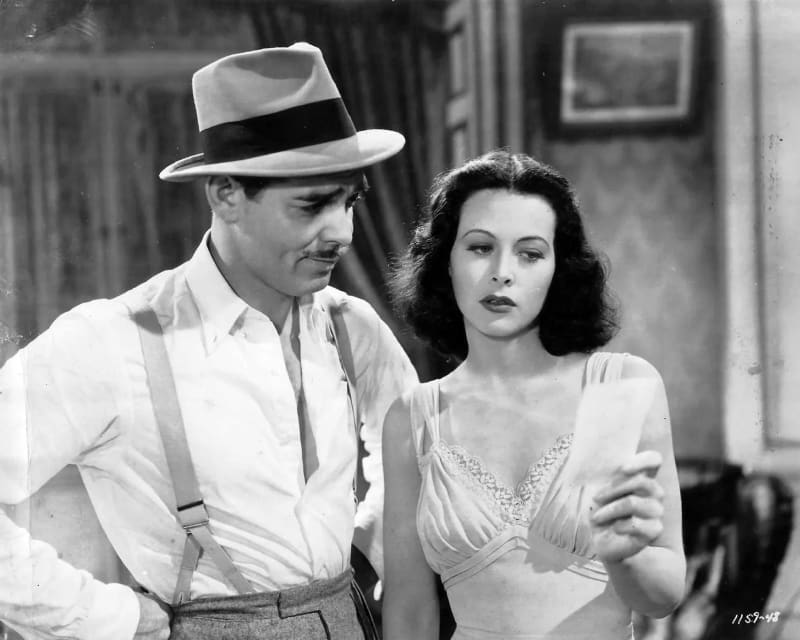
Intellectual precursors, fundamental diagrams, and conceptual representations that forged the vision of a pioneering mind on wireless communication.
Fuente visual sujeta a disponibilidad del ecosistema: Wikimedia Commons bajo licencia CC BY-SA 4.0 o renderizado conceptual IA.Despite her success in films like Algiers (1938), Boom Town (1940), and Samson and Delilah (1949), Lamarr found the superficiality of Hollywood unfulfilling. She often felt her intelligence was overlooked, and she sought more stimulating pursuits. During breaks from filming, she would retreat to her trailer, not for rest, but to tinker with inventions. Her home was filled with technical manuals and engineering books, a stark contrast to the typical Hollywood star's library. This private passion laid the groundwork for her most significant contribution.
The Genesis of an Idea: Frequency Hopping Spread Spectrum
Lamarr's inventive spark ignited during World War II. As an Austrian immigrant with an intimate understanding of European politics and military technology (her first husband, Fritz Mandl, was an Austrian arms manufacturer), she was deeply concerned about the Allied war effort. She learned that radio-controlled torpedoes, a crucial weapon, were vulnerable to jamming. If the enemy could find the single radio frequency controlling the torpedo, they could easily disrupt its signal, rendering it useless or even redirecting it.
The actress envisioned a solution: a system where the radio signal would rapidly jump between different frequencies, making it incredibly difficult for the enemy to jam. This concept, known as "frequency hopping," would ensure that even if a part of the signal was jammed, the torpedo would still receive enough commands to reach its target. She realized that if both the transmitter and receiver could switch frequencies simultaneously in a predetermined, synchronized pattern, the communication link would be virtually unjammable.

A conceptual still-life depicting the intricate workings of early radio technology, symbolizing the foundational elements of signal manipulation.
To bring her complex idea to fruition, Lamarr sought help. She found an unlikely collaborator in George Antheil, an avant-garde composer and inventor. Antheil had previously experimented with synchronized player pianos for his musical compositions. His work on synchronizing multiple piano rolls gave him unique insight into how to coordinate rapid, precise changes in timing and sequence, which was exactly what Lamarr's frequency-hopping idea required. Together, they developed a system that used a piano roll-like mechanism to change frequencies.
Wartime Innovation: The Torpedo Guidance System
Their invention, officially titled "Secret Communication System," was designed to be implemented in radio-controlled torpedoes. The core concept involved a synchronized pair of devices: one on the torpedo and one on the controlling ship. Both devices would rapidly and simultaneously switch through a sequence of 88 different radio frequencies, mirroring the 88 keys on a piano. This rapid switching would make it nearly impossible for enemy forces to predict which frequency the signal would be on at any given moment, thus preventing jamming.
The patent, U.S. Patent No. 2,292,387, was granted on August 11, 1942, under Lamarr's married name at the time, Hedy Kiesler Markey, and George Antheil. They generously offered their invention to the U.S. Navy for free to aid the war effort. However, the Navy, perhaps due to the complexity of the mechanical implementation, or perhaps due to skepticism about an invention from a Hollywood actress and a composer, did not immediately adopt it. The technology was deemed too difficult to implement with the mechanical components available at the time and was largely shelved.
This initial rejection was a significant setback, but it did not diminish the brilliance of their concept. The fundamental principles of their "Secret Communication System" were sound and far ahead of their time. The idea of innovative technological solutions for wartime challenges was not new, but Lamarr and Antheil's approach was particularly ingenious in its simplicity and effectiveness. Their work highlighted how diverse backgrounds could contribute to solving complex engineering problems.
The Patent and its Postponed Recognition
The patent for the "Secret Communication System" lay dormant for years. It wasn't until the 1950s, during the Cuban Missile Crisis, that the U.S. Navy revisited the concept. By then, with the advent of solid-state electronics, the mechanical piano-roll mechanism could be replaced by electronic circuits, making the implementation of frequency hopping practical. The technology was eventually deployed in military communications, particularly in secure military radio systems.
Despite its eventual adoption by the military, Lamarr and Antheil received little public recognition or financial compensation for their invention during their lifetimes. The patent expired before the technology became widely commercialized. It was a classic case of an invention being too far ahead of its time, where the necessary complementary technologies were not yet mature enough for its practical application. This often happens in the history of technology, as seen in the evolution of digital photography or early computing.

A conceptual representation of interconnected digital pathways, highlighting the complex infrastructure that underpins contemporary wireless communication.
The true significance of their work would not be fully appreciated until decades later. The concept of spread spectrum communication, which frequency hopping is a form of, became a cornerstone for various modern wireless technologies. This delay in recognition highlights a common theme in the history of innovation, where the true impact of a groundbreaking idea may not be evident until technological advancements catch up.
Hedy Lamarr's Enduring Legacy in Modern Technology
The principles outlined in Lamarr and Antheil's patent are directly applied in almost every wireless communication device we use today. Frequency hopping spread spectrum (FHSS) is a key component of Bluetooth technology, enabling devices to communicate reliably over short distances by rapidly switching frequencies to avoid interference. Similarly, the broader concept of spread spectrum is fundamental to Wi-Fi (IEEE 802.11 standards), where signals are spread across a wider frequency band to improve robustness against noise and interference, and to allow multiple users to share the same band.
Beyond Bluetooth and Wi-Fi, spread spectrum techniques are also crucial for GPS (Global Positioning System) technology, enabling precise location tracking by making signals more resistant to jamming and interference. The military continues to use advanced forms of spread spectrum for secure and robust communications. It is no exaggeration to say that without the foundational work of Lamarr and Antheil, the ubiquitous wireless connectivity that defines our modern world would look very different, or might not exist in its current form.
Her story serves as a powerful reminder that innovation can come from unexpected places and that diverse perspectives are invaluable in scientific and technological advancement. The actress's intellectual contributions paved the way for a revolution in how we connect, communicate, and navigate our world. This enduring legacy is a testament to her visionary thinking and her commitment to problem-solving, even when her primary profession was in a completely different field.
Beyond the Invention: A Life of Unconventional Brilliance
Hedy Lamarr's life was far from conventional. She was married six times, had a tumultuous relationship with Hollywood, and faced personal struggles throughout her life. Yet, her intellectual curiosity remained a constant. She was not just a beautiful face; she was a woman who challenged norms, both in her personal life and through her inventive pursuits. Her story resonates with the idea that true genius often transcends the boundaries of traditional roles and expectations.
In her later years, Lamarr received belated recognition for her contributions. In 1997, she and George Antheil were jointly awarded the Electronic Frontier Foundation (EFF) Pioneer Award, acknowledging their significant impact on digital communication. She was also inducted into the National Inventors Hall of Fame in 2014, posthumously celebrating her ingenuity. These accolades, though late, finally cemented her place not just as a Hollywood icon, but as a legitimate pioneer in the field of wireless technology.
Her journey underscores the importance of recognizing and nurturing talent wherever it may be found, regardless of background or perceived primary profession. It also highlights the often-overlooked contributions of women in STEM fields throughout history. The complexity of her life, from the glamour of cinema to the solitude of invention, paints a picture of a truly multifaceted individual whose impact continues to shape our daily lives.
Impact on Wireless Communication: Wi-Fi and Beyond
The direct lineage from Lamarr and Antheil's patent to modern Wi-Fi is clear. While Wi-Fi primarily uses Direct Sequence Spread Spectrum (DSSS) and Orthogonal Frequency-Division Multiplexing (OFDM) in its later iterations, the foundational concept of spreading a signal across a wider band or hopping between frequencies to enhance reliability and security is rooted in their work. This "spread spectrum" approach is what makes wireless communication robust enough for the demands of contemporary data transfer.
Consider the everyday applications: streaming high-definition video, making crystal-clear voice calls over Wi-Fi, connecting countless smart devices in our homes, and enabling mobile internet access on the go. All these rely on sophisticated wireless protocols that build upon the principles of spread spectrum. Without these robust communication methods, our interconnected world would face constant interference, dropped connections, and security vulnerabilities. The future of technology, including fields like neuro-rights and AI, will continue to rely on secure and efficient communication infrastructure.
The impact extends beyond consumer electronics. In industrial settings, wireless sensors and control systems leverage these technologies for automation and efficiency. In healthcare, wireless monitoring devices provide critical patient data. In emergency services, reliable wireless communication is paramount. Hedy Lamarr's inventive mind, combined with Antheil's technical prowess, laid a crucial brick in the foundation of this pervasive wireless ecosystem, proving that ingenuity knows no bounds and can emerge from the most unexpected quarters.
Hedy Lamarr: A Symbol of Unrecognized Genius
Hedy Lamarr's story has become a powerful symbol for unrecognized genius, particularly for women in science and technology. For decades, her contributions were overshadowed by her glamorous public image, a common fate for many women whose intellectual achievements were dismissed or downplayed. Her life serves as an inspiration to look beyond superficial appearances and to appreciate the depth of intellect and creativity that individuals possess.
Her legacy encourages us to challenge stereotypes and to foster an environment where innovation is celebrated regardless of its source. It reminds us that significant breakthroughs often come from interdisciplinary thinking, combining insights from seemingly disparate fields—in her case, the arts and engineering. The "Secret Communication System" was not merely a technical achievement; it was a testament to a unique collaboration that bridged creative thinking with scientific problem-solving.
Today, as we navigate an increasingly connected world, it is essential to remember the pioneers like Hedy Lamarr who laid the groundwork. Her journey from Hollywood star to technological visionary is a compelling narrative of intelligence, determination, and a profound desire to contribute to the greater good. Her name is now rightfully etched in the annals of technological history, a brilliant mind whose ideas continue to power the digital age.
Explore Further
- Space Law & Resources
- Digital Photography History
- Neuro-Rights & AI
- Circular Business Models
- Alien Abduction Phenomenon
- Smooth Criminal Analysis
- Global Plastic Crisis
- VR & Addictions
- Social Media Geopolitics
- Lovelace & Quantum Computing
- Lucid Dreaming Techniques
Related Insights Across Our Network
Source: Hybrid content assisted by AI and human editorial supervision.


Comentarios