
Fungal Ecosystems AI Synthetic Biology Sustainable Future
Fungal Ecosystems: AI, Synthetic Biology, and a Sustainable Future
Fungal ecosystems, often overlooked, represent an astonishingly diverse and powerful domain of life with profound implications for our planet. From the microscopic yeast fermenting our bread to the vast subterranean mycelial networks connecting forest trees, fungi play critical roles in nutrient cycling, decomposition, and symbiotic relationships. Their unique biological architectures and metabolic capabilities are now inspiring groundbreaking advancements in artificial intelligence (AI) and synthetic biology, promising a future where technology and nature converge for sustainability.
This exploration delves into how these ancient organisms are becoming blueprints for cutting-edge innovation, offering solutions to some of humanity's most pressing environmental and technological challenges. We will examine the intricate ways fungal intelligence can inform AI design and how synthetic biology is harnessing fungal power to create new materials, medicines, and sustainable processes.
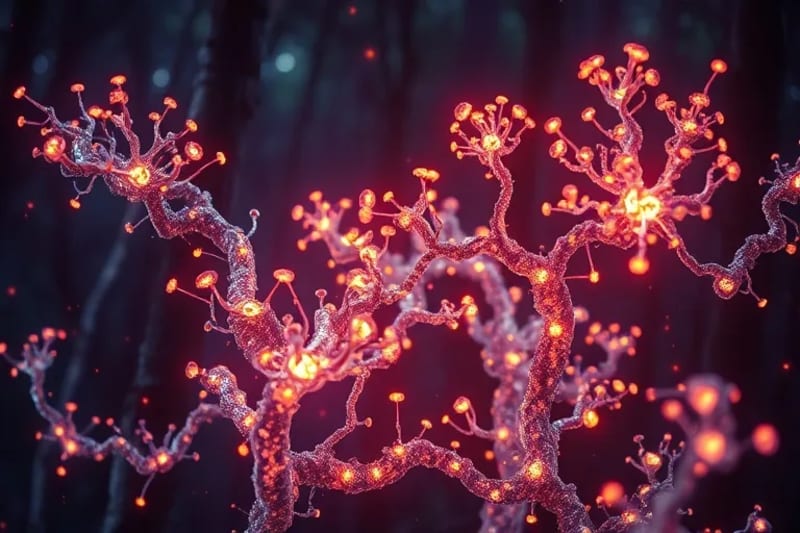
Conceptual fusion of organic networks and digital intelligence, illustrating the intersection of fungal ecosystems and advanced AI architectures.
Visual source subject to ecosystem availability: Wikimedia Commons under license CC BY-SA 4.0 or conceptual AI rendering.
Table of Contents
- The Hidden World of Fungi: A Primer
- Mycelial Networks: Nature's Neural Computers
- AI Inspired by Fungal Intelligence
- Synthetic Biology: Engineering Fungi for a Better World
- Applications in Bioremediation and Material Science
- Fungi in Medicine, Agriculture, and Energy
- Ethical Considerations and Future Directions
- Conclusion: Fungi, AI, and the Path to Sustainability
The Hidden World of Fungi: A Primer
Fungi constitute an entire kingdom of life, distinct from plants and animals, boasting an estimated 2.2 to 3.8 million species, only a fraction of which have been formally described. They are ubiquitous, thriving in nearly every environment on Earth, from arctic tundras to deep-sea hydrothermal vents. Their ecological importance cannot be overstated, acting as primary decomposers that recycle nutrients, making them available for other life forms.
Beyond decomposition, fungi form crucial symbiotic relationships. Mycorrhizal fungi, for instance, connect with plant roots, enhancing water and nutrient uptake for plants in exchange for sugars. Lichens, a symbiotic partnership between fungi and algae or cyanobacteria, are pioneer species capable of colonizing barren environments. This vast biological diversity and metabolic versatility make fungi an invaluable resource for scientific exploration and technological innovation.
Mycelial Networks: Nature's Neural Computers
The true body of most fungi is not the mushroom we see, but rather a vast, intricate network of filamentous structures called mycelium, typically hidden beneath the substrate. These mycelial networks can span enormous areas, sometimes covering thousands of acres, making them the largest living organisms on Earth. They exhibit remarkable properties akin to decentralized computing systems or biological neural networks.
Mycelia demonstrate complex information processing capabilities, adapting their growth patterns to optimize nutrient acquisition and navigate obstacles. They can sense their environment, communicate with other organisms, and even exhibit forms of memory, learning from past experiences to respond more efficiently to future stimuli. This inherent "intelligence" and network architecture provide a compelling model for advanced computational systems.
AI Inspired by Fungal Intelligence
The decentralized, adaptive, and self-organizing nature of mycelial networks offers a rich source of inspiration for developing novel AI architectures. Researchers are exploring how to translate fungal growth algorithms and communication strategies into computational models. This includes neuromorphic computing, which aims to mimic the brain's structure and function, and decentralized AI systems that can operate without a central command unit, much like a fungal colony.
For instance, the slime mold Physarum polycephalum, though not a true fungus, exhibits similar network-forming behaviors and has been shown to solve complex maze problems and optimize transport networks. This has led to algorithms for designing more efficient urban planning and logistical systems. The principles of fungal intelligence could help overcome limitations in current AI, such as energy consumption and vulnerability to single points of failure. As we delve deeper into the philosophical dilemmas of artificial consciousness, understanding natural intelligence becomes even more critical.
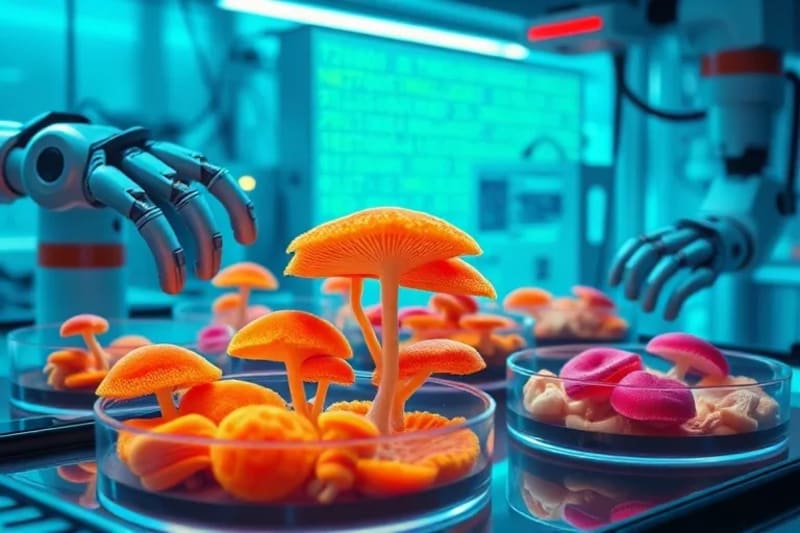
Controlled environments fostering the growth of engineered fungal species for diverse biotechnological applications.
Synthetic Biology: Engineering Fungi for a Better World
Synthetic biology is an interdisciplinary field that involves redesigning organisms for useful purposes by engineering them to have new abilities. Fungi, with their robust metabolic pathways and ease of genetic manipulation, are prime candidates for synthetic biology applications. Scientists are now engineering fungi to produce a wide array of valuable compounds and materials, contributing significantly to a redefining growth for a well-being economy.
This involves introducing new genes into fungal genomes or modifying existing ones to enhance specific functions. The potential applications are vast, ranging from environmental remediation to sustainable manufacturing. The ability of fungi to grow on diverse substrates, including waste products, makes them an incredibly efficient and eco-friendly biological factory.
Applications in Bioremediation and Material Science
One of the most promising areas for engineered fungi is bioremediation. Certain fungal species possess enzymes capable of breaking down complex pollutants, including plastics, pesticides, and heavy metals. Synthetic biologists are enhancing these capabilities, creating "myco-remediation" agents that can clean up contaminated sites more effectively and sustainably. This offers a natural, low-cost alternative to traditional chemical and physical remediation methods.
In material science, mycelium is emerging as a revolutionary bio-material. By controlling growth conditions, fungi can be coaxed to form durable, lightweight, and biodegradable structures. These mycelium-based materials are being developed for packaging, insulation, construction, and even fashion, offering sustainable alternatives to plastics and other resource-intensive materials. This aligns perfectly with the principles of a circular economy in textile innovation and beyond.
Fungi in Medicine, Agriculture, and Energy
Fungi have long been a source of vital medicines, most notably penicillin. Synthetic biology is now expanding this potential, engineering fungi to produce novel antibiotics, anti-cancer compounds, and other pharmaceuticals with greater efficiency and specificity. This could lead to breakthroughs in treating resistant diseases and developing personalized medicine.
In agriculture, engineered fungi can act as bio-pesticides, bio-fertilizers, and agents for improving soil health, reducing reliance on synthetic chemicals. They can enhance crop resilience to disease and drought, contributing to food security. Furthermore, fungi are being explored for biofuel production, converting biomass waste into sustainable energy sources, offering a renewable alternative to fossil fuels.
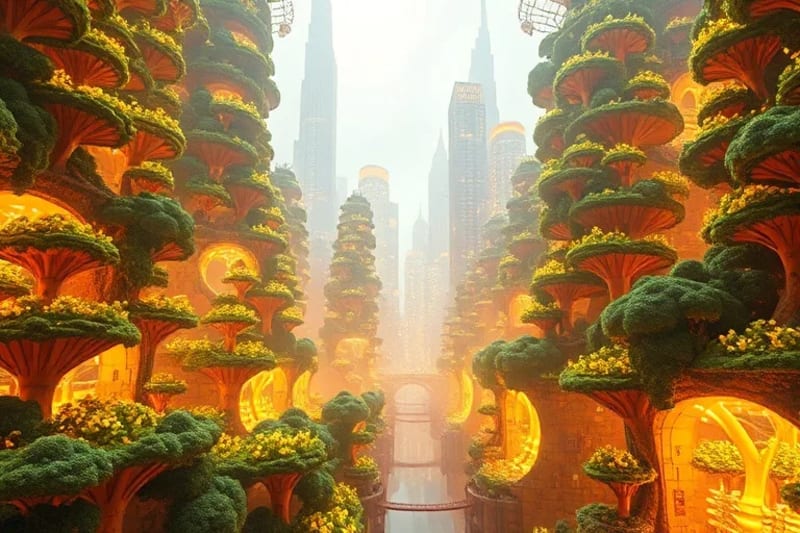
An envisioned urban landscape where advanced fungal technologies integrate seamlessly with sustainable infrastructure.
Ethical Considerations and Future Directions
While the potential of fungal ecosystems in AI and synthetic biology is immense, it also raises important ethical and safety considerations. The deliberate release of genetically modified organisms (GMOs) into the environment requires rigorous risk assessment to prevent unintended ecological consequences. Moreover, the development of increasingly autonomous AI systems, inspired by biological networks, necessitates careful consideration of their societal impact and control mechanisms. This is particularly relevant when discussing the ethical challenges of autonomous algorithms.
Public engagement and transparent regulation are crucial to ensure that these technologies are developed responsibly and for the benefit of all. Future research will likely focus on refining genetic engineering techniques, understanding the complex interactions within fungal communities, and developing robust AI models that balance efficiency with safety and interpretability. The convergence of mycology, AI, and synthetic biology promises a future rich with innovation, provided we navigate these frontiers with wisdom and foresight.
Conclusion: Fungi, AI, and the Path to Sustainability
Fungal ecosystems, with their ancient wisdom and biological prowess, are proving to be unexpected allies in our quest for a sustainable future. By unraveling the secrets of their intricate networks, we gain profound insights for designing more resilient and efficient artificial intelligence. Through synthetic biology, we are empowering these organisms to address critical challenges in environmental remediation, material science, medicine, and energy production. The synergy between fungal biology and advanced technology is not merely a scientific curiosity but a vital pathway towards a world where human innovation harmonizes with natural processes. Embracing this interdisciplinary approach will be key to unlocking transformative solutions for generations to come, fostering an era of unprecedented ecological and technological progress.
Explore Further: Related Insights
- Autonomous Algorithms: Ethical, Legal, and Philosophical Challenges
Delve into the complex ethical landscape surrounding self-governing AI systems and their societal implications.
- Artificial Consciousness: Philosophical, Scientific Dilemmas, and the Future of AI
An in-depth look at the profound questions raised by the pursuit of conscious AI and its potential impact on humanity.
- Well-being Economy: Redefining Growth, Combating Inequality
Discover new economic paradigms focused on holistic well-being and equitable distribution, moving beyond traditional growth metrics.
- Circular Economy in Textiles: Innovation for Sustainable Fashion
Explore how circular principles are transforming the fashion industry, promoting sustainability and waste reduction.
- Astro-Genomics: Epigenetic Karmic Blueprints and DNA Past Life
Uncover the intriguing connections between astrological influences, genetic expression, and karmic patterns.
- Quantum Rosary: Faith, Science, and AI Consciousness
A unique perspective on the intersection of spirituality, quantum physics, and artificial intelligence.
Source: Hybrid content assisted by AI and human editorial supervision.


Comentarios