
Ethnobotany Bioinnovation: Ancestral Medicinal Plants Future
Ethnobotany, the profound study of the intricate relationship between human societies and the plant kingdom, particularly focusing on the traditional uses of flora, is currently experiencing a renaissance. This ancient discipline, when synergized with modern bioinnovation, which harnesses biological systems and organisms to develop novel technologies and products, offers an unparalleled pathway. Together, they are poised to unlock the vast, often underestimated, potential of ancestral medicinal plants for groundbreaking future health solutions.
The collective knowledge accumulated over countless millennia by indigenous communities across the globe represents an invaluable and largely untapped repository of information. This profound wisdom, frequently transmitted orally through successive generations, holds the fundamental keys to discovering novel compounds and pioneering therapeutic approaches that contemporary medicine is only just beginning to comprehend. By meticulously integrating this rich traditional ecological knowledge with state-of-the-art scientific methodologies, humanity can significantly accelerate the pace of discovering and developing new, effective treatments for a myriad of diseases.
- 1. Introduction to Ethnobotany and Bioinnovation
- 2. Historical Roots and Indigenous Wisdom
- 3. The Scientific Validation of Nature's Pharmacy
- 4. Key Plant-Derived Medicines: Success Stories
- 5. Ethical Challenges and Sustainable Practices
- 6. Future Horizons: Personalized Medicine and Conservation
- 7. Conclusion: Bridging Ancient Wisdom and Modern Science
1. Introduction to Ethnobotany and Bioinnovation
The very concept of medicine, from rudimentary poultices to sophisticated pharmaceuticals, has undergone a dramatic evolution throughout human history. Yet, its foundational elements often trace back directly to the natural world, particularly to the vast and diverse plant kingdom. Ethnobotany, as a scientific discipline, systematically documents, analyzes, and interprets the practical knowledge and cultural significance of plants within specific human cultures. This field is absolutely crucial for understanding how diverse societies, from ancient hunter-gatherers to modern agrarian communities, have ingeniously utilized their local flora for sustenance, shelter, spiritual rituals, and, most importantly, for healing and maintaining health.
Bioinnovation, conversely, represents the cutting-edge modern scientific endeavor to harness and manipulate biological processes and resources for the explicit benefit of society. It encompasses a broad spectrum of advanced fields, including biotechnology, synthetic biology, genetic engineering, and pharmaceutical development. When these two seemingly disparate disciplines—the ancient wisdom of ethnobotany and the futuristic tools of bioinnovation—converge, they forge an incredibly powerful framework. This framework is designed for the discovery, development, and sustainable production of new drugs, advanced therapies, and ecologically sound solutions derived directly from the natural world, offering hope for addressing some of humanity's most persistent health challenges.
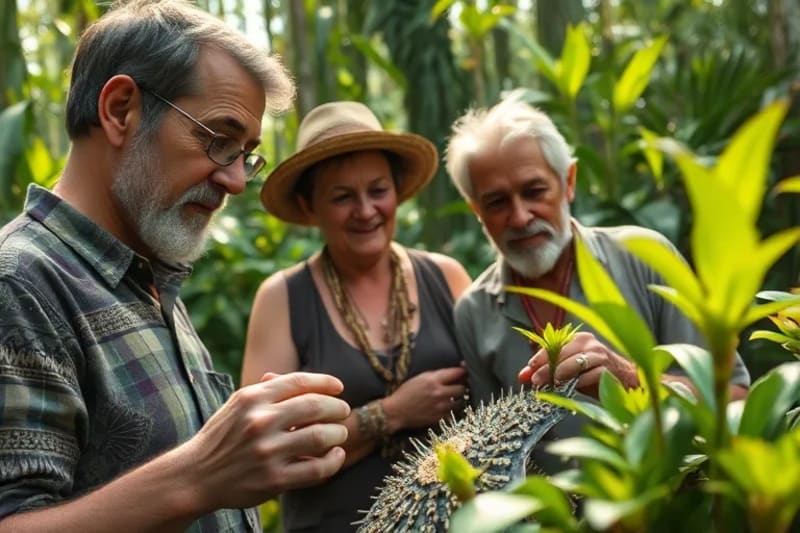
Exploring the rich biodiversity of rainforests, ethnobotanists and indigenous communities collaborate to uncover the secrets of ancestral medicinal plants.
Fuente visual sujeta a disponibilidad del ecosistema: Wikimedia Commons bajo licencia CC BY-SA 4.0 o renderizado conceptual IA.
2. Historical Roots and Indigenous Wisdom
For countless millennia, the very survival and flourishing of human civilization have been intimately and inextricably linked to understanding and expertly utilizing the plant kingdom. From the earliest hominids experimenting with berries and leaves to the complex societies of antiquity, plants have been a cornerstone of human health. Ancient civilizations spanning from the fertile crescent of Mesopotamia to the dense rainforests of the Amazon developed remarkably sophisticated systems of herbal medicine, often predating written language.
A prime example of this early pharmacological knowledge is the Ebers Papyrus from ancient Egypt, meticulously dated back to approximately 1550 BC. This extraordinary medical treatise lists hundreds of herbal remedies, detailing their preparation and application, showcasing a remarkably advanced understanding of plant-based therapeutics for its time. Similarly, traditional Chinese medicine (TCM) and Ayurvedic medicine from India boast thousands of years of continuous practice, with vast pharmacopoeias derived almost entirely from plants.
Indigenous communities, often living in profound and respectful harmony with their natural environments, possess unparalleled insights into the medicinal properties of local flora. Their traditional healing practices are far from merely anecdotal; they represent highly empirical systems developed and refined through generations of meticulous observation, careful experimentation, and precise documentation, often through oral traditions and ritualistic practices. This invaluable body of knowledge constitutes a living, breathing library of potential cures and health-promoting agents, frequently overlooked or undervalued by conventional Western science. Preserving and profoundly respecting this indigenous wisdom is not merely an ethical imperative; it is a critical scientific necessity for the future trajectory of global drug discovery and development.
3. The Scientific Validation of Nature's Pharmacy
Modern bioinnovation provides the indispensable tools and methodologies required to scientifically validate, refine, and ultimately optimize the therapeutic claims of traditional medicinal plants. Disciplines such as ethnopharmacology, phytochemistry, and molecular biology allow contemporary researchers to systematically isolate active compounds, meticulously elucidate their complex mechanisms of action, and conduct rigorous, evidence-based clinical trials. This stringent scientific scrutiny is what transforms age-old traditional remedies into verifiable, evidence-based medicines, capable of meeting the stringent standards of modern healthcare.
The drug discovery pipeline originating from ethnobotanical research typically follows a structured path. It often begins with ethnobotanical surveys, where researchers engage in collaborative partnerships with local communities to identify plants with reported medicinal properties. These plants are then carefully collected, their extracts are prepared, and subsequently subjected to various bioassays to screen for specific biological activities, such as antimicrobial, anti-inflammatory, or anticancer effects. Once active compounds are identified, further research intensely focuses on their purification, structural elucidation using advanced spectroscopic techniques, and, if feasible, their synthetic replication.

Advanced scientific methods are crucial for understanding the complex biochemistry of plant-derived compounds.
A fascinating area of study involves adaptogens, a unique class of natural substances believed to enhance the body's ability to adapt to various stressors, both physical and psychological. This concept, deeply rooted in traditional medicine, is now gaining significant scientific traction. Plants like Ashwagandha (Withania somnifera) from Ayurvedic tradition and Rhodiola rosea, a staple in traditional Chinese and Eastern European medicine, are being rigorously investigated for their effects on stress response, cognitive function, and overall physiological resilience. This research often delves into how these plant compounds interact with the endocrine system, offering insights into topics such as Endocrine Disruptors Functional Nutrition Hormonal Balance, exploring how natural compounds can influence complex physiological systems and contribute to holistic wellness.
4. Key Plant-Derived Medicines: Success Stories
The history of modern pharmacology is replete with numerous blockbuster drugs that owe their origins directly to plants. These success stories underscore the immense and enduring potential that still resides within the vast biodiversity of the plant kingdom. The journey from traditional folk remedy to a globally recognized pharmaceutical often involves decades of dedicated research and development.
- Aspirin (Acetylsalicylic Acid): One of the most widely used drugs globally, Aspirin's active compound, salicylic acid, was originally isolated from willow bark (Salix species). Ancient Egyptians, Greeks, and Native Americans used willow bark extracts for pain relief and fever reduction for centuries before its chemical synthesis.
- Paclitaxel (Taxol): A powerful chemotherapy agent used to treat various cancers, including ovarian, breast, and lung cancer. Paclitaxel was initially discovered in the bark of the Pacific yew tree (Taxus brevifolia). Its complex structure made synthesis challenging, leading to significant efforts in sustainable sourcing and eventually semi-synthesis.
- Artemisinin: A potent antimalarial drug derived from the sweet wormwood plant (Artemisia annua). Its discovery was inspired by traditional Chinese medicine texts and has revolutionized the treatment of malaria, particularly resistant strains.
- Morphine and Codeine: These powerful opioid analgesics are derived from the opium poppy (Papaver somniferum). While their use requires careful management due to addiction potential, they remain indispensable in pain management.
These examples serve as compelling evidence of nature's pharmacy, highlighting the critical importance of ethnobotanical research in identifying promising leads. The intricate chemical diversity found in plants is often far beyond what synthetic chemistry can easily replicate, making natural products an irreplaceable source for drug discovery. This ongoing exploration also provides insights into how various compounds interact with the human body, touching upon complex neurological processes, a topic often explored in Brain Curiosities: Myths and Realities of the Master Organ, where the effects of natural substances on cognitive function are discussed.
5. Ethical Challenges and Sustainable Practices
While the promise of ethnobotany and bioinnovation for global health is undeniably immense, this frontier is not without its significant ethical, legal, and practical challenges. One of the most pressing and widely debated concerns is biopiracy. This refers to the unauthorized commercial exploitation of biological resources and associated traditional knowledge without obtaining the free, prior, and informed consent (FPIC) of, or providing fair and equitable compensation to, the indigenous communities who originally conserved, stewarded, and developed this invaluable knowledge. This pervasive issue underscores the critical need for robust international legal frameworks and stringent ethical guidelines to govern access and benefit-sharing.
The Nagoya Protocol on Access and Benefit-sharing, an international agreement adopted under the Convention on Biological Diversity, was specifically designed to address these profound concerns. Its primary objective is to promote the fair and equitable sharing of benefits arising from the utilization of genetic resources, thereby contributing to the conservation and sustainable use of biodiversity. Adherence to such international protocols and national legislation is absolutely essential to ensure that indigenous communities are recognized as genuine partners and rightful beneficiaries, rather than being treated merely as passive sources of raw materials or proprietary information. Furthermore, understanding the impact of environmental factors on human health, including how plant-derived compounds interact with the human body, can involve exploring topics like IoT Hormonal Health: Wearable Monitoring for Endocrine Wellness, which can provide real-time data on physiological responses to various interventions, including traditional herbal treatments.
Beyond ethical considerations, sustainability represents another critical dimension of ethnobotanical research and bioinnovation. The indiscriminate or over-harvesting of wild medicinal plants can lead directly to species endangerment, habitat destruction, and broader ecosystem degradation, thereby undermining the very resource base we seek to utilize. Bioinnovation offers promising solutions in this regard through advanced methods such as plant tissue culture, which allows for the propagation of valuable species in controlled environments, and synthetic biology, which can engineer microorganisms to produce complex plant compounds without relying on wild harvesting. Implementing sustainable cultivation practices and developing robust supply chains are vital steps to ensure a continuous and ethical supply of valuable compounds without depleting natural populations.
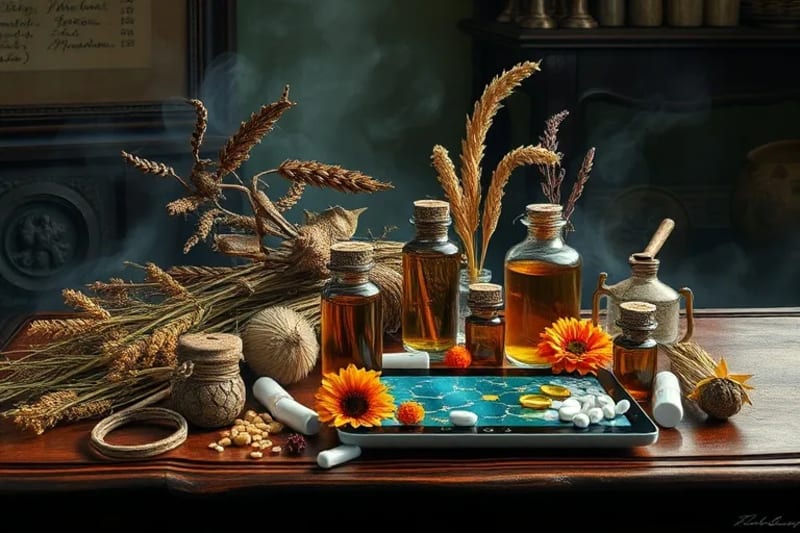
The journey from traditional herbal remedies to modern pharmaceuticals involves rigorous scientific inquiry and ethical considerations.
6. Future Horizons: Personalized Medicine and Conservation
The future landscape of ethnobotany and bioinnovation appears exceptionally bright, with potential applications extending profoundly into the realm of personalized medicine. As our scientific understanding of individual genetic variations, metabolic pathways, and their unique responses to different plant compounds continues to expand, plant-derived medicines could be precisely tailored to specific patients. This bespoke approach promises to optimize therapeutic efficacy while simultaneously minimizing unwanted side effects. Such a shift aligns perfectly with a more holistic and individualized approach to health, echoing many of the fundamental principles found within traditional healing systems that emphasize treating the whole person.
Furthermore, groundbreaking advancements in synthetic biology and metabolic engineering are empowering scientists to design and engineer microorganisms, such as yeast or bacteria, that can efficiently produce complex plant compounds. This innovative approach offers a more scalable and sustainable alternative to traditional extraction from wild or cultivated plants. This could potentially democratize access to rare and often expensive plant-derived drugs, making them more affordable and available to a much wider global population, addressing critical issues of health equity. The intricate ways these natural compounds interact with our complex biological systems, including our cognitive functions and neural pathways, are fascinating areas of ongoing research, often explored in fields related to brain health and performance.
Conservation efforts are inextricably linked to the long-term viability and future success of ethnobotanical research. Protecting global biodiversity means safeguarding not only individual plant species, many of which are yet to be studied, but also the intricate ecosystems they inhabit and the invaluable traditional knowledge associated with them. Establishing robust botanical gardens, comprehensive seed banks, and empowering community-led conservation projects are absolutely vital steps in this endeavor. These proactive initiatives ensure that future generations will continue to have access to this irreplaceable natural heritage and the untold potential medical breakthroughs it holds, preventing the loss of both biological and cultural diversity.
7. Conclusion: Bridging Ancient Wisdom and Modern Science
Ethnobotany and bioinnovation represent a powerful and necessary confluence of ancient wisdom and cutting-edge scientific prowess. By meticulously respecting, preserving, and integrating the profound ecological knowledge of indigenous communities with advanced biotechnological tools, humanity stands on the precipice of unlocking a new and transformative era. This era promises unprecedented pharmaceutical discovery, innovative therapies, and truly sustainable health solutions for the myriad challenges facing global health today.
The journey forward demands careful ethical considerations, an unwavering commitment to fair and equitable benefit-sharing, and a steadfast dedication to global biodiversity conservation. The ancestral medicinal plants are not merely historical relics of the past; they are dynamic, living blueprints for the future of medicine. Their continued exploration, rigorously guided by scientific principles and profound ethical responsibility, promises to yield immense benefits for global health and well-being, ensuring that the healing power of nature remains a cornerstone of human health for generations to come.
Explore Further
- Brain Curiosities: Myths and Realities of the Master Organ
- IoT Hormonal Health: Wearable Monitoring for Endocrine Wellness
- Endocrine Disruptors Functional Nutrition Hormonal Balance
- Marathon Psychophysiological Strategies Ultra-Endurance: Exhaustion Prevention
- Holographic Constellations RV: Exploring Astral Realities AI
Source: Hybrid content assisted by AI and human editorial supervision.


Comentarios