
Greek Mythology in Digital Age: Archetypes in Video Games
The timeless sagas of ancient Greece, replete with Olympian gods, legendary heroes, and monstrous beasts, have captivated human imagination for millennia. Far from being confined to dusty tomes or classical art, these narratives have found a vibrant new life in the digital age. From the immersive worlds of video games to the interactive experiences of augmented and virtual reality, Greek mythology continues to provide a rich tapestry of archetypes and storylines that resonate deeply with contemporary audiences. This exploration delves into how these ancient tales are not merely retold but actively reinterpreted and reinvented within the dynamic landscape of modern technology and storytelling.
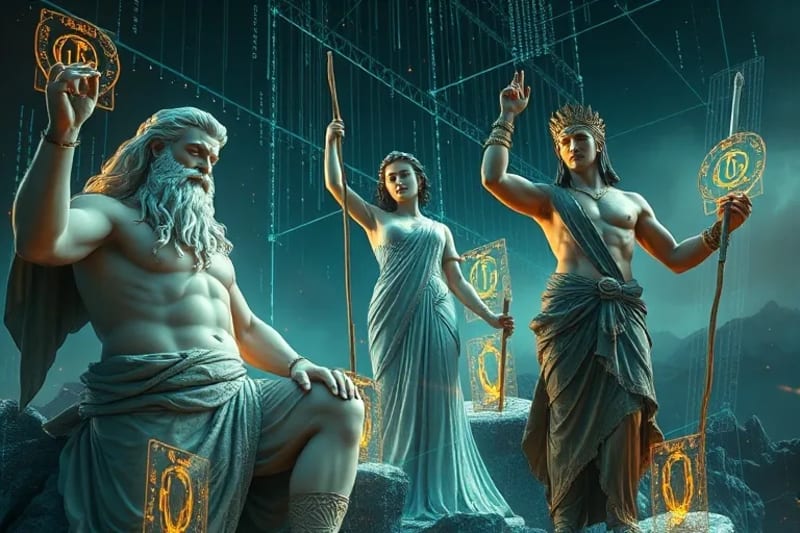
Conceptual fusion of ancient divine power with modern digital interfaces, illustrating the enduring influence of classical narratives in technological advancements.
This visual rendition is a conceptual AI-generated artwork, exploring the intersection of historical lore and future tech under a free-use license.Table of Contents
- The Digital Canvas: Why Greek Mythology Resonates in Video Games
- Beyond the Screen: Augmented and Virtual Reality
- Contemporary Narratives: Modern Interpretations
- Digital Mythologies: Prominent Case Studies
- The Future of Myth: AI and Interactive Storytelling
The Digital Canvas: Why Greek Mythology Resonates in Video Games
Video games, as a medium, offer an unparalleled platform for interactive storytelling and world-building. Greek mythology, with its rich pantheon of characters, epic conflicts, and fantastical settings, provides an ideal foundation for these digital adventures. The inherent drama, moral ambiguities, and grand scale of these myths translate seamlessly into compelling gameplay experiences.
At the heart of this appeal are the archetypal characters. Gods like Zeus, Hades, and Athena embody distinct powers and personalities, making them perfect as powerful allies, formidable foes, or complex quest-givers. Heroes such as Hercules, Odysseus, and Achilles represent classic hero archetypes – the strongman, the cunning strategist, the tragic warrior – offering players diverse roles to inhabit. Moreover, the vast array of mythical creatures, from the Minotaur to the Gorgon Medusa, provides endless opportunities for unique enemy designs and memorable boss battles.
The narrative structures embedded in Greek myths, particularly the "Hero's Journey," are fundamental to game design. Players often embark on epic quests, overcoming trials, facing temptations, and ultimately achieving a form of apotheosis or self-discovery, mirroring the journeys of ancient heroes. This familiar yet flexible framework allows developers to craft engaging storylines that feel both epic and personally resonant. The worlds themselves, from the heights of Mount Olympus to the depths of the Underworld, offer visually stunning and diverse environments for exploration, puzzles, and combat.
Beyond the Screen: Augmented and Virtual Reality
As technology advances, the ways in which we interact with mythological narratives are becoming even more immersive. Augmented Reality (AR) and Virtual Reality (VR) offer groundbreaking opportunities to experience ancient Greek myths not just as observers but as active participants. These technologies bridge the gap between the digital and physical worlds, bringing myths to life in unprecedented ways.
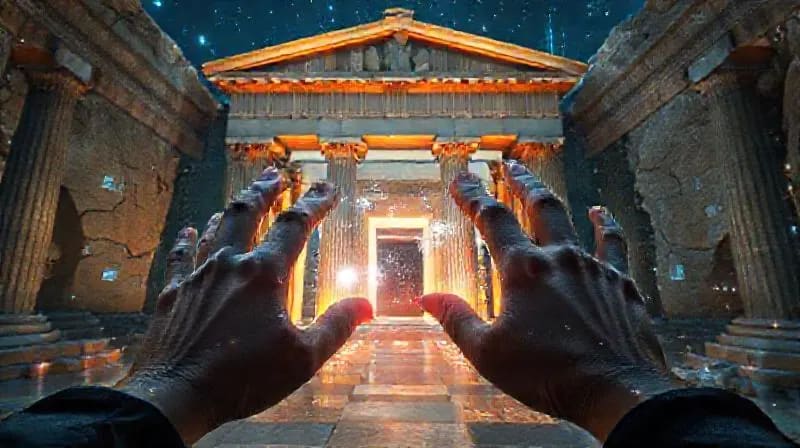
A first-person perspective within a virtual reality environment, showcasing interactive elements and detailed architectural renderings of ancient mythical structures.
This visual concept is an AI-generated artistic interpretation, illustrating the potential of VR technology to recreate historical and mythical settings, available under a creative commons license.In VR, users can step directly into the shoes of a hero, explore the labyrinth of the Minotaur, or stand before the majestic temples of Olympus. The sense of presence and scale that VR provides can evoke a powerful emotional response, making the ancient stories feel tangible and immediate. AR applications, on the other hand, can overlay mythical creatures or gods onto our real-world environments, transforming a local park into a mythical forest or a living room into a battleground for titans. This blending of realities offers a unique way to engage with the myths, making them part of our everyday experience.
Beyond entertainment, AR and VR also hold immense potential for educational applications. Imagine a history class where students can virtually walk through ancient Athens, interact with digital representations of historical figures, or witness mythological events unfold around them. This interactive learning approach can make complex historical and mythological concepts more accessible and engaging. However, creating these believable mythical worlds in AR/VR presents significant software development challenges, requiring advanced graphics rendering, physics engines, and intuitive user interfaces to deliver truly immersive experiences.
Contemporary Narratives: Modern Interpretations
The digital age has not only provided new platforms for Greek myths but also new lenses through which to view them. Contemporary narratives often reimagine these ancient stories, infusing them with modern sensibilities, diverse perspectives, and critical interpretations. This process allows myths to remain relevant and speak to current societal concerns.
One significant trend is the re-examination of traditionally marginalized voices within the myths. Characters like Medusa, Circe, or the various female figures often depicted as victims or antagonists are being re-contextualized, offering feminist perspectives or exploring their motivations with greater depth. This re-evaluation enriches the narratives and challenges long-held assumptions. Similarly, modern storytellers might explore themes of identity, power dynamics, and societal structures through the allegorical framework of Greek mythology, making ancient conflicts feel remarkably contemporary.
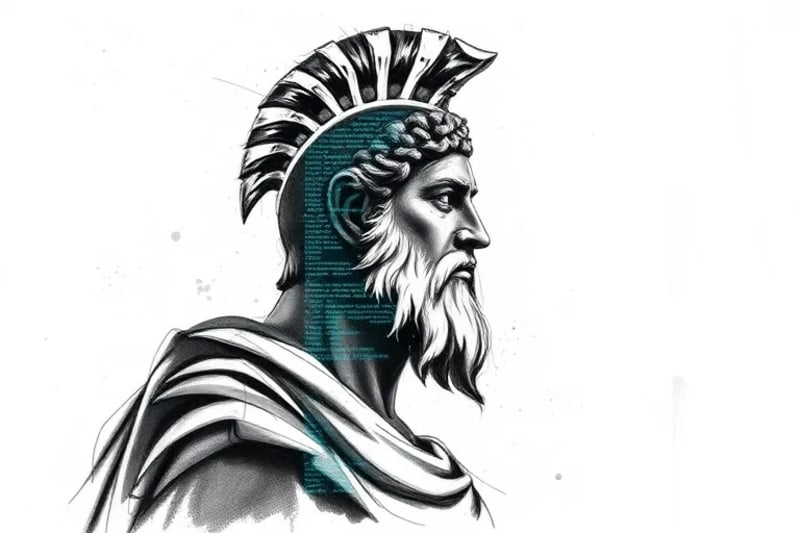
A stylized vector illustration representing the intricate process of software development and narrative construction, forming the silhouette of a classical hero.
This image is an AI-generated conceptual artwork, illustrating the intersection of technological creation and ancient storytelling, provided under a free-to-use license.Transmedia storytelling is another powerful avenue for modern interpretations. A single mythological concept or character can be explored across various digital platforms – a video game, a web series, an interactive fiction piece, or even a social media campaign. This multi-platform approach creates a richer, more expansive narrative universe, allowing audiences to engage with the myths in diverse and interconnected ways. However, this raises ethical considerations regarding cultural appropriation versus inspiration, prompting creators to engage with source material respectfully and thoughtfully.
Digital Mythologies: Prominent Case Studies
Numerous digital creations have successfully leveraged Greek mythology, showcasing the versatility and enduring appeal of these narratives. These examples highlight different approaches to integrating ancient lore with modern technology.
- God of War Series: Perhaps one of the most iconic examples, this series reimagines Kratos's brutal journey through Greek mythology, later venturing into Norse myths. It's known for its visceral combat, epic scale, and complex character development, often subverting traditional portrayals of gods and heroes.
- Hades: This roguelike dungeon crawler offers a stylish, character-driven take on the Greek Underworld. It's praised for its compelling narrative, witty dialogue, and fresh interpretations of classic figures like Zagreus, Hades, and Persephone, making them relatable and deeply human.
- Assassin's Creed Odyssey: This open-world RPG allows players to explore a meticulously recreated ancient Greece during the Peloponnesian War. While grounded in historical events, it weaves in mythological elements, allowing players to encounter mythical beasts and legendary figures, blending history with fantasy.
- Immortals Fenyx Rising: A more lighthearted and humorous take, this game features a demigod protagonist on a quest to save the Greek gods from Typhon. It embraces the whimsical and fantastical aspects of mythology with vibrant visuals and puzzle-solving gameplay.
- VR Experiences: While less mainstream, several VR titles and interactive museum exhibits allow users to explore ancient Greek ruins, interact with mythological characters, or witness epic battles, offering unparalleled immersion into these historical and mythical landscapes.
These examples demonstrate how developers utilize Greek mythology to create diverse experiences, from action-packed adventures to narrative-rich explorations, proving its adaptability across various game genres and technological platforms. The constant re-evaluation of history and its narratives through new archaeological discoveries further enriches the potential for future digital interpretations.
The Future of Myth: AI and Interactive Storytelling
The intersection of Greek mythology and digital technology is still evolving. Emerging technologies like Artificial Intelligence (AI) and advanced interactive storytelling techniques promise even more dynamic and personalized experiences. AI could enable game characters to adapt their behavior based on a player's choices, creating truly branching narratives that reflect the complex moral dilemmas often found in ancient myths. Imagine an AI-driven oracle that offers personalized prophecies or a god whose temperament shifts based on your in-game actions.
Furthermore, the development of more sophisticated natural language processing could allow for deeper, more nuanced interactions with mythological characters, blurring the lines between player and participant. As our understanding of human consciousness and digital literacy grows, the potential for truly adaptive and emotionally resonant mythological experiences will expand. The future of myth in the digital age is one of endless possibilities, where ancient tales continue to inspire innovation and provide a framework for exploring the human condition in ever-new ways.
Explore More Digital Narratives and Ancient Wisdom
Dive deeper into the fascinating connections between ancient lore and modern technology with our curated selection of articles. From the philosophical underpinnings of consciousness to the practical skills needed in the digital era, expand your knowledge and explore new horizons.
- Digital Literacy: Essential Skills | Althox
- Saint Thérèse of Lisieux: Little Way of Holiness, Spiritual Guide | Profecías de la Virgen
- Lilith Houses Karmic Lessons Astrology Insights | StarPluto
Source: Hybrid content assisted by AI and human editorial supervision.


Comentarios