
AI's Impact on Digital Art and Intellectual Property: Challenges
The rapid evolution of Artificial Intelligence (AI) has ushered in a new era of creativity, particularly within the realm of digital art. AI algorithms are now capable of generating intricate, novel, and often breathtaking artistic works, ranging from photorealistic images to complex musical compositions and literary pieces. This technological leap, while exciting, presents a formidable challenge to established legal frameworks, especially in the domain of intellectual property (IP). The fundamental questions of authorship, ownership, and copyright protection, once seemingly straightforward, become profoundly complex when the "creator" is a machine.
As AI-driven tools become more accessible and sophisticated, artists, legal professionals, and policymakers grapple with defining the legal status of AI-generated content. This article delves into the multifaceted impact of AI on digital art intellectual property, exploring the core challenges, the ongoing debates, and the potential pathways for adaptation in an increasingly automated creative landscape. Understanding these dynamics is crucial for fostering innovation while ensuring fair compensation and recognition for all parties involved, whether human or algorithmic in their contribution.
Table of Contents
- Defining AI-Generated Art: Authorship and Originality
- Copyright Law in the Age of Algorithms: Key Challenges
- The Debate: Who Owns AI Art?
- Legal Precedents and Emerging Frameworks
- Ethical Considerations and Fair Use
- Technological Solutions: Blockchain and Metadata
- The Future Landscape of Digital Art IP
- Conclusion: Navigating the New Creative Frontier
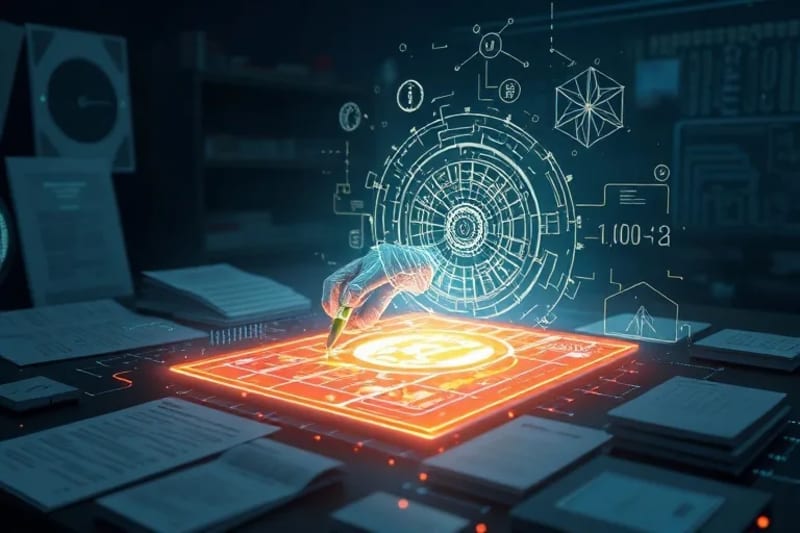 Exploring the intricate interplay between advanced artificial intelligence, artistic creation, and the evolving legal frameworks designed to govern intellectual property in the digital age.
Conceptual AI render illustrating the convergence of technology, art, and law, created under a free-use license for educational purposes.
Defining AI-Generated Art: Authorship and Originality
Before delving into the legal intricacies, it is essential to understand what constitutes AI-generated art. This category encompasses a broad spectrum of creative works where artificial intelligence plays a significant role in their conception, development, or execution. This can range from AI tools that assist human artists by generating variations or suggesting styles, to fully autonomous AI systems that produce art with minimal or no direct human input after initial programming.
The concept of "authorship" is central to intellectual property law. Traditionally, an author is a human being who exercises creative choices and expresses original ideas. AI systems, however, operate based on algorithms, data, and machine learning models. While these models are designed by humans, the creative output can sometimes be unpredictable and go beyond the explicit intentions of the programmer. This raises a fundamental question: if an AI generates a unique piece of art, is the AI itself the author, or is it the programmer, the user who prompted the AI, or perhaps even the original artists whose works were used to train the AI model?
Furthermore, copyright law typically requires a work to be "original" – meaning it must be independently created and possess a minimal degree of creativity. When an AI generates art by learning from vast datasets of existing human-created works, the originality of its output becomes a point of contention. Is it a mere derivative work, a pastiche, or can it truly be considered original in a legal sense? These definitional challenges are at the heart of the current IP debate.
Copyright Law in the Age of Algorithms: Key Challenges
Existing copyright laws, largely established in an era predating advanced computing, struggle to accommodate the nuances of AI-generated art. Several key challenges emerge:
- Lack of Human Authorship: Most jurisdictions require a human author for copyright protection. Without a recognized human author, AI-generated works may fall into the public domain immediately, disincentivizing investment in AI creative tools and potentially undermining the value of human artists who use them.
- Training Data and Infringement: AI models are trained on massive datasets, often comprising millions of images, texts, or sounds. If these datasets include copyrighted material, questions arise about whether the act of training constitutes copyright infringement. Furthermore, if an AI's output closely resembles a specific copyrighted work from its training data, it could be deemed a derivative work or an infringement.
- Originality Threshold: As mentioned, the originality requirement is difficult to apply. If an AI generates art based on statistical patterns without conscious creative intent, does it meet the threshold for originality required for copyright protection?
- Ownership Disputes: When multiple parties are involved (AI developer, AI user, data providers), determining who holds the rights to an AI-generated artwork becomes a complex legal puzzle.
These challenges highlight the need for either reinterpretation of current laws or the development of entirely new legal frameworks. The rapid pace of technological advancement often outstrips the legislative process, creating a legal vacuum that can lead to uncertainty and disputes. For a broader perspective on the ethical implications of such advanced systems, one might consider the ongoing discussions around the ethics of artificial intelligence, which extend beyond mere property rights.
 An abstract visual representation of the complex debate surrounding authorship and ownership in the realm of AI-generated art.
Conceptual digital artwork, generated by AI, exploring themes of digital rights and creative responsibility, licensed for public domain use.
The Debate: Who Owns AI Art?
The question of ownership is perhaps the most contentious aspect of AI-generated art. Several theories and proposals have emerged:
- The Programmer/Developer: One perspective suggests that the intellectual property rights should reside with the individual or entity that created the AI system. They designed the algorithms, curated the training data, and essentially built the tool that produced the art.
- The User/Prompter: Another argument posits that the user who provides the prompts, parameters, or specific instructions to the AI should be considered the author. This individual exercises creative control by guiding the AI towards a desired artistic outcome, similar to how a photographer directs a camera.
- The AI Itself (Legal Personality): A more radical idea suggests granting AI systems a form of legal personality, allowing them to be recognized as authors and owners. This concept, however, raises profound philosophical and practical questions about AI rights and responsibilities.
- No Ownership (Public Domain): Some argue that if no human can be definitively identified as the author, AI-generated works should automatically fall into the public domain. This would ensure free access and use but might disincentivize innovation in AI art creation.
- Shared Ownership/Hybrid Models: A pragmatic approach could involve shared ownership, where rights are distributed among the AI developer, the user, and potentially even the original artists whose works contributed to the AI's training data. This could be complex to implement but might offer a more equitable solution.
The debate is far from settled, with different jurisdictions and legal scholars leaning towards various solutions. The choice of ownership model will significantly impact the future of digital art, its monetization, and the creative economy as a whole. The evolution of business models for SaaS in SMEs, for example, shows how rapidly new digital paradigms can shift economic landscapes, a lesson applicable to AI art.
Legal Precedents and Emerging Frameworks
Globally, legal systems are beginning to grapple with these issues, albeit slowly. The United States Copyright Office, for instance, has generally maintained that copyright protection requires human authorship. In a notable case, the office refused to register a work created by an AI, stating that it "lacks the human authorship necessary to support a copyright claim." However, it has also granted copyright to works where AI was used as a tool under significant human creative control.
Other jurisdictions are exploring different avenues. Some countries might consider a "sui generis" right, a unique legal protection specifically designed for AI-generated works that doesn't fit neatly into existing copyright or patent law. The European Union has been actively discussing AI regulation, including aspects related to intellectual property, aiming for a balanced approach that fosters innovation while protecting creators.
The challenge lies in creating frameworks that are flexible enough to adapt to future technological advancements while providing clarity and certainty for artists and developers today. Any new framework must consider the economic incentives for creating AI tools and AI art, as well as the rights of human artists whose work might be used in AI training datasets.
Ethical Considerations and Fair Use
Beyond the legal technicalities, significant ethical considerations surround AI-generated art and IP. The use of copyrighted works in AI training datasets without explicit permission or compensation raises questions of fairness and exploitation. Artists whose styles are mimicked by AI without attribution or remuneration feel their creative labor is being devalued.
The concept of "fair use" (or "fair dealing" in other jurisdictions) is often invoked in these discussions. Fair use allows for limited use of copyrighted material without permission for purposes such as criticism, comment, news reporting, teaching, scholarship, or research. Whether the training of an AI model on copyrighted material falls under fair use is a subject of intense legal debate, with ongoing lawsuits attempting to clarify this boundary.
Transparency is another ethical imperative. Users and consumers should be aware when art is generated by AI versus created solely by a human. This helps maintain artistic integrity and allows for informed appreciation. As complex AI systems become more prevalent, understanding their origins and ethical implications becomes paramount.
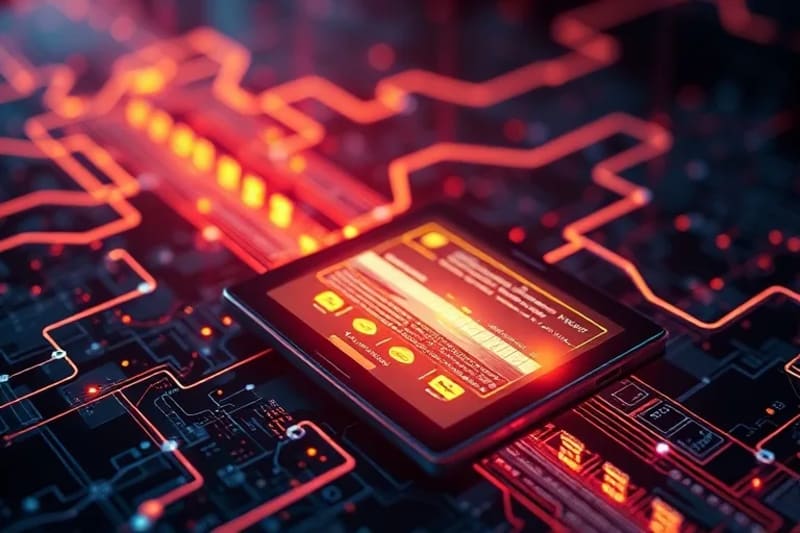 A conceptual visualization of blockchain technology and smart contracts as potential solutions for managing intellectual property in AI-generated art.
AI-generated 3D render depicting innovative digital rights management, under a Creative Commons Attribution license.
Technological Solutions: Blockchain and Metadata
While legal frameworks evolve, technology itself may offer partial solutions to the IP challenges posed by AI art. Blockchain technology, for example, can provide immutable records of creation, ownership, and provenance for digital assets. An AI-generated artwork could be tokenized as an NFT (Non-Fungible Token) on a blockchain, establishing a clear, verifiable chain of title from its inception.
Smart contracts, executable code stored on a blockchain, could automate royalty payments to AI developers, users, or even original artists whose works were part of the training data. This could create a more transparent and equitable system for compensating all contributors. Furthermore, embedding robust metadata within AI-generated art could indicate its origin, the AI model used, the human input involved, and any associated licensing terms.
These technological solutions, however, are not without their own challenges, including scalability, energy consumption, and interoperability. Nevertheless, they offer promising avenues for managing intellectual property in a decentralized and verifiable manner, especially when considering the broader implications of crypto assets for future generations.
The Future Landscape of Digital Art IP
The future of intellectual property in digital art will likely be a dynamic interplay of legal reform, technological innovation, and evolving societal norms. We may see the emergence of specialized IP rights for AI-generated content, distinct from traditional copyright. Licensing models will need to adapt, potentially including new forms of collective licensing or micro-payments for the use of training data.
Collaboration between human artists and AI will become increasingly common, blurring the lines of authorship and necessitating clear agreements on IP ownership. Educational initiatives will be crucial to inform artists, developers, and the public about their rights and responsibilities in this new creative ecosystem. Ultimately, the goal should be to foster an environment where AI can enhance human creativity without undermining the livelihoods and rights of artists.
Conclusion: Navigating the New Creative Frontier
The impact of AI on digital art intellectual property is profound and far-reaching. It challenges the very foundations of copyright law, forcing us to reconsider definitions of authorship, originality, and ownership. While the legal and ethical dilemmas are significant, they also present an opportunity to re-evaluate and modernize IP frameworks for the digital age.
Successfully navigating this new creative frontier will require a collaborative effort from legal experts, technologists, artists, and policymakers. By embracing innovative solutions, fostering open dialogue, and prioritizing ethical considerations, we can shape a future where AI serves as a powerful tool for artistic expression, while ensuring that the rights and contributions of all creators are respected and protected.
Explore More Related Content
- Urban Mobility Future: Autonomous Vehicles, Hyperloop, Smart Grids
- Sustainable Business Models: Green Startups, Circular Economy
- Intelligent Environment AI: Technical Challenges
- Sacred Relics: Forensic Evidence, Faith, Science in the 21st Century
- Mindfulness Emotional Regulation: Inner Peace Techniques
- Draconic Astrology: Karma, Destiny, Complete Guide Reveals Secrets
Source: Hybrid content assisted by AI and human editorial supervision.


Comentarios