
Astrodynamics Interplanetary Travel: Routes, Solar Challenges
Interplanetary travel, once the realm of science fiction, is rapidly transitioning into a tangible objective for humanity. The intricate dance of celestial mechanics, governed by the principles of space law and physics, forms the foundation of this ambitious endeavor. At the heart of this challenge lies astrodynamics, a specialized branch of celestial mechanics and aerospace engineering that deals with the motion of spacecraft and natural celestial bodies. It provides the mathematical framework necessary to design trajectories, predict orbital paths, and execute maneuvers that enable probes and potentially humans to journey across the vast distances of our solar system.
The conquest of our solar neighborhood, from the nearest planets to the distant Kuiper Belt, demands an unparalleled understanding of gravitational forces, propulsion systems, and the unforgiving environment of space. This article delves into the core concepts of astrodynamics, exploring the methodologies for calculating efficient routes and the formidable challenges that must be overcome to achieve successful interplanetary missions. From the elegant simplicity of Hohmann transfers to the complex ballet of gravity assists, we will uncover the scientific rigor that underpins humanity's reach for the stars.
Table of Contents
- Foundations of Astrodynamics: Orbital Mechanics
- Interplanetary Trajectories: Crafting the Cosmic Path
- Challenges of Interplanetary Travel
- Advanced Propulsion and Future Concepts
- The Future of Solar System Conquest
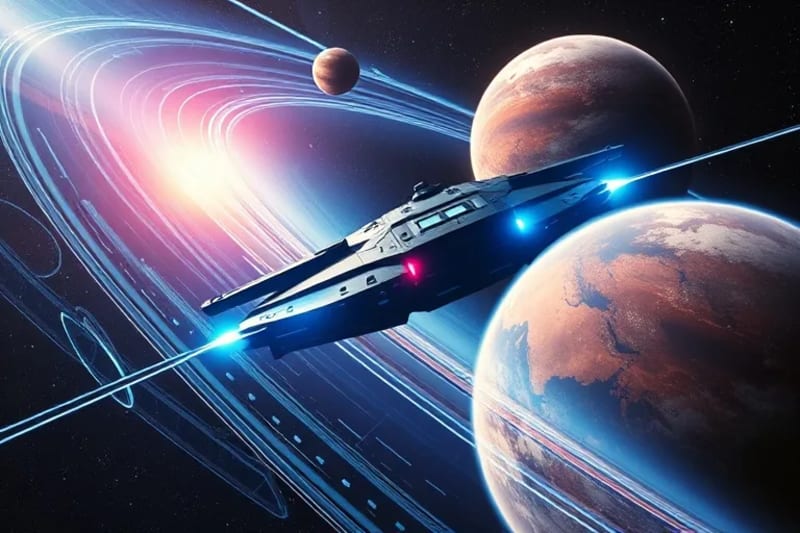
Conceptual visualization of the intricate calculations and advanced engineering principles that underpin the ambitious endeavors of interplanetary navigation.
This conceptual rendering, generated by AI, illustrates the complex dance of celestial mechanics.
Foundations of Astrodynamics: Orbital Mechanics
Astrodynamics is deeply rooted in the classical mechanics formulated by Isaac Newton and Johannes Kepler. Newton's laws of motion and universal gravitation provide the fundamental equations describing how objects move under the influence of gravity. Kepler's laws, derived from observational data, describe the elliptical paths of planets around the Sun, offering a simplified yet powerful model for orbital prediction. These foundational principles allow engineers to calculate the precise velocity changes (delta-v) required to move a spacecraft from one orbit to another.
The primary goal of astrodynamics is to determine the most fuel-efficient and timely trajectories for space missions. This involves solving complex differential equations that account for the gravitational pull of multiple celestial bodies, solar radiation pressure, and other perturbing forces. Understanding concepts like orbital elements (semi-major axis, eccentricity, inclination), escape velocity, and orbital period is critical for mission planning. Without these precise calculations, any attempt at interplanetary travel would be akin to firing a cannonball blindly into the cosmos, highlighting the importance of rigorous scientific methodology.
- Newton's Laws: Govern the motion of objects and the force of gravity. Essential for calculating gravitational interactions between spacecraft and planets.
- Kepler's Laws: Describe planetary motion, providing a framework for understanding elliptical orbits and orbital periods.
- Orbital Elements: A set of six parameters that uniquely define an orbit, crucial for precise navigation and rendezvous.
- Delta-v (Δv): The change in velocity required to perform an orbital maneuver, directly correlating to fuel consumption.
- Escape Velocity: The minimum speed an object needs to break free from the gravitational pull of a celestial body.
Interplanetary Trajectories: Crafting the Cosmic Path
Designing an interplanetary trajectory is a sophisticated art and science. The choice of trajectory significantly impacts mission duration, fuel requirements, and operational complexity. Several types of trajectories are commonly employed, each with its own advantages and disadvantages.
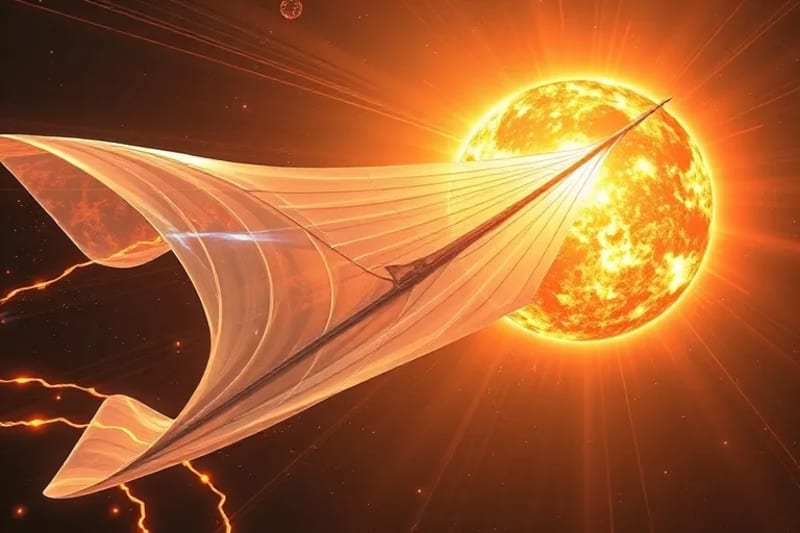
The intricate design of a solar sail, a testament to innovative propulsion methods enabling future deep space missions.
The Hohmann Transfer Orbit is perhaps the most well-known and fuel-efficient method for transferring between two circular orbits in the same plane. It involves two impulses: one to enter an elliptical transfer orbit from the initial circular orbit, and another to enter the final circular orbit. While efficient, Hohmann transfers are time-consuming, as they typically occur only at specific launch windows when the planets are optimally aligned, which may happen only once every few years for Mars.
Gravity Assist (or Slingshot) Maneuvers are crucial for missions to the outer solar system. By flying close to a planet, a spacecraft can use the planet's gravitational field to gain or lose speed and change direction without expending propellant. This technique was famously used by the Voyager probes to accelerate them towards the outer planets, significantly reducing travel times and fuel needs. However, these maneuvers require extremely precise navigation and timing, as even small errors can lead to mission failure.
Low-Energy Transfers (LETs), also known as Ballistic Lunar Transfers or Interplanetary Superhighways, utilize complex gravitational interactions of multiple celestial bodies to achieve transfers with minimal fuel. These trajectories often involve navigating through the intricate network of stable and unstable manifolds in the restricted three-body problem. While incredibly fuel-efficient, LETs are typically much longer in duration than Hohmann transfers, making them suitable primarily for robotic probes rather than human missions where time is a critical factor due to life support and psychological considerations.
| Trajectory Type | Description | Advantages | Disadvantages |
|---|---|---|---|
| Hohmann Transfer | Elliptical orbit tangent to both departure and arrival orbits. | Fuel-efficient for coplanar transfers. | Long travel times; limited launch windows. |
| Gravity Assist | Uses a planet's gravity to alter spacecraft velocity and direction. | Reduces fuel consumption; speeds up missions. | Requires precise timing and navigation; complex planning. |
| Low-Energy Transfer (LET) | Navigates through gravitational "highways" using minimal fuel. | Extremely fuel-efficient. | Very long travel times; highly sensitive to perturbations. |
Challenges of Interplanetary Travel
Beyond the complexities of trajectory design, interplanetary travel presents a myriad of formidable challenges that demand innovative solutions across various scientific and engineering disciplines. These challenges range from the fundamental physics of propulsion to the physiological and psychological resilience of human explorers.
Propulsion Systems: Chemical rockets, while powerful, are inherently inefficient for long-duration interplanetary missions due to the exponential relationship between propellant mass and delta-v. The need for more advanced propulsion is paramount. Concepts like nuclear thermal propulsion, electric propulsion (ion thrusters), and even theoretical designs like fusion rockets or antimatter propulsion offer higher specific impulse, meaning they can achieve greater velocity changes with less propellant. However, these technologies face significant development hurdles, including safety, cost, and technological maturity.
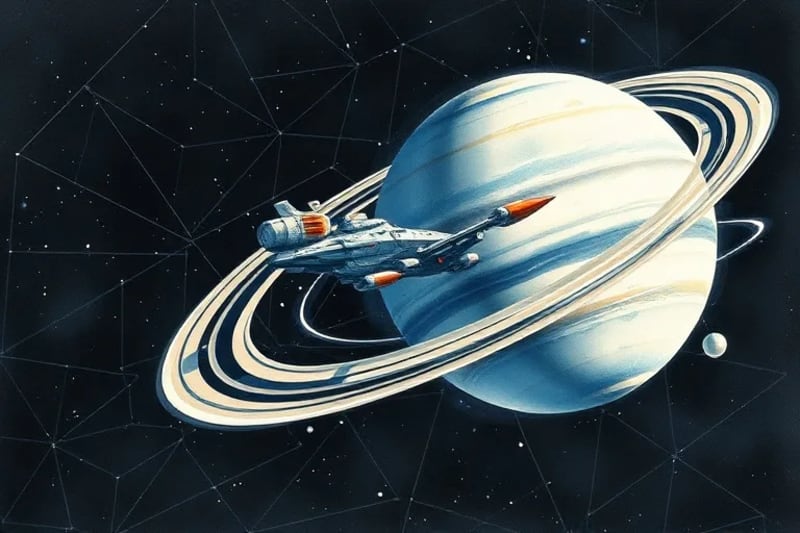
A visual representation of the gravity assist maneuver, a key technique for fuel-efficient deep space exploration.
Radiation Exposure: Outside Earth's protective magnetosphere, astronauts are exposed to harmful cosmic rays and solar particle events. Long-duration missions could lead to increased risks of cancer, acute radiation sickness, and damage to the central nervous system. Developing effective shielding materials, predictive models for solar flares, and potentially even pharmaceutical countermeasures are critical areas of research. This is a significant concern, especially for human missions to destinations like Mars, where travel times can extend for months or even years.
Communication Delays: The vast distances involved in interplanetary travel introduce significant communication delays. A signal from Mars can take anywhere from 3 to 22 minutes to reach Earth, depending on the planets' positions. This latency makes real-time control impossible and necessitates a high degree of autonomy for spacecraft and on-board crews. Advanced AI systems and robust SaaS business models for data management will be crucial for managing these complex operations.
Life Support and Human Factors: Sustaining human life in the harsh environment of space requires closed-loop life support systems that recycle air, water, and waste with extreme efficiency. Furthermore, the psychological impact of isolation, confinement, and prolonged exposure to microgravity poses significant challenges. Understanding the human element, including team dynamics and stress management, is as vital as the engineering aspects. The exploration of universe curiosities often overlooks these fundamental human needs.
Advanced Propulsion and Future Concepts
The dream of faster, more efficient interplanetary travel hinges on breakthroughs in propulsion technology. While chemical rockets have served us well, the next generation of space exploration demands a paradigm shift. Ion thrusters, for instance, use electrical energy to accelerate ions to extremely high velocities, providing a small but continuous thrust over long periods. Missions like NASA's Dawn spacecraft have demonstrated the effectiveness of ion propulsion for deep-space exploration, albeit with longer travel times.
Nuclear thermal propulsion (NTP) offers a significant increase in thrust and efficiency compared to chemical rockets. By using a nuclear reactor to heat a propellant (typically hydrogen) to extreme temperatures and then expelling it through a nozzle, NTP could drastically reduce transit times to Mars and beyond. This technology, though promising, faces challenges related to public perception, safety, and the development of robust, flight-qualified reactors. Research into advanced materials and containment systems is ongoing to make NTP a viable option.
Looking further into the future, concepts such as solar sails, which harness the momentum of photons from the Sun, offer propellant-less propulsion for long-duration missions. While current solar sails generate very little thrust, they can achieve high velocities over time. More speculative ideas include fusion propulsion, which would tap into the power of nuclear fusion, and even warp drives, though the latter remains firmly in the realm of theoretical physics. The legal and ethical implications of digital law in the metaverse might seem distant from these physical challenges, but as humanity expands into space, the intersection of physical and virtual domains will become increasingly relevant.
The Future of Solar System Conquest
The long-term vision for solar system conquest extends beyond mere exploration to sustained presence and eventual colonization. This ambitious goal will require not only advancements in astrodynamics and propulsion but also the development of in-situ resource utilization (ISRU) capabilities. Extracting water from lunar or Martian ice, producing oxygen from planetary regolith, and manufacturing building materials using local resources will be essential for reducing the cost and logistical complexity of deep-space missions.
Furthermore, the integration of artificial intelligence and autonomous systems will play an increasingly vital role. AI-driven navigation, fault detection, and mission management can enhance efficiency and safety, especially during missions with significant communication delays. The development of robust robotic systems capable of performing complex construction, maintenance, and scientific tasks will pave the way for human outposts. The future of interplanetary travel is a multidisciplinary endeavor, pushing the boundaries of human ingenuity and scientific understanding.
As we look towards a future where humanity is a multi-planetary species, the principles of astrodynamics will remain the guiding light. From the initial calculations of orbital mechanics to the design of advanced propulsion systems, every step of our journey into the cosmos is meticulously planned and executed based on these fundamental laws. The challenges are immense, but the potential rewards—new knowledge, resources, and the expansion of human civilization—are even greater, driving us forward in the grand endeavor of solar conquest.
Explore More Space and Technology Insights
Source: Hybrid content assisted by AI and human editorial supervision.


Comentarios