
Generative AI Art Ethics: Authorship Debates
Generative AI and Ethics in Art: Who is the Author?
The advent of generative Artificial Intelligence (AI) has profoundly reshaped numerous creative domains, with its impact on art being particularly transformative. This technology, capable of producing novel and complex artworks, from intricate paintings to musical compositions and literary pieces, challenges long-held notions of creativity, originality, and authorship. As AI systems become increasingly sophisticated, their ability to mimic, extend, and even surpass human artistic capabilities raises a myriad of ethical and philosophical questions that demand rigorous examination.
The core of this debate revolves around the fundamental question: when an AI generates a piece of art, who is the true author? Is it the programmer who coded the algorithm, the artist who curated the training data, the user who prompted the AI, or the AI itself? This inquiry is not merely academic; it has significant implications for copyright law, intellectual property rights, economic models for artists, and the very definition of art in the 21st century. Understanding these complexities requires a deep dive into the technical underpinnings of generative AI, its ethical ramifications, and the evolving legal frameworks attempting to address this new frontier.
 Precursors intellectuales, diagramas fundamentales y representaciones conceptuales que forjaron la visión de la Inteligencia Artificial Generativa sobre la autoría artística.
Fuente visual sujeta a disponibilidad del ecosistema: Wikimedia Commons bajo licencia CC BY-SA 4.0 o renderizado conceptual IA.
Table of Contents
- Understanding Generative AI in Art
- The Authorship Dilemma: Who Owns AI Art?
- Copyright Challenges and Legal Frameworks
- Ethical Considerations Beyond Authorship
- The Future of Art and Human Creativity with AI
- Conclusion
Understanding Generative AI in Art
Generative AI refers to a class of artificial intelligence algorithms designed to create new content, rather than simply analyzing or classifying existing data. In the context of art, these systems learn patterns, styles, and features from vast datasets of existing artworks. Through processes like Generative Adversarial Networks (GANs) or diffusion models, they can then generate entirely new images, texts, or sounds that often exhibit a remarkable degree of originality and aesthetic quality. This capability moves beyond mere automation, venturing into what was once considered the exclusive domain of human intuition and creativity.
The technical sophistication of these models allows for a spectrum of creative control. Some systems operate with minimal human input, generating art based on broad parameters, while others allow artists to fine-tune outputs through specific prompts, style transfers, or iterative refinement. This spectrum blurs the lines between tool and collaborator, making the attribution of creative agency increasingly complex. The underlying algorithms are often open-source or built upon publicly available research, further complicating claims of individual ownership over the creative process. The rapid evolution of these technologies, including advancements in areas like Brain-Computer Interfaces (BCI) for creative expression, suggests an even more integrated future for human and artificial intelligence in art creation, as explored in articles discussing BCI: Advancements, Ethical Implications, and Applications.
The Authorship Dilemma: Who Owns AI Art?
The question of authorship in AI-generated art is multifaceted, touching upon legal, philosophical, and artistic dimensions. Traditionally, authorship is attributed to a human creator who conceives and executes the work. However, generative AI introduces a non-human agent into this process, challenging the very definition of "creator." Several perspectives emerge when attempting to assign authorship:
- The Programmer/Developer: This perspective argues that the individual or team who designed, coded, and trained the AI algorithm is the author, as they created the "tool" that produced the art. However, this view often overlooks the creative input of the user and the autonomous capabilities of advanced AI.
- The User/Prompter: Many believe that the person who provides the prompts, parameters, or curates the output of the AI should be considered the author. Their creative vision guides the AI, making them analogous to a director or a photographer. Yet, the AI's contribution often goes beyond mere execution, introducing elements unforeseen by the user.
- The AI Itself: A more radical view suggests that the AI, given its capacity for generating novel content, should be recognized as an author. This raises profound questions about legal personhood and consciousness, which current legal systems are ill-equipped to handle.
- No Author: Some argue that AI-generated art, lacking a human mind behind its creation, should not have an author in the traditional sense, potentially placing it in the public domain.
- Co-Authorship/Hybrid Authorship: A pragmatic approach suggests that authorship is shared between the human and the AI, or among multiple human contributors (programmer, data curator, user). This model acknowledges the collaborative nature of AI art creation.
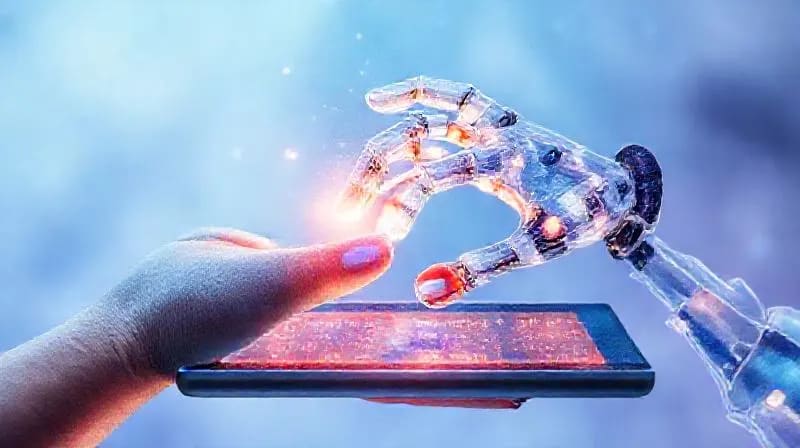 A conceptual depiction of the intricate interaction between human creativity and artificial intelligence in the artistic process.
Copyright Challenges and Legal Frameworks
Copyright law, fundamentally designed to protect human-created works, faces significant challenges with generative AI. Most jurisdictions require a human author for a work to be copyrightable. This "human authorship" requirement is a cornerstone of intellectual property. For instance, the U.S. Copyright Office has explicitly stated that it will not register works produced solely by AI, requiring human creative input. However, the degree of human input necessary remains a gray area.
Another critical issue is the potential for copyright infringement. Generative AI models are trained on vast datasets of existing art, much of which is copyrighted. When an AI generates a new piece, does it "learn" from these copyrighted works in a way that constitutes fair use, or does it create a derivative work that infringes on the original copyrights? This is a contentious legal battleground, with artists and copyright holders increasingly challenging AI companies over the use of their work in training data. The debate extends to the concept of "style appropriation," where AI can mimic the distinctive style of a human artist, raising questions about artistic identity and economic rights. The legal landscape is still nascent, with different countries adopting varying stances, and the need for new legal frameworks or interpretations is becoming increasingly apparent. The principles of Blockchain Decentralized Governance could potentially offer new avenues for transparent ownership and attribution in the digital art space, though its application to generative AI remains complex.
Ethical Considerations Beyond Authorship
Beyond the immediate concerns of authorship and copyright, generative AI in art presents several broader ethical dilemmas:
- Bias in Training Data: AI models learn from the data they are fed. If this data contains biases (e.g., underrepresentation of certain cultures, styles, or demographics), the AI's output may perpetuate or amplify these biases, leading to a lack of diversity or even harmful stereotypes in the generated art.
- Economic Impact on Artists: The ability of AI to rapidly produce art at scale raises concerns about the economic viability of human artists. If AI can generate high-quality art quickly and cheaply, it could devalue human-made art and displace artists from their livelihoods.
- Authenticity and Value of Art: The philosophical question of what constitutes "art" and what gives it value is challenged. If art can be generated without human intention or emotion, does it retain the same intrinsic value? This echoes historical debates about photography or digital art's legitimacy.
- Misinformation and Deepfakes: Generative AI can create highly realistic images and videos, posing risks for misinformation, propaganda, and the creation of "deepfakes" that can be used for malicious purposes, impacting public trust and perception.
- Environmental Impact: Training large generative AI models requires significant computational resources, leading to substantial energy consumption and carbon emissions. The environmental footprint of AI art generation is an emerging ethical concern.
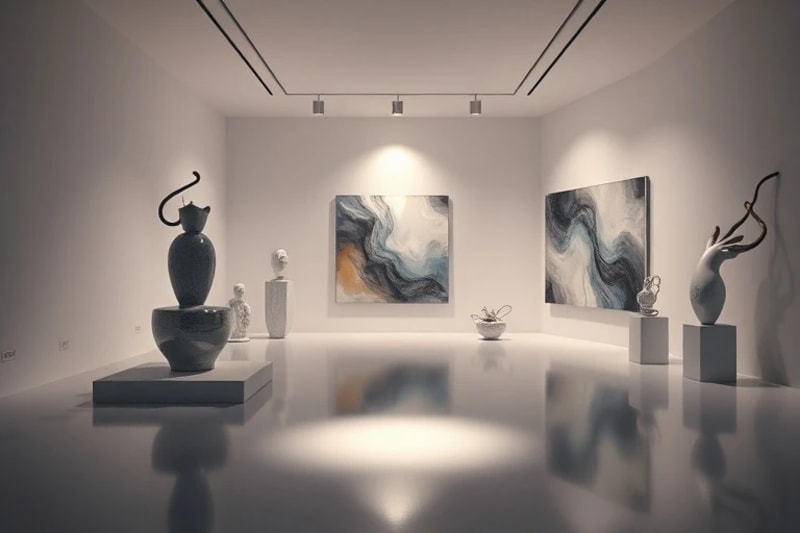 A conceptual representation of the evolving landscape of art exhibition, showcasing pieces created through advanced artificial intelligence.
Addressing these ethical challenges requires a multi-stakeholder approach, involving technologists, artists, legal experts, policymakers, and the public. Developing ethical guidelines for AI development and deployment, promoting transparent data practices, and fostering dialogue about the societal implications of AI art are crucial steps. The discussion around Digital Advertising: Personalization, AI, and Privacy offers parallels in how AI's pervasive influence necessitates careful ethical consideration across various digital domains.
The Future of Art and Human Creativity with AI
Despite the challenges, generative AI also offers unprecedented opportunities for artistic expression and innovation. It can serve as a powerful tool for human artists, augmenting their capabilities, inspiring new ideas, and enabling the creation of art forms previously unimaginable. AI can facilitate rapid prototyping, explore vast aesthetic spaces, and even assist in overcoming creative blocks. For example, AI can analyze complex patterns in historical art movements and suggest new directions, or it can generate variations on a theme that a human artist might not have considered.
The future likely involves a symbiotic relationship between human and AI creativity, where AI acts as a sophisticated co-creator or an advanced artistic assistant. This shift necessitates a re-evaluation of what it means to be an artist. The role may evolve from direct execution to curation, prompting, and conceptualization, with human artists becoming "AI whisperers" or "meta-artists." Education and adaptation will be key for artists to leverage these tools effectively, ensuring that AI enhances rather than diminishes human creative potential. The ongoing "digital renaissance" of analog forms, such as the resurgence of vinyl, as discussed in Vinyl Digital Renaissance: Current Analog Experience, highlights a societal appreciation for authenticity and human touch, which will likely continue to inform the value perception of AI-generated art.
Conclusion
Generative AI has opened a Pandora's Box of possibilities and problems within the art world. The question of "who is the author?" is at the heart of this transformation, challenging legal, ethical, and philosophical foundations. While current legal frameworks struggle to accommodate non-human authorship, the debate forces us to redefine creativity and intellectual property in an age where machines can generate beauty and complexity. Addressing these issues requires a proactive and collaborative approach, fostering innovation while safeguarding human artistic integrity and ensuring fair compensation.
As AI continues to evolve, so too will our understanding of art and authorship. The dialogue must continue to evolve, shaping policies and practices that allow both human and artificial intelligence to flourish in the creative landscape, ultimately enriching our cultural heritage in ways we are only just beginning to imagine. The journey into this new artistic frontier is complex, but it promises a future where the boundaries of creativity are continually expanded.
Explore Further
- Abejorros Agroecología: Polinización Sostenible y Datos Curiosos
- Vinilo Renacimiento Digital: Experiencia Analógica Actual
- Blockchain Gobernanza Descentralizada: Potencial Sectores No Financieros
- BCI: Avances, Implicaciones Éticas y Aplicaciones
- Astrodinámica Viajes Interplanetarios: Rutas Desafíos Sistema Solar
- Abstención Electoral: Causas, Consecuencias y Futuro Democrático
- Publicidad Digital: Personalización, IA y Privacidad
- Innovación Disruptiva Alimentaria: Startups Transforman Cadena Suministro
- Misterio Atlántida: Mitos, Leyendas, Ubicaciones Posibles
- Música Concentración Aprendizaje: Impacto Beneficios Estrategias
- Código Comercio Colombiano: Mandato y Comisión Mercantil
- Dietas Vegetarianas y Veganas: Planificación Nutricional y Mitos
- Microbioma Cutáneo Salud Dermatológica: Ecosistema Oculto Piel
- Caligrafía: Belleza, Tradición, Conexión Mental
- Inversiones Mercados Emergentes Verdes: Fondos Sostenibles Doble Impacto
- Registros Akáshicos Sombra: Integrando Lecciones Kármicas Arquetipos
- Puntos Medios Astrología: Relaciones y Eventos Significativos
- Astro-Gastronomía Consciente: Recetas Intuitivas Armonización Chakras Signos
- Oración Sanación Interior: Liberando Heridas Pasado
- Santidad Matrimonio: Testimonios Esposos Familias Ejemplares
- Profecías Anticristo: Tradiciones Religiosas y Análisis
- Feng Shui Animal Sign: Optimize Home Work Growth
- Cancer Zodiac Sign: Emotional Depth, Nurturing Instincts
- Fixed Stars Karmic Astrology: Past Life Influences Natal Chart
Source: Hybrid content assisted by AI and human editorial supervision.


Comentarios