
Hedy Lamarr: Hollywood Star, Wi-Fi Pioneer, Inventor Genius
Hedy Lamarr, often celebrated as "the most beautiful woman in the world," captivated audiences with her stunning looks and magnetic presence on the silver screen during Hollywood's Golden Age. Yet, beneath the veneer of glamour and stardom lay a brilliant, inquisitive mind that harbored a secret passion for invention and science. Her dual life as a film icon and an uncredited innovator remained largely unknown for decades, a testament to the era's tendency to pigeonhole women into conventional roles. This article delves into the extraordinary life of a woman who not only redefined beauty standards but also laid the groundwork for technologies we now consider indispensable, such as Wi-Fi and Bluetooth.
Her story is a compelling narrative of intellect overshadowed by allure, a testament to the hidden depths of individuals who defy easy categorization. Lamarr's contributions to technology, particularly her co-invention of an early technique for spread spectrum communications and frequency hopping, were revolutionary. These concepts, initially conceived to aid the Allied war effort during World War II, would eventually become the bedrock of modern wireless communication systems. Understanding her journey requires looking beyond the Hollywood spotlight and into the mind of a true pioneer.
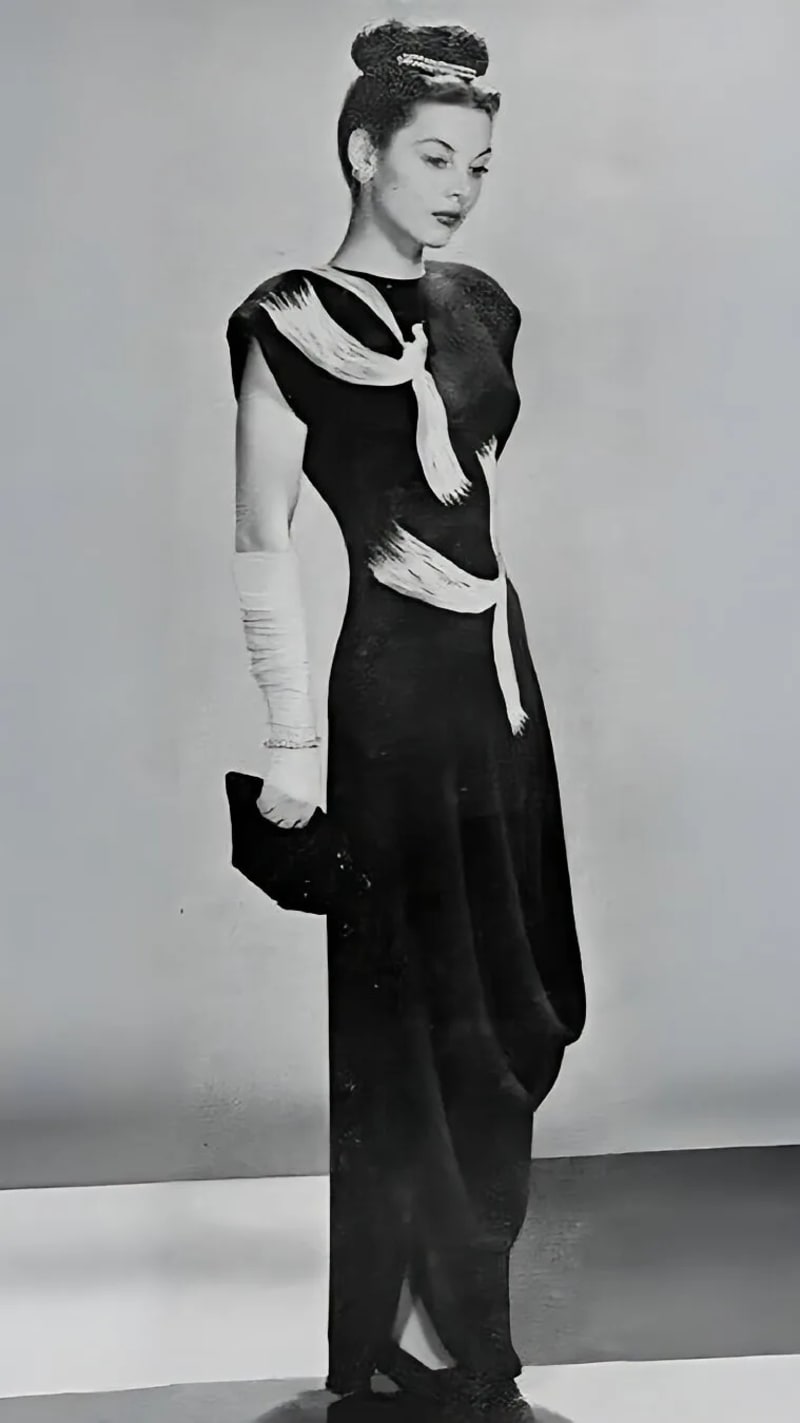 Precursors, intellectual diagrams, and conceptual representations that shaped the vision of this iconic figure regarding her contributions to both cinema and science.
Fuente visual sujeta a disponibilidad del ecosistema: Wikimedia Commons bajo licencia CC BY-SA 4.0 o renderizado conceptual IA.
Table of Contents
- Early Life and Hollywood Ascension
- The War Years and the Spark of Invention
- The Invention: Frequency Hopping and Spread Spectrum
- Post-War Career and Personal Struggles
- The Rediscovery and Legacy of a Visionary
- Impact on Modern Technology
- Hedy Lamarr: A Pioneer Beyond the Screen
Early Life and Hollywood Ascension
Born Hedwig Eva Maria Kiesler in Vienna, Austria-Hungary, in 1914, the future star showed signs of exceptional intelligence and creativity from a young age. Her father, a successful bank director, encouraged her to think critically and observe the world around her, often discussing the inner workings of various machines. Her mother, a concert pianist, exposed her to the arts. This blend of influences fostered a unique individual who was as comfortable dissecting mechanical devices as she was performing on stage.
Lamarr's striking beauty, however, quickly propelled her into the acting world. She began her film career in Germany at the age of 16, gaining international notoriety for her controversial role in the 1933 Czech film Ecstasy. The film, which featured a brief nude scene and depicted female sexual pleasure, caused a sensation and was banned in several countries. Despite the scandal, it cemented her image as a daring and alluring figure.
Her first marriage to Austrian arms manufacturer Fritz Mandl, a wealthy and controlling man with ties to fascist regimes, proved to be a gilded cage. Mandl often took her to business meetings where she absorbed intricate details about military technology, including radio-controlled torpedoes and countermeasures. This exposure, though involuntary, would later prove invaluable. Escaping her marriage and the escalating political turmoil in Europe, she made her way to Hollywood, where she was discovered by MGM studio head Louis B. Mayer, who rebranded her as Hedy Lamarr and launched her American film career.
The War Years and the Spark of Invention
Despite her burgeoning success in Hollywood with films like Algiers (1938) and Boom Town (1940), Lamarr felt a deep sense of frustration. She was often cast in roles that emphasized her beauty over her intelligence, and she was keenly aware of the unfolding horrors of World War II. As an Austrian Jew, she harbored a strong anti-Nazi sentiment and was eager to contribute to the Allied war effort beyond selling war bonds.
Her inventive mind, which she often exercised in her trailer between takes, sought practical solutions to military problems. She recalled the discussions from her first marriage about the vulnerability of radio-controlled torpedoes to jamming. If the enemy could find the single frequency on which a torpedo was guided, they could easily interfere with it, rendering it useless. This problem became her obsession. It was during this period that she met avant-garde composer George Antheil, known for his experimental musical compositions, including those synchronized with player pianos.
 A conceptual still life symbolizing the intersection of Hollywood glamour and the unseen world of radio frequencies, reflecting the dual life of a brilliant innovator.
Their unlikely collaboration began with a discussion about improving plastic surgery techniques but quickly shifted to torpedo guidance. Antheil's work with synchronized player pianos, which could rapidly switch between different notes, provided the crucial analogy. Lamarr realized that if a torpedo's control signal could "hop" between different radio frequencies in a synchronized, unpredictable pattern, it would be nearly impossible for the enemy to jam. This was the genesis of "frequency hopping" or "spread spectrum" technology.
The Invention: Frequency Hopping and Spread Spectrum
In 1941, Lamarr and Antheil submitted their idea to the National Inventors Council. They developed a system that used a piano roll to synchronize the frequency changes between a transmitter and a receiver. The concept was simple yet revolutionary: both the sending and receiving devices would jump from one frequency to another simultaneously, following a predetermined, pseudo-random sequence. This made it incredibly difficult for an adversary to predict and jam the signal, as they would have to jam all possible frequencies at once, or guess the hopping sequence.
On August 11, 1942, U.S. Patent No. 2,292,387 was granted to Hedy Kiesler Markey (her married name at the time) and George Antheil for a "Secret Communication System." The patent described a method for secure radio guidance of torpedoes, using frequency hopping. Despite the ingenuity of their invention, the U.S. Navy initially dismissed it. The technology was deemed too complex and impractical to implement during wartime, especially given its reliance on mechanical piano rolls. The patent was subsequently classified as secret and filed away, largely forgotten for years.
This initial rejection was a significant setback for Lamarr, who genuinely believed her invention could save lives and turn the tide of the war. Her contributions, like those of many unheralded innovators, highlight the often circuitous path from groundbreaking idea to widespread adoption. The principles, however, were sound and would eventually find their true calling in a different era. For more on how technological breakthroughs shape industries, consider the evolution of Augmented Reality in Industry 4.0.
Post-War Career and Personal Struggles
After the war, Lamarr's film career continued, though with varying degrees of success. She starred in several notable films, including Cecil B. DeMille's epic Samson and Delilah (1949), which became the highest-grossing film of that year. However, her personal life was often tumultuous. She was married six times, and her later years were marked by financial difficulties, legal troubles, and a growing reclusiveness.
Her inventive spirit never truly waned, even if her ideas didn't always find commercial success. She reportedly experimented with various other inventions, including a new type of tissue box and a tablet that would dissolve in water to create a carbonated drink. These endeavors, while not as impactful as her frequency hopping patent, underscore her lifelong curiosity and drive to solve problems. Her story is a reminder that innovation often stems from a relentless pursuit of solutions, a trait shared by many visionary figures, including Elon Musk.
 An intricate 3D rendering illustrating the complex, synchronized patterns of frequency hopping, a foundational concept in secure wireless communication.
During these decades, her "Secret Communication System" patent lay dormant. The world was not yet ready for its full potential, and the technology required to implement it effectively (like solid-state electronics instead of mechanical piano rolls) had not yet been developed. This period of obscurity highlights how many revolutionary ideas await the right technological context to flourish.
The Rediscovery and Legacy of a Visionary
It wasn't until the 1950s and 1960s, with the advent of the Cold War, that the U.S. military began to seriously re-examine spread spectrum technology. Engineers at Sylvania (now part of Raytheon) independently developed similar concepts for secure military communications. When they discovered Lamarr and Antheil's patent, it was a revelation. The patent had expired by then, meaning Lamarr and Antheil received no financial compensation for its eventual widespread use.
The principles outlined in their patent became foundational for various military applications, including secure guidance systems and encrypted communications. Later, in the 1980s and 1990s, as the digital revolution took hold, their invention found its true civilian calling. The core concept of frequency hopping and spread spectrum was essential for the development of technologies like:
- Wi-Fi (Wireless Fidelity): Enabling wireless local area networks.
- Bluetooth: For short-range wireless connections between devices.
- GPS (Global Positioning System): Enhancing signal robustness and accuracy.
- CDMA (Code Division Multiple Access): A cellular technology standard.
Lamarr's recognition for her scientific contributions came much later in her life. In 1997, she and George Antheil were jointly awarded the Electronic Frontier Foundation (EFF) Pioneer Award, acknowledging their significant contributions to the digital world. She was also inducted into the National Inventors Hall of Fame posthumously in 2014. These accolades, though belated, finally brought her the scientific recognition she deserved, cementing her place not just as a Hollywood star but as a true technological visionary.
Impact on Modern Technology
The impact of Lamarr and Antheil's invention on modern life is immeasurable. Every time we connect to a Wi-Fi network, pair a Bluetooth device, or use GPS navigation, we are benefiting from the fundamental principles they conceived. Spread spectrum technology ensures that wireless communications are more secure, less prone to interference, and can support multiple users simultaneously without significant degradation in performance. This is particularly critical in today's interconnected world, where the demand for reliable and secure wireless connectivity is ever-increasing.
The ability of devices to "hop" frequencies makes it difficult for malicious actors to eavesdrop or jam signals, contributing significantly to cybersecurity. This concept is vital for the security of smart homes and IoT devices, where robust and unjammable communication is paramount. For further reading on this topic, explore the challenges and solutions in Cybersecurity for the Smart Home. Without the pioneering work of Lamarr and Antheil, the wireless landscape we know today would be vastly different, likely less secure and less efficient.
Hedy Lamarr: A Pioneer Beyond the Screen
Hedy Lamarr's life story is a powerful reminder that brilliance can manifest in unexpected places and that talent often transcends superficial categories. She was more than just a beautiful face; she was an intelligent, curious, and inventive woman who, despite the societal expectations of her time, pursued her intellectual passions. Her legacy serves as an inspiration, particularly for women in STEM fields, demonstrating that creativity and scientific acumen are not limited by gender or profession.
Her journey from a controversial European film star to a Hollywood icon, and finally to a recognized inventor, is a testament to resilience and the enduring power of the human intellect. Hedy Lamarr truly was a star in every sense of the word, illuminating both the silver screen and the future of wireless communication. Her story encourages us to look beyond appearances and celebrate the multifaceted contributions individuals make to society, often in ways that remain hidden for far too long. Her life exemplifies the kind of interdisciplinary thinking that drives true progress, much like the advancements seen in Neurotechnology and Brain-Machine Interfaces.
Frequently Asked Questions (FAQ)
-
Q: What was Hedy Lamarr's major invention?
A: Hedy Lamarr, along with composer George Antheil, co-invented an early technique for spread spectrum communications and frequency hopping. This technology was designed to make radio-guided torpedoes undetectable and unjammable during World War II.
-
Q: How did Hedy Lamarr's invention contribute to modern technology?
A: The principles of frequency hopping and spread spectrum communication, patented by Lamarr and Antheil, became foundational for many modern wireless technologies. These include Wi-Fi, Bluetooth, GPS, and various cellular communication systems, enabling secure and efficient data transmission.
Explore More Innovations
Dive deeper into the world of groundbreaking discoveries and the minds behind them:
Related Articles & Topics
- Exploration of Black Holes: Mysteries and Astrophysical Frontiers - Uncover the deepest secrets of the cosmos.
- Investigative Journalism: The Fourth Estate of Democracy - The critical role of truth-seeking in society.
- SaaS Business Models: Growth, Loyalty, Monetization - Understanding the dynamics of software as a service.
- Inflation and Personal Savings: Protection Strategies in Current Crises - Navigating economic challenges.
- Augmented and Virtual Reality in Education: Immersive and Innovative Learning - The future of educational technology.
- Soft Robotics: Materials, Biomedicine, and the Future - Exploring the next generation of robotic design.
- Sports Psychology: Mental Preparation for High-Performance Athletes - The psychological edge in competitive sports.
- Astrology and Digital Art: Mandalas, Generative, Planetary Energy - A fusion of ancient wisdom and modern creativity.
- Saint Charbel Makhlouf: Life, Miracles, and Legacy - A journey into spiritual devotion and miraculous events.
- Bio-Resonance Healing: Frequencies for Cellular Well-being - Exploring alternative healing modalities.
Source: Hybrid content assisted by AI and human editorial supervision.


Comentarios