
Circular Business Models: Green Startups Regenerative Economy
The global economy stands at a pivotal juncture, grappling with the dual challenges of resource depletion and environmental degradation. Traditional linear economic models, characterized by a "take-make-dispose" approach, are no longer sustainable. In response, a transformative paradigm is emerging: the circular economy, championed by innovative green startups aiming for a regenerative future.
This shift represents a fundamental rethinking of how products are designed, manufactured, used, and ultimately reintegrated into the economic cycle. It moves beyond mere recycling, advocating for systemic changes that eliminate waste and pollution, circulate products and materials, and regenerate natural systems.
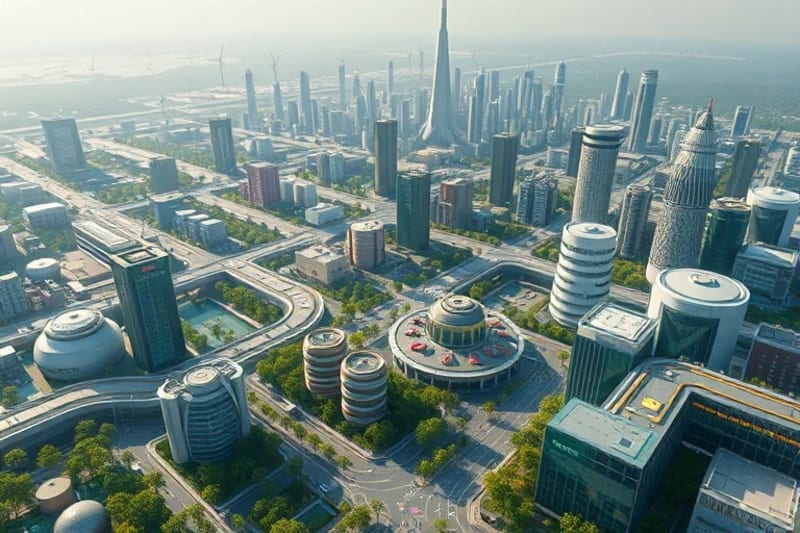 A futuristic urban landscape showcasing the integration of circular economy principles and green energy for a regenerative society.
Green startups are at the forefront of this revolution, developing novel business models that embed sustainability at their core. These enterprises are not just about reducing negative impacts; they are about creating positive value for both society and the environment, fostering an economy that thrives within planetary boundaries.
This article delves into the intricacies of circular business models, the foundational principles of a regenerative economy, and the indispensable role that green startups play in paving the way for a more sustainable and equitable future.
Jump Menu:
1. Introduction to Circularity
2. Foundations of Circular Business Models
3. Principles of the Regenerative Economy
4. The Crucial Role of Green Startups
5. Challenges and Opportunities
Introduction to Circularity
The concept of a circular economy, as distinct from the prevailing linear model, is gaining significant traction globally. It is an economic system aimed at eliminating waste and the continual use of resources. Circular systems employ reuse, sharing, repair, refurbishment, remanufacturing, and recycling to create a closed-loop system, minimizing resource input and waste generation.
This paradigm shift is crucial for addressing pressing environmental issues such as climate change, biodiversity loss, and pollution. By keeping products and materials in use for as long as possible, the circular economy reduces the demand for virgin resources and mitigates the environmental impact associated with extraction and disposal.
The Ellen MacArthur Foundation, a leading proponent of the circular economy, defines it based on three core principles: design out waste and pollution, keep products and materials in use, and regenerate natural systems. These principles guide businesses in rethinking their entire value chain, from product design to end-of-life management.
Foundations of Circular Business Models
Circular business models are innovative frameworks that integrate circular economy principles into their core operations, aiming to create economic value while minimizing environmental impact. These models move away from selling products outright, instead focusing on services, performance, and resource recovery.
Several archetypes of circular business models have emerged, each offering a unique approach to resource optimization. These include product-as-a-service, where customers pay for access to a product rather than ownership; resource recovery, which focuses on recycling and upcycling waste materials; and circular supplies, utilizing renewable, recyclable, or biodegradable inputs.
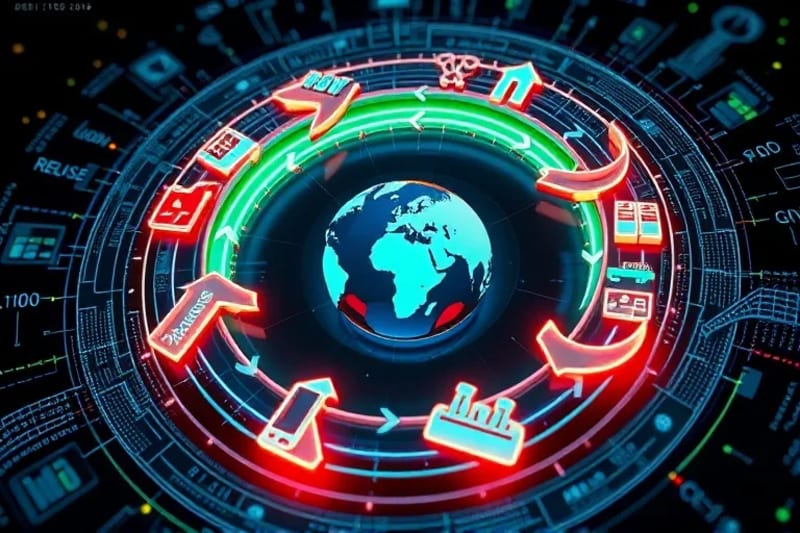 A detailed infographic visualizing the continuous flow of materials within a circular supply chain.
Another prominent model is product life extension, which involves designing products for durability, repairability, and upgradability, thereby extending their useful life. This contrasts sharply with planned obsolescence, a characteristic of the linear economy that drives frequent consumption.
For instance, companies offering repair services, modular product designs, or buy-back programs are actively engaged in product life extension. These models not only reduce waste but also build stronger customer relationships and often create new revenue streams through service provision.
Principles of the Regenerative Economy
While the circular economy focuses on minimizing negative impacts, the regenerative economy takes a step further, aiming to actively restore and enhance natural systems. It's about moving from "less bad" to "more good," ensuring that economic activities contribute positively to ecological health and social well-being.
Key principles of a regenerative economy include prioritizing renewable energy, fostering biodiversity, building social equity, and designing for positive impact. It emphasizes the interconnectedness of ecological, social, and economic systems, recognizing that true prosperity cannot exist at the expense of natural capital or human dignity.
This approach often involves practices like regenerative agriculture, which improves soil health and carbon sequestration, or designing products that biodegrade safely into the environment. It also extends to community-building and fair labor practices, ensuring that economic benefits are broadly distributed.
The regenerative economy is not just an environmental concept; it's a holistic framework for a resilient and thriving future. It invites businesses to consider their broader impact and to become stewards of both natural and human resources, aligning profit with purpose.
The Crucial Role of Green Startups
Green startups are the engines of innovation driving the transition towards circular and regenerative economies. Unburdened by legacy infrastructure or entrenched linear practices, they can design their operations from the ground up with sustainability as a core value proposition. These nascent companies often leverage cutting-edge technologies to create solutions that are both environmentally sound and economically viable.
Their agility allows them to experiment with novel materials, production processes, and consumption models that larger, more established companies might find difficult to implement. From developing biodegradable packaging to creating platforms for product sharing and repair, green startups are demonstrating the feasibility and profitability of circular approaches.
Many green startups are also instrumental in developing the digital infrastructure necessary for a circular economy, such as food traceability systems using blockchain and IoT, or platforms that connect waste streams with new manufacturing opportunities. Their entrepreneurial spirit is vital for overcoming existing market barriers and fostering widespread adoption of sustainable practices.
Furthermore, these startups often act as catalysts for change, inspiring larger corporations to adopt more sustainable practices through partnerships, acquisitions, or simply by demonstrating successful alternative models. Their impact extends beyond their immediate operations, influencing broader industry trends and consumer behavior.
Challenges and Opportunities
Despite the immense potential, green startups pursuing circular and regenerative models face significant challenges. These include securing initial funding, scaling operations, educating consumers, and navigating complex regulatory landscapes designed for linear economies. The upfront investment in new technologies, infrastructure for reverse logistics, and material innovation can be substantial.
Consumer behavior also presents a hurdle; shifting from ownership to service-based models or embracing products made from recycled content requires a change in mindset. Additionally, establishing robust supply chains for collecting, sorting, and processing used materials is a complex undertaking, particularly for small producers, as highlighted in discussions around food traceability and IoT.
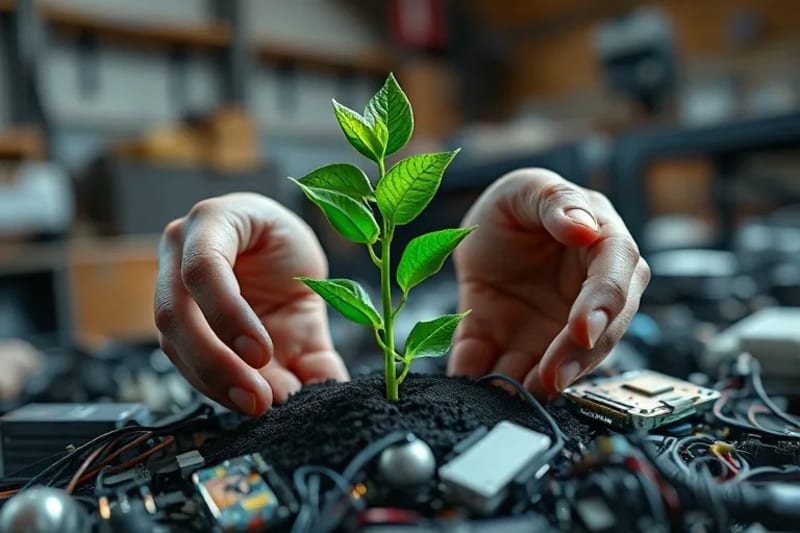 A symbolic representation of regeneration, where new life emerges from repurposed materials and waste.
However, these challenges are dwarfed by the opportunities. The global market for circular economy products and services is projected to grow significantly, offering vast potential for new businesses. Green startups can tap into increasing consumer demand for sustainable products, attract impact investors, and benefit from emerging policy support for circularity.
Furthermore, embracing circularity can lead to greater resource security, reduced volatility in raw material prices, and enhanced brand reputation. By designing out waste, businesses can also unlock new efficiencies and cost savings, making their operations more resilient in the long term. The integration of ethical AI can also help optimize these complex systems.
Pioneering Examples in Practice
Numerous green startups are already demonstrating the viability of circular and regenerative business models across various sectors. In the fashion industry, companies are offering clothing rental services or creating garments from recycled plastics and textile waste. These initiatives not only reduce landfill burden but also provide consumers with more sustainable options.
In electronics, startups are specializing in refurbishing and reselling devices, extending their lifespan and reducing electronic waste. Others are focusing on modular design, allowing consumers to upgrade components rather than replacing entire products. These models challenge the traditional cycle of rapid consumption and disposal.
The food sector sees innovations in reducing food waste through upcycling by-products into new ingredients or creating platforms for redistributing surplus food. Regenerative agriculture startups are also gaining prominence, focusing on practices that restore soil health, enhance biodiversity, and sequester carbon, thereby actively regenerating natural systems.
These examples underscore the diverse ways in which green startups are translating circular and regenerative principles into tangible, impactful business practices. Their success stories serve as powerful testaments to the potential of this economic transformation.
The Future of Sustainable Business
The trajectory towards a circular and regenerative economy is clear, and green startups are leading the charge. As environmental concerns intensify and resource scarcity becomes more pronounced, these business models will transition from niche innovations to mainstream necessities. Policy frameworks, investor interest, and consumer demand are increasingly aligning to support this shift.
The future will likely see a greater integration of digital technologies, such as IoT and AI, to optimize resource tracking, predictive maintenance, and closed-loop logistics. This will enable even more efficient and scalable circular systems, transforming industries from manufacturing to urban management, as seen in smart cities utilizing IoT sensors for sustainable waste management.
Collaboration between startups, established corporations, governments, and research institutions will be paramount. This collaborative ecosystem will foster knowledge sharing, provide necessary infrastructure, and create supportive regulatory environments for circular innovations to flourish. The transition is not merely about new products but about a fundamental redesign of economic systems.
Ultimately, the journey of green startups towards a regenerative economy is a testament to human ingenuity and our capacity to create a future where economic prosperity and ecological health are mutually reinforcing. It's a future where businesses are not just profitable, but also purposeful, contributing positively to the planet and its inhabitants.
Explore Further: Related Topics
- Smart Cities and IoT Sensors for Sustainable Waste Management
- DAOs in Investment: Legal Challenges and Future Opportunities in Finance
- Ethical AI: Avoiding Biases and Ensuring Algorithmic Transparency
- Genetic Bioengineering: Ethical Implications for the Human Future
- Food Traceability with Blockchain and IoT: Challenges for Small Producers
Source: Hybrid content assisted by AI and human editorial supervision.


Comentarios