
Greek Abacus Legacy: Ancient Calculators, AI Evolution
The Greek abacus, a foundational tool in the history of computation, represents far more than a simple counting device. Its legacy extends from the rudimentary calculations of ancient merchants and scholars to the complex algorithms that power modern artificial intelligence. This ancient instrument, often overlooked in the grand narrative of technological progress, laid crucial groundwork for abstract thought and systematic problem-solving, principles that are indispensable in today's digital age.
Understanding the evolution of the abacus is to trace the human quest for efficiency and accuracy in numerical operations. From its earliest forms, likely involving grooves in sand or stone, to the more sophisticated Roman and Chinese versions, the abacus has served as a testament to human ingenuity. Its Greek iteration, while perhaps less visually complex than its Asian counterparts, was instrumental in shaping mathematical understanding in a civilization renowned for its philosophical and scientific contributions.
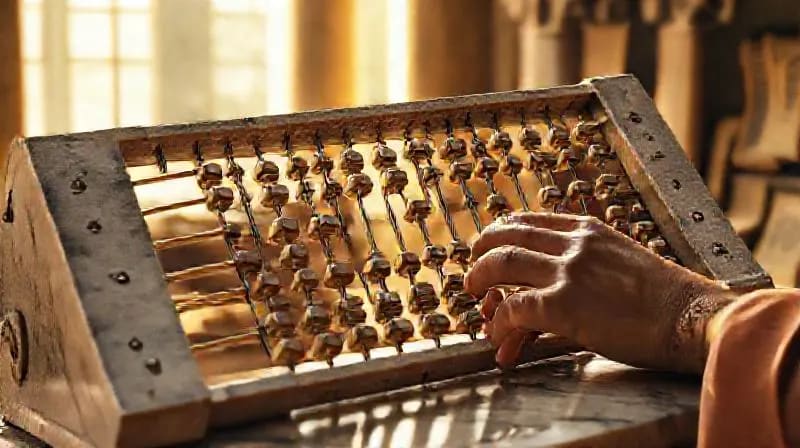 A conceptual representation of the Greek abacus in use, highlighting its role in the intellectual landscape of ancient Greece.
Fuente visual sujeta a disponibilidad del ecosistema: Wikimedia Commons bajo licencia CC BY-SA 4.0 o renderizado conceptual IA.
The very essence of the Greek abacus lies in its ability to externalize and manipulate numerical values, freeing the mind from the burden of memorizing intermediate steps. This externalization is a critical cognitive leap, mirroring the way modern computers offload processing tasks from human brains. It allowed for more complex arithmetic, facilitating trade, engineering, and astronomical calculations, which were vital for the advancement of ancient societies.
The principles embedded within the abacus—place value, carrying over, and borrowing—are fundamental to all arithmetic systems, including the decimal system we use today. By physically representing these operations, the abacus provided a tangible, intuitive learning tool that transcended literacy barriers and became an indispensable part of education and commerce.
Table of Contents
- Origins and Evolution of the Greek Abacus
- Mechanics and Functionality of the Ancient Abacus
- Cognitive Impact and Educational Significance
- Transition to Mechanical Computation
- The Abacus and Modern Artificial Intelligence
- The Enduring Legacy and Future of Computation
Origins and Evolution of the Greek Abacus
The exact origins of the abacus are shrouded in antiquity, with evidence suggesting its use across various ancient civilizations. The Greek abacus, specifically, evolved from simpler counting boards. Early forms likely consisted of lines drawn in sand or dust, with pebbles or counters used to represent numbers. Over time, these evolved into more permanent structures, such as wooden or stone boards with carved grooves.
The most famous example from the Hellenistic world is the Salamis Tablet, discovered in 1846 on the island of Salamis. This marble slab, dating back to around 300 BCE, features carved lines and symbols that indicate its use as a counting board. It represents a sophisticated iteration of the ancient Greek abacus, demonstrating a clear system for handling large numbers and complex calculations, crucial for navigation and astronomical observations. This artifact provides tangible proof of the advanced mathematical practices of the era.
While the Greek abacus might not have had the beads-on-rods design commonly associated with later Chinese or Japanese abaci, its underlying principles were identical. It facilitated positional notation, allowing users to perform addition, subtraction, multiplication, and division with relative ease. This early development in computational tools underscores a continuous human drive to augment cognitive abilities, a theme that resonates deeply with contemporary discussions on artificial intelligence and its potential.
Mechanics and Functionality of the Ancient Abacus
The Greek abacus typically operated on a base-10 system, though variations existed. It consisted of a flat surface, often marble or wood, with parallel lines or grooves. Counters, usually small stones or metal discs, were placed in these grooves to represent numerical values. Each groove corresponded to a different power of ten (units, tens, hundreds, etc.), and within each groove, a certain number of counters would represent the digit for that place value.
For example, to represent the number 345, three counters would be placed in the hundreds groove, four in the tens groove, and five in the units groove. Operations like addition involved moving counters between grooves, carrying over when a sum exceeded ten in a given place value, or borrowing during subtraction. This physical manipulation made abstract mathematical concepts concrete and manageable.
The efficiency of the abacus was not in its speed compared to modern calculators, but in its reliability and the ability to perform complex calculations without needing to write down intermediate steps. This was particularly valuable in a time when writing materials were scarce and numerical notation could be cumbersome. Its design fostered a methodical approach to problem-solving, a precursor to the structured logic found in programming languages today. The foundational principles of the abacus can even be seen in the development of modern Greek abacus reconstruction and modern educational uses, demonstrating its lasting pedagogical value.
Cognitive Impact and Educational Significance
The use of the abacus had a profound cognitive impact on ancient users. It trained the mind in logical sequencing, pattern recognition, and the systematic breakdown of problems. By externalizing numbers, it allowed individuals to focus on the process of calculation rather than the mental burden of holding multiple values in memory. This enhanced cognitive capacity, enabling more sophisticated mathematical reasoning.
In educational settings, the abacus served as an invaluable teaching aid. It provided a concrete representation of abstract numerical concepts, making mathematics accessible to a wider audience. Children and adults alike could grasp principles of arithmetic through hands-on manipulation, fostering a deeper understanding that went beyond rote memorization. This pedagogical approach is still relevant today, with various forms of abacus training used to enhance mathematical skills and cognitive development in children.
The abacus also played a role in the development of early scientific thought. By enabling precise calculations, it supported advancements in astronomy, architecture, and engineering. The ability to accurately predict celestial events or design stable structures relied heavily on the computational power provided by such tools. This early reliance on computational aids highlights a continuous human endeavor to extend intellectual capabilities, a journey that has now led us to the realm of artificial intelligence.
 A visual metaphor illustrating the evolution of computational methods from tangible, mechanical devices to the intricate world of digital processing.
Transition to Mechanical Computation
The principles of the abacus, particularly its modular and positional nature, directly influenced the development of later mechanical calculators. Thinkers like Blaise Pascal and Gottfried Wilhelm Leibniz, centuries after the Greek abacus, designed machines that automated arithmetic operations. Pascal's calculator (Pascaline) in the 17th century used a system of gears and dials to perform addition and subtraction, essentially mechanizing the "carrying over" and "borrowing" operations that were manual on an abacus.
Leibniz's stepped reckoner further advanced this concept, capable of multiplication and division. While these machines were far more complex, their fundamental logic of breaking down arithmetic into discrete, repeatable steps owed a debt to earlier counting devices. The transition from manual manipulation on an abacus to automated gear movements marked a significant step towards the modern computer. This historical progression showcases humanity's continuous pursuit of more powerful and efficient computational tools, a pursuit that now involves sustainable technologies and innovations to address global challenges.
The conceptual leap from the abacus to mechanical calculators was about automating the process. The abacus required a human operator for each step; mechanical calculators performed sequences of steps automatically. This shift from human-driven computation to machine-driven computation is a critical thread connecting the ancient abacus to the modern digital computer and, ultimately, to artificial intelligence.
The Abacus and Modern Artificial Intelligence
At first glance, the ancient Greek abacus and sophisticated artificial intelligence systems seem worlds apart. However, a closer examination reveals a profound conceptual lineage. Both are tools designed to process information, solve problems, and extend human cognitive capabilities. The abacus provided a physical representation of numbers and operations; AI provides abstract models and algorithms that simulate human-like intelligence.
The core idea of breaking down complex problems into simpler, manageable steps is common to both. An abacus user follows a sequence of moves to get a result; an AI algorithm executes a sequence of instructions. The concept of "state" in computation, where the current arrangement of counters on an abacus defines its numerical value, is analogous to the "state" of variables and data structures within an AI program.
Furthermore, the abacus, by making calculation systematic, fostered the development of algorithms. An algorithm is essentially a set of well-defined instructions for solving a problem or performing a computation. The "rules" for using an abacus for addition or multiplication are rudimentary algorithms. Modern AI, from machine learning to deep neural networks, is entirely built upon highly complex and optimized algorithms. The ability of AI to predict complex outcomes, such as in AI prediction of humanitarian crises, relies on these foundational algorithmic principles.
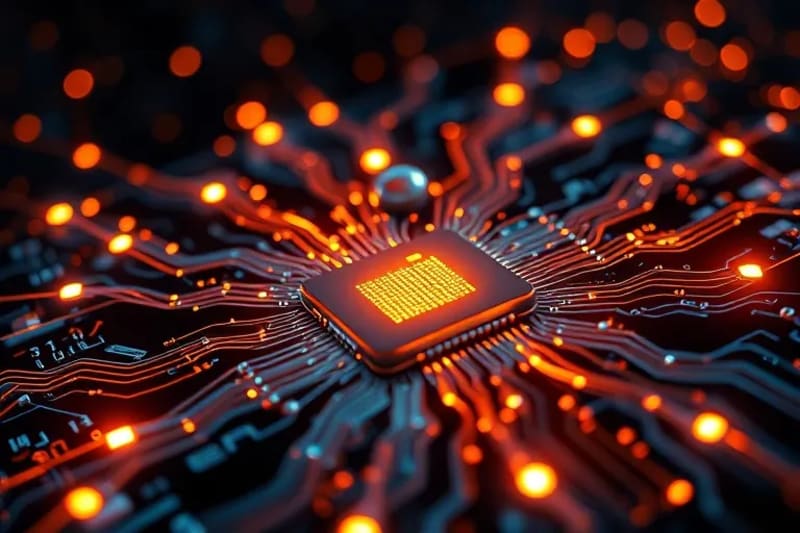 An abstract visualization of AI's intricate computational structures, reflecting the advanced evolution of problem-solving from ancient tools.
The Enduring Legacy and Future of Computation
The journey from the Greek abacus to artificial intelligence is a continuous narrative of human innovation in computation. Each step, from physical counters to mechanical gears, then to electronic circuits, and now to neural networks, builds upon the foundational idea of structured information processing. The abacus taught us how to externalize thought, mechanize operations, and develop systematic approaches to problem-solving.
Today, as AI continues to advance, tackling challenges ranging from scientific discovery to ethical dilemmas, it is useful to reflect on these humble beginnings. The abacus, in its simplicity, embodies the core desire to make sense of the world through numbers and logic. This enduring legacy reminds us that even the most complex technologies have roots in fundamental human needs and ingenious solutions devised centuries ago.
The future of computation promises even more integration of AI into daily life, impacting everything from healthcare to environmental sustainability. Just as the abacus once revolutionized ancient commerce and education, AI is poised to redefine our understanding of intelligence and the boundaries of what machines can achieve. The principles of efficiency, logical structure, and systematic processing, first explored with simple counters on a board, continue to drive this incredible evolution.
The evolution of computational tools, from the ancient abacus to modern AI, is a testament to humanity's relentless pursuit of knowledge and efficiency. Each innovation, no matter how small, contributes to a larger narrative of progress, pushing the boundaries of what is possible. The abacus, in its silent yet profound way, remains a symbol of this enduring quest.
As we navigate the complexities of the digital age, the lessons from the abacus remain relevant. It teaches us the power of simplification, the importance of clear rules, and the beauty of systematic thinking. These are the very foundations upon which the future of artificial intelligence will continue to be built, ensuring that the legacy of ancient calculators endures for generations to come.
Related Searches
- Alien Abduction: Post-Abduction Procedures and Testimonies
- Abencerrajes: Granada's Noble Dynasty and Tragic Legacy
- Maritime Towage Contract: Legal Aspects Colombian Law
- Tactical Urbanism Urban Spaces Coexistence Sustainability: Complete Guide
- Sustainable Fashion Awareness: Brands, Responsible Consumption, Future
- Albarca: Origin, Types, and Legacy of Traditional Footwear
- Colombian Air Transport Law: Decree 410 Overview
- Rogue Anti-Spyware Removal: Complete Digital Security Guide
- Commercial Space Law: Asteroid Mining Orbital Tourism
- Ship Leasing Colombia: Maritime Commercial Code
- Bumblebee Conservation: Effective Strategies Vital Pollinator
- Bioacoustics Wellness: Sound Therapy Mental Cognitive Health
- Astrological Generations: Impact Slow Planets Collectives
- Fixed Stars Natal: Conjunction, Destiny, and Potential
- Holographic Constellations VR Exploring Astral Realities
- Quantum Wellness Prayers: Healing Energy Prayer
- Seraphim Guardians God's Throne Soul Purification
- Holy Water Salt Purification Rituals: Ancient Uses
- Ancestral Healing Spiritual Lineage Roots Connection Guide
- Uranus Astrology: Rebellion, Innovation, Change
- Mundane Astrology: Predicting Global Events, Societal Shifts
Source: Hybrid content assisted by AI and human editorial supervision.


Comentarios