
Cyborg Philosophy: Ethics, Consciousness, Human-Machine Integration
The concept of the cyborg, a portmanteau of "cybernetic organism," transcends mere science fiction; it represents a profound philosophical frontier. As technology advances, the boundaries between human and machine blur, prompting critical questions about identity, consciousness, and the very essence of what it means to be human in an increasingly digital world.
This exploration delves into the intricate ethical dilemmas, the implications for our understanding of consciousness, and the multifaceted challenges and opportunities presented by human-machine integration. From prosthetic limbs controlled by thought to neural implants enhancing cognitive abilities, the cyborg is no longer a distant fantasy but an emerging reality that demands our philosophical attention.
Table of Contents
- The Dawn of the Cyborg: A Philosophical Introduction
- Historical Roots and Cybernetic Foundations
- Ethical Labyrinths: Identity, Autonomy, and Equity
- The Augmented Mind: Consciousness and Cognition
- Societal Repercussions: Law, Labor, and Acceptance
- Charting the Future: Transhumanism and Posthumanism
- Navigating the Human-Machine Frontier
The Dawn of the Cyborg: A Philosophical Introduction
The term "cyborg" was coined in 1960 by Manfred Clynes and Nathan Kline, referring to a self-regulating human-machine system designed for extraterrestrial survival. However, its philosophical implications quickly expanded beyond space exploration, touching upon fundamental questions about what constitutes a human being when biological and artificial components merge.
At its core, cyborg philosophy examines the ontological and epistemological challenges posed by such integration. It forces us to reconsider traditional definitions of life, intelligence, and even the soul. Are we merely biological machines, or does technology's embrace elevate us to a new form of existence?
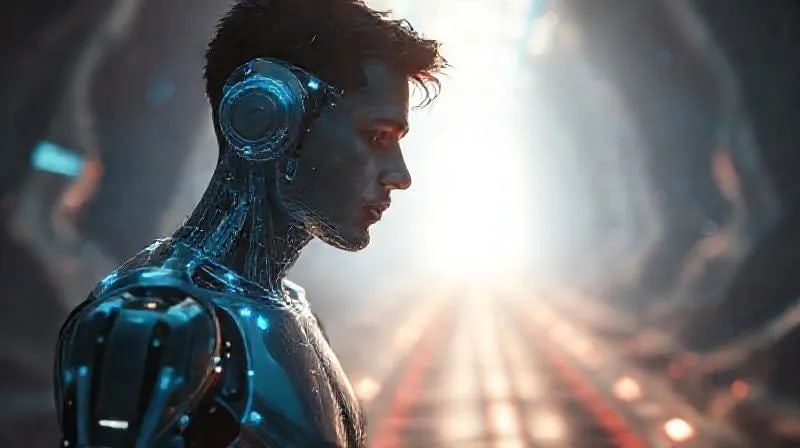
Conceptual representations and theoretical frameworks illustrating the intricate relationship between human consciousness and technological augmentation, foundational to cyborg philosophy.
This evocative image, a conceptual render, explores the profound philosophical intersections of humanity and technology, reflecting the core inquiries of cyborg existence.
The philosophical inquiry into cyborgs is multidisciplinary, drawing from ethics, metaphysics, philosophy of mind, and even political philosophy. It's not just about what we *can* do with technology, but what we *should* do, and what the consequences might be for our individual and collective future.
Historical Roots and Cybernetic Foundations
While the term "cyborg" is relatively new, the idea of enhancing human capabilities through artificial means has ancient roots. Mythological figures like Hephaestus, the Greek god of technology, crafting automatons, or the Golem of Jewish folklore, hint at humanity's enduring fascination with extending its reach beyond natural limits.
The mid-20th century saw the emergence of cybernetics, a field pioneered by Norbert Wiener, which studied control and communication in animal and machine. This scientific discipline provided the theoretical backbone for understanding how biological and mechanical systems could interact and self-regulate. Cybernetics laid the groundwork for the practical realization of cyborg concepts, moving them from the realm of myth to scientific possibility.
Early examples of human-machine integration were often therapeutic, such as pacemakers or prosthetic limbs. These innovations, while not initially framed as "cyborgs," nonetheless represented the first steps in blurring the lines between the organic and the artificial. They demonstrated the potential for technology to restore, and eventually enhance, human function.
Ethical Labyrinths: Identity, Autonomy, and Equity
The ethical implications of cyborg technology are perhaps the most pressing. As we integrate more technology into our bodies and minds, fundamental questions about identity and personhood arise. If a significant portion of our being is artificial, are we still "human" in the traditional sense? What happens to our sense of self when memories can be downloaded or cognitive functions outsourced?
Autonomy and control are also critical concerns. Who owns the data generated by our implants? Who controls the updates or modifications to our augmented bodies? The potential for external entities—corporations or governments—to exert control over our very being raises profound questions about freedom and self-determination. This ties into broader discussions around Neuro-rights and Mental Privacy in AI, highlighting the need for robust ethical frameworks.
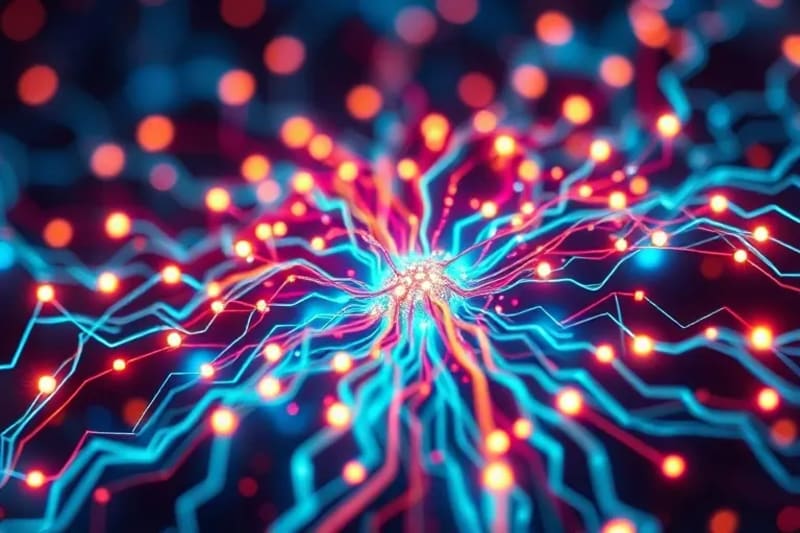
A visual representation of the intricate fusion between organic neural networks and synthetic circuits, embodying the augmented mind.
Furthermore, the issue of equity and access cannot be overlooked. If advanced augmentations offer significant advantages, who will have access to them? Will this create a new form of social stratification, exacerbating existing inequalities and creating a divide between the "augmented" and the "unaugmented"? This concern is similar to debates surrounding Genetic Bioengineering and its Ethical Implications, where access to transformative technologies could create new societal rifts.
The ethical framework for human-machine integration must address:
1. The preservation of human dignity and autonomy.
2. Ensuring equitable access to enhancement technologies.
3. Establishing clear lines of responsibility for actions involving augmented individuals.
4. Protecting mental privacy and cognitive freedom in an age of neural interfaces.
The responsibility and accountability for the actions of augmented individuals or the systems they are connected to also present complex legal and moral challenges. If an autonomous prosthetic causes harm, where does the liability lie? These questions demand careful consideration and proactive policy development.
The Augmented Mind: Consciousness and Cognition
Perhaps the most profound philosophical questions arise when considering the impact of technology on consciousness itself. The "extended mind hypothesis," proposed by Andy Clark and David Chalmers, suggests that external tools can become extensions of our cognitive processes. A cyborg takes this a step further, integrating these tools directly into our biological framework.
If our memories can be stored externally or our processing power enhanced by artificial intelligence, what happens to our subjective experience? Does consciousness reside solely in the biological brain, or can it be distributed across a hybrid system? These inquiries push the boundaries of our understanding of the mind, echoing discussions about exploring expanded consciousness through different means.
The development of advanced AI also brings into question the nature of synthetic consciousness. If we can create artificial intelligences capable of subjective experience, how does this impact our definition of sentient life? The potential for AI to integrate directly with human brains raises the prospect of entirely new forms of consciousness, blurring the lines between human and machine cognition.
Societal Repercussions: Law, Labor, and Acceptance
Beyond individual ethics, the rise of cyborgs will inevitably reshape society. Legal frameworks will need to adapt to define the rights and responsibilities of augmented individuals. Current laws are largely based on a clear distinction between human and machine, a distinction that cyborg technology erodes.
The world of work and employment will also undergo significant transformation. If augmented individuals possess superior cognitive or physical abilities, how will this impact job markets? Will certain professions become inaccessible to the unaugmented, or will new forms of collaboration emerge between humans and their technological extensions?
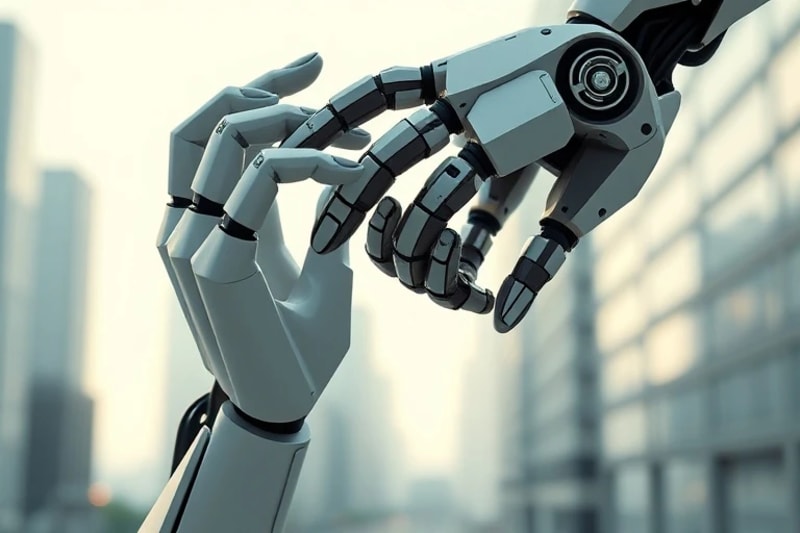
A symbolic representation of the collaborative future between humanity and advanced technology, emphasizing integration and mutual support.
Social integration and acceptance will be crucial. Will augmented individuals face discrimination or prejudice? Conversely, will there be pressure to undergo augmentation to keep pace with societal expectations? These questions highlight the need for open dialogue and inclusive policies to ensure a harmonious transition into a cyborg-integrated future.
Charting the Future: Transhumanism and Posthumanism
The philosophical discourse around cyborgs often intersects with transhumanism and posthumanism. Transhumanism is a movement advocating for the enhancement of the human condition through technology, aiming to overcome biological limitations like aging, disease, and even death. Cyborg technology is a primary vehicle for achieving these transhumanist goals.
Posthumanism, on the other hand, suggests a future where the very concept of "human" as we know it is transcended. This could involve radical biological and technological transformations that lead to beings fundamentally different from present-day humans. The philosophical implications of such a future are vast, touching upon the potential for new forms of intelligence, social structures, and even evolutionary paths.
These perspectives offer both utopian visions of a perfected humanity and dystopian warnings of unforeseen consequences. Understanding these philosophical currents is essential for guiding the development of human-machine integration responsibly. The predictions around Technological Singularity and AI further underscore the urgency of these philosophical considerations.
Navigating the Human-Machine Frontier
The philosophy of the cyborg is not merely an academic exercise; it is a critical framework for navigating the rapidly evolving landscape of human-machine integration. As prosthetic technology becomes more sophisticated, neural interfaces more commonplace, and AI more integrated into our daily lives, these philosophical questions will move from theoretical debates to practical realities.
Open dialogue, interdisciplinary research, and ethical foresight are paramount. We must collectively decide what kind of future we want to build, ensuring that technology serves humanity's best interests, rather than diminishing our essential qualities. The journey into the cyborg age is a journey into self-redefinition, and philosophy will be our compass.
Explore More on Technology and Ethics
Digital Greek Mythology: Archetypes in Video Games and Augmented Reality
Responsible Investment (ESG): A Key Trend in the Stock Market
Source: Hybrid content assisted by AI and human editorial supervision.


Comentarios