
Submarine IoT Sensors: Ocean Monitoring, Conservation Strategies
The vastness and mystery of our oceans have long presented significant challenges for comprehensive study and effective conservation. Submarine Internet of Things (IoT) sensors represent a groundbreaking technological frontier, offering unprecedented capabilities for monitoring marine ecosystems. These sophisticated devices are transforming how scientists, conservationists, and policymakers understand and protect the delicate balance of underwater life.
By deploying networks of interconnected sensors beneath the waves, we can gather real-time data on a multitude of environmental parameters, from water quality to marine wildlife behavior. This continuous stream of information is crucial for detecting changes, predicting threats, and implementing targeted conservation strategies. The integration of IoT technology into oceanography marks a pivotal shift towards more data-driven and proactive approaches to marine stewardship.
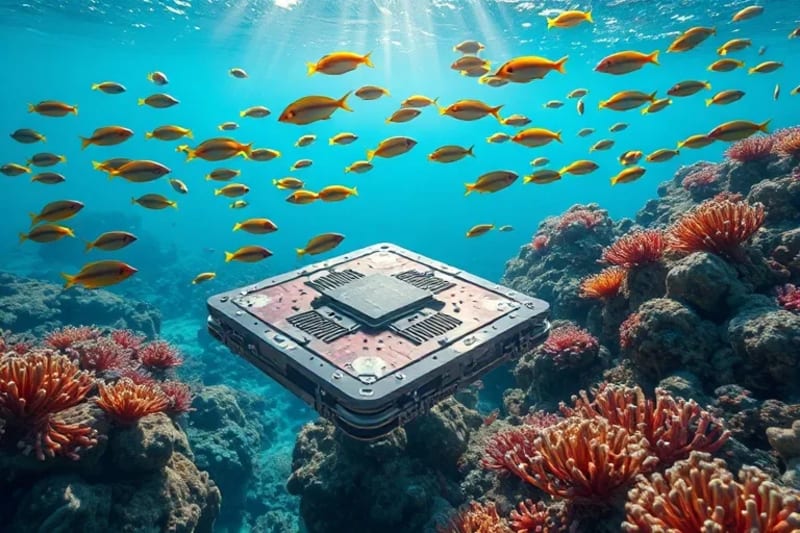
An advanced submarine IoT sensor array meticulously integrated within a vibrant coral reef, diligently monitoring marine health and biodiversity.
Table of Contents
- 1. What Are Submarine IoT Sensors?
- 2. How They Work and Their Components
- 3. Key Applications in Marine Monitoring
- 4. Benefits for Ocean Conservation
- 5. Challenges and Limitations
- 6. The Future of Submarine IoT in Conservation
- 7. Conservation Strategies Informed by IoT
1. What Are Submarine IoT Sensors?
Submarine IoT sensors are specialized electronic devices designed to operate in underwater environments, collecting and transmitting data about marine conditions. Unlike traditional data loggers that require physical retrieval, IoT sensors leverage network connectivity to send information wirelessly, often in real-time, to surface stations or satellites. This capability allows for continuous, long-term monitoring without constant human intervention.
These sensors are built to withstand the extreme pressures, corrosive saltwater, and low-light conditions characteristic of underwater habitats. Their robust design and advanced communication protocols make them indispensable tools for modern oceanographic research and environmental protection efforts. The "Internet of Things" aspect refers to their ability to connect and share data within a larger network, creating a comprehensive picture of the marine environment.
2. How They Work and Their Components
At their core, submarine IoT sensors consist of several key components that enable their functionality. These typically include a sensing element, a micro-controller for data processing, a communication module, and a power source. The sensing element is responsible for detecting specific environmental parameters, which are then converted into digital data by the micro-controller.
Communication underwater is particularly challenging due to the rapid attenuation of radio waves. Therefore, submarine IoT sensors often utilize acoustic modems for short-range communication or satellite uplinks for surface-based data transmission. Power is usually supplied by long-lasting batteries or, in more advanced systems, by energy harvesting technologies such as solar panels (for surface buoys) or thermoelectric generators that exploit temperature differences.

A detailed digital painting illustrating data streams from diverse underwater IoT sensors converging into a holographic interface for real-time analysis.
The data collected can be diverse, ranging from physical properties to biological indicators. Here's a breakdown of common sensor types and their functions:
- Temperature Sensors: Measure water temperature, crucial for understanding climate change impacts, ocean currents, and species distribution.
- Salinity Sensors: Determine salt content, affecting ocean density, circulation, and marine organism habitats.
- pH Sensors: Monitor ocean acidity, vital for assessing ocean acidification, a major threat to coral reefs and shellfish.
- Dissolved Oxygen Sensors: Measure oxygen levels, indicating marine health and supporting aquatic life.
- Turbidity Sensors: Detect water clarity, important for studying sediment transport, pollution, and light penetration for photosynthesis.
- Acoustic Sensors (Hydrophones): Listen to underwater sounds, used for tracking marine mammals, detecting illegal fishing, and monitoring seismic activity.
- Chemical Sensors: Identify specific pollutants, nutrients, or toxins in the water.
- Imaging Sensors (Cameras): Capture visual data for biodiversity assessment, habitat mapping, and monitoring specific species.
3. Key Applications in Marine Monitoring
The versatility of submarine IoT sensors allows for a wide range of applications that are critical for understanding and managing marine ecosystems. These applications span from fundamental research to practical conservation efforts.
One primary application is biodiversity monitoring. Sensors equipped with cameras and acoustic devices can identify and track marine species, providing insights into population dynamics, migration patterns, and habitat usage. This data is invaluable for protecting endangered species and managing fisheries sustainably.
Another crucial area is climate change research. By continuously measuring temperature, pH, and ocean currents, IoT sensors help scientists model the impacts of global warming, such as ocean acidification, sea-level rise, and changes in marine heatwaves. This long-term data series is essential for predicting future scenarios and developing adaptation strategies.

An abstract watercolor depicting a futuristic underwater research station, featuring glowing sensor nodes, symbolizing humanity's commitment to deep-sea exploration and conservation.
Furthermore, IoT sensors play a vital role in pollution detection and monitoring. They can identify the presence and concentration of various pollutants, including plastics, oil spills, and chemical runoff. Early detection allows for rapid response and mitigation efforts, minimizing environmental damage. For instance, sensors can track the dispersion of microplastics, helping to understand their impact on marine food webs.
In terms of resource management, these sensors can monitor the health of aquaculture farms, optimizing conditions for farmed species and preventing disease outbreaks. They also provide data for managing marine protected areas, ensuring compliance with regulations and assessing the effectiveness of conservation measures. The ability to monitor remotely and continuously reduces the need for costly and time-consuming manual surveys.
4. Benefits for Ocean Conservation
The benefits of submarine IoT sensors for ocean conservation are manifold, providing a foundation for more effective and data-driven environmental stewardship. These advantages are transforming the landscape of marine protection.
- Real-time Data: The most significant advantage is the ability to collect and transmit data continuously and in real-time. This allows for immediate detection of anomalies, such as sudden changes in water quality or the presence of pollutants, enabling rapid response actions.
- Enhanced Understanding: Long-term, high-resolution data sets provide scientists with a deeper understanding of complex marine processes, ecological interactions, and the impacts of human activities. This knowledge is fundamental for informed decision-making.
- Cost-Effectiveness: While initial deployment can be an investment, automated IoT networks can significantly reduce the long-term costs associated with manual data collection, research vessel operations, and human labor.
- Remote Monitoring: Sensors can be deployed in remote, hazardous, or deep-sea environments that are difficult or impossible for humans to access regularly. This expands our monitoring capabilities to previously unexplored or inaccessible areas.
- Predictive Capabilities: With sufficient historical data, machine learning algorithms can be applied to IoT sensor data to predict environmental events, such as harmful algal blooms or the spread of invasive species, allowing for proactive intervention.
- Increased Public Awareness: Data collected by these sensors can be visualized and shared with the public, fostering greater awareness and engagement in ocean conservation efforts.
5. Challenges and Limitations
Despite their immense potential, submarine IoT sensors face several significant challenges that researchers and engineers are actively working to overcome. The harsh underwater environment presents unique obstacles to technology deployment and operation.
One major hurdle is power management. Sensors need to operate for extended periods without external power, requiring efficient energy consumption and robust battery technologies or innovative energy harvesting solutions. Replacing batteries in deep-sea deployments is a complex and costly operation.
Underwater communication is another critical challenge. Radio waves, which power most terrestrial IoT devices, do not travel well through water. This necessitates the use of acoustic communication, which is slower, has limited bandwidth, and can be affected by noise and interference. Optical communication offers higher bandwidth but is limited by range and water clarity.
The harsh marine environment itself poses threats to sensor longevity. Corrosion from saltwater, biofouling (the accumulation of marine organisms on surfaces), and extreme pressures can damage equipment and impair sensor accuracy. Robust materials and anti-fouling coatings are essential but add to the cost and complexity.
Furthermore, the sheer volume of data generated by large sensor networks can be overwhelming. Effective data processing, storage, and analysis infrastructure are required to extract meaningful insights. Cybersecurity also becomes a concern, as these networks could be vulnerable to tampering or data breaches.
6. The Future of Submarine IoT in Conservation
The future of submarine IoT sensors in marine conservation is bright, with ongoing advancements promising to enhance their capabilities and expand their reach. Integration with other emerging technologies is set to revolutionize ocean monitoring.
One key development is the increasing use of Artificial Intelligence (AI) and Machine Learning (ML). AI can process vast amounts of sensor data, identify patterns, and detect anomalies more efficiently than humans. This enables predictive modeling for environmental changes, early warning systems for natural disasters, and automated identification of marine species from acoustic or visual data.
The deployment of autonomous underwater vehicles (AUVs) equipped with IoT sensors will further extend monitoring capabilities. These robotic submersibles can patrol vast areas, collect data, and even perform maintenance tasks on sensor networks, reducing the need for human intervention and expanding coverage to deeper and more remote regions.
Improvements in underwater networking and communication technologies, such as advanced acoustic modems and hybrid optical-acoustic systems, will enable faster data transfer and more robust network topologies. The development of self-organizing and self-healing sensor networks will also improve reliability and longevity.
Moreover, the miniaturization of sensors and advancements in energy harvesting will lead to smaller, more discreet, and longer-lasting devices. This will allow for broader deployment and less intrusive monitoring, minimizing impact on marine life while maximizing data collection.
7. Conservation Strategies Informed by IoT
The rich, continuous data provided by submarine IoT sensors is instrumental in shaping and refining effective marine conservation strategies. This data moves conservation from reactive measures to proactive, evidence-based interventions.
For instance, adaptive management of marine protected areas (MPAs) can be significantly enhanced. IoT data can monitor the health of protected ecosystems, track the recovery of species, and detect incursions by illegal fishing vessels. This allows conservation managers to adjust boundaries, regulations, or enforcement efforts in real-time to maximize effectiveness.
In the fight against illegal, unreported, and unregulated (IUU) fishing, acoustic sensors can detect fishing vessel activity in restricted zones, while satellite-linked buoys can track fishing gear. This intelligence provides law enforcement agencies with the necessary evidence to combat illicit practices that deplete fish stocks and damage marine habitats.
Furthermore, IoT sensor networks contribute to the development of early warning systems for environmental hazards. By monitoring parameters like temperature, pH, and dissolved oxygen, scientists can predict harmful algal blooms, hypoxic zones (dead zones), or the onset of marine heatwaves. This allows for timely warnings to coastal communities, fisheries, and tourism operators, mitigating economic and ecological damage.
The data also supports sustainable aquaculture practices by optimizing feeding regimes, monitoring water quality, and detecting disease early, reducing environmental impact and improving yield. Ultimately, submarine IoT sensors provide the scientific foundation for robust environmental policies, international agreements, and public engagement campaigns that are essential for safeguarding our oceans for future generations.
Source: Hybrid content assisted by AIs and human editorial supervision.


Comentarios