
Deepfakes: Reality, Psychology, Digital Deception
In an increasingly digital world, the lines between reality and fabrication have become blurred, largely due to the emergence of advanced technologies like deepfakes. These sophisticated synthetic media have transcended the realm of science fiction, presenting a profound dilemma for human perception and trust. Deepfakes leverage artificial intelligence to create highly convincing, yet entirely fake, images, audio, and video content.
The implications of this technology extend far beyond mere entertainment, touching upon critical aspects of psychology, social cohesion, and global security. As deepfakes become more accessible and realistic, understanding their mechanics, their psychological impact, and the strategies to counter their deceptive power is paramount. This article aims to explore the multifaceted challenge deepfakes pose to our understanding of reality.
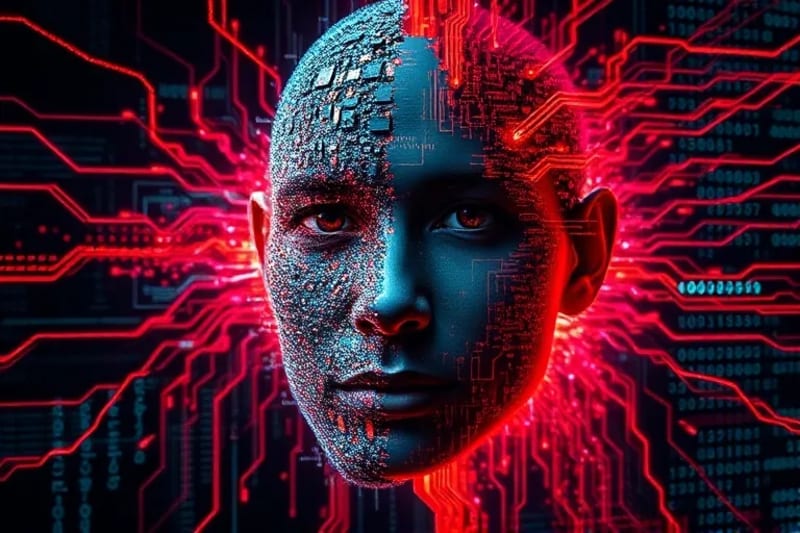
The digital fragmentation of identity, symbolizing the profound impact of deepfake technology on perception and truth.
The rise of deepfake technology forces us to critically re-evaluate our reliance on visual and auditory evidence, a cornerstone of human communication and information gathering for centuries. This phenomenon introduces a new layer of complexity to media literacy, demanding a more discerning approach to the content we consume daily. The challenge is not just technical but deeply psychological, affecting our cognitive processes and our ability to distinguish truth from highly persuasive falsehoods.
Table of Contents
- What Are Deepfakes? Understanding the Technology
- The Psychological Impact: Erosion of Trust and Cognitive Dissonance
- Societal and Geopolitical Challenges of Synthetic Media
- Detecting Deepfakes: Technical and Human Approaches
- Regulatory and Policy Responses to Deepfake Threats
- The Future of Reality in the Age of Deepfakes
What Are Deepfakes? Understanding the Technology
Deepfakes are a form of synthetic media in which a person in an existing image or video is replaced with someone else's likeness. The term "deepfake" is a portmanteau of "deep learning" and "fake," reflecting the artificial intelligence techniques at its core. Specifically, deepfakes are often generated using Generative Adversarial Networks (GANs).
GANs consist of two neural networks: a generator and a discriminator. The generator creates new, synthetic data, while the discriminator tries to determine if the data is real or fake. Through a continuous adversarial process, both networks improve, with the generator becoming increasingly adept at producing highly realistic fakes that can fool the discriminator. This iterative process is what makes deepfakes so convincing.
The creation process typically involves feeding a large dataset of images or videos of a target person into the AI model. The AI then learns the facial expressions, speech patterns, and mannerisms of that person. Once trained, it can then superimpose this learned likeness onto another person's body or make them say things they never did. This technology has evolved rapidly, moving from rudimentary, easily detectable fakes to highly sophisticated creations that are nearly indistinguishable from genuine content.
The Psychological Impact: Erosion of Trust and Cognitive Dissonance
The proliferation of deepfakes has profound psychological implications, primarily centered around the erosion of trust. Humans are inherently visual creatures, often relying on what they see and hear as undeniable proof. Deepfakes shatter this fundamental assumption, forcing individuals to question the authenticity of virtually any digital media. This constant state of doubt can lead to a pervasive sense of distrust in news, public figures, and even personal interactions.

A person grappling with the unsettling reality of a deepfake, reflecting the profound psychological impact of digital manipulation.
One significant psychological effect is cognitive dissonance. When confronted with a deepfake that appears to show a credible source saying or doing something completely out of character, individuals experience mental discomfort. They are forced to reconcile conflicting beliefs: the belief in the authenticity of visual media versus the knowledge that such content can be fabricated. This internal conflict can be stressful and lead to confusion, making it harder to form coherent beliefs about the world.
Moreover, deepfakes can be weaponized for personal harm, such as revenge porn or defamation. The creation of non-consensual deepfake pornography, for instance, can cause severe psychological distress, reputational damage, and long-lasting trauma for victims. The ease with which such content can be created and disseminated exacerbates the harm, making it incredibly difficult for victims to reclaim their privacy and dignity. This malicious use preys on the psychological vulnerability of individuals, exploiting their public image for nefarious purposes.
The "liar's dividend" is another concerning psychological phenomenon associated with deepfakes. This refers to the situation where genuine, incriminating evidence can be dismissed as a deepfake. If a public figure is caught on video doing something unethical, they can simply claim it's a deepfake, leveraging the general public's awareness of synthetic media to sow doubt. This undermines accountability and makes it harder to hold individuals responsible for their actions, further eroding public trust in institutions and media.
Societal and Geopolitical Challenges of Synthetic Media
Beyond individual psychological impacts, deepfakes pose significant societal and geopolitical challenges. Their ability to generate convincing misinformation and propaganda makes them a potent tool for manipulation. In political contexts, deepfakes can be used to spread false narratives, discredit opponents, or influence public opinion during elections. Imagine a deepfake video of a political leader making inflammatory statements or confessing to a crime; such content could rapidly destabilize a nation.
The threat of election interference is particularly acute. Foreign adversaries could use deepfakes to sow discord, amplify divisions, or directly impact voter behavior. By creating fabricated endorsements, scandalous accusations, or misleading campaign messages, deepfakes can undermine democratic processes and erode faith in electoral integrity. The speed of digital dissemination means that such content can go viral before it can be debunked, causing irreversible damage.
National security risks also emerge from deepfake technology. A deepfake of a head of state declaring war or issuing a false threat could trigger international crises. Similarly, deepfakes could be used in corporate espionage to manipulate stock prices, damage company reputations, or engage in sophisticated fraud. The economic and political consequences of such attacks could be catastrophic, leading to widespread panic and financial instability.
The ethical dilemmas surrounding deepfakes are complex and far-reaching. Who is responsible when a deepfake causes harm? The creator? The platform that hosts it? The AI developer? These questions highlight the need for clear legal frameworks and ethical guidelines to govern the creation and dissemination of synthetic media. Without such regulations, the potential for abuse remains dangerously high.
Detecting Deepfakes: Technical and Human Approaches
The arms race between deepfake creators and detectors is ongoing, with both sides constantly evolving their techniques. Technical methods for deepfake detection primarily involve forensic analysis and AI-powered tools. Forensic experts look for subtle inconsistencies that betray a deepfake's artificial nature. These can include:
- Inconsistent Lighting: Lighting conditions might not match across different parts of the image or video.
- Unnatural Blinking Patterns: Deepfake models often struggle to replicate natural human blinking.
- Lack of Micro-expressions: Genuine human faces display subtle, involuntary muscle movements that deepfakes often miss.
- Pixel Anomalies: Digital artifacts or distortions at the pixel level can indicate manipulation.
- Inconsistent Head Poses: The angle or movement of the head might not align with the body or background.
A conceptual representation of the intricate digital manipulation and algorithmic deception inherent in deepfake technology.
AI detection tools are also being developed, often using machine learning models trained on vast datasets of both real and fake media. These detectors aim to identify patterns and anomalies that humans might miss. However, as deepfake generation technology improves, so must detection, leading to a continuous cycle of innovation on both sides.
Crucially, human vigilance and critical thinking remain indispensable. Individuals must adopt a skeptical approach to online content, especially if it seems sensational or emotionally charged. Key strategies include:
- Source Verification: Always check the origin of the content. Is it from a reputable news organization or an unknown social media account?
- Cross-referencing: Look for corroborating evidence from multiple trusted sources. If only one obscure source reports a sensational event, be wary.
- Contextual Analysis: Consider the context in which the content appears. Does it make sense? Is it consistent with known facts?
- Visual and Auditory Cues: Pay attention to subtle details like unnatural movements, inconsistent shadows, strange audio quality, or robotic speech patterns.
- Reverse Image Search: Tools like Google Reverse Image Search can help trace the origin of an image and identify if it has been used out of context or manipulated.
Regulatory and Policy Responses to Deepfake Threats
Governments and international bodies are beginning to recognize the severe threats posed by deepfakes and are working towards regulatory and policy responses. In the United States, several states have enacted laws addressing deepfakes, particularly concerning political campaigns and non-consensual pornography. For example, California and Texas have laws prohibiting the distribution of deepfake political videos within a certain timeframe before an election, and Virginia has made it illegal to create deepfake pornography without consent.
The European Union is also at the forefront of regulating AI, including deepfake technology. The proposed AI Act, for instance, includes provisions that would require AI systems generating deepfakes to disclose that the content is artificially created. This transparency requirement aims to empower users to distinguish between real and synthetic media. Such regulations are crucial for establishing accountability and mitigating the harmful effects of deepfakes.
Beyond legislation, platform responsibilities are a key area of focus. Social media companies and content hosting platforms are increasingly pressured to implement robust policies for identifying and removing deepfakes. This includes investing in AI detection tools, providing clear reporting mechanisms for users, and collaborating with fact-checking organizations. However, the sheer volume of content makes this a monumental task, requiring continuous innovation and resource allocation.
International cooperation is also vital, as deepfakes do not respect national borders. Collaborative efforts among governments, tech companies, and civil society organizations are necessary to develop global standards, share best practices, and coordinate responses to cross-border deepfake campaigns. This collective approach is essential for building a resilient defense against the pervasive threat of synthetic media.
The Future of Reality in the Age of Deepfakes
The ongoing evolution of deepfake technology suggests that the challenge to human perception and reality will only intensify. The "arms race" between creators and detectors is likely to continue, pushing the boundaries of what is technically possible. As deepfakes become more sophisticated, they will integrate seamlessly into various forms of media, making detection increasingly difficult for the untrained eye.
In this future, digital literacy will no longer be an optional skill but a fundamental necessity. Education on critical media consumption, source evaluation, and the mechanics of synthetic media will be crucial from an early age. Empowering individuals with the tools and knowledge to navigate a landscape saturated with potentially deceptive content is our best defense against widespread manipulation.
Philosophically, deepfakes force us to confront the nature of truth itself. If visual and auditory evidence can no longer be trusted implicitly, what constitutes verifiable reality? This question has profound implications for our legal systems, historical records, and collective memory. The challenge is not just about identifying fakes, but about rebuilding trust in a world where reality can be manufactured at will.
Ultimately, the dilemma of perception posed by deepfakes is a call to action for individuals, technologists, policymakers, and educators alike. It demands a multi-pronged approach that combines technological innovation in detection, robust legal frameworks, ethical guidelines, and widespread digital literacy. Only through such concerted efforts can we hope to preserve the integrity of information and safeguard human psychology in the face of an ever-evolving digital deception.
Source: Hybrid content assisted by AIs and human editorial supervision.


Comentarios