
IoT Smart Cities: Energy Management, Sustainability Success | Althox
The rapid pace of urbanization presents both unprecedented challenges and remarkable opportunities. As cities grow, so does their demand for resources, particularly energy. The concept of a "smart city," leveraging advanced technologies to improve urban living, has emerged as a critical framework for addressing these complexities. At the heart of this transformation lies the Internet of Things (IoT), a network of interconnected devices, sensors, and software that collect and exchange data, enabling intelligent decision-making and automated processes.
IoT's integration into urban infrastructure is fundamentally reshaping how cities manage their energy consumption and pursue sustainability goals. By providing real-time data and enabling remote control, IoT solutions offer a powerful toolkit for optimizing resource allocation, reducing waste, and fostering a greener urban environment. This comprehensive guide explores the pivotal role of IoT in enhancing energy management and sustainability within smart cities, highlighting key applications and successful implementations worldwide.
Introduction to IoT and Smart Cities
A smart city is an urban area that uses various types of electronic methods and sensors to collect data. Information gained from that data is used to manage assets, resources, and services efficiently; in return, that data is used to improve operations across the city. This includes data collected from citizens, devices, buildings, and assets that is processed and analyzed to monitor and manage traffic and transportation systems, power plants, utilities, water supply networks, waste management, crime detection, information systems, schools, libraries, hospitals, and other community services.
The Internet of Things (IoT) serves as the foundational technology enabling this interconnected urban ecosystem. It refers to the vast network of physical objects embedded with sensors, software, and other technologies for the purpose of connecting and exchanging data with other devices and systems over the internet. In the context of smart cities, IoT devices range from smart streetlights and waste bins to environmental sensors and connected vehicles, all contributing to a rich data landscape that informs urban management.

A panoramic view of a Metaverse Digital Law: Property, Identity, Jurisdiction at dusk, showcasing its advanced energy management and interconnected systems.
The imperative for smart cities to prioritize energy management and sustainability stems from several factors. Rapid population growth leads to increased energy demand, contributing to greenhouse gas emissions and climate change. Furthermore, inefficient resource use strains urban budgets and natural environments. By integrating IoT, cities can transition from reactive management to proactive, data-driven optimization, fostering resilience and significantly improving the quality of life for their residents.
The Role of IoT in Modern Urban Energy Management
IoT technologies provide the backbone for intelligent energy management by enabling real-time monitoring, analysis, and control of energy consumption across various urban sectors. This capability allows city planners and utility providers to gain unprecedented insights into energy usage patterns, identify inefficiencies, and implement targeted interventions. The core mechanisms involve a vast network of sensors, meters, and actuators communicating data to centralized platforms.
For instance, smart meters deployed in homes and businesses can track electricity consumption minute-by-minute, empowering consumers with information to adjust their habits and enabling utilities to manage demand more effectively. Similarly, sensors in public infrastructure can monitor energy performance, signaling maintenance needs or opportunities for optimization. This real-time feedback loop is crucial for dynamic energy management, moving beyond static, scheduled operations.
Beyond mere monitoring, IoT facilitates predictive analytics. By analyzing historical data and current conditions (e.g., weather patterns, traffic flow), smart city systems can anticipate future energy demands. This predictive capability allows for proactive adjustments, such as pre-cooling buildings during off-peak hours or adjusting public lighting schedules based on anticipated pedestrian activity, leading to significant energy savings and reduced strain on the grid.
Key Pillars of IoT-Driven Urban Sustainability
IoT applications extend across multiple facets of urban life, each contributing to a more sustainable and energy-efficient city. These interconnected systems work in concert to create a holistic approach to urban sustainability, addressing everything from power distribution to waste disposal.
Smart Grids and Optimized Energy Distribution
Smart grids are modernized electricity networks that use digital technology to monitor, control, and manage energy delivery from all generation sources to meet the varying electricity demands of end-users. IoT devices, such as smart meters, sensors, and communication infrastructure, are integral to these grids. They enable two-way communication between utilities and consumers, facilitating demand-response programs where energy consumption can be shifted away from peak times.
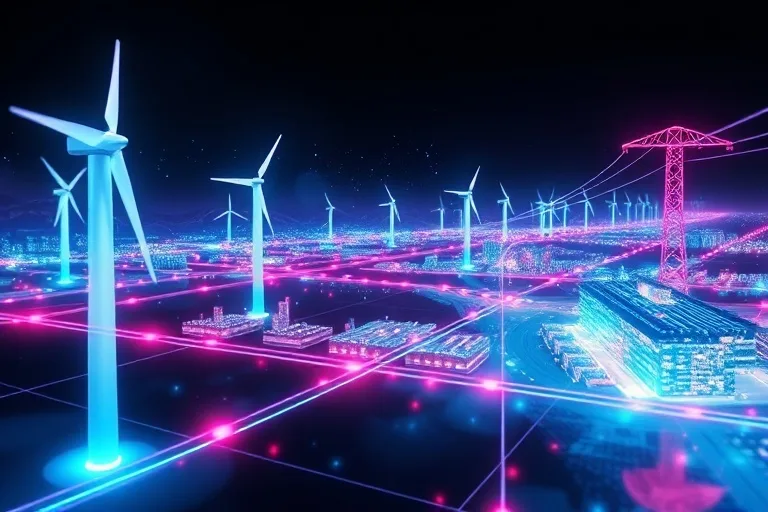
An artistic representation of a Metaverse Digital Law: Property, Identity, Jurisdiction, illustrating the integration of renewable energy sources and efficient distribution.
The integration of renewable energy sources like solar and wind power is significantly enhanced by smart grids. IoT sensors can monitor weather conditions and energy generation from these intermittent sources, allowing the grid to dynamically adjust to fluctuations. This optimizes the use of clean energy, reduces reliance on fossil fuels, and improves grid stability. Furthermore, smart grids can quickly detect and isolate faults, minimizing outages and improving overall service reliability.
Intelligent Public Lighting Systems
Traditional public lighting accounts for a substantial portion of a city's energy budget. Intelligent public lighting systems, powered by IoT, offer a compelling solution. These systems use networked LED lights equipped with sensors that can detect ambient light levels, pedestrian and vehicle movement, and even environmental conditions.
Based on real-time data, the lights can dim or brighten automatically, ensuring adequate illumination only when and where it's needed. This dynamic control leads to significant energy savings, often ranging from 30% to 70% compared to conventional lighting. Beyond energy efficiency, these systems can also report outages automatically, reducing maintenance costs and improving public safety. Some advanced systems even integrate air quality sensors or serve as Wi-Fi hotspots, adding further value to urban infrastructure.
Advanced Waste Management through IoT
Waste collection and disposal are resource-intensive processes. IoT-enabled smart waste management systems revolutionize this sector by optimizing collection routes and schedules. Smart bins equipped with fill-level sensors communicate their status to a central platform. This allows waste management companies to collect only full bins, avoiding unnecessary trips and reducing fuel consumption, operational costs, and carbon emissions.
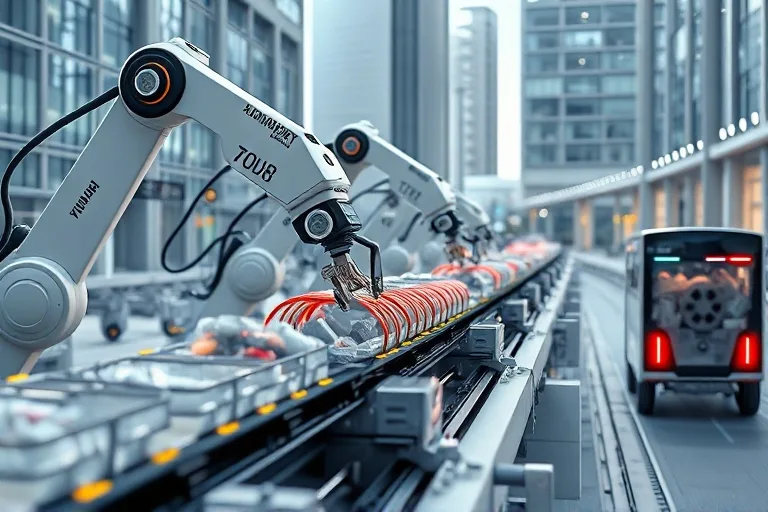
A detailed 3D render illustrating an advanced Neuroscience Humor: Laughter Transforms Brain, Mental Health system, emphasizing automation and environmental benefits.
Furthermore, smart waste systems can differentiate between types of waste, promoting better recycling rates. By reducing the frequency of collections and optimizing routes, cities can significantly decrease traffic congestion and noise pollution. This leads to cleaner streets, improved public health, and a more sustainable urban environment overall.
Smart Water Management and Conservation
Water is a finite and precious resource, and its efficient management is crucial for urban sustainability. IoT sensors can monitor water flow, pressure, and quality across the entire water supply network. This enables early detection of leaks in pipes, which can account for significant water loss in many cities. Rapid identification and repair of leaks save vast quantities of water and reduce the energy required for pumping and treating it.
Smart irrigation systems in parks and green spaces use soil moisture sensors and weather data to water plants only when necessary, preventing over-watering and conserving water. Real-time water quality monitoring also ensures public health and allows for quick responses to contamination issues. By optimizing water usage, cities can mitigate the impacts of droughts and ensure a sustainable water supply for their growing populations.
IoT in Smart Buildings for Efficiency
Buildings are major consumers of energy in urban areas. Smart building technologies, powered by IoT, integrate various systems like HVAC (heating, ventilation, and air conditioning), lighting, security, and access control to optimize energy performance. Occupancy sensors can turn off lights and adjust thermostats in unoccupied rooms, while smart windows can automatically tint to reduce solar heat gain.
Predictive maintenance, enabled by IoT sensors monitoring equipment performance, helps prevent costly breakdowns and ensures systems operate at peak efficiency. These integrated systems not only reduce energy consumption and operational costs but also enhance occupant comfort and productivity. The data collected from smart buildings can also feed into broader city-wide energy management strategies, contributing to overall urban sustainability.
Global Success Stories in IoT Smart Cities
Numerous cities worldwide have successfully implemented IoT solutions to address their energy and sustainability challenges, serving as blueprints for future urban development. These examples demonstrate the tangible benefits of a data-driven approach to urban management.
Barcelona: Pioneering Urban Innovation
Barcelona is often cited as a global leader in smart city initiatives, particularly in its approach to energy and waste management. The city implemented an extensive network of smart streetlights that adjust illumination based on real-time conditions, saving an estimated 30% in energy costs. These streetlights also serve as Wi-Fi hotspots and host environmental sensors, contributing to a broader data ecosystem.
In waste management, Barcelona deployed smart bins that compress waste and signal when they are full, optimizing collection routes and reducing the number of trips by waste trucks. This has led to significant reductions in fuel consumption and carbon emissions. The city also utilizes IoT for smart parking, reducing congestion and associated emissions. Barcelona's success lies in its integrated approach, where various IoT solutions work together to create a more efficient and sustainable urban environment.
Singapore: A Model for Smart Nation Integration
Singapore's "Smart Nation" initiative is a comprehensive strategy to leverage technology for national development, with a strong focus on sustainability. The city-state uses IoT extensively for energy management, including smart grid technologies that integrate renewable energy and optimize distribution. Intelligent building management systems are prevalent, using sensors to control lighting, air conditioning, and ventilation based on occupancy and environmental conditions.
Furthermore, Singapore has implemented a robust smart water management system, monitoring water quality and detecting leaks with high precision. The city's commitment to sustainability is evident in its efforts to reduce waste through smart recycling programs and optimize public transport with real-time data, minimizing energy consumption and environmental impact. Singapore's top-down approach and strong government support have made it a benchmark for smart city integration.
Amsterdam: Collaborative Sustainability Initiatives
Amsterdam has embraced a collaborative model for its smart city development, involving citizens, businesses, and research institutions. The "Amsterdam Smart City" platform focuses on numerous projects aimed at energy efficiency and sustainability. One notable initiative involves smart energy meters in homes, providing residents with detailed insights into their consumption and encouraging energy-saving behaviors.
The city also pilots projects for intelligent public lighting, adaptive traffic management, and smart waste collection. Emphasis is placed on circular economy principles, with IoT playing a role in tracking material flows and optimizing recycling processes. Amsterdam's approach demonstrates how a city can foster innovation and sustainability through a decentralized, community-driven framework.
Songdo, South Korea: A Purpose-Built Smart City
Songdo International Business District in South Korea is unique as it was built from the ground up with smart city principles embedded into its design. Every aspect of the city, from its pneumatic waste disposal system to its integrated building management, is connected via IoT. This allows for unparalleled levels of energy efficiency and resource optimization.
For example, the city's waste is automatically sucked through underground pipes to a central processing facility, eliminating the need for garbage trucks. Energy consumption in buildings is meticulously monitored and adjusted. Public spaces are equipped with sensors that manage lighting and climate control. Songdo represents the ideal vision of a smart city where IoT is seamlessly integrated into the urban fabric from its inception, resulting in a highly sustainable and livable environment.
Benefits and Challenges of IoT in Smart Cities
The adoption of IoT in smart cities brings a multitude of benefits, but also presents significant challenges that must be addressed for successful implementation and long-term sustainability.
| Benefit Category | Key Benefits of IoT in Smart Cities |
|---|---|
| Environmental Impact | Reduced carbon emissions, optimized resource consumption (energy, water), less waste, improved air quality. |
| Economic Efficiency | Lower operational costs for utilities and city services, new economic opportunities, increased ROI on infrastructure. |
| Quality of Life | Enhanced public safety, reduced traffic congestion, better public services, increased citizen engagement, improved health outcomes. |
| Operational Optimization | Real-time monitoring and control, predictive maintenance, data-driven decision making, faster response to incidents. |
Despite these compelling advantages, the path to a fully integrated smart city is not without obstacles. Key challenges include:
- Data Security and Privacy: The vast amount of data collected by IoT devices raises concerns about cybersecurity threats and the privacy of citizens' information. Robust encryption and data governance policies are essential.
- Interoperability: Different IoT devices and platforms often use varying standards, making it challenging to integrate them into a cohesive system. Standardized protocols are crucial for seamless communication.
- High Initial Investment: Deploying IoT infrastructure across an entire city requires significant upfront capital investment, which can be a barrier for many municipalities.
- Digital Divide: Ensuring equitable access to smart city services and technologies across all demographics is vital to prevent exacerbating existing social inequalities.
- Regulatory and Policy Frameworks: Developing appropriate legal and ethical frameworks to govern IoT deployment, data usage, and citizen rights is a complex but necessary task.
- Public Acceptance and Engagement: Gaining public trust and encouraging citizen participation is critical. Citizens need to understand the benefits and feel secure about their data.
The Future of IoT in Urban Development
The trajectory of IoT in urban development points towards even greater integration and sophistication. Future smart cities will likely see an increased convergence of IoT with other emerging technologies such as Artificial Intelligence (AI), 5G connectivity, and blockchain. AI will enhance the analytical capabilities of IoT systems, enabling more predictive and autonomous urban management. For example, AI-powered algorithms can predict traffic congestion with higher accuracy or optimize energy distribution in real-time based on complex variables.
The rollout of 5G networks will provide the necessary high-speed, low-latency communication infrastructure to support billions of IoT devices, enabling instantaneous data exchange critical for applications like autonomous vehicles and real-time public safety monitoring. Blockchain technology could offer enhanced security and transparency for data transactions within smart city ecosystems, addressing some of the privacy and security concerns associated with IoT.
Furthermore, the concept of "digital twins" of cities, where a virtual replica of the urban environment is created and constantly updated with real-time IoT data, will become more prevalent. These digital twins will allow city planners to simulate various scenarios, test interventions, and optimize urban systems before physical implementation, leading to more efficient and sustainable development. The focus will shift towards creating hyper-connected, resilient, and citizen-centric urban environments that dynamically adapt to evolving needs and challenges.
Conclusion: A Sustainable and Connected Urban Future
The Internet of Things is undeniably a transformative force in the evolution of smart cities, particularly in the critical areas of energy management and sustainability. By enabling unprecedented levels of data collection, analysis, and automation, IoT solutions empower urban centers to operate more efficiently, reduce their environmental footprint, and enhance the quality of life for their inhabitants. From smart grids and intelligent lighting to advanced waste and water management, IoT provides the tools necessary to build more resilient and resource-conscious urban ecosystems.
While challenges related to data security, interoperability, and investment remain, the success stories from cities like Barcelona, Singapore, Amsterdam, and Songdo demonstrate the immense potential and tangible benefits of embracing IoT. As technology continues to advance and integrate with AI and 5G, the future promises even smarter, more sustainable, and human-centric urban environments. The journey towards truly smart and sustainable cities is ongoing, with IoT serving as a crucial enabler for a greener, more efficient, and connected urban future.
Fuente: Contenido híbrido asistido por IAs y supervisión editorial humana.


Comentarios