
Blue Economy: Ocean Innovation, Sustainability, Opportunities | Althox
The concept of the Blue Economy represents a paradigm shift in how humanity interacts with its oceans. Moving beyond traditional maritime industries, it encompasses a holistic approach to sustainable development, economic growth, and social equity, all while preserving the health of marine and coastal ecosystems. This framework recognizes the ocean as a vital economic space, a source of food, energy, and resources, and a critical regulator of the global climate. Its core lies in balancing economic prosperity with environmental stewardship, ensuring that ocean resources are utilized responsibly for current and future generations.
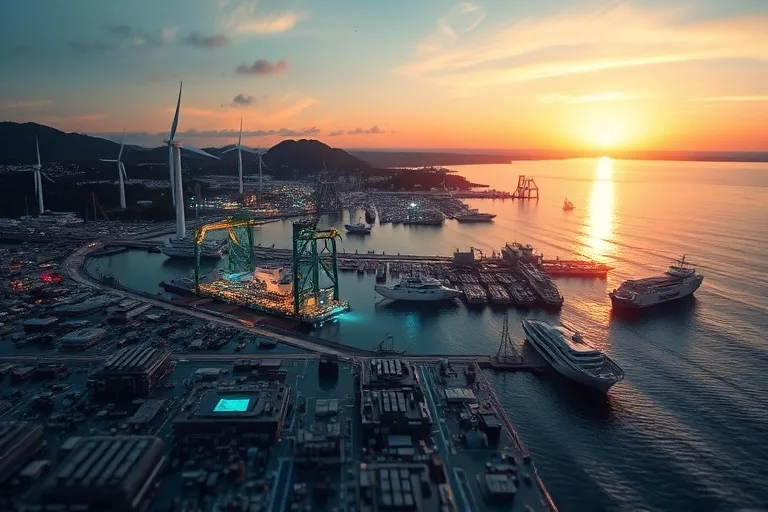
A vibrant, futuristic port city showcasing integrated sustainable technologies and pristine marine environments, embodying the Blue Economy's vision.
The global ocean economy is already vast, estimated at trillions of dollars annually, supporting millions of jobs and providing essential services. However, decades of unsustainable practices have led to overfishing, pollution, habitat destruction, and the escalating impacts of climate change. The Blue Economy offers a pathway to mitigate these challenges by fostering innovation, promoting circular economy principles, and investing in green technologies. It seeks to unlock new economic opportunities that are inherently sustainable, contributing to global goals such as poverty eradication, food security, and climate action.
This comprehensive guide delves into the multifaceted aspects of the Blue Economy, exploring its foundational principles, diverse sectors, and the technological advancements propelling its growth. We will also examine the critical role of environmental conservation, policy frameworks, and investment strategies necessary to realize its full potential. By understanding and embracing the Blue Economy, we can collectively work towards a prosperous and healthy future for our oceans and the communities that depend on them.
Table of Contents
- 1. Understanding the Blue Economy: A Holistic Approach
- 2. Core Principles and Pillars
- 3. Key Sectors and Emerging Opportunities
- 4. Technological Advancements Driving Ocean Innovation
- 5. Environmental Stewardship and Conservation Challenges
- 6. Policy, Governance, and International Cooperation
- 7. Investment and Financing for a Sustainable Ocean Future
- 8. Addressing Challenges and Charting the Future
- 9. Conclusion
1. Understanding the Blue Economy: A Holistic Approach
The term "Blue Economy" gained prominence as a concept that integrates ocean health with economic development. It moves beyond the traditional "ocean economy," which often focuses solely on resource extraction and exploitation, by embedding sustainability and social equity at its core. This approach recognizes that a healthy ocean is fundamental to a thriving economy and human well-being. It seeks to maximize the economic benefits derived from marine resources while minimizing environmental degradation and ensuring equitable distribution of benefits.
According to the World Bank, the Blue Economy is defined as "the sustainable use of ocean resources for economic growth, improved livelihoods, and ocean ecosystem health." This definition highlights the triple bottom line approach, emphasizing economic, social, and environmental dimensions. It includes established sectors like fisheries, shipping, and coastal tourism, but also emerging areas such as marine renewable energy, biotechnology, and deep-sea mining (with strict environmental safeguards).
Key characteristics of the Blue Economy include:
- Sustainability: Ensuring that ocean resources are managed in a way that meets the needs of the present without compromising the ability of future generations to meet their own needs.
- Innovation: Driving technological advancements and creative solutions for sustainable ocean use, resource management, and conservation.
- Inclusivity: Promoting equitable access to ocean resources and opportunities, supporting coastal communities, and ensuring fair labor practices.
- Ecosystem Health: Prioritizing the protection and restoration of marine ecosystems, recognizing their intrinsic value and the services they provide.
- Circular Economy Principles: Minimizing waste and pollution, and maximizing resource efficiency within ocean-related industries.
2. Core Principles and Pillars
The Blue Economy is built upon a foundation of interconnected principles that guide its implementation and development. These principles ensure that economic activities are not only profitable but also environmentally sound and socially just. Understanding these pillars is crucial for any stakeholder looking to engage with or contribute to this evolving economic model.
The primary pillars supporting the Blue Economy include:
- Marine Ecosystem Preservation: This pillar emphasizes the critical need to protect and restore marine biodiversity, habitats, and ecological processes. It involves implementing effective marine protected areas, combating pollution, and addressing climate change impacts such as ocean acidification and sea-level rise.
- Sustainable Resource Management: This focuses on managing marine resources like fish stocks, minerals, and genetic resources in a way that ensures their long-term viability. It includes sustainable fishing practices, responsible aquaculture, and careful consideration of deep-sea resource extraction.
- Innovation and Technology: Driving the development and adoption of new technologies that enhance efficiency, reduce environmental impact, and create new sustainable products and services. Examples include advanced sensors for ocean monitoring, renewable energy technologies, and biotechnological applications.
- Social Equity and Livelihoods: Ensuring that coastal communities, particularly those in developing nations, benefit from ocean economic activities. This includes job creation, fair wages, improved infrastructure, and empowering local stakeholders in decision-making processes.
- Good Governance and Policy: Establishing robust legal and regulatory frameworks, fostering international cooperation, and promoting transparency and accountability in ocean management. This pillar is essential for effective implementation and enforcement of sustainable practices.
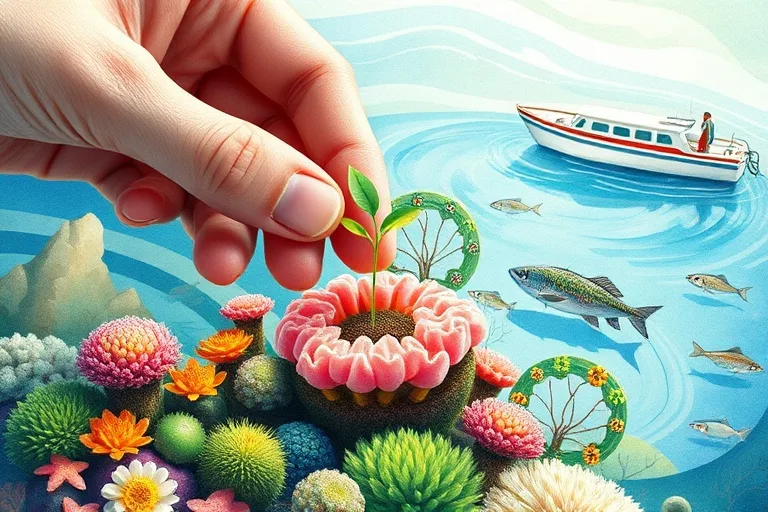
A watercolor illustration depicting a hand fostering a sustainable marine ecosystem, symbolizing responsible development and ecological balance.
3. Key Sectors and Emerging Opportunities
The Blue Economy encompasses a wide array of sectors, both traditional and novel, all geared towards sustainable utilization of ocean resources. These sectors represent significant business opportunities and potential for job creation, provided they adhere to the principles of environmental sustainability and social responsibility.
Some of the most prominent sectors include:
- Sustainable Fisheries and Aquaculture: Moving away from destructive fishing practices towards methods that ensure fish stock recovery and minimize bycatch. Sustainable aquaculture, such as seaweed farming and responsible fish farming, offers a protein source with a lower environmental footprint.
- Marine Renewable Energy: Harnessing the power of the ocean through offshore wind, wave, and tidal energy technologies. This sector is crucial for transitioning to a low-carbon economy and reducing reliance on fossil fuels.
- Coastal and Marine Tourism: Developing eco-tourism, responsible diving, and cultural heritage tourism that supports local economies while protecting marine environments. This includes sustainable infrastructure and waste management practices in coastal areas.
- Marine Biotechnology: Utilizing marine organisms and ecosystems to develop new pharmaceuticals, industrial enzymes, cosmetics, and biofuels. This field holds immense potential for scientific discovery and economic value.
- Shipping and Port Infrastructure: Promoting green shipping initiatives, such as low-emission vessels, efficient port operations, and digital logistics to reduce the environmental impact of global trade.
- Waste Management and Circular Economy: Innovations in marine plastic clean-up, recycling technologies, and developing biodegradable materials to prevent ocean pollution. This also includes repurposing marine waste into valuable products.
- Ocean Observation and Research: Investing in technologies for monitoring ocean health, climate change impacts, and biodiversity. This data is vital for informed decision-making and adaptive management.
4. Technological Advancements Driving Ocean Innovation
Technology is a cornerstone of the Blue Economy, enabling more efficient, sustainable, and less impactful ways of interacting with the marine environment. Innovations across various fields are transforming traditional ocean industries and creating entirely new ones. These advancements are essential for both economic growth and the protection of delicate marine ecosystems.
Key technological drivers include:
- Artificial Intelligence (AI) and Machine Learning: Used for predictive modeling of fish stocks, optimizing shipping routes for fuel efficiency, analyzing vast datasets from ocean sensors, and detecting marine pollution. AI-powered systems can enhance decision-making in fisheries management and environmental monitoring.
- Internet of Things (IoT) and Sensor Networks: Networks of interconnected sensors deployed across the ocean provide real-time data on water quality, temperature, currents, and marine life. This data is crucial for early warning systems for natural disasters, tracking marine species, and monitoring environmental changes.
- Robotics and Autonomous Systems: Unmanned underwater vehicles (UUVs) and autonomous surface vessels (ASVs) are used for mapping the seafloor, inspecting underwater infrastructure, conducting scientific research in hazardous environments, and even assisting in marine clean-up operations.
- Biotechnology and Genetic Engineering: Advancements in marine biotechnology are leading to the discovery of new compounds for medicine, sustainable biofuels from algae, and improved aquaculture species with enhanced disease resistance or growth rates.
- Advanced Materials: Development of biodegradable plastics, anti-fouling coatings for ships that reduce chemical release, and lightweight, durable materials for offshore structures that withstand harsh marine conditions.
- Remote Sensing and Satellite Technology: Satellites provide invaluable data for monitoring ocean surface temperatures, sea-level rise, ocean color (indicating phytoplankton presence), and tracking illegal fishing activities over vast areas.
5. Environmental Stewardship and Conservation Challenges
At the heart of the Blue Economy is a profound commitment to environmental stewardship. The health of our oceans is intrinsically linked to the planet's overall well-being and the long-term viability of ocean-based economies. However, the oceans face unprecedented threats that require urgent and concerted action. Addressing these challenges is not merely an environmental imperative but an economic necessity.
Major environmental challenges include:
- Climate Change Impacts: Ocean warming, acidification, and deoxygenation are altering marine ecosystems, threatening coral reefs, fish populations, and coastal communities. The Blue Economy seeks to mitigate these impacts through renewable energy and carbon sequestration efforts.
- Marine Pollution: Plastic pollution, chemical runoff, agricultural discharge, and noise pollution severely degrade marine habitats and harm wildlife. Innovative waste management, circular economy models, and stricter regulations are vital to combat this.
- Biodiversity Loss: Overfishing, habitat destruction, and climate change contribute to the decline of marine species. Establishing and effectively managing Marine Protected Areas (MPAs) and implementing sustainable fishing quotas are critical for conservation.
- Habitat Degradation: Coastal development, dredging, and destructive fishing methods destroy critical habitats like mangroves, seagrass beds, and coral reefs, which serve as nurseries for marine life and natural coastal protection.

An abstract 3D render illustrating complex data flows and interconnected systems, symbolizing innovation and intelligence for a sustainable ocean future.
6. Policy, Governance, and International Cooperation
Effective governance and robust policy frameworks are indispensable for the successful implementation of the Blue Economy. Given the transboundary nature of oceans, international cooperation is paramount. National governments, regional bodies, and global organizations must collaborate to establish and enforce regulations that promote sustainable ocean use and protect marine ecosystems.
Key aspects of policy and governance include:
- International Law and Agreements: The United Nations Convention on the Law of the Sea (UNCLOS) provides the legal framework for ocean activities. Other agreements, such as those related to biodiversity (CBD), climate change (Paris Agreement), and pollution (MARPOL), are also critical.
- National Ocean Policies: Countries are developing integrated ocean policies and marine spatial planning (MSP) to manage competing uses of marine areas, allocate resources, and protect sensitive ecosystems.
- Regional Cooperation: Regional fisheries management organizations (RFMOs) and regional seas programs play a vital role in coordinating efforts to manage shared marine resources and address cross-border environmental issues.
- Stakeholder Engagement: Involving local communities, indigenous groups, the private sector, and civil society organizations in decision-making processes ensures that policies are inclusive and effective.
- Enforcement and Monitoring: Strengthening surveillance, compliance, and enforcement mechanisms to combat illegal, unreported, and unregulated (IUU) fishing, marine pollution, and other illicit activities.
7. Investment and Financing for a Sustainable Ocean Future
Achieving the goals of the Blue Economy requires substantial investment and innovative financing mechanisms. Traditional funding sources are often insufficient to address the scale of challenges and opportunities presented by sustainable ocean development. Therefore, a blend of public, private, and blended finance is essential to drive the transition.
Key financing approaches include:
- Green and Blue Bonds: These are financial instruments specifically designed to raise capital for projects with environmental or ocean-related benefits, such as marine renewable energy, sustainable fisheries, or coastal protection.
- Impact Investing: Investors seeking both financial returns and positive social/environmental impact are increasingly channeling funds into Blue Economy ventures, including sustainable aquaculture, marine biotech, and eco-tourism.
- Public-Private Partnerships (PPPs): Collaborations between governments and private entities can leverage private sector expertise and capital for large-scale infrastructure projects, such as offshore wind farms or sustainable port development.
- Blended Finance: Combining public and philanthropic funds with private capital to de-risk investments and attract a wider range of investors into sustainable ocean projects, particularly in developing countries.
- Debt-for-Nature Swaps: Innovative financial mechanisms where a portion of a country's foreign debt is forgiven in exchange for commitments to invest in marine conservation or sustainable development initiatives.
- Carbon Credits and Ecosystem Services Payments: Exploring markets for carbon sequestration by marine ecosystems (blue carbon) and payments for other ecosystem services provided by healthy oceans, such as coastal protection or biodiversity.
8. Addressing Challenges and Charting the Future
While the Blue Economy offers immense promise, its path is not without significant challenges. Overcoming these hurdles requires sustained commitment, innovative solutions, and strong international collaboration. The future of the Blue Economy hinges on our ability to transform these challenges into opportunities for sustainable growth and ocean health.
Key challenges include:
- Data Gaps and Scientific Uncertainty: A lack of comprehensive data on ocean ecosystems and the impacts of human activities hinders effective management and policy-making. Increased investment in oceanographic research and monitoring is crucial.
- Governance Fragmentation: The complex web of national and international laws, treaties, and institutions can lead to fragmented governance, making integrated ocean management difficult.
- Capacity Building: Many developing countries lack the technical expertise, infrastructure, and financial resources to implement Blue Economy initiatives effectively. Capacity building and technology transfer are vital.
- Balancing Competing Interests: Reconciling the diverse interests of various stakeholders – fisheries, shipping, tourism, conservation, energy – requires careful planning, negotiation, and conflict resolution.
- Financing Gaps: Despite growing interest, significant financing gaps remain for scaling up sustainable ocean projects, particularly in regions with higher perceived risks.
Charting the future of the Blue Economy involves:
- Strengthening International Cooperation: Enhancing multilateral agreements and regional partnerships for transboundary ocean management and conservation.
- Investing in Research and Development: Fostering innovation in marine science, technology, and sustainable practices to unlock new solutions.
- Empowering Coastal Communities: Ensuring that local populations are active participants and beneficiaries of Blue Economy initiatives, promoting traditional knowledge and sustainable livelihoods.
- Developing Robust Policy Frameworks: Creating adaptive and integrated ocean policies that can respond to changing environmental conditions and technological advancements.
- Promoting Public Awareness: Educating the public about the importance of ocean health and the role of the Blue Economy in achieving a sustainable future.
9. Conclusion
The Blue Economy represents a critical framework for navigating the complex relationship between human societies and the ocean. It offers a compelling vision for economic development that is not only profitable but also regenerative, equitable, and sustainable. By integrating innovation, robust governance, and a deep commitment to environmental stewardship, the Blue Economy can unlock vast opportunities for growth, improve livelihoods, and safeguard the health of our planet's most vital resource.
The transition to a fully realized Blue Economy will require concerted efforts from governments, businesses, civil society, and individuals worldwide. It demands a shift in mindset, moving from exploitation to stewardship, and recognizing the intrinsic value of healthy marine ecosystems. As we look towards the future, embracing the principles and practices of the Blue Economy is not merely an option but an imperative for ensuring a thriving planet and prosperous future for all.
Source: Hybrid content assisted by AIs and human editorial supervision.


Comentarios