
Digital Nomad Finances: Saving, Investing, Taxation Globally | Althox
Digital Nomad Finances: Strategic Saving, Global Investment, and International Taxation
The rise of remote work has ushered in the era of the digital nomad, individuals who leverage technology to work from anywhere in the world. This lifestyle offers unparalleled freedom and cultural enrichment, but it also presents unique financial complexities. Managing finances across borders requires a specialized approach, encompassing everything from daily budgeting to long-term investment strategies and intricate tax compliance.
Navigating this landscape effectively is crucial for sustained success and peace of mind. This comprehensive guide explores the essential financial pillars for digital nomads, providing an educational framework to build a robust financial future in a world without traditional boundaries.
 Digital nomads thriving in a modern co-working environment, embodying the global work-life balance.
Table of Contents
- Understanding Digital Nomad Finances
- Strategic Saving for Digital Nomads
- Investment Strategies for a Borderless Lifestyle
- Navigating International Taxation
- Banking and Financial Tools
- Insurance and Contingency Planning
- Future Trends and Considerations
Understanding Digital Nomad Finances
The financial landscape for digital nomads differs significantly from traditional employment. Income sources can vary, often involving freelance work, contract roles, or running an online business. This variability necessitates meticulous budgeting and financial planning to ensure stability.
Key considerations include currency fluctuations, varying costs of living across different countries, and the absence of a fixed employer-provided benefits package. A proactive approach to understanding these unique factors is the first step towards financial independence and security.
- Income Volatility: Many digital nomads experience fluctuating income, making consistent saving and budgeting essential.
- Cost of Living Differences: The ability to move between countries with different cost structures is a major advantage, but requires careful research.
- Currency Exchange: Managing multiple currencies and understanding exchange rates is a daily financial task.
- Lack of Traditional Benefits: Health insurance, retirement plans, and other benefits often need to be self-sourced.
Strategic Saving for Digital Nomads
Saving is paramount for digital nomads, serving as a buffer against income fluctuations and unexpected expenses. Establishing clear financial goals, such as an emergency fund, travel savings, and future investments, provides a roadmap for saving efforts. It is advisable to build an emergency fund covering at least 6-12 months of living expenses, given the inherent uncertainties of the nomadic lifestyle.
Automating savings transfers to dedicated accounts can significantly boost consistency. Furthermore, leveraging high-yield savings accounts or money market funds, even if based in a home country, can help grow savings passively. Understanding the cost of living in various destinations allows for optimizing spending and maximizing savings potential.
- Emergency Fund: Aim for 6-12 months of expenses to cover unforeseen circumstances.
- Automated Transfers: Set up recurring transfers to savings accounts to ensure consistency.
- Budgeting Tools: Utilize apps and software to track income and expenses across different currencies.
- Cost of Living Arbitrage: Strategically choose destinations with lower costs of living to maximize savings.
Investment Strategies for a Borderless Lifestyle
Investing as a digital nomad requires careful consideration of jurisdiction, accessibility, and tax implications. Traditional investment vehicles, such as stocks, bonds, and mutual funds, remain viable, but the choice of brokerage platform is critical. Many platforms have residency restrictions, making it essential to find those that cater to international clients or those with flexible residency requirements.
Diversification is key, not just across asset classes but also across geographical regions and currencies. Cryptocurrencies and decentralized finance (DeFi) platforms offer alternative investment avenues that are inherently borderless, though they come with their own set of risks and regulatory challenges. For those interested in the evolving regulatory landscape of digital assets, exploring topics like global cryptocurrency regulation can provide valuable insights.
 A visual representation of diverse financial symbols encircling the globe, symbolizing the vast opportunities in borderless investment.
Real estate investment, particularly through REITs (Real Estate Investment Trusts) or fractional ownership platforms, can also be adapted for a nomadic lifestyle, offering passive income without the need for physical presence. The choice of investment strategy should align with individual risk tolerance, financial goals, and long-term residency plans.
- International Brokerages: Research platforms that accommodate non-resident investors.
- Diversification: Spread investments across various asset classes, geographies, and currencies.
- Cryptocurrencies/DeFi: Consider as part of a diversified portfolio, understanding associated risks.
- Automated Investing: Utilize robo-advisors for hands-off portfolio management.
Navigating International Taxation
Taxation is arguably the most complex financial aspect for digital nomads. The concept of tax residency becomes paramount, as it dictates where and how income is taxed. Many countries have specific rules for determining residency based on physical presence, domicile, and economic ties. It is crucial to understand both your home country's tax laws and those of any country where you spend significant time.
Double taxation treaties can provide relief by preventing income from being taxed in two different countries. However, these treaties often require specific conditions to be met. Some digital nomads explore "tax haven" or "tax-friendly" jurisdictions, but this path requires extensive legal and financial advice to ensure compliance and avoid legal pitfalls. Professional tax consultation specializing in international taxation is often indispensable for digital nomads.
For those running their own businesses, understanding the implications of digital transformation strategies for SMEs can also impact tax obligations and compliance in various jurisdictions. Proper record-keeping of travel dates, income sources, and expenses is vital for accurate tax reporting.
- Tax Residency: Determine your tax residency based on local laws and international agreements.
- Double Taxation Treaties: Understand how these treaties can prevent being taxed twice.
- Professional Advice: Consult with a tax specialist experienced in international taxation.
- Record Keeping: Maintain meticulous records of all financial activities and travel.
Banking and Financial Tools
The right banking and financial tools can simplify money management for digital nomads. Traditional banks often impose high foreign transaction fees and unfavorable exchange rates. Modern fintech solutions, such as multi-currency accounts and digital banks, offer significantly better terms.
Services like Wise (formerly TransferWise), Revolut, and N26 provide low-cost international transfers, multi-currency debit cards, and competitive exchange rates. These platforms are designed for a global lifestyle, allowing users to hold and manage funds in various currencies seamlessly.
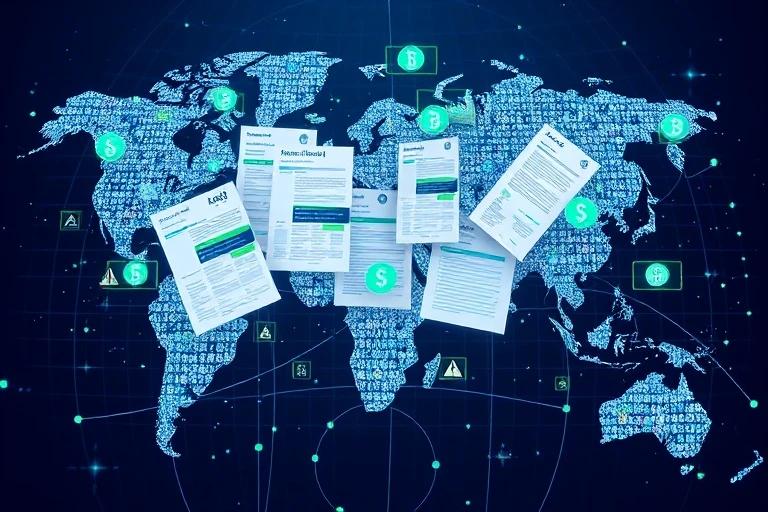 A detailed 3D rendering illustrating the intricate web of tax forms and digital currency, symbolizing the challenges of global taxation for mobile professionals.
Budgeting apps and expense trackers that support multiple currencies are also invaluable. Tools like YNAB (You Need A Budget) or Mint can help maintain financial discipline, while invoicing software is essential for freelancers and business owners to manage client payments efficiently. The choice of tools should prioritize ease of use, security, and global accessibility.
- Multi-currency Accounts: Utilize digital banks for low fees and favorable exchange rates.
- International Transfer Services: Use platforms like Wise for cost-effective money movement.
- Budgeting Apps: Employ tools that support multi-currency tracking.
- Secure Payment Gateways: Ensure secure methods for receiving and making payments globally.
Insurance and Contingency Planning
Given the transient nature of the digital nomad lifestyle, robust insurance and contingency planning are non-negotiable. Health insurance is a primary concern, as national healthcare systems may not cover non-residents or may offer limited services. International health insurance providers specialize in plans for expatriates and digital nomads, offering comprehensive coverage worldwide.
Travel insurance, while often considered separate, can complement health insurance by covering emergencies, trip cancellations, lost luggage, and other travel-related mishaps. It is important to distinguish between short-term travel insurance and long-term international health coverage. Furthermore, consider professional liability insurance if your work involves client services, protecting against potential legal claims.
Contingency planning also extends to having backup plans for internet access, power, and even a "go-home" fund in case of emergencies. A well-prepared digital nomad has considered various scenarios and has strategies in place to mitigate risks.
- International Health Insurance: Essential for global medical coverage.
- Travel Insurance: Covers travel-specific risks like cancellations and lost items.
- Professional Liability: Protects against claims related to your work.
- Emergency Funds: Beyond living expenses, consider a fund for repatriation or major unforeseen events.
Future Trends and Considerations
The digital nomad landscape is constantly evolving, with new technologies and regulations emerging. The increasing adoption of remote work policies by companies is likely to further legitimize and expand the digital nomad community. Governments are also beginning to recognize this demographic, with some countries introducing specific digital nomad visas and favorable tax regimes to attract remote workers.
The growth of decentralized autonomous organizations (DAOs) and the metaverse could also introduce new financial paradigms, offering novel ways to earn, invest, and manage assets without geographical constraints. Staying informed about these trends and adapting financial strategies accordingly will be key to long-term success.
Embracing continuous learning about global financial markets, tax laws, and technological advancements will empower digital nomads to make informed decisions and thrive in an increasingly interconnected world. The future of work is borderless, and so too must be the approach to personal finance.
Source: Hybrid content assisted by AIs and human editorial supervision.


Comentarios