
Metaverse Education: Digital Twins for Future Professional Training
The convergence of the metaverse and digital twins is poised to redefine the landscape of professional training, offering unprecedented opportunities for immersive simulation and skill development. This innovative approach moves beyond traditional learning methods, creating dynamic, interactive environments where professionals can practice complex tasks, collaborate globally, and gain hands-on experience without real-world risks.
As industries rapidly evolve, the demand for highly skilled and adaptable workforces intensifies. Educational metaverse platforms, powered by digital twin technology, provide a scalable and effective solution to bridge skill gaps and prepare individuals for the complexities of future job roles. This article explores the foundational concepts, benefits, applications, and challenges of integrating these cutting-edge technologies into professional training.
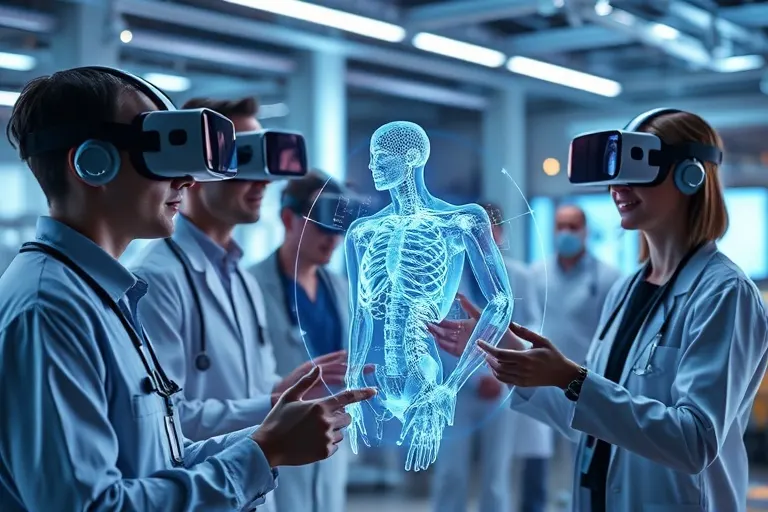
Professionals engaging with advanced holographic simulations in a metaverse training environment, enhancing practical skills.
Table of Contents
- Understanding the Metaverse and Digital Twins
- Benefits of Immersive Simulation in Professional Training
- Key Technologies Enabling Metaverse Education
- Applications Across Diverse Industries
- Challenges and Considerations
- The Future of Professional Training
Understanding the Metaverse and Digital Twins
To grasp the transformative potential of metaverse education, it is crucial to define its core components: the metaverse and digital twins. The metaverse refers to a persistent, interconnected, and immersive virtual world where users can interact with each other, digital objects, and AI-driven entities in real-time. It transcends simple virtual reality by offering a shared, persistent digital space that mirrors or augments reality.
Digital twins, on the other hand, are virtual replicas of physical objects, systems, or processes. These sophisticated models are continuously updated with real-time data from their physical counterparts, allowing for accurate simulation, monitoring, and predictive analysis. They act as a bridge between the physical and digital worlds, providing a dynamic and data-rich representation of reality.
When combined, the metaverse provides the immersive environment, while digital twins furnish the realistic, data-driven content within that environment. This synergy enables training scenarios that are not only engaging but also highly accurate and relevant to real-world operations. For instance, a digital twin of a factory can be placed within a metaverse, allowing engineers to train on its operations as if they were physically present.
Benefits of Immersive Simulation in Professional Training
The integration of metaverse and digital twin technologies offers a multitude of benefits for professional training, addressing many limitations of traditional methods. These advantages span from enhanced engagement to significant cost savings and improved safety.
- Enhanced Engagement and Retention: Immersive environments naturally capture learners' attention more effectively than static materials. The interactive nature of metaverse training fosters deeper engagement, leading to better knowledge retention and skill mastery.
- Safe and Risk-Free Practice: Professionals can practice dangerous or high-stakes procedures in a virtual environment without any risk to themselves, equipment, or patients. This is particularly valuable in fields like medicine, aviation, and heavy industry.
- Cost-Effectiveness: While initial setup costs can be significant, metaverse training can drastically reduce expenses associated with physical equipment, travel for training, and potential damage from errors during real-world practice.
- Scalability and Accessibility: Training programs can be scaled to accommodate large numbers of learners globally, breaking down geographical barriers. Access to specialized equipment or scenarios becomes universal, regardless of physical location.
- Personalized Learning Paths: Digital twins can track individual performance within simulations, providing personalized feedback and adapting training modules to address specific weaknesses. This tailored approach optimizes learning outcomes.
- Real-time Data and Analytics: The data generated within digital twin simulations offers invaluable insights into learner performance, skill acquisition rates, and areas requiring improvement. This data-driven approach allows for continuous refinement of training programs.
- Collaboration and Teamwork: Metaverse platforms enable geographically dispersed teams to collaborate on complex projects within a shared virtual space, fostering teamwork and communication skills critical in modern workplaces.
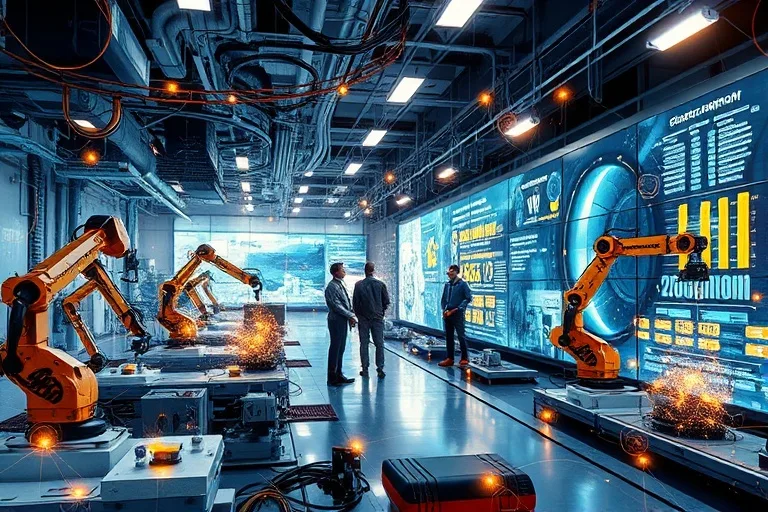
A digital twin of a factory floor, providing real-time operational data for advanced professional training and predictive analysis.
Key Technologies Enabling Metaverse Education
The robust functionality of metaverse educational platforms relies on a sophisticated stack of underlying technologies. Understanding these components is essential to appreciating the depth and potential of this training paradigm.
- Virtual Reality (VR) and Augmented Reality (AR): VR provides fully immersive experiences, transporting users into virtual training environments. AR overlays digital information onto the real world, enabling interactive learning with physical objects. Both are crucial for creating engaging and practical simulations.
- Artificial Intelligence (AI) and Machine Learning (ML): AI powers intelligent non-player characters (NPCs) for realistic interactions, provides personalized feedback, and analyzes learner performance data to optimize training paths. ML algorithms continuously improve the realism and responsiveness of digital twins.
- Internet of Things (IoT): IoT sensors collect real-time data from physical assets, feeding it into digital twins. This ensures that the virtual replicas accurately reflect the current state and behavior of their real-world counterparts, making simulations highly realistic and current.
- Cloud Computing: Cloud infrastructure provides the necessary processing power and storage for hosting complex metaverse environments and managing vast amounts of digital twin data. It also enables global accessibility and scalability for training programs.
- Blockchain Technology: While still emerging, blockchain can secure digital assets, verify credentials, and create transparent records of learning achievements within the metaverse, enhancing trust and interoperability.
- High-Fidelity 3D Modeling and Simulation Engines: Advanced 3D graphics and physics engines are critical for creating visually stunning and functionally accurate digital twins and metaverse environments, ensuring realistic interactions and outcomes.
Applications Across Diverse Industries
The versatility of metaverse educational platforms and digital twins means they can be applied across a wide range of industries, transforming how professionals acquire and refine their skills.
Healthcare: Medical students and practitioners can perform complex surgical procedures on digital twin organs, practice diagnostic skills, or simulate patient interactions in a safe, controlled environment. This reduces risks to actual patients and accelerates skill acquisition.
Manufacturing and Engineering: Engineers can design, test, and optimize new products or factory layouts using digital twins within a metaverse. Technicians can train on operating and maintaining complex machinery, identifying potential issues before they arise in the physical world. This leads to faster innovation and reduced downtime.
Aviation and Aerospace: Pilots can undergo highly realistic flight simulations, practicing emergency procedures and navigating diverse weather conditions. Maintenance crews can train on intricate aircraft systems, improving safety and efficiency. The accuracy of digital twins ensures that these simulations mirror real-world flight dynamics.
Construction and Architecture: Architects and construction workers can walk through digital twins of buildings before they are built, identifying design flaws, planning logistics, and practicing construction techniques. This minimizes errors, improves project management, and enhances safety on site.
Retail and Customer Service: Employees can practice customer interaction scenarios, product demonstrations, and sales techniques in a virtual store environment. This allows for consistent training and the development of soft skills in a low-pressure setting.
Emergency Services: First responders can simulate disaster scenarios, practice rescue operations, and coordinate responses in a highly realistic virtual environment. This prepares them for critical situations and improves inter-agency collaboration.
An abstract representation of diverse educational modules seamlessly integrated within a metaverse for comprehensive professional development.
Challenges and Considerations
Despite the immense potential, the widespread adoption of metaverse educational platforms and digital twins faces several challenges that need to be addressed for successful implementation.
- High Initial Investment: Developing and deploying high-fidelity metaverse environments and accurate digital twins requires significant upfront investment in hardware, software, and specialized talent.
- Technical Complexity: The creation and maintenance of these platforms demand advanced technical expertise in areas like 3D modeling, real-time rendering, AI integration, and data management.
- Interoperability Standards: A lack of universal standards for metaverse platforms and digital twin data can hinder seamless integration and content sharing across different systems.
- Data Security and Privacy: Managing vast amounts of real-time data from digital twins and protecting user privacy within the metaverse are critical concerns that require robust cybersecurity measures and clear ethical guidelines.
- Digital Divide and Accessibility: Ensuring equitable access to the necessary hardware (VR headsets, powerful computers) and high-speed internet is crucial to prevent exacerbating existing inequalities in education and training.
- User Adoption and Training: Overcoming user resistance to new technologies and providing adequate training on how to effectively utilize metaverse tools will be vital for successful adoption.
- Ethical Implications: Questions surrounding data ownership, potential biases in AI-driven feedback, and the psychological impact of extended immersion in virtual environments need careful consideration.
Addressing these challenges will require collaborative efforts from technology developers, educators, industry leaders, and policymakers to establish best practices, develop open standards, and ensure responsible innovation.
The Future of Professional Training
The trajectory of professional training is undeniably heading towards more immersive, personalized, and data-driven methodologies. Metaverse education, powered by digital twins, represents a significant leap forward in this evolution. It promises a future where learning is not confined to classrooms or physical limitations but is a continuous, dynamic, and highly effective process.
As these technologies mature, we can expect to see more sophisticated simulations, hyper-realistic digital twins, and AI-driven tutors that adapt to each learner's unique needs. The blend of virtual and physical experiences will become seamless, fostering a new generation of professionals who are not only highly skilled but also deeply adaptable to rapidly changing work environments. The future of professional training is immersive, intelligent, and interconnected, paving the way for unprecedented human potential.
Source: AI-assisted hybrid content and human editorial supervision.


Comentarios