
Generative AI Law: Authorship, Intellectual Property, Ethics
The advent of generative Artificial Intelligence (AI) has ushered in an era of unprecedented creativity and automation, transforming how content is produced across various industries. From text and images to music and code, AI models can now create sophisticated outputs that often mimic or even surpass human capabilities. However, this technological leap has simultaneously opened a Pandora's Box of complex legal and ethical challenges, particularly concerning authorship, intellectual property rights, and the responsible creation and dissemination of AI-generated content. Understanding these multifaceted issues is crucial for policymakers, creators, developers, and users alike as we navigate this rapidly evolving landscape.
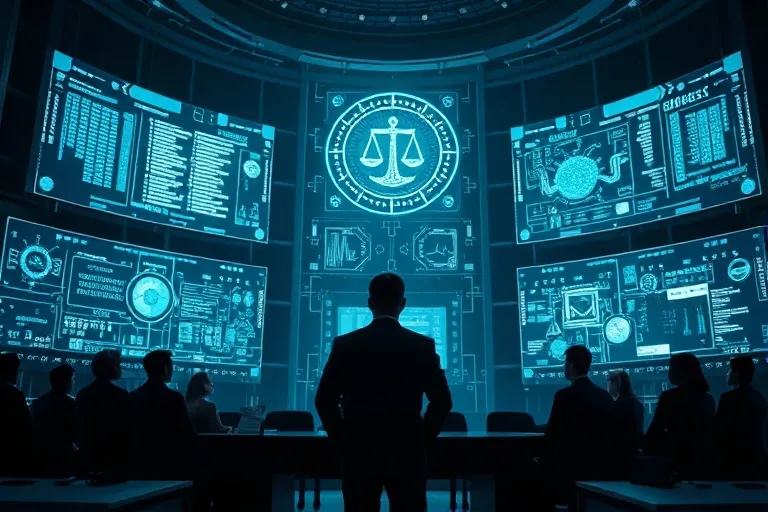
A futuristic courtroom setting where holographic displays show AI-generated content, symbolizing the complex legal debates surrounding its creation.
Generative AI, exemplified by models like GPT-4, DALL-E, and Midjourney, operates by learning patterns and structures from vast datasets of existing content. It then uses this acquired knowledge to generate new, original, or derivative works. While the capabilities are awe-inspiring, the legal frameworks designed for human-centric creation struggle to accommodate these new paradigms. The core questions revolve around who owns the output, who is liable for its misuse, and how to ensure ethical standards are upheld in an increasingly automated world.
This article delves into the intricate legal and ethical considerations surrounding generative AI content. We will explore the contentious issue of authorship, examine the implications for intellectual property law, and discuss the pressing ethical challenges that demand careful attention and innovative solutions. As AI continues to advance, establishing clear guidelines and fostering a culture of responsibility will be paramount to harnessing its potential while mitigating its risks.
Authorship in the Age of Generative AI: A Shifting Paradigm
One of the most fundamental questions posed by generative AI is that of authorship. Traditional copyright law, rooted in the concept of human creativity, attributes authorship to a natural person who conceives and executes an original work. However, when an AI system generates content, the line between human input and machine output becomes blurred, challenging established legal definitions.
Several perspectives exist on how authorship might be attributed in the context of AI-generated content. Some argue that the human developer or user who prompts and guides the AI should be considered the author, as their creative intent and direction are essential to the final output. Others contend that the AI itself, as the "creator" of the work, should be recognized, though this raises complex questions about legal personhood for non-human entities.
- Human as Author: This view posits that the human who designs, trains, or prompts the AI is the ultimate author, as the AI is merely a tool. The originality stems from the human's choices and instructions.
- AI as Author (with caveats): A more radical view suggests granting some form of authorship to the AI, perhaps through a sui generis right, acknowledging its autonomous creative contribution. This approach faces significant legal and philosophical hurdles.
- No Authorship: Some argue that if no human can claim sufficient creative control or originality, AI-generated content might fall into the public domain, lacking copyright protection altogether.
The U.S. Copyright Office, for instance, has clarified its stance, stating that it will only register works where a human author has exercised sufficient creative control. Purely AI-generated content, without significant human intervention, is unlikely to be granted copyright. This position underscores the current legal system's reliance on human agency for intellectual property protection.
Intellectual Property Rights: Copyright, Patents, and Fair Use
Beyond authorship, generative AI profoundly impacts various aspects of intellectual property (IP) law, particularly copyright. The training data used to develop these AI models often consists of vast amounts of copyrighted material. This raises questions about potential infringement during the training phase and whether the AI's output constitutes a derivative work.

A vibrant vector illustration depicting the complex interplay between traditional intellectual property symbols and the dynamic flow of digital information in the AI era.
The concept of "fair use" or "fair dealing" becomes critical here. Legal arguments are emerging that training AI models on copyrighted data might fall under fair use, as it is transformative and does not directly compete with the original works. However, content creators and rights holders are increasingly challenging this view, arguing for compensation or explicit licensing for the use of their work in AI training datasets. The outcome of these legal battles will significantly shape the future of AI development and content creation.
Another critical area is the potential for AI to generate content that infringes on existing copyrights or trademarks. If an AI model produces an image strikingly similar to a copyrighted artwork, or text that plagiarizes an existing publication, who is liable? Is it the user who prompted it, the developer who trained the model, or the AI itself? Current legal frameworks struggle to assign responsibility in such scenarios, leading to a need for clearer guidelines.
While copyright is the primary concern, generative AI also touches upon patent law. AI systems can be used to generate novel designs, chemical compounds, or even software code that might be patentable. The question then becomes: can an AI be listed as an inventor? Similar to authorship, most patent offices currently require a human inventor, but debates are ongoing about whether this stance needs to evolve to accommodate AI's innovative capabilities. For more insights into the legal challenges of digital assets, consider exploring Digital Asset Copyrights, Contracts, and Creator Economy.
Ethical Dilemmas of AI-Generated Content
Beyond the legal intricacies, generative AI presents a host of profound ethical dilemmas that demand careful consideration. The ability of AI to create highly realistic and persuasive content raises concerns about truth, authenticity, and societal impact.
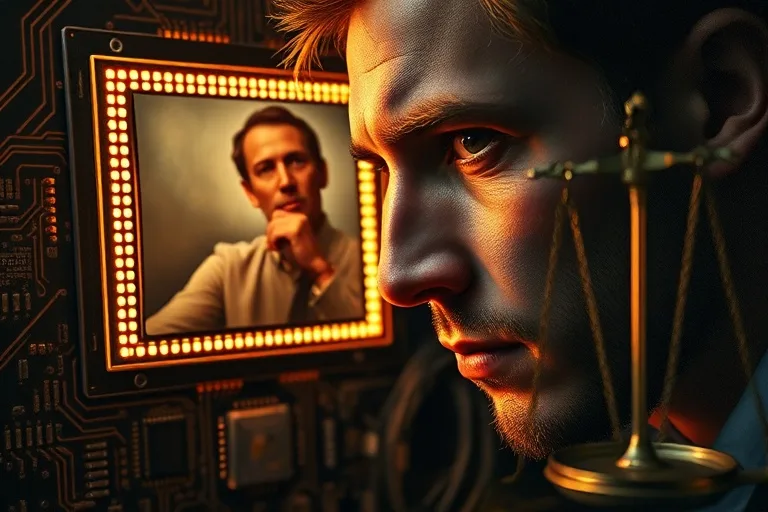
A thought-provoking oil painting illustrating a human grappling with the ethical implications of AI-generated content, with subtle visual cues representing truth, deception, and moral judgment.
One of the most pressing concerns is the potential for misinformation and disinformation. Generative AI can produce convincing fake news articles, social media posts, and even deepfake videos that are nearly indistinguishable from reality. This capability poses a significant threat to public trust, democratic processes, and individual reputations. The ease with which such content can be created and disseminated necessitates robust mechanisms for detection, labeling, and accountability.
Bias is another critical ethical issue. AI models learn from the data they are trained on, and if this data reflects societal biases (e.g., racial, gender, cultural), the AI's output will likely perpetuate and amplify those biases. This can lead to discriminatory content, stereotypes, or the misrepresentation of certain groups, further entrenching inequalities. Developers have a moral obligation to curate diverse and unbiased datasets and implement fairness-aware AI design principles.
The issue of consent and privacy is also paramount. Generative AI can create highly realistic images or voices of individuals without their permission, raising concerns about exploitation and the erosion of personal autonomy. The use of a person's likeness or voice to train AI models, or to generate content featuring them, without explicit consent, presents significant ethical and potentially legal challenges. This is particularly relevant in areas like digital art and entertainment. The ethical implications of AI are vast and complex, as explored in AI Ethics: Philosophical Challenges, Algorithmic Biases, Digital Consciousness.
Regulatory Landscape and Emerging Frameworks
Governments and international bodies worldwide are grappling with how to regulate generative AI. Existing laws, often designed for a pre-AI era, are proving inadequate to address the unique challenges posed by this technology. Consequently, new regulatory frameworks are being proposed and implemented to establish clearer rules and responsibilities.
The European Union, for example, is at the forefront with its proposed AI Act, which aims to classify AI systems based on their risk level and impose stricter requirements on high-risk applications, including those that generate content. Key provisions include transparency obligations, data governance requirements, and human oversight. While not specifically targeting generative AI authorship, it sets a precedent for regulating AI systems that impact fundamental rights and public safety.
In the United States, discussions are ongoing, with a focus on sector-specific regulations and voluntary guidelines. The U.S. Copyright Office has issued guidance on copyrighting AI-generated works, emphasizing human authorship. Various legislative proposals are also being considered to address issues like deepfakes and the use of copyrighted material in AI training. The rapid pace of technological change often outstrips the legislative process, creating a dynamic and often uncertain regulatory environment.
Internationally, organizations like UNESCO are working on recommendations for the ethics of AI, promoting principles such as fairness, transparency, and accountability. The goal is to foster a global consensus on responsible AI development and deployment, recognizing that AI's impact transcends national borders. These efforts highlight a growing recognition that a multi-faceted approach, combining legal, ethical, and technical solutions, is necessary.
Challenges and Future Outlook
The challenges in regulating generative AI are substantial. The technology is evolving at an exponential rate, making it difficult for laws to keep pace. Furthermore, the global nature of AI development and deployment necessitates international cooperation to avoid regulatory fragmentation and ensure consistent standards.
Enforcement is another significant hurdle. Identifying the source of AI-generated misinformation or infringement can be technically complex, especially with sophisticated models that obscure their origins. Attribution and liability remain thorny issues that require innovative legal and technical solutions, such as digital watermarking or provenance tracking for AI-generated content.
Looking ahead, several key trends are likely to shape the future of generative AI law and ethics:
- Increased Litigation: Expect more lawsuits challenging AI models' use of copyrighted data and the ownership of AI-generated content.
- Hybrid Authorship Models: Legal frameworks might evolve to recognize "hybrid" authorship, where both human and AI contributions are acknowledged, perhaps through new forms of IP rights.
- Transparency and Labeling: Mandatory labeling of AI-generated content is becoming a critical tool to combat misinformation and ensure authenticity.
- Global Harmonization: Efforts to align international AI regulations will intensify to create a more coherent legal environment.
- Ethical AI by Design: A greater emphasis will be placed on embedding ethical principles directly into the design and development of AI systems, rather than addressing issues post-deployment.
The debate over generative AI's legal and ethical implications is not merely academic; it has profound real-world consequences for industries, individuals, and society at large. Establishing a balanced approach that fosters innovation while protecting rights and upholding ethical standards is the monumental task ahead. The future of content creation, intellectual property, and even our understanding of creativity itself hinges on how effectively we navigate these complex waters.
As we move forward, continuous dialogue between technologists, legal experts, ethicists, and policymakers will be essential. The goal is not to stifle innovation but to guide it responsibly, ensuring that generative AI serves humanity's best interests while respecting fundamental rights and values. The journey will be challenging, but the potential rewards of a well-regulated and ethically developed AI ecosystem are immense.
Source: Hybrid content assisted by AIs and human editorial supervision.


Comentarios