
Buccal Pouches: Animal Anatomy, Function, Evolution | Althox
The animal kingdom is replete with fascinating anatomical adaptations, and among the most intriguing are buccal pouches. These specialized sacs, often found in the cheeks of various animals, serve a primary function of temporary food storage and transport. While most famously associated with rodents, such as hamsters and chipmunks, these ingenious structures represent a remarkable evolutionary solution to diverse ecological challenges.
Understanding buccal pouches goes beyond mere observation; it delves into the intricate interplay of anatomy, physiology, and behavioral ecology. From enabling efficient foraging to aiding in predator evasion, these seemingly simple pockets play a crucial role in the survival and reproductive success of the species that possess them. This comprehensive exploration will uncover the science behind these unique anatomical features, their distribution across the animal kingdom, and their profound impact on animal behavior and ecosystems.
Table of Contents
- Introduction to Buccal Pouches
- Anatomical Structure and Physiology
- Evolutionary Significance and Adaptations
- Diversity Across the Animal Kingdom
- Behavioral Ecology and Usage
- Ecological Impact and Seed Dispersal
- Health and Veterinary Aspects
- Conclusion: The Enduring Utility of Buccal Pouches
Introduction to Buccal Pouches
Buccal pouches are distensible sacs located in the oral cavity of certain animals, primarily mammals. They are essentially extensions of the cheek lining, capable of expanding significantly to hold substantial quantities of food or other materials. The term "buccal" refers to the cheek region, highlighting their anatomical placement.
These pouches are not merely passive storage containers; they are active, muscular structures that can be manipulated by the animal. Their primary function is to gather and transport food items from a foraging site to a safer location, such as a burrow or nest, where the food can be consumed or cached. This adaptation provides a significant survival advantage, allowing animals to minimize exposure to predators while maximizing food collection efficiency.

A golden hamster showcasing its remarkably distended buccal pouches, brimming with collected food, a testament to its efficient food storage strategy.
While rodents are the most well-known possessors of buccal pouches, other mammals, including some primates, also exhibit similar structures. The morphology and capacity of these pouches vary widely among species, reflecting their specific dietary needs and ecological niches. This diversity underscores the adaptability and evolutionary success of this physiological trait.
Anatomical Structure and Physiology
The anatomical design of buccal pouches is a marvel of biological engineering. These structures are essentially invaginations of the oral mucosa, forming expandable sacs on either side of the mouth. They are lined with a specialized epithelium, which can vary in texture and thickness depending on the species and the type of material typically stored.
Key physiological features include:
- Musculature: The pouches are surrounded by a complex network of muscles, including the buccinator muscle and specialized pouch muscles. These muscles allow the animal to actively fill, empty, and manipulate the contents of the pouches.
- Innervation: Nerves provide sensory feedback and motor control, enabling precise coordination of pouch movements. This is crucial for both efficient packing and safe emptying of the contents.
- Blood Supply: A rich vascular supply supports the metabolic demands of the muscular walls and maintains the health of the pouch tissues, especially during periods of heavy use.
- Glandular Secretions: While not typically involved in digestion, some pouches may have minor glandular activity, contributing to lubrication or antimicrobial defense. However, the primary function is mechanical storage, not chemical processing.
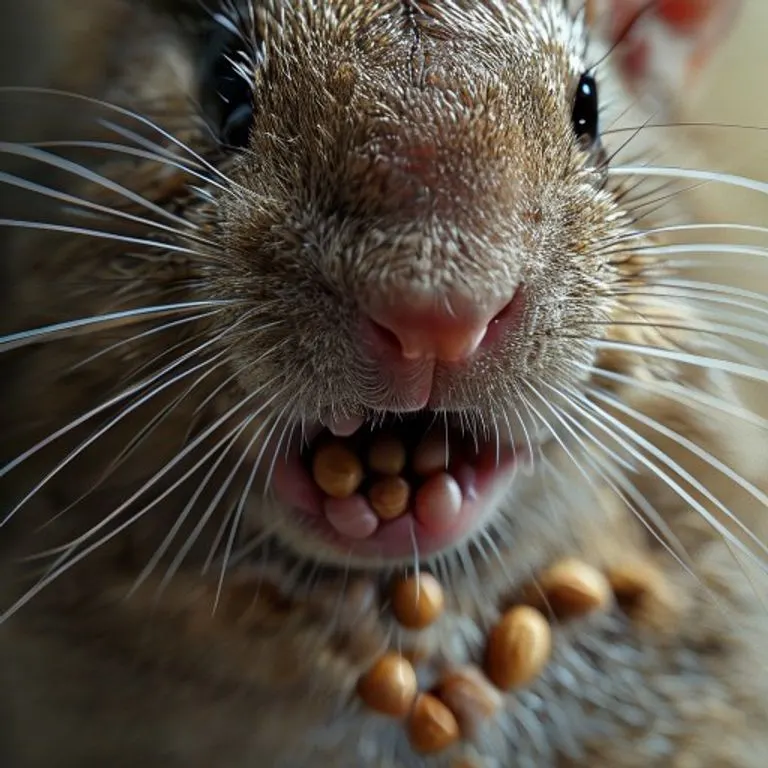
An intricate 3D rendering revealing the internal anatomical structure of a rodent's buccal pouch, showcasing its muscular layers and lining for efficient food transport.
The elasticity of the pouch walls is remarkable, allowing them to expand to several times their resting size. For instance, a hamster's pouches can extend from its cheeks down to its hips when fully loaded. This incredible distensibility is due to the flexible connective tissues and muscle fibers within the pouch walls, which can stretch without tearing or causing discomfort to the animal.
The process of emptying the pouches is equally fascinating. Animals typically use their forepaws to push the contents forward from the outside, or they can contract the pouch muscles from the inside. This allows for controlled release of food, either for consumption or for caching in a designated storage area.
Evolutionary Significance and Adaptations
The evolution of buccal pouches is a prime example of natural selection shaping an anatomical feature to confer significant survival advantages. These pouches likely evolved independently in different lineages, suggesting a strong convergent evolutionary pressure for efficient food handling.
The primary drivers for the development of buccal pouches include:
- Predator Avoidance: By quickly gathering large quantities of food and retreating to a safe location to eat or store, animals reduce their exposure time in vulnerable foraging areas. This "grab-and-go" strategy is crucial for species that are preyed upon.
- Resource Exploitation: Pouches allow animals to exploit ephemeral or localized food sources more effectively. They can collect a bounty of seeds or fruits when available, transporting them back to their burrow for later consumption, thus ensuring food security.
- Caching Behavior: Many pouch-bearing animals are hoarders. The pouches are essential for transporting food to underground caches, which are vital for surviving periods of scarcity, such as winter or dry seasons.
- Parental Care: In some species, parents use their pouches to transport food back to their young in the nest, ensuring the offspring receive adequate nourishment without the parent having to make numerous dangerous trips.
The size and structure of the pouches are finely tuned to the animal's diet and habitat. For instance, species that primarily consume small, dry seeds tend to have larger, more robust pouches, while those that eat softer, moist foods might have less pronounced structures. This specialization highlights the adaptive nature of these organs, demonstrating how they are perfectly suited to the specific challenges faced by each species.
Diversity Across the Animal Kingdom
While hamsters are the poster children for buccal pouches, these structures are found in a surprisingly diverse array of animals. Their presence highlights a common solution to the challenge of resource acquisition and storage.
Here's a look at some notable examples:
| Animal Group | Examples | Pouch Characteristics/Usage |
|---|---|---|
| Rodents | Hamsters (Syrian, Dwarf), Chipmunks, Ground Squirrels, Pocket Gophers | Highly distensible, often extending to shoulders/hips. Used for carrying seeds, nuts, grains, and even nesting material. Some species have fur-lined pouches. |
| Primates | Macaques, Baboons, Mandrills, Vervet Monkeys | Well-developed pouches used for temporary storage of fruits, leaves, and insects while foraging in groups or avoiding predators. |
| Monotremes | Platypus | Unique cheek pouches used to store invertebrates (worms, insect larvae) collected from the riverbed while diving. |
| Birds (Analogous) | Pelicans (gular pouch), Pigeons/Doves (crop) | While not buccal pouches, these are analogous structures. Pelicans use their gular pouch to scoop fish, and many birds use a crop for food storage before digestion. |
| Fish (Analogous) | Some Cichlids (mouthbrooders) | Female mouthbrooding cichlids use their mouths to incubate eggs and protect fry. This is a form of temporary oral storage, though not for food. |
The presence of pouches in such disparate groups underscores the effectiveness of this adaptation. In rodents, for example, the fur-lined pouches of pocket gophers are particularly noteworthy, preventing moisture loss and protecting the delicate oral lining from abrasive soil and plant material during tunneling and foraging.
Behavioral Ecology and Usage
The existence of buccal pouches profoundly influences the behavioral ecology of the animals that possess them. These structures are integral to foraging strategies, social dynamics, and survival tactics.
Key behavioral aspects include:
- Efficient Foraging: Animals can gather food much faster than they can consume it, allowing them to make the most of abundant but temporary food sources. This is particularly evident in species that forage in open, exposed environments.
- Food Transport: The pouches allow for the safe transport of food items back to a burrow, nest, or other secure location. This reduces the risk of predation while eating and ensures that valuable resources are not lost.
- Caching and Hoarding: Many pouch-bearing animals exhibit caching behavior, storing food for future consumption. The pouches are indispensable for moving large quantities of food to these hidden stores, which are critical for survival during lean times.
- Social Interactions: In some primate species, buccal pouches can play a role in social dynamics. Dominant individuals might display their full pouches as a sign of successful foraging, while subordinate individuals might empty their pouches to avoid conflict or share resources.
- Material Transport: Beyond food, some animals use their pouches to transport other materials. For instance, hamsters might carry nesting materials or even their young in their pouches when moving them to a new location, demonstrating remarkable versatility.
A serene watercolor painting illustrating the concept of seed dispersal, with various seeds and nuts artfully arranged, some emerging from a symbolic buccal pouch.
The ability to carry multiple items simultaneously significantly increases foraging efficiency. Instead of making numerous trips for single items, an animal can fill its pouches and transport a substantial meal or cache in one go. This not only saves energy but also minimizes the time spent in vulnerable open areas, a critical advantage for small prey animals.
Ecological Impact and Seed Dispersal
Beyond individual survival, buccal pouches have broader ecological implications, particularly in the context of seed dispersal. Many pouch-bearing animals, especially rodents, are granivores, meaning their diet consists primarily of seeds. Their caching behavior, facilitated by buccal pouches, inadvertently contributes to the propagation of plant species.
The process works as follows:
- Collection: Animals gather seeds in their pouches from a parent plant or a concentrated food source.
- Transport: The seeds are carried away from the source, reducing competition with the parent plant.
- Caching: The animal buries or hides the seeds in various locations, often in shallow caches.
- Forgotten Caches: Not all cached seeds are retrieved and consumed. Many are forgotten or the animal may die, leaving the seeds buried.
- Germination: These forgotten seeds, now buried at an optimal depth and protected from immediate predation, have a higher chance of germinating and growing into new plants.
This mutualistic relationship between plants and seed-hoarding animals is a cornerstone of many terrestrial ecosystems. The pouches, therefore, are not just a personal convenience for the animal but a vital tool in maintaining biodiversity and forest regeneration. Species like chipmunks and squirrels, with their extensive caching networks, are particularly important in this regard.
The efficiency of seed dispersal is directly linked to the capacity and usage patterns of buccal pouches. A larger pouch capacity allows for the transport of more seeds, potentially increasing the number of forgotten caches and thus enhancing the chances of successful plant propagation over a wider area. This makes buccal pouches an indirect but powerful force in ecosystem dynamics.
Health and Veterinary Aspects
While buccal pouches are highly efficient, they are not without their potential health risks, especially in domesticated animals like pet hamsters. Owners and veterinarians need to be aware of common issues that can arise from pouch usage.
Common health concerns include:
- Impaction: Sticky foods, sharp objects, or excessively large items can become lodged in the pouches, preventing the animal from emptying them. This can lead to discomfort, infection, and even necrosis of the pouch tissue if not addressed.
- Infection (Pouchitis): Bacteria or fungi can proliferate in food residues left in the pouches, leading to inflammation and infection. Symptoms include swelling, redness, foul odor, and reluctance to eat.
- Abscesses: Punctures from sharp food items (e.g., pointed seeds, splintered wood) can introduce bacteria, leading to abscess formation within or around the pouch.
- Eversion/Prolapse: In rare cases, a pouch can turn inside out and protrude from the mouth. This is a serious condition requiring immediate veterinary intervention to reposition the pouch and prevent further damage.
- Tumors: Like any tissue, buccal pouches can be susceptible to tumor growth, though this is less common than other issues.
Proper care for pet hamsters often involves providing appropriate, non-sticky foods and avoiding sharp treats to minimize the risk of pouch problems. Regular checks of the mouth and cheeks can help detect issues early. Veterinary treatment for pouch problems can range from manual emptying of impacted pouches to surgical intervention for abscesses or eversions. Understanding the delicate nature of these structures is crucial for responsible pet ownership and effective veterinary care.
Conclusion: The Enduring Utility of Buccal Pouches
Buccal pouches stand as a testament to the power of evolutionary adaptation, offering a simple yet profoundly effective solution to the complex challenges of foraging, survival, and resource management in the animal kingdom. From the iconic cheek-stuffing hamsters to the deep-diving platypuses, these structures have enabled diverse species to thrive in myriad environments.
Their anatomical precision, coupled with the intricate behaviors they facilitate, underscores their importance not only for individual animals but also for the broader ecological systems they inhabit. As we continue to study these fascinating organs, our understanding of animal physiology, behavioral ecology, and the delicate balance of nature only deepens. The humble buccal pouch, therefore, is far more than just a storage compartment; it is a symbol of nature's endless ingenuity.
Source: Hybrid content assisted by AIs and human editorial supervision.
Comentarios