
Abbot: Monastic Leadership, History, Evolution | Althox
The term "Abbot," derived from the Aramaic word for "father" (abba), designates the spiritual head of a monastery in various religious traditions, most notably Christianity. This title signifies not only administrative authority but also profound spiritual leadership over a community of monks. Its origins trace back to the nascent stages of monasticism, evolving significantly over centuries to encompass a complex interplay of ecclesiastical, social, and even political power.
Initially, an abbot was simply a revered elder within a monastic community, a figure of respect whose wisdom guided the brethren. However, as monastic institutions grew in size and influence, the role of the abbot became more formalized and structured, eventually becoming a pivotal position within the broader ecclesiastical hierarchy. Understanding the evolution of the abbot's role provides critical insight into the development of monasticism itself and its impact on Western civilization.
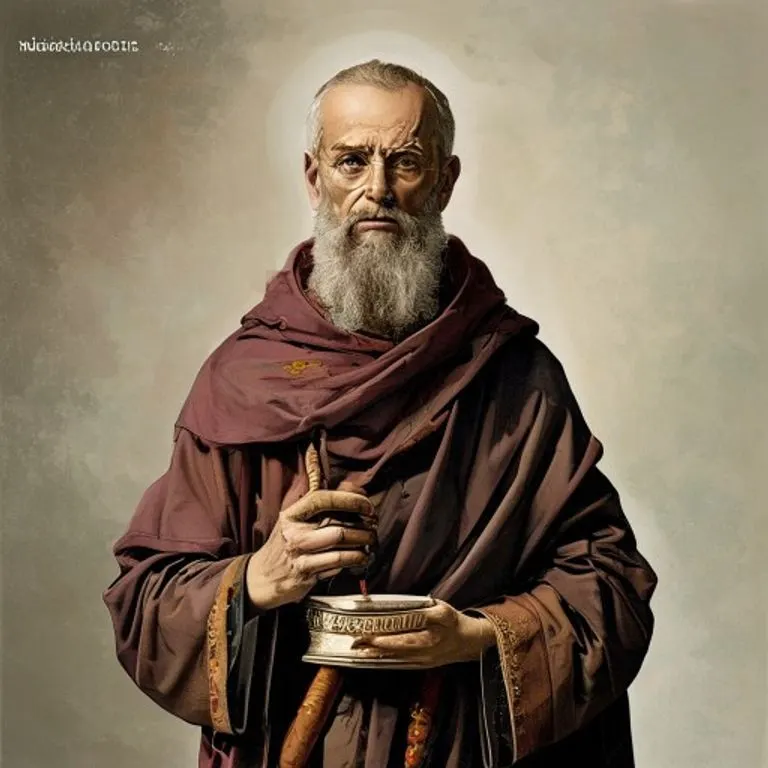
An abbot, depicted in traditional attire, embodies the historical and spiritual authority within monastic communities.
Origins and Early Development of the Abbacy
The title "Abbot" emerged from the very cradle of Christian monasticism in the deserts of Egypt and Syria during the 3rd and 4th centuries. Initially, it was a term of respect, applied to any venerable monk or hermit, signifying a spiritual father figure. These early "abbas" were often charismatic ascetics whose wisdom and experience drew disciples, forming loosely organized communities.
As monasticism spread across the Eastern Mediterranean and into the West, the need for more structured leadership became apparent. What began as an informal designation gradually evolved into a formal office. By the 5th century, the term "Abbot" was widely accepted and used to denote the superior of a monastery, a role that began to acquire specific responsibilities and canonical recognition. This transition marked a crucial step in the institutionalization of monastic life.
Early abbots, particularly in Egypt, sometimes presided over vast numbers of monks. St. John Cassian, for instance, speaks of an abbot in the Thebaid region who commanded a community of 500 monks. The jurisdiction of these early abbots and archimandrites (a similar Eastern title) was often vaguely defined, with some ruling single communities and others overseeing multiple hermitages without strict hierarchical oversight. This fluidity reflected the diverse and often experimental nature of early monasticism.
The Rule of St. Benedict and Monastic Governance
In the Western Church, the definitive shaping of the abbot's role came with the promulgation of the Rule of St. Benedict in the 6th century. This foundational document for Western monasticism established a clear framework for monastic life and governance, placing the abbot at its absolute center. According to Benedict's Rule, the abbot was to be chosen by the community for his wisdom, virtue, and ability to govern, serving as the spiritual father and temporal administrator of the monastery.
The Benedictine Rule stipulated that the abbot possessed jurisdiction over a single, self-contained community. This model emphasized stability (stabilitas loci) and obedience (obedientia) to the abbot, who was seen as representing Christ within the monastery. The abbot's power was paternal and absolute, yet it was also tempered by the Rule's injunctions for consultation with the brethren and adherence to the principles of charity and humility.
Despite the clear guidelines, the Benedictine model was subject to frequent violations and adaptations over time. It wasn't until the Cluniac reform movement of the 10th and 11th centuries that the idea of a supreme abbot, exercising jurisdiction over multiple houses of an order, gained widespread recognition. This innovation marked a significant departure from Benedict's original vision of independent monasteries, paving the way for larger, more centralized monastic congregations.
Abbots and Episcopal Authority: A Shifting Dynamic
Originally, abbots were typically laymen, and their monasteries were subject to the jurisdiction of the local bishop. Monks would attend the nearest church for sacraments and other religious offices. However, the practical inconveniences of this arrangement, especially for monasteries located in remote areas, soon necessitated a change. By the late 5th century in the East, and more slowly in the West, abbots began to be ordained as deacons or priests, allowing them to administer sacraments within their own communities.
The relationship between abbots and bishops was a constant source of tension and negotiation throughout the early medieval period. The Code of Justinian (lib. i. tit. iii.'s Ep. Leg. xl.) explicitly subordinated abbots to episcopal supervision. However, cases of partial exemption from episcopal control began to emerge, such as that of Faustus, Abbot of Lérins, at the Council of Arles in 456 AD. These exemptions often arose from the "exorbitant claims and exactions" of bishops, which monastic communities sought to escape.

The tools of monastic scholarship reflect the enduring intellectual and spiritual contributions overseen by abbots.
Pope Gregory the Great in the 6th century significantly boosted the practice of exempting religious houses from full episcopal control, placing them directly under papal authority. While intended for good purpose, these exemptions became a widespread issue by the 12th century, effectively creating "an empire within an empire" and diminishing the authority of bishops over significant centers of influence in their dioceses. This shift in power dynamics underscores the growing importance and independence of abbots.
The Second Council of Nicaea in 787 AD formally recognized the right of abbots to ordain their monks to lower orders beneath the diaconate, a power usually reserved for bishops. This was a crucial step in solidifying the abbot's ecclesiastical authority. Over time, particularly in the West, abbots pushed for even greater privileges, eventually gaining the right to confer the subdiaconate and diaconate, as permitted by Innocent IV in 1489.
The Abbot in the Middle Ages: Power, Prestige, and Insignia
By the High Middle Ages, abbots had often attained a status comparable to, and sometimes even exceeding, that of bishops. They presided over vast estates, commanded considerable wealth, and wielded significant political influence. The abbots of powerful monasteries, such as Fulda, even claimed precedence over archbishops. This rise in temporal power was often accompanied by the adoption of episcopal insignia, despite early prohibitions and protests from reformers like St. Bernard.
Abbots began to wear the mitre, ring, gloves, and sandals—symbols traditionally reserved for bishops. While the first undisputed case of an abbot being granted the use of a mitre dates to 1063 (Pope Alexander II to Egelsinus, Abbot of St. Augustine in Canterbury), the practice became increasingly common. To distinguish them from bishops, it was sometimes decreed that abbots' mitres should be made of less expensive materials and unadorned, a rule often disregarded.
The pastoral staff, or crozier, carried by an abbot was typically held with the crook turned inwards, symbolizing that his jurisdiction was limited to his own house, in contrast to a bishop's staff, which pointed outwards, signifying broader authority. However, the adoption of these pontificalia often led to abbots encroaching upon episcopal functions, a trend that the Lateran Council in 1123 attempted, largely ineffectually, to curb.
The power of the abbot was seen as both paternal and absolute within his community, though always theoretically limited by canon law. Obedience to the abbot was considered paramount, a path to spiritual perfection. Examples from early monasticism, such as monks watering a dry stick for months or struggling to move an immense rock at their abbot's command, illustrate the extreme emphasis placed on submission to the superior's will.
Election, Admission, and the Abbot's Authority
The process of selecting an abbot varied over time and place. Initially, the bishop of the diocese often chose the abbot from among the monastery's monks. However, the right of election gradually shifted to the monks themselves, with the bishop retaining the right to confirm the election and bless the new abbot. For "exempt" abbeys, those directly under papal jurisdiction, the confirmation and blessing had to be granted by the Pope himself, often incurring significant travel costs for the newly elected abbot to Rome.
Canonical requirements for an abbot included being at least 25 years old, of legitimate birth, and a monk of the house. If no suitable candidate was found within the monastery, a free choice from another monastery was sometimes permitted. The chosen abbot was expected to be capable of instructing others, having learned to command through practicing obedience himself. In rare, exceptional cases, an abbot was allowed to appoint his successor, as noted by Cassian in Egypt and later with St. Bruno.
A ruined archway stands as a testament to the enduring spiritual and architectural legacy of ancient monasteries.
Over time, both popes and secular rulers increasingly influenced the election process, often usurping the monks' rights. In Italy, the Pope eventually gained the right to nominate all abbots, while the King of France exercised similar control over most abbeys, with notable exceptions like Cluny and Prémontré. The election was generally for life, unless the abbot was canonically deprived of his office by the heads of his order, the Pope, or the bishop, depending on the abbey's jurisdiction.
The formal admission ceremony for a Benedictine abbot in medieval times, as prescribed by the customary of Abingdon, was a solemn affair. The newly elected abbot would remove his shoes at the church door and proceed barefoot to meet the community in a ceremonial procession. After kneeling and praying at the entrance to the choir, he would be presented by the bishop or his commissary and installed in his stall. The monks would then offer him the kiss of peace, first on his hand and then on his mouth, as he held his pastoral staff, symbolizing their obedience and acceptance of his authority.
Lifestyle, Extravagance, and Early Criticisms
Before the late modern era, abbots were accorded immense respect within their houses. When an abbot appeared, whether in church or elsewhere in the abbey, all present would stand and bow. His letters were received kneeling, akin to those of the Pope or a king. No monk was permitted to sit in his presence or leave without his explicit permission, reflecting the hierarchical social norms of the time.
In the church and at table, the abbot was assigned the place of highest honor. While Eastern monastic tradition often mandated that the abbot eat with the other monks, the Rule of St. Benedict in the West appointed him a separate table where he could entertain guests and strangers. This provision, however, inadvertently opened the door to a more luxurious lifestyle. The Council of Aachen in 817, for instance, decreed that abbots should eat in the refectory with the monks and be content with the ordinary fare, unless a guest was present, in an attempt to curb growing extravagance.
Despite such ordinances, these efforts often proved ineffective. Contemporary literature is replete with satirical remarks and complaints about the excessive extravagance of abbots' tables. When an abbot did condescend to eat in the refectory, his chaplains would wait on him with intact dishes, and a servant would assist them. Even when dining in their private rooms, the Rule of St. Benedict commanded them to invite monks to their table, providing opportunities for conversation and fellowship, though this was not always strictly observed.
The coat of arms of a Roman Catholic abbot was traditionally distinguished by a gold staff in the center, often with a black veil or cap, and a galero (a broad-brimmed hat) with twelve tassels. The ordinary attire of an abbot was supposed to be identical to that of his monks. Yet, by the 10th century, this rule was commonly set aside. Complaints frequently arose about abbots dressing in silk and adopting sumptuous costumes, sometimes even abandoning the monastic habit entirely for secular dress.
Secularization and the Rise of Lay Abbots
With the increase in wealth and power, many abbots began to lose much of their distinct religious character, becoming more akin to powerful feudal lords. They were primarily distinguished from lay lords by their vow of celibacy. Historical records describe abbots engaging in activities traditionally associated with the nobility, such as hunting with bows and arrows, maintaining horses, dogs, and hunters. A notable example is the Abbot of Leicester in 1360, who was renowned among the nobility as a formidable rabbit hunter.
In terms of their retinue and display of magnificence, abbots often vied with the greatest nobles of the kingdom. They would ride on mules with gilded bridles and saddles, with hawks on their wrists, followed by an immense train of attendants. Church bells would ring upon their passage. They socialized as equals with lay dignitaries, sharing in their pleasures and pastimes. This elevated rank and power, however, were frequently exploited for personal gain, leading to further secularization of the office.
The phenomenon of "lay abbots" (Latin: abbacomites, abbate laici, abbate milites, abbate saeculares, or irreligiosi) was a direct consequence of the growth of the feudal system from the 8th century onwards. This practice originated from the "recommendation" system, where, to meet contemporary emergencies, the income of a monastic community was handed over to a lay lord in exchange for protection. Early emperors and kings would reward their warriors with abbeys, effectively granting them control over monastic lands and revenues.
During the Carolingian era, the custom of granting abbeys as regular hereditary fiefs or benefits became prevalent. By the 10th century, before the great Cluniac reform, this system was firmly established. Even the prestigious Abbey of Saint-Denis was held in commendam (a temporary grant) by Hugh Capet. The example set by kings was emulated by feudal nobles, who sometimes acquired abbeys through temporary grants that became permanent, or even without any legitimate claim, further blurring the lines between ecclesiastical and secular authority.
The Abbot in the Modern Era: Continuity and Adaptation
While the temporal power and political influence of abbots diminished significantly after the Middle Ages, particularly with the rise of nation-states and the Reformation, the spiritual office of the abbot has endured. In the Roman Catholic Church, abbots continue to serve as the elected superiors of independent monasteries (abbeys) belonging to various monastic orders, such as the Benedictines, Cistercians, and Premonstratensians.
The modern abbot's role is primarily spiritual and administrative, focusing on the welfare of the monastic community, the preservation of the order's charism, and the spiritual guidance of the monks. They are typically ordained priests and hold significant authority within their abbey, often equivalent to that of a bishop in certain liturgical and disciplinary matters, though without episcopal ordination.
In some instances, abbots may still hold territorial jurisdiction, known as an "abbacy nullius" or "territorial abbacy," where they function as ordinary bishops over a specific territory, even if they are not consecrated as bishops. These are rare exceptions today, reflecting a historical legacy of abbots exercising quasi-episcopal power. The election process largely remains democratic within the community, followed by confirmation by higher ecclesiastical authorities.
The title of abbot is also found in other Christian traditions, such as some Anglican and Orthodox monastic communities, where it similarly denotes the head of a monastery. The core mandate remains the same: to foster a life of prayer, work, and community according to the specific rule of their order. The abbot continues to be the spiritual father, guide, and protector of his monastic family, upholding traditions that span over a millennium and a half.
In conclusion, the abbot's role has undergone a remarkable transformation from its humble origins as a term of respect for desert hermits to a position of immense ecclesiastical and temporal power in the Middle Ages, and finally to its more focused spiritual and administrative function in the modern era. This evolution reflects the dynamic interaction between spiritual ideals, institutional development, and broader socio-political changes throughout history. The abbot remains a vital figure in monasticism, embodying continuity with a rich and complex past.
Fuente: Contenido híbrido asistido por IAs y supervisión editorial humana.


Comentarios