
Fan: History, Types, Cultural Significance, and Function | Althox
The hand fan, a seemingly simple device, boasts a rich and complex history intertwined with human ingenuity, cultural expression, and the universal need for comfort. Far more than just a tool to generate a breeze, it has served as a symbol of status, an artistic canvas, a means of communication, and even a weapon across diverse civilizations. Its evolution reflects advancements in materials, craftsmanship, and societal norms, making it a fascinating object of study.
From its humble beginnings as a practical instrument for cooling to its elevated status as a sophisticated fashion accessory and ceremonial item, the fan has adapted and transformed over millennia. This comprehensive exploration delves into its anatomy, various types, the scientific principles behind its function, and its profound historical and cultural impact across continents.
Table of Contents
- The Anatomy of a Hand Fan
- Types of Fans Through History
- The Science Behind the Fan's Cooling Effect
- A Journey Through Time: History of the Fan in East Asia
- The Fan's Resurgence in the West: From Flabellum to Fashion Statement
- Cultural Significance and Modern Relevance
- Manufacturing and Craftsmanship Evolution
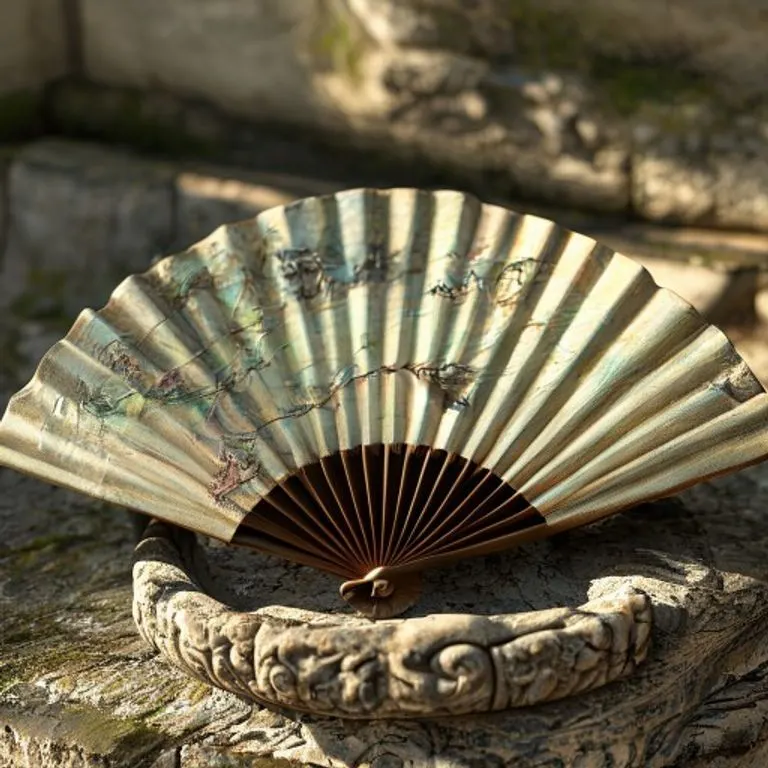
The hand fan, a timeless accessory, embodies both practical utility and sophisticated artistry across various cultures.
The Anatomy of a Hand Fan
Understanding the components of a hand fan is crucial to appreciating its design and functionality. While designs vary widely, most fans share fundamental structural elements that allow for their characteristic movement and air-moving capability. These components have been refined over centuries, reflecting both aesthetic preferences and material availability.
The primary parts of a typical folding hand fan include:
- Deck or Pivot: This refers to the fixed base or the starting point where the sticks or rods converge. In some designs, it's a solid piece, while in others, it's the point around which the fan pivots.
- Sticks or Rods (Deck): These are the individual segments, often made of wood, ivory, bone, or plastic, that form the skeleton of the fan. They support the "country" or leaf and allow the fan to fold and unfold. The craftsmanship of these sticks can be incredibly intricate, featuring carving, inlay, or painting.
- Country or Leaf: This is the broad, air-moving surface of the fan, typically made of fabric (silk, lace), paper, or feathers. It is attached to the sticks and is often decorated with elaborate paintings, embroidery, or prints. This is the most visible part and often dictates the fan's aesthetic appeal.
- Draft (Optional): Some fans feature decorative openings or strings that connect the rods, particularly in older designs. These elements, sometimes called "depths," were often functional for structural integrity or simply ornamental.
- Headers or Guards: These are the two outermost, often thicker, sticks that protect the inner sticks and the leaf when the fan is closed. They are frequently more elaborately decorated than the inner sticks and provide a sturdy grip for the user.
The combination of these elements creates a device that is both practical and a work of art, capable of providing comfort while also conveying messages or enhancing an outfit.
Types of Fans Through History
The evolution of the hand fan has given rise to a diverse array of types, each reflecting the materials, technologies, and cultural aesthetics of its time and place. These categories broadly fall into two main groups: fixed fans and folding fans, with numerous variations within each.
Historically, fans can be categorized as:
- Flat Fans (Píng Shàn): These are non-folding fans, characterized by a rigid, often circular or paddle-shaped blade attached to a handle. They represent some of the earliest forms of fans and are still prevalent in many cultures.
- Circular Fans: Often made of silk or paper stretched over a bamboo or wooden frame.
- Palm Fans: Woven from palm leaves or other natural fibers, common in tropical regions.
- Straw Fans: Similar to palm fans, offering a lightweight and inexpensive cooling solution.
- Feather Fans: Made from various bird feathers, often associated with ceremonial use or luxury.
- Folding Fans (Zhé Shàn): Invented in East Asia, these fans are designed to collapse into a compact form, making them highly portable. Their intricate construction allows for a dramatic unfurling motion.
- Silk Folding Fans: Feature delicate silk leaves, often painted with elaborate scenes or calligraphy.
- Paper Folding Fans: A more common and versatile type, allowing for a wide range of artistic expressions.
- Sandalwood Fans: Made entirely of carved sandalwood, prized for their aromatic qualities and intricate openwork designs.
- Pearl or Tortoiseshell Fans: Luxury items, often featuring exquisitely carved sticks and guards made from precious materials.
Beyond these main types, there are specialized fans such as the "brisé" fan, which consists solely of sticks held together by a ribbon, without a leaf. Each type tells a story of its origin, purpose, and the societal context in which it was used.
The Science Behind the Fan's Cooling Effect
The cooling sensation provided by a hand fan is not due to a reduction in air temperature, but rather a clever manipulation of the body's natural thermoregulation processes. This effect is primarily achieved through enhanced evaporative cooling and increased convection.
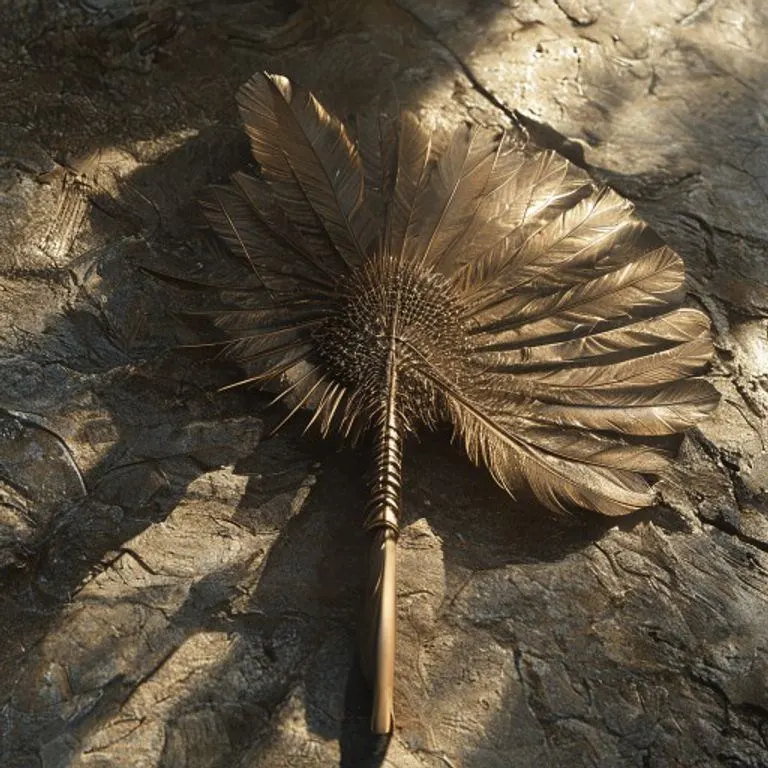
Meticulous craftsmanship and a variety of materials have defined the creation of hand fans throughout history.
When the human body becomes warm, it produces sweat, a liquid that cools the body as it evaporates from the skin. In still, humid air, the air immediately surrounding the skin becomes saturated with moisture, slowing down further evaporation. This reduces the efficiency of the body's natural cooling mechanism.
A hand fan works by displacing this saturated air with drier air from the surroundings. The movement of air created by the fan accelerates the rate at which sweat evaporates from the skin's surface. As sweat turns into vapor, it absorbs heat from the body, leading to a noticeable cooling sensation.
Furthermore, the fan increases convective heat transfer. Convection is the process of heat transfer through the movement of fluids (in this case, air). By constantly moving cooler air across the skin and carrying away warmer air, the fan helps to dissipate body heat more effectively. This combination of enhanced evaporation and convection makes the hand fan an effective, albeit simple, tool for personal cooling, particularly in warm or poorly ventilated environments.
A Journey Through Time: History of the Fan in East Asia
East Asia, particularly China and Japan, holds a pivotal place in the history of the hand fan, where it evolved from a utilitarian object into a profound cultural artifact. The fan's journey in this region is marked by artistic refinement, symbolic meaning, and its integration into various aspects of daily life and ceremony.
The Chinese Fan: A Legacy of Art and Status
In China, the fan possesses abundant cultural deposits and is deeply interwoven with national culture, Buddhism, and the culture of bamboo. The earliest known Chinese fans date back to the second century BC, typically as a pair of woven bamboo side-mounted fans. The Chinese character for "fan" (扇, shàn) is etymologically derived from a pictograph depicting feathers under a roof, hinting at its ancient origins and materials.
Initially, fans were fixed, known as pien-mien, meaning "to stir the air." These early fans were not only for cooling but also served as indicators of social status. During the Song Dynasty (960–1279), it became common for famous artists to be commissioned to paint intricate scenes or calligraphy on fan surfaces, transforming them into portable artworks. This practice elevated the fan's aesthetic value and reinforced its role as a luxury item.
The folding fan, while popularized in China during the Ming Dynasty (1368–1644), is believed to have originated in Japan. Hangzhou emerged as a significant center for the production of folding fans during this period. Chinese painters developed numerous decorative fan designs, using materials like ivory, bone, mica, sandalwood, or tortoiseshell for the slats, which were then covered with paper or cloth. The social meaning attached to fans in the Far East was profound, with the handling of a hand fan becoming a highly regarded art, especially for women.
The Japanese Fan: Innovation and Symbolism
The folding fan was invented in Japan between the sixth and eighth centuries. Early Japanese court fans, known as Akomeogi, were worn by court women and were made by tying thin strips of hinoki (Japanese cypress) together with thread. The number of wooden strips varied according to the individual's social standing, highlighting the fan's role in conveying hierarchy.
Historical records, such as the Sui Song (History of Song), mention a Japanese monk named Chōnen offering folding fans to the Chinese Emperor in 988, indicating their Japanese origin. By the eleventh century, Korean envoys were bringing Japanese folding fans as gifts to Chinese courts. The popularity of fans in Japan was so immense that sumptuary laws were enacted during the Heian period (794–1185) to restrict the decoration of both hiogi (rigid fans) and folding paper fans.
Today, Japanese fans, particularly the sensu (folding fan) and uchiwa (non-folding fan), remain important cultural symbols. Shinto priests use them in formal attire, and they are integral to traditional Japanese dance. The Mai Ogi, a type of dance fan, typically has ten sticks and a thick paper mount displaying a family crest. Symbolically, the fan represents friendship, respect, and good wishes, often given as special gifts.
Beyond their aesthetic and social functions, Japanese fans also had practical applications, such as in the military for sending signals on the battlefield. Warriors even used specialized fans as a form of weapon, known as tessen. In Japanese pop culture, fans, sometimes called "haris," appear in anime and graphic novels as weapons, showcasing their enduring iconic status. The fan's handle is often seen to symbolize the beginning of life, with the ribs representing the diverse paths one can take.
The Fan's Resurgence in the West: From Flabellum to Fashion Statement
While archaeological ruins suggest the use of fans in ancient Greece, the hand fan largely disappeared from Western Europe during the Middle Ages. Its reintroduction and subsequent flourishing in European society marked a significant cultural shift, transforming it into a quintessential accessory of elegance and social interaction.
Early European Fans: The Flabellum and Eastern Influence
The earliest known hand fan in Christian Europe was the flabellum, a ceremonial fan dating from the sixth century. These rigid fans were primarily used in religious services to ward off insects from the consecrated bread and wine. While its use became extinct in Western Europe during the Middle Ages, the flabellum continues to be used in the Eastern Orthodox Church and the Churches of Ethiopia, maintaining its ancient ecclesiastical role.
The reintroduction of secular hand fans to Europe occurred in the thirteenth and fourteenth centuries, primarily through contact with the Middle East via the Crusaders. However, it was in the fifteenth century that Portuguese traders, returning from China and Japan, brought Asian folding fans to Europe, sparking a widespread fascination. These exotic imports quickly gained popularity, paving the way for local production and adaptation.
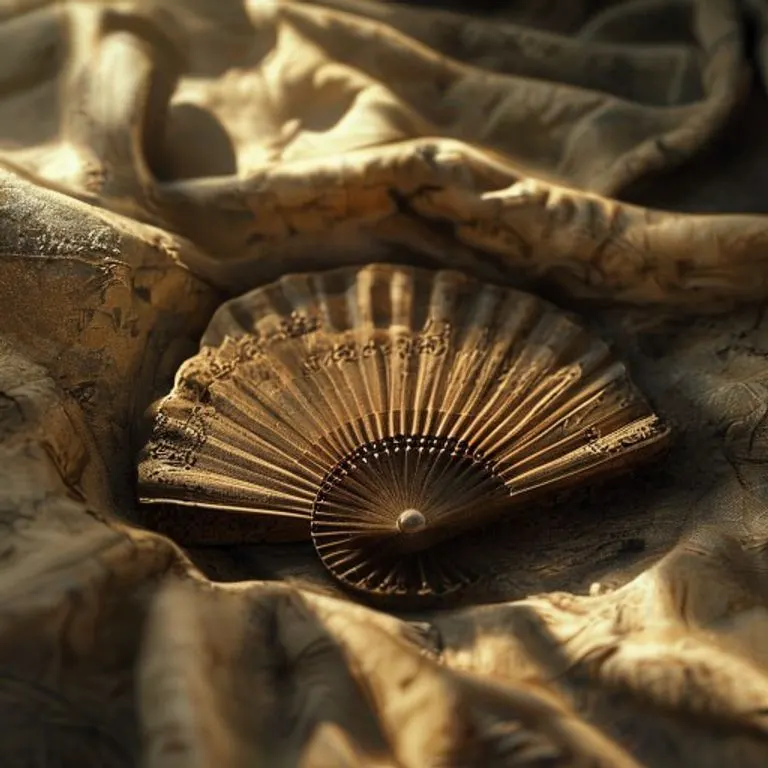
The fan transcends its practical use, embodying abstract concepts of movement, communication, and cultural fusion.
The Golden Age of European Fans: 17th to 19th Centuries
By the seventeenth century, the folding fan, with its elegant design and portability, had gained dominance in Europe. Portraits of high-society women often depicted them holding elaborately decorated fans, sometimes adorned with pompoms, feathers, and jewels. Rigid-style fans, often made with exotic materials like mica or leather, were also popular and sometimes hung from ladies' skirts.
The eighteenth century marked a zenith for the ornamental hand fan, which became a high art form. Specialized craftsmen across Europe produced exquisite fans, with leaves often painted with religious, classical, or neoclassical themes. Ivory or tortoiseshell sticks, sometimes inlaid with gold or silver, showcased intricate ornamental ironwork. The Edict of Nantes' revocation in 1685 led to an exodus of skilled French fan makers to Protestant countries like England, contributing to the spread and diversification of European fan craftsmanship.
In the nineteenth century, European fashion continued to influence the fan's decor and size. While popular lore suggests a "language of the fan" was used in courts for secret messages, modern research indicates this was largely a clever marketing ploy developed in the eighteenth century. This marketing strategy, however, has endured, with contemporary fan makers like Duvelleroy in London still referencing this "visual language" in their advertisements, perpetuating the romantic mystique of the fan.
Cultural Significance and Modern Relevance
Beyond its primary function as a cooling device, the hand fan has woven itself into the fabric of human culture, acquiring layers of meaning and symbolism. Its presence in art, literature, and social customs underscores its importance as a cultural artifact that transcends mere utility.
In many societies, the fan was a powerful symbol of status and wealth. The materials used—such as ivory, mother-of-pearl, rare woods, and precious metals—along with intricate artistic decorations, indicated the owner's social standing. Owning a beautifully crafted fan was a testament to one's taste and affluence, making it a coveted item among the elite.
The fan also played a significant role in communication, particularly in European high society. While the "language of the fan" may have been exaggerated for marketing, the subtle gestures and movements with a fan could indeed convey unspoken messages, adding a layer of intrigue to social interactions. In East Asian dance forms, the fan is an extension of the dancer's body, used to express emotions, tell stories, and create dynamic visual effects.
In modern times, while electric fans and air conditioning have largely replaced hand fans for practical cooling, the hand fan retains its cultural and aesthetic appeal. It is still used in traditional ceremonies, theatrical performances, and as a fashion accessory. Folding fans, especially from Japan and China, remain popular tourist souvenirs, cherished for their artistic beauty and historical significance. The hand fan continues to be a testament to human creativity, blending functionality with exquisite artistry.
Manufacturing and Craftsmanship Evolution
The production of hand fans has seen a remarkable evolution, from rudimentary handmade objects to sophisticated artisanal creations and, eventually, to mass-produced items. This progression reflects changes in technology, artistic trends, and economic demands over centuries.
Early fans were often crafted from readily available natural materials such as palm leaves, woven grasses, or feathers, requiring simple techniques. As societies advanced, so did the complexity of fan making. In East Asia, particularly China and Japan, fan making became a highly specialized craft. Artisans would meticulously carve sticks from bamboo, wood, or ivory, and then paint or embroider silk or paper leaves with intricate designs. This period emphasized individual skill and artistic expression, with each fan often being a unique masterpiece.
In Europe, the reintroduction of the folding fan spurred the development of a dedicated fan-making industry. The eighteenth century saw the rise of specialized workshops where different aspects of fan production—carving the sticks, painting the leaves, and assembling the components—were often carried out by different skilled artisans. This division of labor allowed for greater efficiency and higher quality, contributing to the fan's status as a luxury item.
The nineteenth century brought about significant changes with the advent of industrialization. Machines were introduced for certain aspects of fan production, such as paper making and cutting, which allowed for softer, more uniform fan leaves and increased output. While this made fans more accessible to a wider audience, it also led to a distinction between artisanal, handcrafted fans and more affordable, mass-produced versions. Despite these changes, the art of traditional fan making continues to be preserved by dedicated craftsmen around the world, ensuring that the legacy of this elegant and culturally rich object endures.
Fuente: Contenido híbrido asistido por IAs y supervisión editorial humana.


Comentarios