
Gun Down: Understanding the Mechanics of Projectile Firing | Althox
The phrase "gun down" carries a specific and often misunderstood connotation within the broader lexicon of projectile expulsion. While "shooting" can refer to a multitude of actions, from firing an arrow to launching a rocket, "gun down" specifically denotes the act of discharging a firearm that propels a bullet. This distinction is crucial for a precise understanding of the terminology, particularly in scientific, journalistic, and legal contexts where accuracy is paramount.
For instance, if one were to "shoot" a cork from a champagne bottle, it would not be considered "gunning down" because, despite being a projectile expulsion, the object is not a bullet and the mechanism is not a firearm in the conventional sense. This article aims to meticulously explore the technical mechanics, ballistic principles, and contextual nuances that define "gun down" as the precise act of firing a bullet from a firearm, differentiating it from other forms of projectile discharge.
Table of Contents
- The Etymology and Evolution of "Gun Down"
- Mechanics of a Firearm: From Trigger to Target
- The Ballistics of a Bullet: Internal, External, and Terminal
- Differentiating "Gun Down" from Other Projectile Expulsions
- Legal and Ethical Considerations of Firearm Usage
The Etymology and Evolution of "Gun Down"
The term "gun" itself has a fascinating etymological journey, believed to originate from the Old Norse word "gunnr," meaning "war." It later evolved through Middle English to refer to various types of artillery and projectile weapons. The verb "to shoot" comes from the Old English "scēotan," meaning to "hurl, send flying, discharge." Over centuries, as firearms became more prevalent and sophisticated, the specific act of using them to propel bullets became intrinsically linked with these terms.
The addition of "down" in "gun down" often implies an act of bringing something or someone to the ground, typically with lethal or incapacitating force. This phrasal verb gained prominence in the 19th and 20th centuries, particularly in contexts of warfare, law enforcement, and crime reporting. Its usage underscores a definitive and often violent conclusion to the act of firing a firearm, distinguishing it from a mere "shot" which could be accidental, warning, or non-lethal.
Historically, the evolution of firearms from rudimentary cannons to modern handguns and rifles refined the meaning of "gun down." Early firearms were often imprecise, and the act of "shooting" was less controlled. With advancements in metallurgy, propellant chemistry, and manufacturing, firearms became more reliable and their projectiles (bullets) more standardized, solidifying the specific definition of "gun down" as a deliberate act involving these specialized weapons and their ammunition.
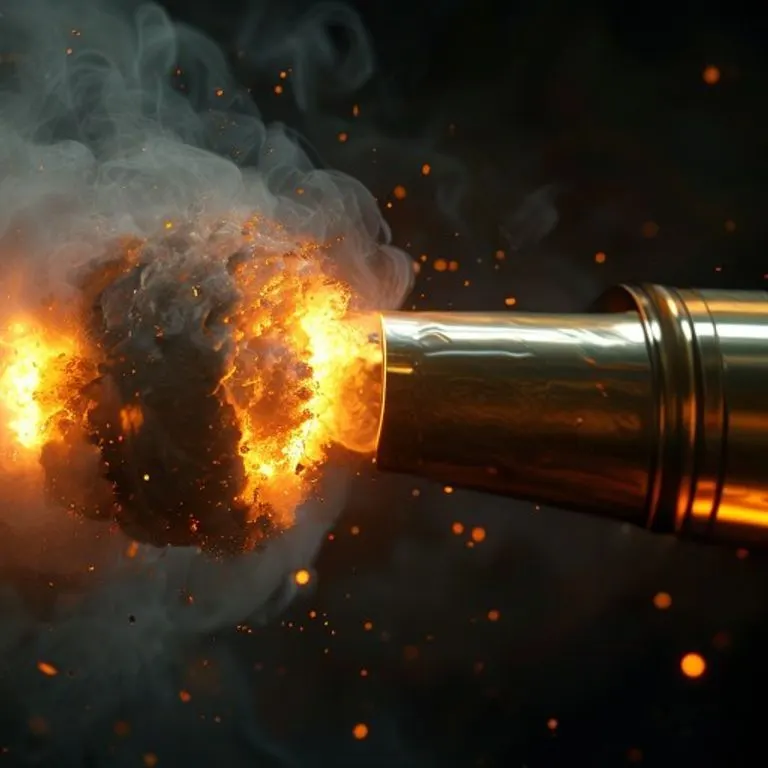
The intricate mechanisms of modern firearms represent centuries of precision engineering and design.
Mechanics of a Firearm: From Trigger to Target
Understanding "gun down" requires a grasp of how a firearm functions to propel a bullet. The process, while seemingly instantaneous, involves a precise sequence of mechanical and chemical reactions. This sequence ensures the controlled and directed expulsion of a projectile at high velocity. The core components involved are the trigger, firing pin, primer, propellant, bullet, and barrel.
- Trigger Pull: The action begins when the operator pulls the trigger. This mechanical input releases the hammer or striker mechanism.
- Hammer/Striker Mechanism: The released hammer/striker moves forward with significant force, impacting the primer at the base of the cartridge.
- Primer Ignition: The impact causes the primer, a small cap containing an explosive compound, to ignite. This ignition creates a small flame.
- Propellant (Gunpowder) Combustion: The flame from the primer ignites the main propellant charge (gunpowder) within the cartridge casing. The gunpowder burns rapidly, generating a large volume of hot, expanding gases.
- Projectile (Bullet) Acceleration: These rapidly expanding gases create immense pressure behind the bullet, forcing it forward and down the barrel. The bullet engages with the rifling (spiral grooves) inside the barrel, which imparts a spin, stabilizing it in flight.
- Ejection of Spent Casing: In most semi-automatic and automatic firearms, the recoil energy generated by the shot is harnessed to cycle the action, extracting the spent cartridge casing and loading a new round into the chamber, preparing for the next shot.
Different types of firearms—pistols, rifles, and shotguns—share these fundamental principles but vary in their specific mechanisms and the types of bullets they fire. Pistols are designed for compactness and relatively short-range engagements, while rifles offer greater accuracy and power over longer distances. Shotguns, on the other hand, typically fire multiple small pellets (shot) or a single large projectile (slug), designed for wider spread or specific hunting applications, though the core "gun down" definition still applies if they fire a single bullet.
The Ballistics of a Bullet: Internal, External, and Terminal
Ballistics is the scientific study of the motion of projectiles, particularly bullets, and the effects they produce. It is typically divided into three main categories, each crucial for understanding the complete journey and impact of a bullet fired from a firearm.
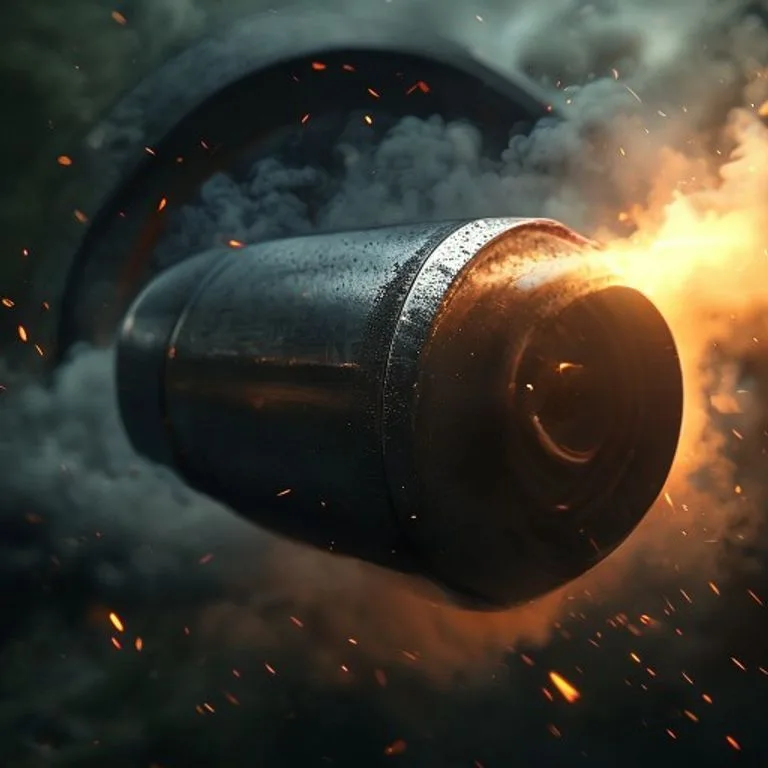
Visualizing the ballistic trajectory helps in understanding the complex path a bullet takes after being fired.
- Internal Ballistics: This phase deals with the events occurring within the firearm from the moment the primer ignites until the bullet exits the barrel. Key factors include the pressure generated by the burning propellant, the bullet's acceleration, the barrel's length, and the rifling that imparts spin. The design of the cartridge and the firearm's chamber significantly influence these internal dynamics, determining the bullet's initial velocity and stability.
- External Ballistics: Once the bullet leaves the barrel, it enters the realm of external ballistics, which studies its flight path through the air. Factors such as gravity, air resistance (drag), wind, and the bullet's spin (gyroscopic stability) all influence its trajectory. Bullet shape, weight, and initial velocity are critical determinants of how far and accurately it will travel. Understanding external ballistics is vital for aiming and predicting bullet drop over distance.
- Terminal Ballistics: This final phase examines what happens when the bullet strikes its target. It involves the transfer of kinetic energy from the bullet to the target material, resulting in deformation, penetration, and potential damage. For biological targets, terminal ballistics studies wound profiles, temporary and permanent cavities, and the overall incapacitation effects. This field is particularly relevant in forensic science and medical trauma research, always approached from a scientific and objective standpoint.
Each ballistic phase is interconnected, with the outcome of one directly influencing the next. The precision engineered into modern firearms and ammunition is a testament to the deep understanding of these ballistic principles, allowing for controlled and predictable projectile performance. Further insights into related technological advancements can be found by exploring biometric security technologies, which often intersect with contexts where firearm control is a concern.
Differentiating "Gun Down" from Other Projectile Expulsions
The English language often uses "shoot" broadly, leading to potential confusion regarding the specific act of "gunning down." To clarify, it is essential to distinguish between the precise definition of "gun down" and other forms of projectile expulsion that do not involve firearms and bullets.
- Cork from a Bottle: When a cork is "shot" from a champagne bottle, the propulsion mechanism is the pressure of dissolved carbon dioxide, and the projectile is a cork, not a bullet. This is a physical expulsion, not a firearm discharge.
- Arrows from a Bow: Archery involves "shooting" arrows. Here, kinetic energy is stored in the bow limbs and transferred to the arrow. While an arrow is a projectile, the bow is not a firearm, and the arrow is not a bullet.
- Airsoft/BB Guns: These devices "shoot" plastic or metallic pellets using compressed air or springs. Although they resemble firearms, their power output, projectile material, and intended use differ significantly from those designed to fire bullets, thus not fitting the "gun down" definition.
- Nail Guns: An industrial tool used in construction, a nail gun "shoots" nails into materials. It uses compressed air or small explosive charges, but its purpose is fastening, not propelling bullets, and its mechanism is distinct from a firearm.
- Slingshots or Catapults: These ancient devices "shoot" stones or other objects using tension and leverage. They are primitive projectile launchers, far removed from the sophisticated mechanics of a firearm.
The core differentiator for "gun down" remains the specific combination of a firearm (a weapon designed to fire a projectile using an explosive charge) and a bullet (a metallic projectile designed to be fired from a firearm). Any deviation from these two elements means the action, while potentially a "shooting," is not a "gunning down." This precision in language is vital for clear communication, especially when discussing serious topics related to public safety and legal frameworks. Further reading on cyber hygiene principles can offer insights into responsible digital conduct, paralleling the need for precision in language.

Scientific inquiry into ballistics has evolved significantly, from ancient observations to modern computational models.
Legal and Ethical Considerations of Firearm Usage
The act of "gunning down" carries profound legal and ethical implications, far beyond the mechanical process itself. Due to the inherent destructive potential of firearms and bullets, their use is heavily regulated in most jurisdictions worldwide. These regulations typically cover aspects such as ownership, licensing, storage, carrying, and the circumstances under which a firearm may be discharged.
Ethically, the decision to use a firearm involves considerations of self-defense, the protection of others, and the potential for harm. Professional training and a deep understanding of local laws are paramount for any individual who chooses to own or operate a firearm. The emphasis is always on responsibility, safety, and the minimization of unintended consequences. This includes rigorous adherence to safety protocols, such as treating every firearm as if it were loaded, never pointing it at anything you don't intend to shoot, keeping your finger off the trigger until ready to fire, and knowing your target and what is beyond it.
The societal impact of firearm usage is a complex and often debated topic, involving discussions on public safety, individual rights, and the role of law enforcement. From a purely scientific and journalistic perspective, it is critical to address these issues with neutrality and respect, focusing on factual information and established research. The precise definition of "gun down" helps to frame these discussions accurately, ensuring that conversations about firearm-related incidents are based on clear and unambiguous terminology. Understanding the broader context of ethical frameworks in artificial intelligence can provide a parallel for the careful consideration required in highly impactful fields.
In conclusion, "gun down" is a term that precisely describes the act of firing a bullet from a firearm. This definition is rooted in the specific mechanics of these weapons and the ballistics of their projectiles, distinguishing it from other forms of shooting. A comprehensive understanding of this term is essential for accurate communication in various professional fields, from journalism to law enforcement and scientific research, ensuring clarity and avoiding ambiguity in critical discussions.
Fuente: Contenido híbrido asistido por IAs y supervisión editorial humana.


Comentarios