
Abaangui Guarani God: Moon Myth & Culture Hero | Althox
Abaangui, a prominent figure in the rich tapestry of Guarani mythology, stands as a testament to the intricate cosmological views of indigenous South American peoples. Revered as a moon god and a pivotal culture hero, his narrative intertwines celestial phenomena with the origins of cultural practices and natural elements. The Guarani, an indigenous group primarily inhabiting Paraguay and parts of Brazil, Argentina, and Bolivia, possess a spiritual heritage deeply connected to their environment and ancestral stories.
His myth, often recounted through generations, provides profound insights into their understanding of the cosmos and the roles of divine beings in shaping their world. Abaangui's story is particularly striking due to its unique depiction of the moon's creation, stemming from a physical transformation that highlights themes of sacrifice and cosmic order. This narrative not only explains a celestial body but also reinforces the interconnectedness of the spiritual and natural realms within Guarani belief systems.
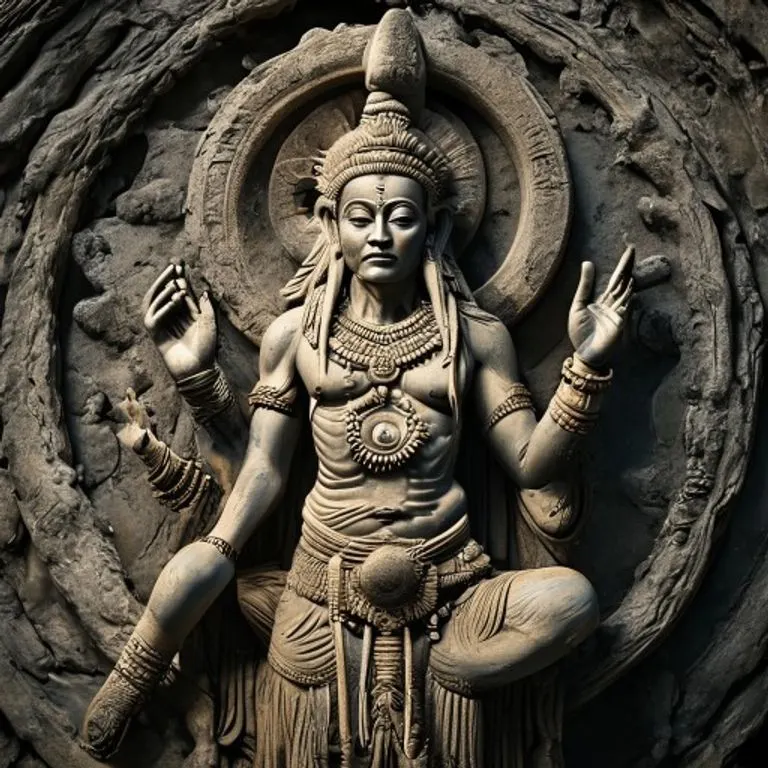
Abaangui, the Guarani moon god, depicted with his characteristic large nose, embodying his mythical essence.
The legend of Abaangui, with its vivid imagery and profound symbolism, encapsulates the Guarani worldview, where every element of nature holds spiritual significance. Understanding his story is crucial for appreciating the depth and complexity of indigenous mythologies. This article delves into the origins, significance, and enduring legacy of Abaangui, shedding light on his unique place within Guarani cosmology.
Table of Contents
The Guarani People and Their Cosmology
The Guarani are one of the most well-known indigenous groups in South America, whose historical territories span across Paraguay, Brazil, Argentina, and Bolivia. Their culture is rich with oral traditions, intricate social structures, and a deep spiritual connection to the natural world. The Guarani language, Guaraní, remains one of the official languages of Paraguay, reflecting the enduring strength of their cultural identity.
Guarani cosmology is complex, centered around a pantheon of deities and spirits that govern various aspects of existence. At the heart of their creation myth is Ñande Ru Guasu (Our Great Father), the supreme creator god. The world is seen as a living entity, imbued with spiritual essence, where humans, animals, and plants are interconnected. This holistic view emphasizes balance and respect for all forms of life.
Their mythology often features culture heroes who bring knowledge, tools, and social order to humanity. These figures are instrumental in shaping the world and establishing the customs that guide Guarani life. Celestial bodies, particularly the sun and moon, hold immense significance, often personified as powerful deities that influence daily life, agricultural cycles, and spiritual rituals.
The Guarani belief system is not static; it has evolved over centuries, incorporating new interpretations while retaining its core principles. Shamans, known as Pajés, play a crucial role in mediating between the human and spiritual worlds, interpreting dreams, and conducting ceremonies. Their cosmology provides a framework for understanding their place in the universe and their responsibilities towards it.
The Myth of Abaangui and the Moon
The most distinctive and widely known myth associated with Abaangui concerns the origin of the moon. According to Guarani tradition, Abaangui was a powerful being with a striking physical characteristic: an enormous nose. This feature is central to his transformation into a celestial body, marking him as a unique figure among lunar deities.
The myth narrates that Abaangui, in an act of profound self-sacrifice or perhaps a consequence of his immense power, cut off his own nose. This act is not merely a grotesque detail but a symbolic gesture within the narrative. The detached nose was then cast into the sky, where it ascended and transformed, becoming the moon that illuminates the night sky. This origin story provides a vivid explanation for the moon's existence, anchoring it firmly within the Guarani spiritual landscape.

Ancient Guarani artifact symbolizing the moon, reflecting the deep cultural connection to celestial bodies.
The act of severing and casting the nose into the sky can be interpreted in several ways. It might represent a primordial act of creation, where a part of a divine being is sacrificed to bring forth a fundamental element of the world. It also highlights the idea that even unusual or seemingly imperfect features can contribute to the grandeur of the cosmos. The moon, therefore, is not just a distant light but a tangible piece of a powerful deity.
This myth underscores the Guarani's ability to imbue natural phenomena with deeply personal and anthropomorphic narratives. The moon, with its cyclical phases and gentle glow, becomes a constant reminder of Abaangui's presence and his contribution to the cosmic order. It is a story that connects the physical world to the spiritual, providing meaning and reverence for the celestial sphere.
Abaangui as a Culture Hero
Beyond his role as a moon god, Abaangui is also described as a significant culture hero for the Guarani people. Culture heroes are archetypal figures in mythology who are responsible for introducing essential aspects of civilization, technology, or social order to humanity. They often teach skills, provide tools, or establish customs that define a community's way of life.
Abaangui's association with his brother, Zaguaguayu, is often mentioned in this context. While specific details of their joint exploits can vary across different Guarani subgroups, the general theme is that they worked together to benefit humanity. This fraternal dynamic is common in many mythologies, where siblings or pairs of heroes collaborate to overcome challenges and shape the world.
As a culture hero, Abaangui is believed to have imparted crucial knowledge and skills to the early Guarani. This might include teachings related to agriculture, hunting techniques, the use of medicinal plants, or the construction of shelters. Such contributions are vital for the survival and development of any society, and attributing them to divine figures elevates their importance and ensures their perpetuation through oral tradition.
His role as a culture hero reinforces the idea that the divine is not distant but actively involved in the human sphere. Abaangui's actions provided the foundation for Guarani society, making him a revered ancestor and a source of cultural identity. The stories of his deeds serve as moral lessons and practical guides, emphasizing community values and respect for ancestral wisdom.
Symbolism and Interpretations
The myth of Abaangui is rich in symbolism, offering multiple layers of interpretation. The most striking symbol is his enormous nose, which becomes the moon. This transformation can be seen as a metaphor for the profound changes and sacrifices required for creation. It suggests that beauty and utility can emerge from unexpected sources, challenging conventional notions of aesthetics.
The moon itself holds significant symbolic weight in Guarani culture, as it does in many indigenous traditions. It is often associated with fertility, cycles, intuition, and the feminine principle. As the night's illuminator, it guides travelers and hunters, and its phases are linked to agricultural practices and the ebb and flow of life. Abaangui, as the moon god, embodies these qualities, connecting the celestial light to earthly rhythms.
His role as a culture hero also carries deep symbolic meaning. It represents the transmission of knowledge and the establishment of order from a chaotic primordial state. The collaboration with his brother Zaguaguayu symbolizes cooperation and the complementary nature of different forces in shaping the world. These narratives serve to validate existing social structures and cultural norms, providing a divine precedent for human behavior.
A mystical moon illuminates a dense jungle, symbolizing Abaangui's enduring presence in Guarani spiritual beliefs.
Furthermore, the myth reflects the Guarani's close observation of nature and their ability to weave scientific understanding into spiritual narratives. The moon's distinct appearance and its impact on the environment are explained through a story that is both fantastical and deeply meaningful. This blend of observation and imagination is a hallmark of indigenous mythologies worldwide.
Comparative Mythology: Lunar Deities
While Abaangui's origin story is unique, the concept of a lunar deity is common across numerous cultures globally. Comparing Abaangui to other moon gods and goddesses reveals both universal themes and distinct cultural variations. For instance, many mythologies associate the moon with specific attributes or roles:
- Selene (Greek Mythology): Often depicted as a beautiful goddess driving a silver chariot across the night sky. She embodies the moon's serene and luminous qualities.
- Chang'e (Chinese Mythology): The goddess of the moon, known for her beauty and eternal residence on the moon. Her story is often linked to immortality and longing.
- Tecciztecatl (Aztec Mythology): A male moon god who was supposed to become the sun but hesitated, allowing Nanahuatzin to take his place. He represents humility and the moon's lesser light compared to the sun.
- Mama Killa (Incan Mythology): The goddess of the moon, marriage, and women. She was a protector and regulator of time, her phases used for the Inca calendar.
What sets Abaangui apart is the very physical and transformative nature of his creation of the moon. Unlike deities who are simply associated with or reside on the moon, Abaangui literally becomes the moon through a part of his body. This emphasizes a more direct, almost visceral connection between the deity and the celestial body, reflecting a distinct Guarani perspective on creation.
The shared theme across these diverse mythologies is the profound impact of the moon on human life and imagination. It serves as a source of light, a timekeeper, a symbol of mystery, and a powerful force influencing tides and cycles. Abaangui's story, therefore, contributes to a global narrative of human fascination with the celestial, interpreted through a unique cultural lens.
Legacy and Modern Relevance
Despite the passage of time and the influences of colonization, the myths and traditions surrounding Abaangui continue to hold relevance for the Guarani people. Oral traditions ensure that his story is passed down through generations, maintaining a connection to their ancestral heritage and cultural identity. For many, these myths are not mere stories but living narratives that explain their world and guide their spiritual lives.
In contemporary contexts, Abaangui's myth serves as a powerful symbol of indigenous resilience and cultural preservation. As Guarani communities face challenges such as deforestation, land rights issues, and cultural assimilation, their traditional stories become even more important. They provide a sense of continuity, belonging, and a unique worldview that stands in contrast to dominant global narratives.
Academically, the study of Abaangui and other Guarani deities contributes significantly to the fields of anthropology, ethnology, and comparative mythology. Researchers analyze these narratives to understand indigenous cognitive processes, social structures, and environmental philosophies. The depth of Guarani mythology offers valuable insights into human cultural diversity and the varied ways in which societies make sense of their existence.
Moreover, elements of Guarani mythology, including references to Abaangui, can sometimes be found in contemporary art, literature, and even tourism initiatives in regions inhabited by the Guarani. These modern interpretations help to keep the stories alive and introduce them to a wider audience, fostering appreciation for indigenous cultures. Abaangui remains a compelling figure, a testament to the enduring power of myth and the rich spiritual heritage of the Guarani people.
Fuente: Contenido híbrido asistido por IAs y supervisión editorial humana.


Comentarios