
Abbess: Women with Power in Religious Orders and Their Enduring Legacy | Althox
The term "abbess," derived from the Latin "abbatissa" (the feminine form of "abbas" or abbot), refers to the female superior of a community of nuns within an abbey. This revered position, often known colloquially as "Mother Superior," signifies a woman entrusted with substantial spiritual, administrative, and temporal authority over her monastic order. Her role is not merely ceremonial; it involves profound responsibilities that have shaped religious life, education, and even political landscapes throughout history.
The office of an abbess is one of the oldest and most enduring forms of female leadership within Christianity, spanning various denominations including the Catholic Church (both Eastern and Roman Catholic), Orthodox, Coptic, and Anglican traditions. These women have historically managed vast estates, overseen significant intellectual and artistic endeavors, and provided spiritual guidance to countless individuals. Understanding the abbess's role offers a unique lens through which to view women's historical influence and power within ecclesiastical structures.
Table of Contents
- Historical Origins and Evolution
- Role, Authority, and Responsibilities
- Election and Formal Admission
- Symbols of Office and Vestments
- Abbesses Across Denominations
- Notable Abbesses and Their Impact
- Social and Political Influence
- Modern Relevance and Enduring Legacy
Historical Origins and Evolution
The concept of female monastic leadership dates back to the early Christian communities, where women played crucial roles in organizing spiritual life and charitable works. As monasticism developed, particularly in the East and later in the West, formalized communities of women emerged, requiring strong leadership. The earliest records of abbesses appear in the 4th and 5th centuries, with figures like Saint Marcella of Rome overseeing ascetic communities.
In Celtic monasticism, the role of an abbess was particularly prominent and often held significant authority, sometimes even over mixed communities of monks and nuns. A prime example is Saint Brigid of Kildare in 5th-century Ireland, who founded the monastery of Kildare, a double monastery where she presided over both male and female religious. This custom of joint houses, led by an abbess, accompanied Celtic missionary efforts into France, Spain, and even Rome itself, showcasing a unique model of shared spiritual governance.
A 12th-century manuscript illumination portraying Hildegard of Bingen, an influential abbess, mystic, and composer.
During the Middle Ages, abbeys led by abbesses often became centers of learning, art, and economic activity. They managed vast landholdings, employed numerous people, and wielded considerable influence in local and regional affairs. These institutions provided opportunities for women to pursue intellectual and spiritual development in ways largely unavailable in secular society. The evolution of the abbess's role reflects broader societal changes and the varying degrees of autonomy granted to women within religious frameworks.
Role, Authority, and Responsibilities
The role of an abbess is multifaceted, encompassing spiritual, administrative, and pastoral duties. According to canon law, abbesses are considered major superiors, holding significant authority within their respective orders. Their responsibilities mirror many of those held by abbots, though with specific distinctions, particularly concerning sacramental powers.
Key responsibilities and aspects of an abbess's authority include:
- Spiritual Guidance: Providing spiritual direction and formation for the nuns in her community, ensuring adherence to the monastic rule and fostering a life of prayer and devotion.
- Administrative Management: Overseeing the temporal affairs of the abbey, including finances, property management, and the welfare of the community members. This often involved complex legal and economic decisions.
- Pastoral Care: Ensuring the physical and emotional well-being of the nuns, offering counsel, and mediating disputes.
- Reception of Vows: Abbesses receive the solemn vows of the nuns, formally admitting them into the consecrated life of the order.
- External Representation: Acting as the official representative of the abbey in dealings with ecclesiastical authorities, secular rulers, and the wider community.
Despite their extensive authority, abbesses in the Catholic, Orthodox, and Eastern churches do not receive Holy Orders. This means they cannot perform certain sacramental functions, such as celebrating Mass or hearing confessions, which are reserved for ordained priests. Furthermore, their direct authority typically does not extend to territories outside the monastery walls, unlike some abbots who historically held quasi-episcopal jurisdiction over surrounding lands.
Election and Formal Admission
The process of selecting an abbess is democratic within the monastic context, typically involving an election by secret ballot among the nuns belonging to the community. This ensures that the chosen leader has the support and confidence of her sisters, fostering communal harmony and effective governance. The election is a significant event, often preceded by periods of prayer and discernment.
Once elected, the abbess is solemnly admitted to her office through a formal blessing ceremony. This rite is usually conferred by the bishop in whose diocese the monastery is located, or by an abbot or another bishop with proper permission. The ceremony marks the official recognition of her authority and responsibility within the Church. While similar to the blessing of an abbot, there are distinct differences in the symbols conferred.

An ancient illuminated manuscript, quill, and herbs symbolizing the intellectual and spiritual contributions of abbesses.
Symbols of Office and Vestments
The formal admission of an abbess is accompanied by the conferral of specific symbols that denote her office and authority. These symbols are rich in meaning and visually communicate her elevated status within the monastic community and the broader Church. While some symbols are shared with abbots, others are unique or adapted to her female role.
The primary symbols of an abbess's office include:
- The Ring: A symbol of her fidelity to Christ and her community, worn on her finger as a sign of her spiritual marriage to God and her commitment to her vows.
- A Copy of the Rule: The monastic rule (e.g., the Rule of Saint Benedict) is presented to her, signifying her responsibility to uphold and guide the community in its observance.
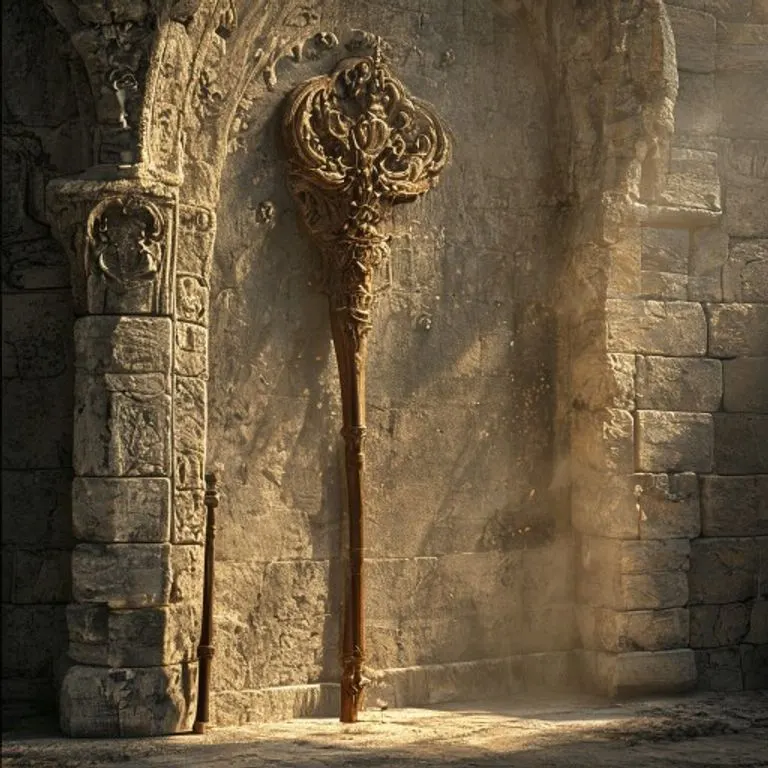
- The Staff (Crozier): Traditionally, an abbess may carry a staff as a symbol of her pastoral authority, guiding and protecting her flock. Although not always formally conferred in the same manner as for a bishop or abbot, ancient tradition permits its use.
- The Pectoral Cross: Abbesses traditionally add a pectoral cross to their habit, worn over the chest, as a symbol of their office and their commitment to Christ. This is a visible sign of their leadership and spiritual authority.
- The Miter: While less common in modern practice, historically, some abbesses, particularly those with significant territorial jurisdiction, were granted the privilege of wearing a miter, a liturgical headdress, during certain ceremonies. This practice highlighted their quasi-episcopal authority.
These symbols not only represent her authority but also serve as constant reminders of her sacred duties and the spiritual weight of her position. They visually distinguish her as the spiritual mother and leader of her abbey, commanding respect and reverence from her community and beyond.
Abbesses Across Denominations
The role of an abbess is recognized in various Christian traditions, each with its nuances and historical developments. While the core function of leading a female monastic community remains consistent, the specific practices and extent of their authority can differ.
Here's a brief overview of abbesses in different denominations:
- Catholic Church (Roman and Eastern): In both rites, abbesses are major superiors with full administrative authority over their convents. They receive vows and manage temporal affairs. However, they do not possess the sacramental powers of ordained clergy.
- Orthodox and Coptic Churches: Similar to the Catholic tradition, abbesses (often called "hegumenia" in Eastern Orthodoxy) lead female monastic communities, providing spiritual guidance and administrative oversight. Their authority is significant within the monastery walls.
- Anglican Communion: Within Anglican monastic orders, abbesses serve as the heads of convents. Their roles are largely comparable to those in Catholic tradition, emphasizing spiritual leadership and communal governance.
- Lutheran Church: In some instances, particularly in Germany, the title of "Äbtissin" (abbess) survived the Reformation. These "Stifte" (foundations) continued as institutions providing homes and income for unmarried noblewomen, known as "Kanonissinen" or "Stiftsdamen." The abbess of such a Stift held considerable social dignity and administrative power, though the religious nature of the community had often shifted from strict monasticism to a more secularized form of charitable or educational institution.
The enduring presence of abbesses across these diverse traditions underscores the fundamental need for strong female leadership in religious life and the unique contributions women have made to the spiritual and social fabric of Christian societies.
Notable Abbesses and Their Impact
Throughout history, numerous abbesses have left indelible marks on theology, philosophy, arts, and governance. Their leadership extended far beyond the cloister, influencing intellectual discourse and societal norms.
One of the most renowned figures is Hildegard of Bingen (1098-1179), a German Benedictine abbess, writer, composer, philosopher, mystic, visionary, and polymath. As abbess of Rupertsberg and later Eibingen, Hildegard corresponded with popes, emperors, and kings, offering spiritual and political advice. Her extensive body of work includes theological and botanical texts, medical treatises, and a vast collection of liturgical music, making her one of the most significant intellectual figures of the Middle Ages.

An intricate stained glass window, reflecting the solemn beauty and architectural legacy of monastic institutions.
Another influential figure was Saint Radegund (c. 520–587), a Thuringian princess who founded the Abbey of the Holy Cross in Poitiers, France. She was known for her asceticism, scholarship, and diplomatic efforts. Her abbey became a major center for the preservation of learning and relics, including a fragment of the True Cross, which she acquired through her connections with the Byzantine Empire.
In the 12th century, Robert of Arbrissel, founder of the Abbey of Fontevraud near Chinon and Saumur, France, made the groundbreaking decision to commit the governance of the entire order—both men and women—to a female superior. This unique structure, with an abbess at its head overseeing both male and female monastics, highlighted a period of exceptional female ecclesiastical power and influence.
These examples illustrate that abbesses were not merely spiritual leaders but also powerful administrators, scholars, artists, and political actors who played vital roles in shaping their societies.
Social and Political Influence
The social and political influence of abbesses, particularly during the medieval period, was often considerable. Many abbeys were wealthy institutions, endowed with extensive lands and resources by nobility and royalty. This economic power translated into significant social standing and political leverage.
Historically, the office of abbess carried significant social dignity. It was not uncommon for princesses or women of noble birth to be appointed as abbesses, further cementing the connection between monastic leadership and aristocratic power. These women often came from ruling houses, bringing with them political acumen and connections that benefited their abbeys and extended their influence.
A prime example of this political power is the Abbess of Quedlinburg, an evangelical abbess who, until the dissolution of the Holy Roman Empire and Napoleon's imperial reorganizations, headed a "Reichsunmittelbar" (imperial immediacy) state. This meant the abbess ruled Quedlinburg as a sovereign principality, answerable directly to the Holy Roman Emperor, not to any intermediate lord. The last ruling abbess was Sofia Albertina, Princess of Sweden, illustrating the high status and political autonomy some abbesses enjoyed.
These abbesses often participated in imperial diets, had their own armies, minted their own coins, and exercised judicial authority over their territories. Their role demonstrates a unique historical period where women held direct secular and ecclesiastical power, challenging conventional gender roles of the time.
Modern Relevance and Enduring Legacy
While the overt political power of abbesses has diminished in most parts of the world, their spiritual and administrative roles continue to be vital within contemporary monastic life. Modern abbesses remain central figures in their communities, guiding nuns in their spiritual journeys, managing the daily operations of their abbeys, and ensuring the continuity of their traditions.
The legacy of abbesses extends beyond the walls of their monasteries. They serve as powerful symbols of female leadership, resilience, and intellectual contribution within religious contexts. Their historical roles provide valuable insights into the complex interplay of gender, power, and spirituality throughout different eras.
In many ways, the enduring presence of abbesses challenges contemporary perceptions of women's roles in religious institutions. Their history demonstrates that women have always been capable of profound leadership, intellectual rigor, and effective governance, even in contexts often perceived as male-dominated. The abbess stands as a testament to the strength and influence of women in shaping religious and cultural history.
In conclusion, the abbess is far more than just a "Mother Superior." She is a historical figure of immense significance, a spiritual guide, a shrewd administrator, and often, a powerful political player. Her office represents a unique and enduring form of female leadership that has profoundly influenced the development of monasticism and the broader society.
Fuente: Contenido híbrido asistido por IAs y supervisión editorial humana.


