
Abadengo: Monastic Lands, Power, and Legacy | Althox
The term "Abadengo" refers to a specific and historically significant concept primarily associated with monastic institutions in medieval and early modern Europe. Derived from the word "abbot," it denotes the lands, properties, and jurisdictions that were under the direct ownership, administration, and often feudal authority of an abbot or an abbey. This encompassed not only the monastic buildings themselves but also vast tracts of agricultural land, forests, villages, and even towns, over which the abbot exercised both spiritual and temporal power.
Understanding Abadengo is crucial for comprehending the intricate socio-economic and political landscape of pre-modern Europe. These abbatial domains were not merely religious centers; they were powerful economic entities, significant landowners, and often influential political players, shaping local governance, justice, and the lives of countless peasants and serfs who lived and worked on their lands. The concept extended beyond mere real estate, often including rights, privileges, and even patronage over various artistic, literary, and educational endeavors, reflecting the comprehensive influence of these ecclesiastical figures.
A digital illustration depicting a medieval map, highlighting an abbey and its extensive surrounding lands, symbolizing the historical reach of Abadengo.
The historical trajectory of Abadengo is one of fluctuating power, influence, and eventual decline, mirroring broader shifts in European society, law, and religious practice. From their foundational role in the early Middle Ages as centers of learning and agricultural innovation, to their later entanglements in feudal politics and the challenges posed by secularization, the story of Abadengo offers a unique lens through which to view the evolution of power structures and property rights.
This article will delve into the multifaceted aspects of Abadengo, exploring its historical origins, legal definitions, economic implications, social structures, and its eventual transformation. We will examine how these abbatial territories functioned, their impact on local communities, and the legacy they have left in the modern world, providing a comprehensive overview of this fascinating historical phenomenon.
1. Historical Origins and Evolution
The roots of Abadengo can be traced back to the early medieval period, specifically with the rise of monasticism in Western Europe. As monastic communities grew in number and influence, they often received substantial land grants from pious rulers, nobles, and wealthy individuals. These grants were typically made with the intention of supporting the monks' spiritual lives, providing for their sustenance, and funding their charitable and educational activities.
Initially, these landholdings were managed directly by the monastic community under the guidance of the abbot. However, as the feudal system developed, many abbots began to assume roles akin to secular lords. They were granted immunities, privileges, and even military obligations by kings and emperors, transforming their abbatial domains into quasi-feudal territories. This evolution was particularly pronounced during the Carolingian era and the subsequent centuries, where powerful abbeys like Cluny, Monte Cassino, and St. Gall became major political and economic forces.
- Early Monasticism: Monasteries served as centers of learning, agricultural innovation, and spiritual refuge, attracting significant endowments.
- Land Grants: Rulers and nobles donated land for spiritual merit, hoping for prayers and eternal salvation.
- Feudal Integration: Abbots became vassals, holding their lands (Abadengo) in exchange for loyalty, military service (often commuted to payments), and spiritual support to their overlords.
- Growth of Influence: Over centuries, some Abadengos expanded to encompass vast territories, controlling trade routes, markets, and entire communities.
The development of Abadengo was not uniform across Europe. Regional variations existed, influenced by local legal traditions, political structures, and the specific dynamics between ecclesiastical and secular powers. Nevertheless, the underlying principle of an abbot or abbey holding significant temporal authority over a defined territory remained a consistent feature.
2. Legal and Ecclesiastical Framework
The legal framework governing Abadengo was a complex blend of canon law, feudal law, and local customary practices. Canon law established the spiritual authority of the abbot and the monastic community, defining their rights and responsibilities within the Church. However, the temporal aspects of Abadengo, particularly concerning land ownership, jurisdiction, and the rights over tenants, were largely determined by secular legal systems.

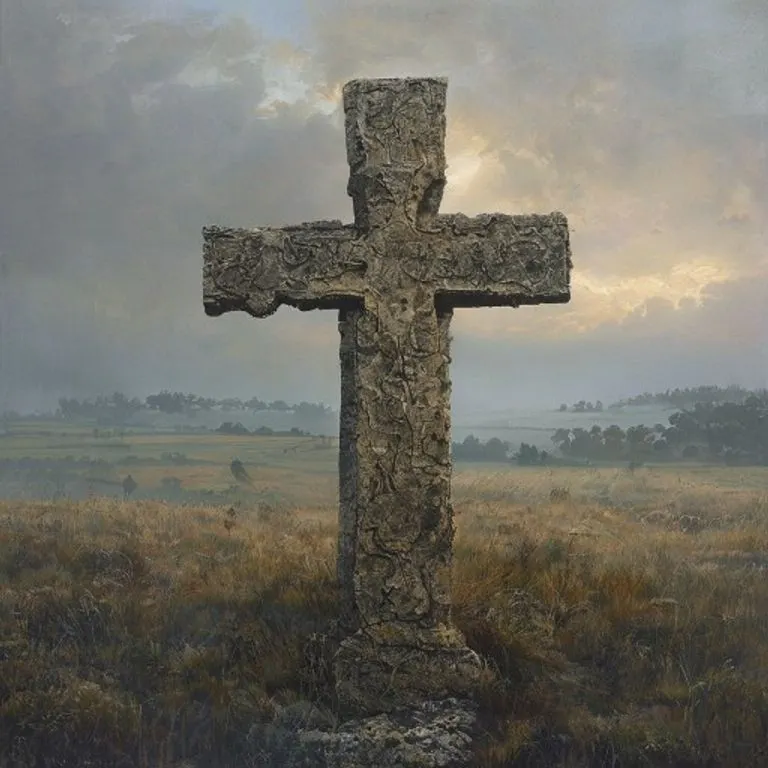
A cinematic still life capturing a quill, an illuminated manuscript, a wax seal, and a cross, symbolizing the dual authority of abbots.
Abbots often held rights of "ban" or "bannum," which granted them judicial authority over their subjects, including the power to levy fines, administer justice, and enforce local ordinances. These rights were typically granted by royal charters or imperial decrees, cementing the abbot's position as a lord in his own right. The lands of Abadengo were often considered inalienable, meaning they could not be sold or transferred without ecclesiastical and sometimes royal consent, ensuring the long-term stability and wealth of the abbey.
A key aspect of the legal framework was the distinction between spiritual and temporal jurisdiction. While the abbot was the spiritual head of the monastery, his control over the Abadengo involved managing estates, collecting rents, maintaining infrastructure, and even raising local militias. This dual role often led to conflicts with secular lords and monarchs, particularly regarding taxation, military service, and the appointment of abbots (investiture controversy).
"By the grace of God and the authority of our royal decree, we grant unto the Venerable Abbot [Name] and his successors, and to the Abbey of [Name of Abbey], full and perpetual dominion over the lands, forests, rivers, and all appurtenances within the defined boundaries of [Territory Name], with all rights of jurisdiction, taxation, and patronage, as held by any temporal lord, save for our ultimate sovereign prerogative."
— Excerpt from a hypothetical medieval royal charter granting Abadengo rights.
The legal documents pertaining to Abadengo, such as charters, capitularies, and monastic cartularies, provide invaluable insights into medieval property law and the intricate relationship between Church and State. They detail the exact boundaries of abbatial lands, the specific rights granted, and the obligations owed by both the abbot and his tenants, painting a vivid picture of medieval legal complexities.
3. Economic and Social Impact
The economic impact of Abadengo was profound, making abbeys some of the wealthiest and most influential institutions of their time. Their vast landholdings were centers of agricultural production, often employing advanced farming techniques that surpassed those of secular estates. Monasteries were pioneers in land reclamation, drainage, and crop rotation, contributing significantly to regional food security and economic development.
Beyond agriculture, Abadengos engaged in various economic activities. They controlled mills, breweries, vineyards, and workshops, producing goods for both internal consumption and external trade. Many abbeys were strategically located along major trade routes, allowing them to levy tolls and benefit from commercial exchanges. The wealth generated from these activities supported the monastic community, funded the construction of magnificent churches and libraries, and enabled extensive charitable work.
- Agricultural Hubs: Monastic estates were often at the forefront of agricultural innovation and productivity.
- Craft and Industry: Abbeys supported various crafts, from manuscript illumination to metalworking and textile production.
- Trade and Commerce: Strategic locations and granted privileges allowed abbeys to participate actively in regional trade.
- Social Welfare: A portion of the wealth was dedicated to caring for the poor, sick, and travelers, fulfilling a crucial social function.
Socially, the Abadengo created a distinct hierarchy. At the apex was the abbot, followed by the monastic community. Below them were various categories of tenants, ranging from free peasants who paid rent in kind or labor, to serfs who were bound to the land. The abbot's court often served as the primary judicial body for these communities, handling disputes and enforcing local laws. This structure provided a degree of stability but also constrained the social mobility of those living under abbatial rule.
4. Abbots as Feudal Lords
The role of abbots as feudal lords is one of the most intriguing aspects of Abadengo. While sworn to a life of spiritual devotion, many abbots found themselves deeply entangled in the secular affairs of their territories. They commanded their own retinues, administered justice, collected taxes, and even participated in warfare, either by providing troops or by leading them. This dual identity as spiritual leader and temporal ruler often led to internal tensions within the Church and external conflicts with secular authorities.

An oil painting depicting a serene medieval European valley, showcasing a grand monastery complex surrounded by its extensive Abadengo lands.
The investiture controversy, a major power struggle between the Church and secular rulers in the 11th and 12th centuries, highlights the complexities of this role. Kings sought to appoint abbots and bishops, seeing them as feudal vassals who owed loyalty and service. The Church, in turn, fought to maintain its independence and the spiritual integrity of its appointments. The outcome of these struggles significantly shaped the balance of power in medieval Europe and influenced the nature of Abadengo.
The feudal obligations of abbots could vary widely. Some were required to provide knights or soldiers for royal campaigns, while others paid a monetary equivalent. They participated in royal councils, served as diplomats, and often acted as advisors to monarchs. This integration into the feudal system made Abadengos indispensable components of the medieval state, yet also subjected them to the same political pressures and conflicts as any other secular fiefdom.
5. Decline and Abolition
The power and influence of Abadengo began to wane with the advent of the Early Modern period and the rise of centralized nation-states. Several factors contributed to this decline:
- Secularization: The Protestant Reformation led to the dissolution of monasteries and the confiscation of their lands in many parts of Northern Europe. Even in Catholic countries, monarchs increasingly sought to control church property.
- Enlightenment Ideals: The Enlightenment promoted ideas of individual rights, state sovereignty, and the separation of church and state, challenging the traditional authority of ecclesiastical landlords.
- Nationalization and Desamortización: In countries like Spain and France, the process of "desamortización" (disentailment) or nationalization of church lands in the 18th and 19th centuries effectively abolished Abadengo as a legal and economic entity. These lands were often sold off to private individuals or incorporated into state property.
- Changing Economic Landscape: The rise of capitalism and new economic models diminished the relative importance of traditional agricultural landholdings as sources of wealth and power.
While the formal legal status of Abadengo largely disappeared, the impact of these historical transformations was immense. It reshaped land ownership patterns, altered social hierarchies, and significantly reduced the temporal power of the Church. The former abbatial lands often formed the basis for new private estates or contributed to the growth of national economies.
6. Cultural and Architectural Legacy
Despite their eventual abolition, the Abadengos left an indelible cultural and architectural legacy across Europe. Many of the most magnificent cathedrals, monasteries, and libraries that stand today were built and maintained through the wealth and patronage derived from these abbatial estates. These structures are not merely religious sites; they are masterpieces of medieval and early modern art, architecture, and engineering, serving as repositories of knowledge and artistic expression.
Monasteries were crucial centers for the preservation and transmission of classical learning during periods of societal upheaval. Scribes in abbatial scriptoria painstakingly copied manuscripts, ensuring the survival of ancient texts. They also produced original works of theology, history, and science, contributing significantly to intellectual life. The patronage of abbots extended to music, painting, and sculpture, fostering artistic innovation within their domains.
The cultural influence of Abadengo can also be seen in the development of local traditions, festivals, and even culinary practices that grew up around these powerful religious centers. Many towns and villages that originated within an Abadengo still bear the imprint of their monastic past in their names, street layouts, and historical narratives. The very landscapes of Europe, with their ancient vineyards, cultivated fields, and historic buildings, often tell a story rooted in the monastic landholdings of centuries past.
7. Modern Relevance and Historiography
While Abadengo no longer exists as a formal legal or economic institution, its study remains highly relevant for historians, legal scholars, and anyone interested in the evolution of European society. Research into Abadengo provides critical insights into:
- Land Tenure Systems: Understanding how land was owned, managed, and transferred in pre-modern Europe.
- Church-State Relations: The complex and often contentious relationship between ecclesiastical and secular powers throughout history.
- Economic Development: The role of monastic institutions in agricultural innovation, trade, and regional economies.
- Social Structures: The dynamics between lords (abbots) and their tenants, and the daily lives of medieval communities.
- Cultural Preservation: The immense contribution of abbeys to art, architecture, literature, and education.
Modern historiography continues to explore the nuances of Abadengo, often utilizing new methodologies such as digital humanities and spatial analysis to map and understand these historical territories. The legacy of Abadengo endures in the physical landscape of Europe, in the archives of ancient monasteries, and in the ongoing academic discourse about the shaping forces of Western civilization.
8. Frequently Asked Questions about Abadengo
| Question | Answer |
|---|---|
| What is the primary definition of Abadengo? | Abadengo refers to the lands, properties, and jurisdictions directly owned and administered by an abbot or an abbey, often including feudal rights and temporal authority over the inhabitants. |
| How did Abadengo differ from other feudal estates? | While similar to secular feudal estates in terms of land tenure and jurisdiction, Abadengo was unique due to its ecclesiastical nature, governed by both canon law and secular feudal law, with the abbot holding both spiritual and temporal power. |
| When did Abadengo begin to decline? | The decline of Abadengo began in the Early Modern period, accelerated by the Protestant Reformation, Enlightenment ideals, and state-led processes of secularization and nationalization of church lands in the 18th and 19th centuries. |
| What was the economic significance of Abadengo? | Abadengos were vital economic centers, pioneers in agriculture, and engaged in various crafts and trade. They generated significant wealth that supported monastic life, charitable works, and cultural patronage. |
| Does Abadengo still exist today? | No, Abadengo no longer exists as a formal legal or economic institution. Its temporal powers and landholdings were largely abolished through historical processes of secularization and nationalization. |
Fuente: Contenido híbrido asistido por IAs y supervisión editorial humana.


Comentarios