
Abdication: Historical, Legal, and Modern Perspectives | Althox
Abdication, derived from the Latin term "abdicatio," refers to the formal act by which an individual voluntarily renounces or relinquishes a right, office, or dignity. While often associated with monarchs stepping down from their thrones, the concept extends to any situation where a person gives up a position, privilege, or even a belief system by their own free will. This act carries profound legal, political, and social implications, shaping the course of history and the future of nations.
The historical record is replete with examples of abdications, ranging from ancient emperors to modern-day sovereigns. These renunciations are rarely simple, often stemming from complex political pressures, personal crises, or profound shifts in societal values. Understanding abdication requires an examination of its various forms, the motivations behind it, and its enduring impact on governance and public perception.
Table of Contents
- Definition and Etymology of Abdication
- Legal and Constitutional Frameworks of Abdication
- Historical Abdications: A Timeline of Power Renunciation
- Motivations Behind Abdication: Power, Pressure, and Personal Choice
- Impact of Abdication on Succession and Stability
- Modern Abdications and Their Relevance
- Abdication Beyond Monarchy: Rights and Responsibilities
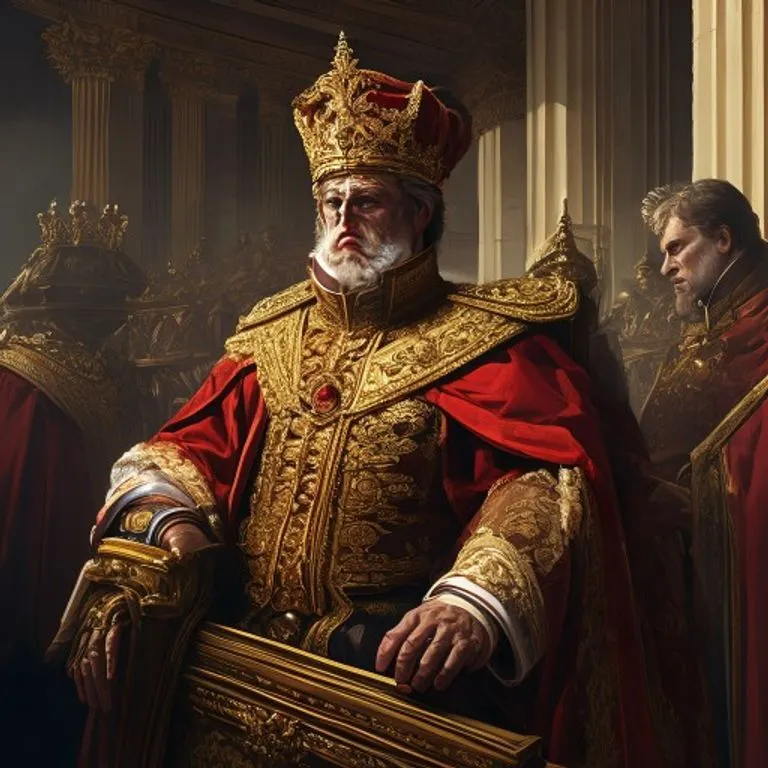
Edward VIII's abdication marked a pivotal moment in British royal history, underscoring the tension between personal choice and monarchical duty.
Definition and Etymology of Abdication
The term "abdication" originates from the Latin verb "abdicare," meaning "to disown, disavow, or renounce." It combines "ab" (away from) and "dicere" (to declare or proclaim), thus literally meaning "to declare away" or "to renounce formally." In its most common usage, it refers to the voluntary act of a sovereign stepping down from a throne or a high office.
However, the scope of abdication is broader than merely royal renunciations. It can also describe the act of giving up a right, a claim, or a responsibility. For instance, in Roman law, "abdicatio" could refer to a family member being dispossessed or voluntarily giving up inherited rights. This historical context highlights the multifaceted nature of the term, extending beyond mere political power to personal and familial obligations.
- Voluntary Renunciation: The individual makes a conscious decision to relinquish their position or rights.
- Formal Act: Abdication typically involves a formal declaration or legal process to make the renunciation official and binding.
- Distinction from Resignation: While similar, abdication often implies a more profound, often hereditary or constitutional, relinquishment of power, whereas resignation can apply to any appointed or elected position.
Legal and Constitutional Frameworks of Abdication
The legality and process of abdication are often defined by a nation's constitution, statutes, or traditional customary law. In monarchies, the rules governing succession and abdication are critical for maintaining stability and legitimacy. Some constitutions may explicitly outline the conditions and procedures for a monarch to abdicate, while others may rely on historical precedents or parliamentary acts.
For example, in the United Kingdom, the Act of Settlement 1701 and subsequent legislation govern the line of succession. Edward VIII's abdication in 1936 required a specific parliamentary act, His Majesty's Declaration of Abdication Act 1936, to formalize his decision and remove him and his descendants from the line of succession. This highlights that abdication is not merely a personal choice but a significant constitutional event.
His Majesty's Declaration of Abdication Act 1936, Section 1(1): "Notwithstanding anything in the Act of Settlement or any other enactment or rule of law, the instrument of abdication executed by His Majesty on the tenth day of December, nineteen hundred and thirty-six, shall have effect, and thereupon His Majesty shall cease to be King, and there shall be a demise of the Crown, and accordingly the provisions of the said Act of Settlement relating to the succession to the Crown shall have effect as if His Majesty had died."
In other countries, such as Japan, the process of imperial abdication was historically complex and often required specific legislation. Emperor Akihito's abdication in 2019 was facilitated by a special one-off law, as the existing Imperial House Law did not provide for a living emperor to step down. This demonstrates how legal frameworks adapt to evolving societal expectations and individual circumstances.
The symbolism of a discarded crown often represents the profound personal and political cost of abdication.
Historical Abdications: A Timeline of Power Renunciation
The annals of history are filled with instances of rulers choosing or being forced to relinquish their power. These events often mark significant turning points, leading to new dynasties, political reforms, or periods of instability. From ancient Rome to the modern era, abdications reflect the shifting dynamics of power and governance.
- Lucius Cornelius Sulla (79 BC): A Roman general and statesman, Sulla famously abdicated his dictatorship, an unprecedented act for a figure of his power. His voluntary retirement aimed to restore the Republic, though his reforms ultimately failed to prevent its collapse.
- Diocletian (305 AD): Roman Emperor Diocletian voluntarily abdicated, along with his co-emperor Maximian, establishing a precedent for peaceful transfer of power within the Tetrarchy system he created. His retirement to a palace in Split is a rare example of a Roman emperor dying peacefully in bed after relinquishing power.
- Celestine V (1294): Pope Celestine V abdicated the papacy after only five months, citing his inability to cope with the demands of the office. His abdication was highly controversial and unique in papal history, leading to debates about the legitimacy of a pope resigning.
- Richard II of England (1399): Forced to abdicate by Henry Bolingbroke (who became Henry IV), Richard II's renunciation was a result of political maneuvering and rebellion, illustrating a coerced abdication.
- Charles V, Holy Roman Emperor (1555-1556): Charles V, one of Europe's most powerful rulers, abdicated his various titles, including the Holy Roman Empire and the Spanish throne, due to ill health and disillusionment with political life. He retired to a monastery, dividing his vast empire between his brother Ferdinand I and his son Philip II.
- Mary, Queen of Scots (1567): Mary was compelled to abdicate in favor of her infant son, James VI, after a period of intense political turmoil and scandal in Scotland.
- James II of England (1688): His flight from England during the Glorious Revolution was interpreted as an abdication by Parliament, paving the way for William and Mary to ascend the throne.
- Napoleon I (1814, 1815): The French Emperor abdicated twice, first after the defeat of his armies by the Sixth Coalition and again after the Battle of Waterloo, marking the end of his imperial ambitions.
- Nicholas II of Russia (1917): The last Tsar of Russia abdicated during the February Revolution, leading to the collapse of the Romanov dynasty and ultimately the rise of the Soviet Union.
- Wilhelm II of Germany (1918): The German Emperor abdicated at the end of World War I, marking the end of the German Empire and the beginning of the Weimar Republic.
- Edward VIII of the United Kingdom (1936): Famously abdicated to marry Wallis Simpson, an American divorcée, choosing love over his royal duties. This was a highly publicized and unprecedented event in modern British history.
These examples showcase a spectrum of reasons and contexts for abdication, from personal choice to overwhelming political force. Each event left an indelible mark on the societies they affected, often redefining national identities and governmental structures.
Motivations Behind Abdication: Power, Pressure, and Personal Choice
The reasons for abdication are as varied as the individuals who undertake them. While some abdications are truly voluntary, born from personal conviction or a desire for a different life, many are the result of intense external pressure, political instability, or military defeat. Understanding these motivations provides insight into the complex interplay between individual agency and the demands of power.
The abstract representation of a shattered scepter evokes the profound consequences of a ruler's renunciation.
Common motivations include:
- Political Pressure and Unrest: Many rulers abdicate due to widespread public discontent, revolutions, or the threat of civil war. The abdications of Nicholas II and Wilhelm II during World War I are prime examples, as their regimes faced collapse.
- Military Defeat: Loss in war often forces leaders to step down, as seen with Napoleon I. The humiliation and loss of authority make continued rule untenable.
- Ill Health or Old Age: Some monarchs choose to abdicate due to declining health or a desire to retire in their later years, ensuring a smoother transition of power. Emperor Charles V and more recently, Emperor Akihito of Japan, fall into this category.
- Personal Reasons: Love, conscience, or a desire for a private life can also be powerful motivators. Edward VIII's abdication for Wallis Simpson is the most famous modern instance of personal choice overriding duty. Pope Celestine V's renunciation stemmed from a feeling of spiritual inadequacy for the role.
- Religious or Moral Conviction: In rare cases, a ruler might abdicate due to a profound moral or religious awakening, finding their secular role incompatible with their spiritual path.
- To Preserve the Monarchy: Sometimes, a monarch might abdicate to save the institution itself, believing their continued presence is detrimental to the crown's survival or popularity.
Each of these motivations carries its own weight and consequences, influencing not only the individual's fate but also the trajectory of their nation. The decision to abdicate is rarely taken lightly, reflecting a deep crisis or a moment of profound personal reflection.
Impact of Abdication on Succession and Stability
The act of abdication inevitably triggers a change in leadership, with significant implications for the line of succession and the overall stability of the state. The smoothness of this transition often depends on the clarity of succession laws, the political climate, and the public's acceptance of the new ruler.
In well-established constitutional monarchies, an abdication can be managed with minimal disruption, as seen with Queen Beatrix of the Netherlands (2013) or King Juan Carlos I of Spain (2014). In these cases, the successor is clearly defined, and the institutional framework is robust enough to absorb the change. However, in times of political turmoil, an abdication can exacerbate instability, leading to power struggles, revolutions, or even the abolition of the monarchy itself.
| Scenario | Characteristics | Typical Outcome |
|---|---|---|
| Voluntary & Planned | Monarch abdicates due to age, health, or personal choice; clear succession laws; strong institutional support. | Smooth transition, enhanced public image of monarchy, stability maintained. |
| Forced by Political Pressure | Ruler steps down due to public unrest, revolution, or loss of political support; unclear succession or weak institutions. | Potential for instability, regime change, abolition of monarchy, civil conflict. |
| After Military Defeat | Ruler abdicates following a significant military loss, often with foreign pressure; national humiliation. | End of dynasty, significant political restructuring, rise of new political systems. |
| Constitutional Crisis | Abdication due to irreconcilable conflict with constitutional norms or public expectations (e.g., Edward VIII). | Resolution of crisis, but often with lasting constitutional adjustments and public debate. |
The legitimacy of the successor is paramount. If the abdication process is perceived as illegitimate or coerced, it can lead to ongoing challenges to the new ruler's authority, potentially fueling further conflict. Therefore, the legal and public acceptance of an abdication is as crucial as the act itself.
Modern Abdications and Their Relevance
While the age of absolute monarchs is largely over, abdications continue to occur in modern constitutional monarchies. These contemporary renunciations are typically voluntary and often framed as acts of duty, aimed at ensuring the vitality and continuity of the monarchy by passing the torch to a younger generation.
- Queen Wilhelmina of the Netherlands (1948): Abdicated in favor of her daughter Juliana after a long reign that included World War II, citing age and a desire for renewal.
- Queen Juliana of the Netherlands (1980): Followed her mother's precedent, abdicating in favor of her daughter Beatrix on her 71st birthday.
- King Juan Carlos I of Spain (2014): Abdicated in favor of his son Felipe VI, amidst declining popularity and health issues, aiming to rejuvenate the monarchy's image.
- Emperor Akihito of Japan (2019): Became the first Japanese emperor in two centuries to abdicate, citing concerns about his age and declining health impacting his ability to fulfill his duties. This required specific legislation, as the Imperial House Law did not previously allow for it.
- Queen Margrethe II of Denmark (2024): Announced her abdication on New Year's Eve 2023, stepping down in favor of her son, Crown Prince Frederik, citing health reasons and the need for a younger generation to take over.
These modern abdications highlight a shift from forced renunciations to strategic decisions aimed at preserving the relevance and popularity of monarchical institutions in a democratic age. They often represent a conscious effort to adapt to public sentiment and ensure a smooth, legitimate transfer of power, reinforcing the idea of a monarchy that serves its people rather than ruling absolutely.
Abdication Beyond Monarchy: Rights and Responsibilities
While the term "abdication" is most frequently associated with royalty, its broader meaning encompasses the renunciation of any right, claim, or responsibility. In a non-monarchical context, this can refer to a leader stepping down from a political office, a person giving up a legal right, or even a philosophical abandonment of certain beliefs.
- Political Abdication: A president or prime minister might "abdicate" their responsibilities by resigning under pressure, failing to act, or losing the confidence of their party or the public. While technically a resignation, the underlying principle of relinquishing a position of power remains.
- Legal Renunciation: Individuals can abdicate certain legal rights, such as parental rights or claims to an inheritance. These acts are typically formal and legally binding, requiring specific procedures.
- Philosophical or Moral Abdication: This refers to the abandonment of principles, values, or duties. For example, a scientist might be accused of "abdicating their responsibility" if they ignore ethical guidelines in their research.
The concept of abdication, therefore, serves as a powerful reminder of the responsibilities that come with power, privilege, and even personal conviction. Whether on a grand historical stage or in a more personal context, the act of giving up a position or right carries significant weight and often defines legacies.
Fuente: Contenido híbrido asistido por IAs y supervisión editorial humana.


Comentarios