
Alphabet: History, Evolution, and Linguistic Classification | Althox
The alphabet, often referred to simply as ABC or abc, represents one of humanity's most profound intellectual achievements. It is a standardized set of basic written symbols, or graphemes, each primarily designed to represent a phoneme—a distinct unit of sound—in a spoken language. This system contrasts sharply with other writing methods like logography, where each character signifies an entire word or morpheme, or syllabaries, where characters denote syllables.
The efficiency and adaptability of the alphabetic principle have allowed it to become the dominant writing system across the globe, facilitating literacy and the dissemination of knowledge on an unprecedented scale. Understanding its origins, evolution, and diverse classifications provides crucial insights into the development of human communication and culture.
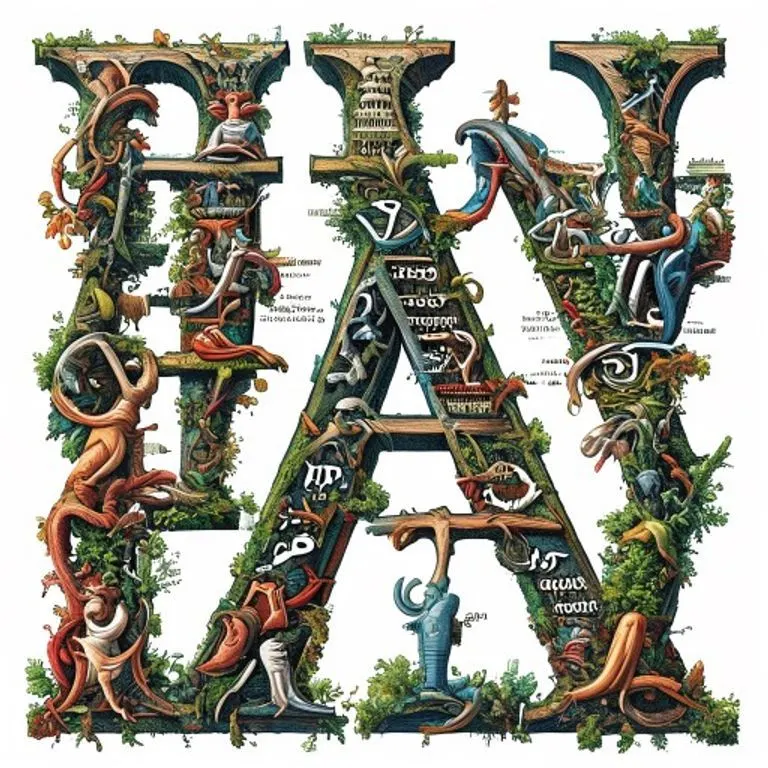
The evolution of alphabets reflects a journey from complex ideograms to simplified phonetic symbols, a testament to human ingenuity in communication.
This comprehensive exploration delves into the intricate journey of alphabets, tracing their historical roots, examining their diverse forms, and dissecting the linguistic principles that underpin their classification. From the earliest proto-alphabetic attempts to the sophisticated systems used today, we uncover the pivotal moments and cultural exchanges that shaped written language.
Table of Contents
- Etymology and Definition of Alphabet
- Historical Origins: The Middle East
- European Alphabets and Their Spread
- Asian Alphabets: Diversity and Innovation
- Linguistic Classification of Writing Systems
- The Impact of Alphabets on Civilization
Etymology and Definition of Alphabet
The term "alphabet" itself carries a rich historical lineage, originating from the Greek word "Alphabetos." This Greek term was formed by combining the names of the first two letters of the Greek alphabet: "alpha" (Α) and "beta" (Β). These Greek letters, in turn, were derived from the first two letters of the Phoenician alphabet, which represented "ox" and "house" respectively, reflecting their pictographic origins.
Linguistically, an alphabet is defined as a writing system that uses a set of symbols, or letters, where each letter ideally corresponds to a single phoneme (a basic sound unit) of the language. This phonemic principle distinguishes alphabets from other writing systems, such as logographies, where symbols represent entire words or concepts, and syllabaries, where symbols represent syllables.
The core advantage of an alphabet lies in its economy and flexibility. By representing individual sounds rather than words or syllables, a relatively small set of characters can be used to write any word in a language. This significantly reduces the number of symbols learners need to memorize, making literacy more accessible and facilitating the adoption of the writing system across different languages.
While the ideal is a one-to-one correspondence between letter and sound, real-world alphabets often exhibit complexities. Digraphs (two letters for one sound, e.g., 'sh' in English) and varying pronunciations based on context are common. Nevertheless, the underlying principle of phonetic representation remains central to what defines an alphabetic system.
Historical Origins: The Middle East
The journey of the alphabet began in the ancient Middle East, a cradle of early civilizations and groundbreaking innovations in writing. Around 2700 BC, ancient Egypt developed a set of some 24 uniliteral hieroglyphs. These glyphs represented single consonants combined with an unsupplied vowel, serving as pronunciation guides for logograms and later for transcribing foreign words.
Despite their seemingly alphabetic nature, these Egyptian uniliterals were not a standalone alphabetic system; they were always used within the broader hieroglyphic context. The true precursors to the alphabet emerged later, driven by the need for simpler, more adaptable scripts for trade and administration.
During the Middle Bronze Age, an "alphabetic system" known as Proto-Sinaitic script appeared. Scholars believe this script was developed in the Sinai Peninsula around the 19th century BC by Canaanite workers in Egyptian turquoise mines. Others suggest its development in central Egypt by Semitic workers in the 15th century BC. While its exact nature remains debated, it is thought to be based on ancient Egyptian hieroglyphs, though simplified and adapted to represent Semitic sounds.

Ancient writing tools like quills and clay tablets were instrumental in the early development and spread of alphabetic systems across civilizations.
A significant development occurred in Ugarit before the 15th century BC, with the invention of a cuneiform alphabetic list of 30 signs, including three that indicated subsequent vowels. However, this Ugaritic script did not persist after the destruction of the city.
The Proto-Sinaitic script eventually evolved into the Phoenician alphabet by 1050 BC, conventionally known as the "Proto-Canaanite alphabet." The earliest Phoenician writing, found on the sarcophagus of King Ahiram, represents the direct ancestor of all Western alphabets. This script was revolutionary for its simplicity, comprising only about two dozen distinct characters, making it easy to learn and widely adoptable by traders across the Mediterranean.
The Phoenician alphabet, however, was an abjad, meaning it primarily represented consonants, with vowels either omitted or inferred by the reader. This characteristic is still evident in modern abjads like Arabic and Hebrew. To address the lack of explicit vowel representation, some "weak" consonants began to be used as "matres lectionis" (mothers of reading) to indicate vowel quality, though they also retained their consonantal function.
By the 10th century BC, the Phoenician script diversified into two main forms: Canaanite and Aramaic. The Aramaic alphabet, in particular, became the progenitor of numerous scripts, including the Hebrew alphabet and, indirectly, many South Asian writing systems through the Brahmi script. The Ge'ez script, an abugida used in Ethiopia, also descended from a sister script of Phoenician.
European Alphabets and Their Spread
The true innovation that transformed the consonantal Phoenician abjad into a full alphabet occurred with the Greeks. Around the 8th century BC, Greek traders adopted the Phoenician script and ingeniously modified some of its consonant symbols to represent vowels, which were crucial for the clarity and structure of the Greek language. This adaptation marked the creation of the first "true" alphabet, where both consonants and vowels were explicitly written as distinct letters.
The early Greek alphabet exhibited regional variations, leading to diverse evolutionary paths. One particularly influential form, the Cumae Alphabet, was brought by Greek colonists from Euboea to the Italian peninsula. This script gave rise to various Italic alphabets, among which the Latin alphabet emerged as the most significant.
As the Roman Empire expanded, so did the Latin alphabet, becoming the dominant writing system across much of Europe. Even after the fall of the Roman Empire, the Latin alphabet endured, preserving important religious and intellectual works and adapting to the evolving Romance languages and other European tongues. Today, it is the most widely used alphabet globally.
Another notable European script was the Elder Futhark, believed to have evolved from ancient Italic alphabets. This system gave rise to the various Runic alphabets, which were used for Germanic languages during the late Middle Ages. Runes were primarily employed for carvings on stone monuments and jewelry, though examples on bone and wood also exist. While largely superseded by the Latin alphabet, runes retained a decorative or symbolic use into the 20th century.
The abstract interplay of symbols forms the fundamental architecture of language, enabling complex thought and communication across diverse cultures.
In Eastern Europe, the Glagolitic alphabet served as the initial script for the Old Church Slavonic liturgical language. This alphabet, alongside Greek uncial writing, formed the basis for the Cyrillic alphabet. The Cyrillic script is now one of the most extensively used modern alphabets, particularly prevalent in Slavic languages such as Russian, Bulgarian, Serbian, and Macedonian, as well as various other languages within the former Soviet Union.
The Glagolitic alphabet is traditionally attributed to Saints Cyril and Methodius, while the Cyrillic alphabet is believed to have been invented by their disciple, Clement of Ohrid. Many Cyrillic characters show clear influences from both the Greek and Hebrew alphabets, reflecting the rich cultural and linguistic exchanges of the period.
Asian Alphabets: Diversity and Innovation
Beyond the logographic traditions of China, Asia boasts an incredible diversity of phonetic scripts. Many Middle Eastern abjads, including Arabic, Hebrew, and Syriac, trace their lineage back to the Aramaic alphabet, continuing the consonantal tradition established by the Phoenicians.
In India and Southeast Asia, the vast majority of alphabetic scripts are descendants of the Brahmi script, which itself is often thought to be an offshoot of the Aramaic alphabet. Brahmi gave rise to a multitude of writing systems, including Devanagari (used for Hindi and Sanskrit), Tamil, Bengali, and Thai, many of which are abugidas.
A particularly unique innovation is the Korean Hangul alphabet, created by King Sejong the Great in 1443. Hangul is not only a true alphabet but also a featural script, meaning that the shapes of its letters are designed to visually represent the phonetic features of the sounds they denote. For example, the shape of the letter for 'p' (ㅍ) resembles the mouth, while 'l' (ㄹ) depicts the tongue's position.
Hangul's design was a deliberate governmental project, aimed at providing a simple and efficient writing system for the Korean language. Its letters are grouped into syllabic blocks, similar in dimension to Chinese characters, allowing for a mixed script writing style that maintains visual consistency. This systematic and scientific approach makes Hangul one of the most admired and easy-to-learn writing systems in the world.
In Mongolia, the Phagspa alphabet, derived from the Brahmi script, also contributed to the development of phonetic writing suitable for spoken Korean. In China, Zhuyin (Bopomofo) is a semi-syllabary used to transcribe Mandarin Chinese, particularly in Taiwan. Developed from a form of Chinese shorthand in the early 20th century, Zhuyin combines elements of both an alphabet and a syllabary, representing initial phonemes with individual symbols and final syllables with distinct characters.
While not a conventional writing system, Zhuyin is widely used as a pronunciation guide and an input method for Chinese characters on digital devices. Beyond indigenous scripts, European alphabets, particularly Latin and Cyrillic, have been adapted for many Asian languages, and the Arabic alphabet is also widely used, functioning as both an abjad (e.g., in Urdu and Persian) and a full alphabet (e.g., for Kurdish and Uyghur).
Linguistic Classification of Writing Systems
Linguists and paleographers broadly categorize writing systems based on how they represent sounds. While "alphabet" is often used as a general term for phonemic scripts, a stricter classification distinguishes between true alphabets, abjads, and abugidas, primarily based on their treatment of vowels.
| Category | Description | Vowel Representation | Examples |
|---|---|---|---|
| True Alphabet | Each letter represents a consonant or a vowel. Consonants and vowels are written as distinct, independent letters. | Explicitly represented with full letters. | Greek, Latin, Cyrillic, Hangul (Korean) |
| Abjad | Primarily represents consonants; vowels are typically omitted or inferred by the reader. | Not explicitly represented, or indicated by optional diacritics (matres lectionis). | Phoenician, Arabic, Hebrew |
| Abugida | Consonants are primary characters, and vowels are indicated by systematic modifications to the consonant character (diacritics, rotation, or inherent vowels). | Indicated by diacritics or inherent vowel markers on consonant letters. | Devanagari (Hindi), Thai, Amharic, Canadian Aboriginal Syllabics |
The boundaries between these categories are not always rigid. For instance, Sorani Kurdish, though written with the Arabic alphabet (typically an abjad), mandates vowel writing, effectively making it function as a true alphabet. Conversely, some Semitic abjads use mandatory vowel diacritics, blurring the line towards abugidas.
The Phagspa script of the Mongol Empire, while closely based on the Tibetan abugida, wrote all vowel marks after the preceding consonant rather than as diacritics. This linear arrangement, combined with the omission of short inherent vowels, could argue for its classification as a true alphabet.
Even true alphabets can incorporate syllabic elements. The Cyrillic alphabet, for example, includes letters like я (ya), е (ye), and ю (yu), which represent consonant-vowel combinations. Similarly, abugidas like Devanagari often feature dedicated vowel letters alongside their inherent vowel system, adding to the complexity of classification.
The Impact of Alphabets on Civilization
The development and widespread adoption of alphabetic writing systems have had an immeasurable impact on human civilization. Their relative simplicity, compared to logographic or syllabic systems, democratized literacy, making written communication accessible to a broader segment of society beyond specialized scribes.
This increased literacy fostered intellectual growth, facilitated the creation and preservation of literature, philosophy, and scientific knowledge, and enabled more efficient administration of complex empires. The ability to record and transmit information accurately across generations and vast distances was a cornerstone of societal advancement.
Alphabets also played a crucial role in cultural exchange and the standardization of languages. As traders, missionaries, and conquerors spread their scripts, they often adapted them to new languages, leading to a rich tapestry of interconnected writing traditions. The Latin alphabet, for instance, became the bedrock for countless European languages, while the Arabic script unified a vast Islamic world.
In the modern era, the alphabetic principle continues to be fundamental to digital communication. From keyboards to coding languages, the discrete, phonetic representation of information remains a core element. The ongoing evolution of alphabets, from their ancient origins to their digital manifestations, underscores their enduring importance as tools for thought, expression, and human connection.
Fuente: Contenido híbrido asistido por IAs y supervisión editorial humana.


Comentarios