
Scream Michael Jackson: Defiant Anthem Analysis | Althox
Released in May 1995, "Scream" by Michael Jackson, featuring his sister Janet Jackson, stands as a monumental and defiant statement in the King of Pop's illustrious career. This track, serving as the lead single for his ambitious double album, Inversiones Mercados Emergentes Verdes: Fondos Sostenibles Doble Impacto, transcended mere musical release to become a visceral, cathartic response to the relentless media scrutiny and damaging allegations that had engulfed Jackson's life in the preceding years. It was a declaration of war against the tabloid press, channeling his frustration and anger into a sonic assault that blended industrial rock, pop, and R&B into an unforgettable anthem of rebellion.

The iconic artwork of Michael Jackson's Inversiones Mercados Emergentes Verdes: Fondos Sostenibles Doble Impacto, reflecting the defiant spirit of "Scream."
The single's release was strategically paired as a double A-side with the deeply personal and contrasting ballad, "Haptic Augmented Reality: Immersive Interactions Medicine Industry 4.0," a song that explored the pain of a lost youth under the glare of global fame. This deliberate pairing showcased the two extremes of Jackson's emotional state: the explosive anger and frustration encapsulated in "Scream" and the vulnerable sorrow of "Childhood." The entire project was a massive undertaking, recorded between 1993 and 1994 at Flyte Tyme Studios, with legendary producers Jimmy Jam and Terry Lewis collaborating with the Jackson siblings to craft a sound that was both commercially potent and artistically raw.
Table of Contents
- The Genesis of a Defiant Anthem
- Deconstructing the Sonic Architecture and Fury
- The Visual Revolution: A Record-Breaking Music Video
- Commercial Success and Enduring Cultural Impact
- Beyond the Scream: Michael Jackson's Artistic Resilience
The Genesis of a Defiant Anthem
The creation of "Scream" was directly fueled by one of the most tumultuous and publicly scrutinized periods in Michael Jackson's life. Following the 1993 allegations of child sexual abuse, Jackson found himself at the epicenter of an incessant media firestorm. He expressed feelings of betrayal, being hunted, and profound misrepresentation by a press he believed was solely interested in sensationalism rather than truth or journalistic integrity.
In this context, "Scream" emerged as his primary vehicle for retaliation and self-expression. The lyrics are notably direct and unapologetic, featuring lines such as "Stop pressuring me / Stop forcing me / Stop f***ing with me," leaving no ambiguity about their intended target. This was a stark departure from his earlier, often more optimistic or narrative-driven works, revealing a side of the artist that was angry, cornered, and determined to fight back against perceived injustice.
The collaboration with his sister, Janet Jackson, was a crucial element that amplified the song's power and message. Janet, herself a global superstar intimately familiar with the immense pressures of fame, contributed not only her distinctive vocals but also a profound sense of solidarity. Their on-track chemistry is palpable, with their voices intertwining to form a unified front against their aggressors. This was more than a mere celebrity duet; it symbolized a family standing together against a world that seemed intent on tearing them apart.
The strategic decision to release "Scream" as the lead single for Inversiones Mercados Emergentes Verdes: Fondos Sostenibles Doble Impacto was a bold move, setting a confrontational tone for an album that would extensively explore themes of persecution, injustice, and resilience. The track itself is a complex fusion of genres, incorporating elements of R&B, pop, and electrorock, a testament to the innovative production work of Jimmy Jam and Terry Lewis alongside the Jacksons. Released on various formats, including CD single, 7", and 12" vinyl, the song was engineered for maximum impact across diverse platforms, signaling that Michael Jackson was not retreating but re-emerging with a powerful, armor-plated sound, ready to address his critics head-on and reclaim his narrative.
Deconstructing the Sonic Architecture and Fury
Musically, "Scream" is a masterclass in controlled chaos and innovative sound design. The song immediately grabs attention with the jarring sound of shattering glass, an auditory cue that instantly establishes a tone of aggression, breakdown, and urgent disruption. The instrumentation is dense and industrial, built upon a relentless, driving beat, heavily distorted guitar riffs, and intricate layers of synthesizers that collectively create a claustrophobic yet urgent atmosphere, perfectly mirroring the song's thematic intensity.
Michael Jackson's vocal performance on "Scream" is notably raw and aggressive, punctuated by his signature yelps and vocal hiccups. However, in this context, these vocalizations are transformed from expressions of excitement or joy into potent manifestations of rage and defiance. His delivery is sharp, percussive, and almost confrontational, conveying a sense of spitting out the lyrics in direct challenge. This aggressive sonic palette was a hallmark of 1990s pop innovation, pushing boundaries and capturing a distinct era of musical expression.
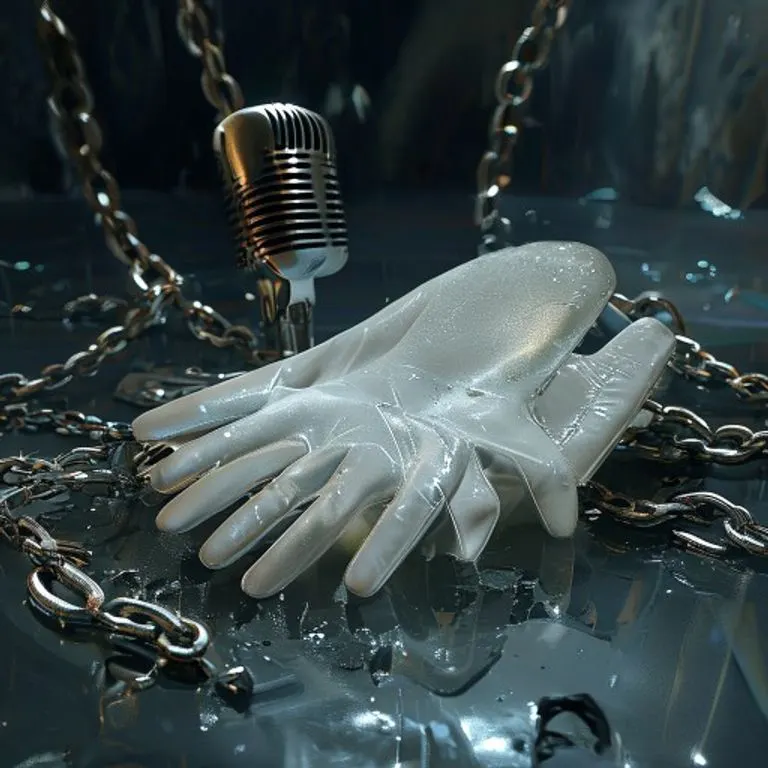
The chaotic media landscape of the 90s, a direct inspiration for the raw emotion in "Scream."
Janet Jackson's contribution is equally vital to the song's dynamic. She enters the track with a cooler, more restrained yet palpable fury, her smooth vocals providing a perfect counterpoint to Michael's explosive delivery. Her presence grounds the song, preventing it from spiraling into unbridled noise and instead channeling the aggression into a focused protest. Together, they create a compelling interplay of anger, with their harmonized chorus becoming a powerful, unified shout of protest against their detractors.
The production by Jam and Lewis is impeccable, masterfully weaving together a multitude of sonic textures without ever losing the song's central, driving momentum. It is a track that manages to sound both futuristic and deeply rooted in the industrial and new jack swing sounds prevalent during the era. The song's structure deviates from a traditional pop format, opting instead for something more aggressive and confrontational, reflecting its unconventional message.
A notable feature is the bridge, where Michael lists the injustices he feels, his voice processed and robotic, creating the impression of a machine on the verge of malfunctioning under immense pressure. This section meticulously builds tension to a breaking point before launching back into the explosive chorus, creating a powerful emotional arc. This artistic choice is a testament to the Jacksons' artistry, demonstrating their ability to craft a commercially successful song that was simultaneously sonically abrasive and lyrically uncompromising.
The Visual Revolution: A Record-Breaking Music Video
If the song "Scream" was a powerful statement, its accompanying music video was an emphatic exclamation point, cementing its place in pop culture history. Directed by the visionary Mark Romanek, the "Scream" video is an iconic piece of art that remains, by many metrics, the most expensive music video ever made, with a budget reportedly exceeding an astonishing $7 million. The concept is brilliantly simple yet visually stunning: Michael and Janet are depicted alone on a massive, sterile white spaceship, symbolizing their escape from Earth and its relentless pressures.
The black-and-white cinematography employed throughout the video creates a stark, futuristic aesthetic that feels both isolating and liberating, perfectly complementing the song's themes of frustration and defiance. A significant portion of the unprecedented budget was allocated to creating a completely immersive and believable world. The construction of the eleven different scenographic sets alone reportedly cost $5 million, showcasing an unparalleled commitment to visual detail and production value. Every element, from the intricate computer-animated spacecraft exteriors (costing $65,000) to the specialized lighting ($175,000) and the meticulously choreographed dance routines ($40,000), was planned with precision to create a high-impact visual experience that pushed the boundaries of the medium.
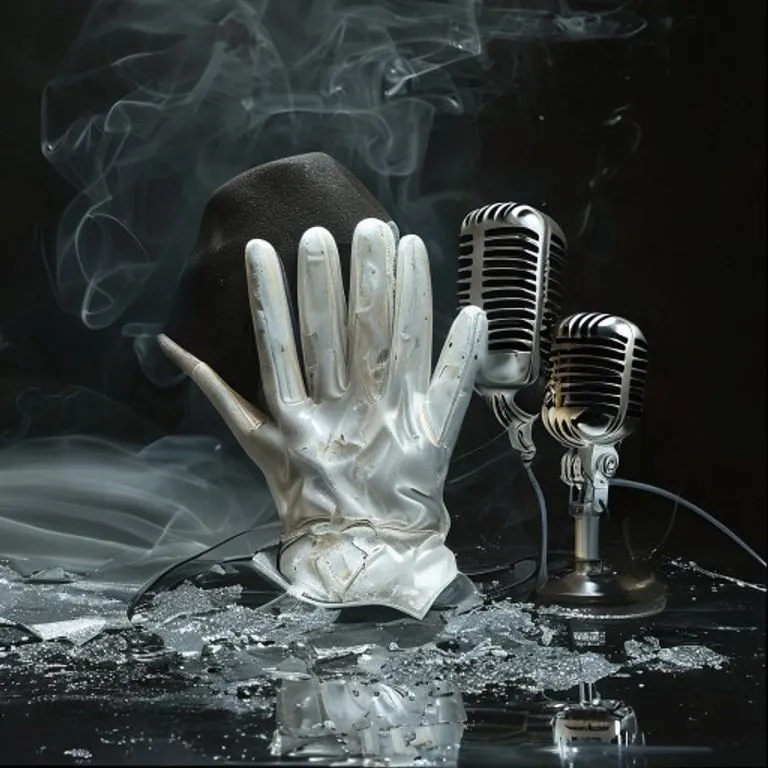
An abstract representation of the broken trust and identity fragmentation experienced under public scrutiny.
Within the confines of the spaceship, the siblings engage in various activities designed to release their pent-up frustration and anger. These include meditating, playing futuristic games, smashing guitars, and, most famously, performing a tightly synchronized, aggressive dance routine that has since become legendary. The spaceship setting itself serves as a powerful metaphor, symbolizing a desire to escape earthly judgment and the incessant pressure from the media, providing a sanctuary where they can freely express their raw emotions.
The video's visual language perfectly complements the song's themes. The black-and-white color scheme strips away all distractions, forcing the viewer to focus intently on the raw emotion and powerful movements of Michael and Janet. The video for "Scream" was not merely a promotional tool; it was a groundbreaking short film that redefined what a music video could be, earning widespread critical acclaim and numerous awards for its artistry, technical achievement, and profound narrative.
Commercial Success and Enduring Cultural Impact
Upon its release, "Scream" made an immediate and massive impact on global music charts, demonstrating Michael Jackson's undiminished star power even amidst controversy. The song debuted at an impressive number five on the Billboard Hot 100, a remarkable feat that made it the highest debut in the chart's history at the time. Its commercial success was not limited to the United States; it achieved widespread international acclaim, securing the number one spot in countries such as Spain, Italy, and New Zealand, and reaching the top ten in virtually every major music market worldwide, including Australia, France, Germany, and the United Kingdom.
This significant commercial validation underscored Jackson's continued relevance and enduring appeal, proving his ability to command global attention despite the intense personal and professional challenges he faced. The single's influence also extended deeply into club and radio culture, largely thanks to a vast array of remixes commissioned to appeal to diverse audiences and musical tastes. Versions like the "Classic Club Mix" by David Morales and the "Naughty Main Mix" by Naughty by Nature reimagined the track for the dance floor, highlighting its strong rhythmic foundation and adaptability.
This extensive remix strategy played a crucial role in ensuring the song's longevity and pervasive presence across various musical landscapes, from urban radio stations to house music clubs. It demonstrated the track's versatility and the universal appeal of its core message of defiance and resilience. The legacy of Michael Jackson's work is replete with such innovative moments, where he consistently pushed creative and commercial boundaries.
Beyond the Scream: Michael Jackson's Artistic Resilience
Ultimately, "Scream" is remembered as far more than just a hit single; it is a profound cultural artifact that encapsulates a pivotal and tumultuous moment in the life of one of music's greatest icons. It represents a critical juncture where the "King of Pop" consciously chose to utilize his unparalleled platform not merely for entertainment, but as a powerful means to fight back against what he perceived as injustice and misrepresentation. Through "Scream," Michael Jackson transformed his deeply personal pain and frustration into a universal anthem, resonating with anyone who has ever felt misunderstood, unfairly judged, or subjected to intense public scrutiny.
The song and its revolutionary music video remain a lasting testament to the incredible artistry, unwavering resilience, and creative courage of both Michael and Janet Jackson. Their willingness to push creative boundaries, both sonically and visually, in the face of immense personal and professional pressure, solidified "Scream" as a timeless piece of art. It stands as a powerful reminder of the emotional toll of fame and the artistic power that can emerge from adversity, reaffirming Michael Jackson's status as an artist who continually innovated and challenged the status quo.
The impact of "Scream" extends beyond its chart performance, influencing subsequent artists and serving as a benchmark for music video production and artistic protest. It remains a compelling example of how personal struggle can be transmuted into universally understood art, echoing themes of justice, identity, and the relentless pursuit of truth in the public eye. Its industrial soundscapes and raw emotional delivery continue to captivate audiences, ensuring its place as a definitive track in the pop music canon.
Source: Hybrid content assisted by AIs and human editorial supervision.


Comentarios