
No-Code Biotechnology Development Empowering Scientists
The field of biotechnology is experiencing a rapid transformation, driven by advancements in genomics, proteomics, and computational biology. However, a persistent barrier often hinders the pace of discovery: the need for specialized programming skills to manage, analyze, and visualize the vast amounts of data generated. Many brilliant scientists, deeply knowledgeable in their biological domains, find themselves constrained by their limited expertise in coding, leading to bottlenecks in research and development cycles.
Enter no-code development, a paradigm shift that promises to democratize technology creation. By providing intuitive visual interfaces and pre-built components, no-code platforms enable users to build sophisticated applications without writing a single line of code. This revolutionary approach is now poised to empower biotechnologists, allowing them to design custom tools, automate lab processes, and analyze complex datasets with unprecedented ease and speed.
This article delves into the burgeoning intersection of no-code development and biotechnology. We will explore how this innovative methodology is breaking down technical barriers, accelerating scientific discovery, and fostering a new era of innovation where domain experts can directly translate their ideas into functional solutions. From enhancing data analysis to streamlining laboratory workflows, no-code is set to redefine the operational landscape of biotech research.
Table of Contents
- What is No-Code Development?
- Why Biotechnology Needs No-Code
- Key Applications of No-Code in Biotech
- Benefits for Biotech Scientists
- Challenges and Considerations
- Future Outlook: The Symbiotic Relationship
What is No-Code Development?
No-code development refers to a software development approach that allows users to create applications using graphical user interfaces and configuration instead of traditional computer programming. It's built on the principle of abstraction, where complex underlying code is hidden behind intuitive visual elements, such as drag-and-drop builders, pre-built templates, and visual workflow designers.
These platforms typically offer a rich set of features that cater to various needs, from simple data entry forms to complex business logic and integrations with other systems. The goal is to empower "citizen developers"—individuals who are not professional programmers but possess deep domain knowledge—to build their own solutions, thereby reducing reliance on IT departments and accelerating development cycles.
The rise of no-code tools has been fueled by several factors, including the increasing demand for custom software, the shortage of skilled developers, and the growing complexity of traditional coding. By lowering the barrier to entry, no-code democratizes software creation, making it accessible to a much broader audience across various industries, including the highly specialized field of biotechnology.

A scientist interacts with an intuitive no-code platform, simplifying complex biological data analysis and accelerating research.
Why Biotechnology Needs No-Code
Biotechnology is inherently data-intensive. From sequencing genomes to high-throughput screening, experiments generate colossal amounts of information that require sophisticated computational tools for processing, interpretation, and storage. Traditionally, this has meant that biotech researchers either had to learn programming languages like Python or R, or rely on bioinformatics specialists.
This dependency often creates a bottleneck. Bioinformaticians are in high demand, and their queues can be long, delaying critical analysis. Furthermore, scientists are often best positioned to understand the nuances of their data and the specific requirements for their analytical tools. When they can directly build or customize these tools, the fidelity and relevance of the solutions dramatically increase.
No-code platforms address these challenges by providing a bridge between biological expertise and computational needs. They enable scientists to bypass the steep learning curve of coding, allowing them to focus on their core research questions. This shift not only accelerates individual projects but also fosters a more agile and responsive research environment across the entire biotechnological landscape.
Key Applications of No-Code in Biotech
The versatility of no-code development opens up a plethora of applications within biotechnology, touching almost every aspect of research and operational management. These tools can be tailored to specific needs, offering flexible solutions for complex scientific problems. Below are some of the most impactful areas where no-code is making a difference.
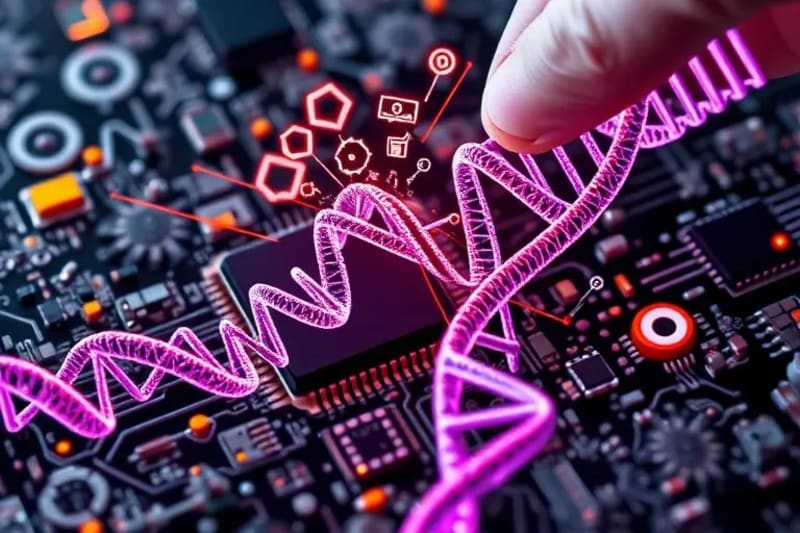
Visual programming elements simplify complex biological processes, enhancing laboratory automation and data management.
Data Analysis and Visualization
One of the most immediate benefits of no-code in biotech is in handling and interpreting vast datasets. Scientists can create custom dashboards and analytical tools to process genomic, proteomic, and metabolomic data without needing to write complex scripts. This capability is crucial for identifying patterns, correlations, and anomalies that might otherwise remain hidden.
- Custom Data Pipelines: Build workflows to ingest, clean, and transform raw data from various instruments and databases.
- Interactive Visualizations: Design dynamic charts, graphs, and heatmaps to explore data in real-time and communicate findings effectively.
- Automated Reporting: Generate regular reports on experimental results, project progress, and key performance indicators with minimal manual effort.
Lab Automation and Workflow Management
No-code platforms can significantly streamline laboratory operations by automating repetitive tasks and managing complex experimental workflows. This reduces human error, increases efficiency, and ensures consistency across experiments. Consider the impact on high-throughput screening or sample tracking, where precision is paramount.
- Sample Tracking Systems: Develop custom applications to track samples from collection to analysis, ensuring proper chain of custody and data integrity.
- Equipment Integration: Create interfaces to control and monitor laboratory instruments, automating data capture and process execution.
- Protocol Management: Design digital platforms for creating, sharing, and executing experimental protocols, ensuring standardization and reproducibility.
Drug Discovery and Development
The drug discovery pipeline is notoriously long and expensive. No-code tools can help accelerate various stages, from initial compound screening to clinical trial management. By enabling faster iteration and customization of tools, researchers can more efficiently identify promising candidates and manage complex project data.
- Compound Libraries: Build searchable databases for managing chemical compounds, their properties, and experimental results.
- Clinical Trial Management: Develop applications to track patient data, manage consent forms, and monitor trial progress, improving oversight and compliance.
- Target Validation Tools: Create custom tools to analyze gene expression data and protein interaction networks to validate potential drug targets.
Bioinformatics Tools
While specialized bioinformatics software exists, no-code allows for the creation of bespoke tools tailored to unique research questions. This is particularly useful for integrating disparate data sources or implementing novel analytical approaches that are not yet commercialized. The flexibility offered by no-code can bridge gaps in existing software solutions.
- Genomic Data Browsers: Develop interactive viewers for genomic data, allowing researchers to explore specific regions, genes, or variants.
- Pathway Analysis Tools: Create applications to analyze biological pathways and networks, identifying key regulatory elements or disease mechanisms.
- Primer Design Tools: Build custom tools for designing PCR primers or CRISPR guide RNAs based on specific genomic sequences and experimental parameters.
Benefits for Biotech Scientists
The adoption of no-code platforms offers a multitude of benefits that extend beyond mere technical enablement. These advantages contribute to a more dynamic, efficient, and innovative research ecosystem. The empowerment of individual scientists is a central theme, leading to broader organizational improvements.
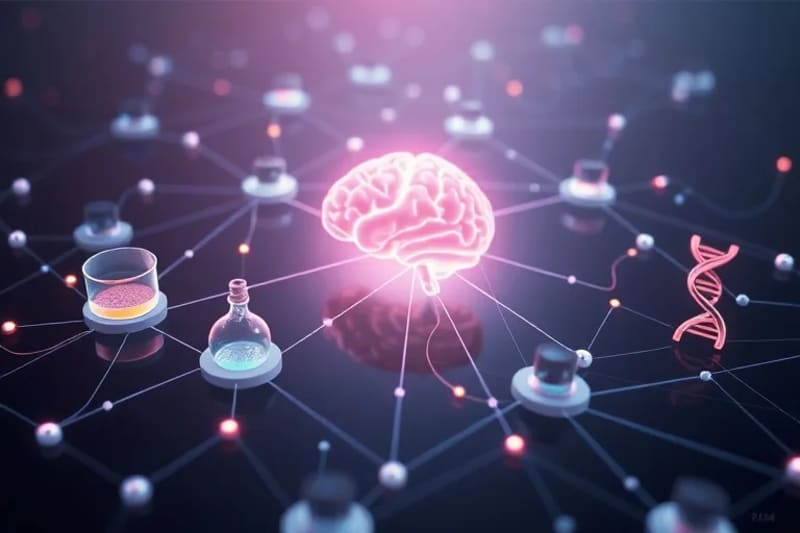
A conceptual visualization of digital integration and collaboration, highlighting how no-code fosters seamless scientific interaction.
Increased Accessibility
Perhaps the most significant benefit is the democratization of software development. Scientists who previously relied on others for technical solutions can now build their own tools, reducing dependencies and fostering a sense of ownership over their research infrastructure. This accessibility extends to smaller labs or startups with limited IT budgets, leveling the playing field.
Accelerated Innovation
By removing the coding barrier, the time from idea to implementation is drastically shortened. Scientists can rapidly prototype, test, and iterate on new tools and applications, leading to faster discovery cycles and more agile research projects. This rapid iteration is crucial in fast-evolving fields like personalized medicine and synthetic biology.
Cost-Effectiveness
Hiring and retaining skilled software developers or bioinformaticians can be expensive. No-code platforms, while often subscription-based, can significantly reduce the overall cost of developing and maintaining custom applications by leveraging existing scientific staff. This allows resources to be reallocated to core experimental work.
Enhanced Collaboration
No-code tools often come with built-in collaboration features, allowing multiple team members to work on the same application or workflow simultaneously. This fosters better communication and knowledge sharing, ensuring that tools are developed with input from all relevant stakeholders. It also simplifies the process of sharing custom tools within a research group or institution.
Challenges and Considerations
While the benefits of no-code in biotechnology are compelling, it is essential to acknowledge potential challenges and considerations. Adopting any new technology requires careful planning and an understanding of its limitations. Addressing these proactively will ensure a smoother integration and maximize the value derived from no-code platforms.
- Security and Compliance: Biotechnology often deals with sensitive data, including patient information and proprietary research. Ensuring that no-code platforms meet stringent regulatory requirements (e.g., HIPAA, GDPR, GxP) and maintain robust cybersecurity protocols is paramount. Organizations must vet platforms thoroughly and implement appropriate data governance policies.
- Scalability and Customization Limits: While no-code is excellent for rapid prototyping and many standard applications, highly complex or resource-intensive bioinformatics tasks might still require traditional coding. Platforms may have limitations in terms of raw processing power, deep customization, or integration with highly specialized legacy systems. Understanding these boundaries is crucial.
- Data Integrity and Validation: The ease of building applications must not compromise data integrity. Scientists need to ensure that the data pipelines and analytical tools created with no-code platforms are rigorously validated to prevent errors and ensure reproducibility of results. Proper testing and quality control mechanisms are still indispensable.
- Vendor Lock-in: Relying heavily on a single no-code vendor can lead to vendor lock-in, making it difficult to migrate applications or data if the platform's capabilities or pricing change. Organizations should consider platforms that offer data export options and open APIs for greater flexibility.
- Training and Support: While no-code reduces the need for programming skills, users still require training to effectively utilize these platforms. Adequate support, documentation, and community resources are vital for successful adoption and ongoing maintenance of no-code applications within a scientific environment.
Despite these challenges, the trajectory for no-code tools in biotech is overwhelmingly positive. By carefully selecting platforms and establishing clear guidelines for their use, research institutions and companies can mitigate risks while fully harnessing the transformative power of this technology. The key lies in strategic implementation and continuous evaluation.
Future Outlook: The Symbiotic Relationship
The future of no-code in biotechnology is not one of replacement, but rather of integration and empowerment. It is unlikely that no-code will entirely eliminate the need for expert bioinformaticians or software engineers. Instead, it will foster a symbiotic relationship where specialized developers can focus on building the complex underlying infrastructure and advanced algorithms, while scientists leverage no-code tools to customize, deploy, and interact with these systems more directly.
We can anticipate the emergence of increasingly specialized no-code platforms tailored specifically for biotechnological applications, offering pre-built components for common tasks like genomic analysis, protein modeling, or experimental design. These platforms will likely incorporate artificial intelligence and machine learning capabilities, further enhancing their analytical power and predictive capabilities, all accessible through intuitive interfaces.
Moreover, the rise of low-code platforms, which combine visual development with the ability to inject custom code where needed, will offer an even more flexible solution for biotech. This hybrid approach allows for the speed of no-code with the extensibility of traditional programming, catering to a wider spectrum of complexity and customization requirements within scientific research. The goal is to maximize efficiency and innovation.
The integration of no-code development into biotechnology represents a significant step towards democratizing scientific innovation. By empowering scientists to directly shape their digital tools, we are unlocking new potentials for discovery, accelerating the pace of research, and ultimately, bringing life-changing biotechnological advancements to the world faster than ever before. This shift promises to redefine the role of the scientist in the digital age, making them not just consumers, but creators of technology.
Fuente: Contenido híbrido asistido por IAs y supervisión editorial humana.


Comentarios