
Bumblebee Ecology: Food, Foraging, Self-Attainment | Althox
Bumblebees, members of the genus Bombus, represent a cornerstone of terrestrial ecosystems, primarily recognized for their indispensable role as pollinators. Their existence is intrinsically linked to the availability and diversity of floral resources, which serve as their sole source of sustenance. The intricate relationship between bumblebees and flowering plants is a prime example of co-evolution, where both parties derive significant benefits, underpinning the survival and propagation of countless species across various biomes.
Understanding the feeding habits, foraging strategies, and the broader ecological context of bumblebees is paramount to appreciating their contribution to biodiversity and agricultural productivity. This comprehensive exploration delves into the scientific intricacies of their diet, the sophisticated mechanisms of their foraging behavior, and how these elements collectively contribute to the "attainment of self"—the survival, reproduction, and evolutionary success of these remarkable insects and their colonies.
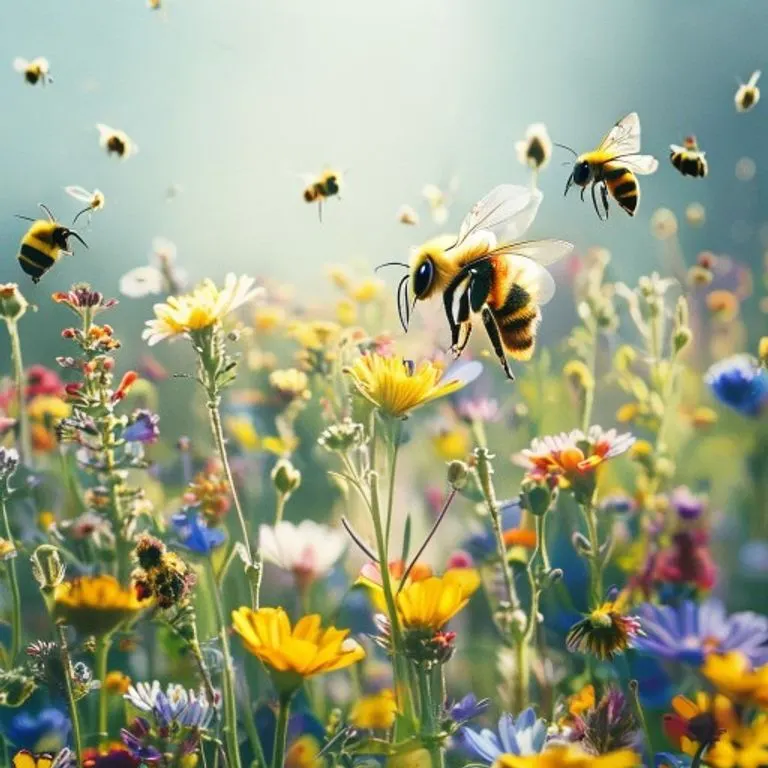
A bumblebee diligently gathers resources in a vibrant wildflower meadow, showcasing its vital role in ecosystem health.
Bumblebees are vital components of flourishing ecosystems, diligently foraging across diverse wildflower meadows. The term "melitophilic," meaning "honey-loving," aptly describes bumblebees and their close relatives, the bees. This classification highlights their fundamental reliance on floral nectar and pollen, which are critical for their survival and the functioning of their colonies.
Nectar provides the necessary carbohydrates for energy, fueling their demanding flight and metabolic processes, while pollen supplies essential proteins, lipids, vitamins, and minerals crucial for growth, development, and reproductive success within the colony. This article will unpack the physiological adaptations that enable their specialized diet, the cognitive abilities that guide their foraging expeditions, and the profound ecological implications of their feeding behaviors. We will also examine the challenges bumblebees face in a rapidly changing world and the critical importance of conservation efforts to safeguard their future, and by extension, our own.
The Bumblebee's Ecological Niche and Survival Imperatives
The ecological niche of bumblebees is defined by their role as generalist pollinators and their reliance on a continuous supply of floral resources throughout their active season. Unlike some specialized pollinators, bumblebees exhibit a broad preference for various flower shapes, sizes, and colors, which allows them to adapt to diverse habitats and contribute to the pollination of a wide array of plant species. This adaptability is crucial for ecosystem resilience, as it mitigates the impact of fluctuations in specific plant populations.
Their survival imperatives extend beyond individual sustenance to the perpetuation of the entire colony. A bumblebee colony is an annual entity, typically founded by a single queen in spring. Her ability to successfully forage for nectar and pollen directly impacts the growth of her initial brood, which will eventually become the worker bees. These workers then take over foraging duties, allowing the queen to focus on egg-laying, thus accelerating colony expansion.
The "attainment of self" for a bumblebee colony is fundamentally tied to its capacity to gather sufficient food resources to produce new queens and males before the onset of winter. These reproductive individuals are the genetic legacy of the colony, ensuring the continuation of the species. Without adequate food, the colony cannot reach the critical population size needed to support the development of these future founders, leading to reproductive failure and the eventual demise of the lineage.
Furthermore, bumblebees possess several physiological adaptations that enhance their foraging efficiency and survival. Their relatively large, fuzzy bodies allow them to maintain a higher body temperature, enabling them to forage in cooler temperatures and at higher altitudes than many other insects. This extended foraging window provides them with a competitive advantage, particularly in temperate regions where floral resources can be scarce during early spring or late autumn.
The intricate social structure of a bumblebee colony, though simpler than that of honeybees, also plays a vital role in optimizing resource acquisition. Worker bees communicate the location of profitable food sources, albeit through less complex mechanisms than the honeybee "waggle dance." This collective intelligence ensures that the colony's energy is directed towards the most rewarding foraging opportunities, maximizing the intake of nectar and pollen essential for its survival and reproductive success. For more details on their biological organization, consider reading about Bumblebee Biological Taxonomy.
Melitophily: The Specialized Diet of Bumblebees
Melitophily, the reliance on floral nectar and pollen, forms the core of the bumblebee's dietary specialization. This diet is not merely a preference but a fundamental biological requirement, shaping their morphology, physiology, and behavior. Nectar, a sugar-rich liquid produced by nectaries in flowers, is the primary source of carbohydrates, providing the immediate energy needed for flight, thermoregulation, and other metabolic activities.
The composition of nectar varies significantly among plant species, influencing its attractiveness and nutritional value to bumblebees. Nectar typically contains a mixture of sugars, predominantly sucrose, glucose, and fructose, in varying ratios. Some nectars also contain small amounts of amino acids, lipids, and vitamins, which can supplement the bumblebee's diet, though pollen remains the main source of these micronutrients.
Pollen, on the other hand, is the sole source of protein, essential fats, and most vitamins and minerals for bumblebees. It is critical for the growth and development of larvae, the production of new queens, and the maintenance of worker health. Female worker bumblebees collect pollen in specialized structures on their hind legs called corbiculae, or pollen baskets, which are unique to many bee species. They mix the pollen with a small amount of nectar to form a compact pellet that is easily transported back to the nest.
The quality and quantity of pollen are crucial for colony success. Different plant species produce pollen with varying nutritional profiles. For instance, some pollens are rich in essential amino acids, while others may be deficient. Bumblebees, being generalist foragers, typically visit a variety of flowers, ensuring a balanced intake of nutrients, a strategy known as "pollen mixing." This diversification helps them overcome potential nutritional deficiencies from any single pollen source.
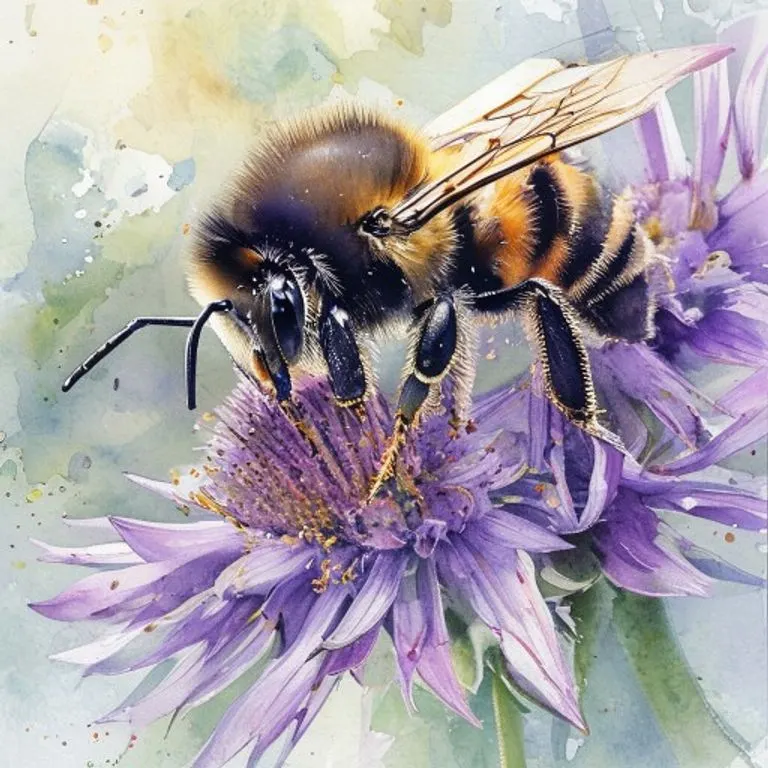
A bumblebee meticulously gathers nectar from a thistle, demonstrating its specialized feeding behavior.
The digestive system of a bumblebee is adapted to process these floral resources efficiently. Nectar is stored in a specialized organ called the honey stomach or crop, where it is partially processed before being regurgitated in the nest as "bee bread" for larvae or consumed by adult bees. Pollen is digested in the midgut, where enzymes break down its tough outer shell and release its nutrient-rich contents.
The energetic demands of bumblebees are substantial. Their endothermic nature requires significant energy expenditure to maintain body temperature, especially during flight and in cooler conditions. A foraging bumblebee can consume large quantities of nectar to sustain its high metabolic rate, making efficient access to abundant floral resources a matter of survival. This constant need for energy drives their relentless foraging behavior and influences their choice of flowers.
Furthermore, the specialized diet of bumblebees has implications for their life cycle and reproductive success. Queens require substantial protein intake from pollen to develop their ovaries and initiate egg-laying. Worker bees also need pollen for glandular development, which produces royal jelly-like substances used to feed the queen and young larvae. Without this specialized diet, the entire reproductive cycle of the colony would halt, leading to its collapse. For more on their life cycle, see Bumblebee Way of Life and Reproductive Cycle.
The Symbiotic Dance: Bumblebees as Keystone Pollinators
The relationship between bumblebees and flowering plants is a classic example of mutualism, a symbiotic interaction where both organisms benefit. Bumblebees gain essential nutrients, while plants achieve successful reproduction through pollination. This interaction is so fundamental that bumblebees are often considered "keystone pollinators" in many ecosystems, meaning their presence is critical for the health and stability of the entire ecological community.
Pollination occurs when a bumblebee, while collecting nectar or pollen, inadvertently transfers pollen grains from the anther (male part) of a flower to the stigma (female part) of the same or another flower. This transfer facilitates fertilization, leading to seed and fruit production. Bumblebees are particularly effective pollinators due to several characteristics:
- Buzz Pollination (Sonication): Many bumblebee species are capable of "buzz pollination" or sonication. They grasp the flower and rapidly vibrate their flight muscles, causing pollen to be dislodged from poricidal anthers (anthers that release pollen through small pores, like those found in tomatoes, blueberries, and cranberries). This method is highly efficient and essential for the reproduction of numerous economically important crops.
- Large Body Size and Hairiness: Their large, fuzzy bodies are excellent at picking up and carrying large quantities of pollen. The dense hairs on their bodies act like Velcro, trapping pollen grains as they move from flower to flower, increasing the likelihood of successful pollen transfer.
- Foraging in Cooler Temperatures: As endothermic insects, bumblebees can forage in cooler weather conditions (early morning, late evening, or overcast days) when many other insect pollinators are inactive. This extends the pollination window for plants, especially in temperate and high-altitude regions.
- Generalist Foragers: While they can exhibit flower constancy (visiting one type of flower during a single foraging trip), bumblebees are generalists overall, visiting a wide range of plant species. This broad diet ensures that many different plants receive pollination services, contributing to overall plant diversity.
The economic importance of bumblebees as pollinators cannot be overstated. They contribute significantly to the yield and quality of numerous agricultural crops, including fruits (e.g., apples, cherries, raspberries), vegetables (e.g., tomatoes, peppers), and oilseed crops. Without their pollination services, many of these crops would produce significantly less fruit or no fruit at all, leading to substantial economic losses and food insecurity. More on their agricultural influence can be found in The Bumblebee's Direct Influence on Agriculture.
Beyond agriculture, bumblebees play a critical role in maintaining natural ecosystems. They pollinate wild plants, which in turn support herbivores, carnivores, and decomposers, forming the base of complex food webs. The loss of bumblebee populations can lead to cascading effects throughout an ecosystem, impacting plant reproduction, biodiversity, and ecosystem stability. This symbiotic relationship has driven co-evolutionary processes over millions of years.
Plants have evolved specific floral traits (e.g., color, scent, shape, nectar guides) to attract bumblebees, while bumblebees have developed specialized mouthparts (long proboscis for deep flowers) and behaviors (buzz pollination) to efficiently extract resources. This ongoing evolutionary "arms race" ensures the continued success of both partners.
Nutritional Ecology: Nectar, Pollen, and Larval Development
The nutritional ecology of bumblebees is a complex interplay of resource availability, colony needs, and individual physiological requirements. Nectar and pollen are not merely food items; they are the building blocks of colony growth, reproduction, and resilience. The quality and quantity of these resources directly influence every stage of the bumblebee life cycle, from larval development to queen production.
For larvae, pollen is the primary source of protein, which is essential for rapid growth. Bumblebee larvae grow exponentially, increasing their body mass many times over in a short period. This growth demands a constant and rich supply of amino acids, which are derived from the pollen collected by worker bees. The workers process the pollen into a paste, often referred to as "bee bread," and feed it to the developing larvae in specialized brood cells.
The nutritional status of the colony, particularly the protein intake, dictates whether a larva will develop into a worker, a male, or a new queen. In bumblebees, queen determination is largely influenced by environmental factors, particularly the amount and quality of food received during larval development. Larvae destined to become queens receive a more abundant and possibly richer diet of pollen and nectar, allowing them to grow larger and develop reproductive organs.
Adult bumblebees also have specific nutritional needs. Queens require high protein intake to develop their ovaries and produce eggs. Worker bees need protein for the development of their hypopharyngeal glands, which produce secretions used in feeding the queen and younger larvae. Nectar provides the energy for all adult activities, especially flight and thermoregulation, which are energetically expensive.
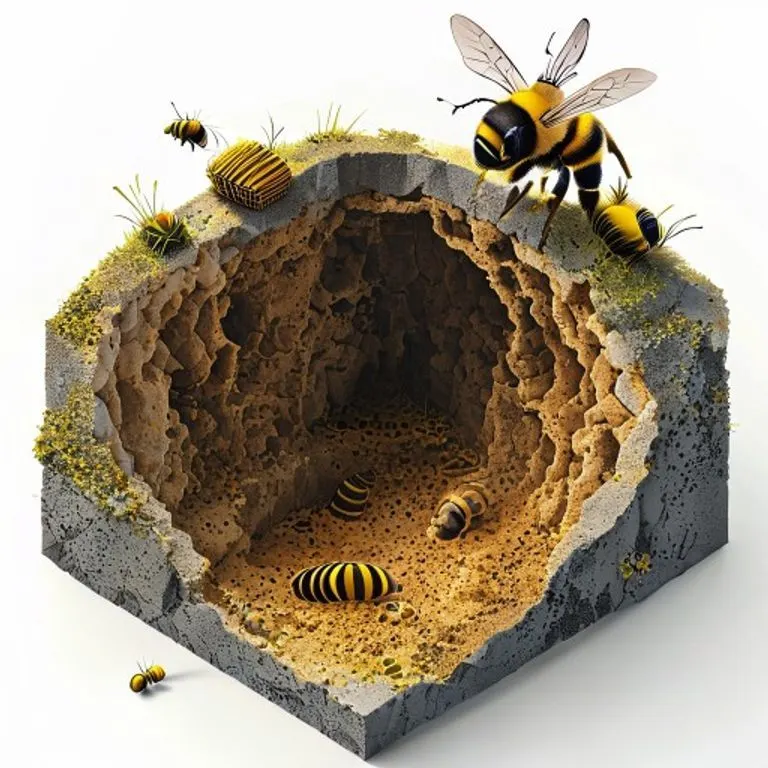
An illustration of an underground bumblebee nest, highlighting the colony's structure and resource management.
A deficiency in either nectar or pollen can have severe consequences for the colony. Nectar scarcity leads to reduced foraging activity, lower metabolic rates, and increased mortality due to starvation. Pollen scarcity, particularly protein-poor pollen, can result in stunted larval growth, reduced adult lifespan, impaired immune function, and a significant decrease in the production of new queens, ultimately threatening the colony's reproductive output.
The diversity of floral resources available to a colony is therefore a critical factor in its success. A monoculture landscape, dominated by a single crop, may provide abundant nectar for a short period but often lacks the diversity of pollen required for a balanced diet throughout the season. This highlights the importance of biodiverse habitats with a succession of flowering plants to support bumblebee populations effectively.
Furthermore, the presence of secondary plant compounds in nectar and pollen can also influence bumblebee nutrition. While some compounds may be toxic or deterrents, others might offer medicinal benefits, helping bumblebees combat parasites and pathogens. This complex interaction adds another layer to their nutritional ecology, demonstrating the sophisticated co-evolutionary arms race between plants and their pollinators.
Foraging Strategies: "Superflying" and Navigational Acumen
Bumblebees employ highly sophisticated foraging strategies, often referred to as "superflying" due to their remarkable efficiency and navigational capabilities. Their ability to locate, assess, and exploit floral resources is a testament to their cognitive prowess and evolutionary adaptations. These strategies ensure optimal energy gain while minimizing risks, crucial for individual survival and colony prosperity.
One key aspect of their foraging is their ability to learn and remember the locations of profitable flowers. Bumblebees create mental maps of their foraging grounds, using visual landmarks, olfactory cues, and even the Earth's magnetic field for navigation. Studies have shown that they can optimize their foraging routes over time, creating "traplines" that connect multiple rewarding flowers in an efficient sequence, minimizing travel distance and energy expenditure.
The decision-making process during foraging is also complex. Bumblebees assess various factors before visiting a flower, including its color, scent, shape, and the presence of nectar guides. They can even detect electric fields around flowers, which may indicate recent visits by other pollinators or the presence of nectar. This multi-sensory approach allows them to quickly identify the most rewarding floral patches.
Their flight dynamics are equally impressive. Despite their seemingly clumsy appearance, bumblebees are highly agile fliers, capable of hovering, rapid acceleration, and precise maneuvers. Their powerful wing muscles allow them to carry heavy loads of nectar and pollen back to the nest, often exceeding their own body weight. The mechanics of their flight have long fascinated scientists, with some even describing it as defying conventional aerodynamic principles, as explored in The Flight Bumblebee Violates Laws of Aerodynamics.
Furthermore, bumblebees exhibit a remarkable ability to adapt their foraging behavior to changing environmental conditions. For example, in windy conditions, they may fly closer to the ground or choose sheltered flowers. During periods of resource scarcity, they may expand their foraging range or become less selective in their flower choices, demonstrating a flexible and resilient approach to food acquisition.
Optimizing Foraging: Flower Constancy and Trapline Foraging
Bumblebees employ specialized strategies to optimize their foraging efficiency, two of the most notable being flower constancy and trapline foraging. These behaviors are crucial for maximizing resource intake and ensuring effective pollination.
Flower constancy refers to a bumblebee's tendency to visit only one species of flower during a single foraging trip, even when other flower species are available. While bumblebees are generalist foragers across their lifespan, individual bees often become constant to a particular flower type for a period. This behavior has several benefits:
- Increased Efficiency: By focusing on one flower type, the bee becomes more proficient at handling that specific flower's morphology, reducing the time and energy spent on each visit.
- Improved Pollination: Flower constancy ensures that pollen from one species is transferred primarily to other flowers of the same species, increasing the likelihood of successful cross-pollination and seed set for the plant.
- Reduced Pollen Loss: Mixing pollen from different species can lead to "pollen clogging" or reduced viability, so constancy helps maintain the purity and effectiveness of pollen transfer.
Trapline foraging is a sophisticated behavior where bumblebees learn and repeatedly visit a sequence of spatially separated flowers in a predictable order. This is analogous to a trap-line used by trappers, where traps are visited in a specific circuit. Key characteristics of trapline foraging include:
- Cognitive Mapping: Bees develop a mental map of their foraging area, remembering the locations of rewarding flowers.
- Route Optimization: Over time, bees refine their routes to minimize travel distance and energy expenditure between flowers, creating highly efficient circuits.
- Resource Management: By visiting flowers in a sequence, bees allow previously visited flowers time to replenish their nectar, ensuring a continuous supply of resources.
These foraging strategies highlight the remarkable learning and memory capabilities of bumblebees, enabling them to navigate complex environments and efficiently exploit floral resources. Such optimization is critical for the survival of individual bees and the overall success of their colonies, especially in environments where floral resources might be patchily distributed or subject to depletion.
Environmental Factors Influencing Foraging and Food Availability
Bumblebee foraging behavior and the availability of their food resources are profoundly influenced by a myriad of environmental factors. These factors can dictate the success of a foraging trip, the health of a colony, and ultimately, the survival of the species. Understanding these influences is crucial for conservation efforts.
Climate and Weather Conditions: Temperature, rainfall, and wind are primary determinants. Bumblebees, being endothermic, can forage in cooler temperatures than many other insects, but extreme cold or heat can limit their activity. Heavy rain can wash away pollen and nectar, while strong winds make flight difficult and energetically costly. Prolonged droughts can reduce floral abundance and nectar production, directly impacting food availability.
Habitat Structure and Floral Diversity: The composition and structure of the landscape play a vital role. Diverse habitats with a continuous succession of flowering plants throughout the season provide a stable food supply. Monocultures or fragmented habitats, conversely, offer limited and often ephemeral resources, making it challenging for bumblebees to find sufficient food. Urbanization and agricultural intensification often lead to habitat loss and reduced floral diversity, posing significant threats.
Pesticide Use: The application of pesticides, particularly neonicotinoids, has been widely implicated in bumblebee declines. These systemic insecticides can be present in nectar and pollen, leading to sub-lethal effects such as impaired foraging efficiency, reduced learning abilities, and weakened immune systems, ultimately affecting colony health and reproductive success. Even non-lethal doses can significantly impact their ability to collect food, as discussed in pesticides and their impact on bumblebees.
Competition: Bumblebees may face competition for floral resources from other pollinators, including honeybees, other wild bees, and even other bumblebee species. While some level of competition is natural, an imbalance, often exacerbated by habitat degradation, can put pressure on bumblebee populations, especially when resources are scarce.
Disease and Parasites: The presence of diseases and parasites can weaken bumblebees, reducing their foraging capacity and overall fitness. A well-nourished colony is generally more resilient to these threats, but environmental stressors that reduce food availability can make colonies more vulnerable.
These interconnected environmental factors highlight the delicate balance required to sustain healthy bumblebee populations. Any disruption to this balance, particularly those driven by anthropogenic activities, can have far-reaching consequences for both bumblebees and the ecosystems they support.
The Attainment of Self: Colony Dynamics and Resource Allocation
The concept of "self-attainment" in bumblebee ecology refers to the successful propagation and survival of the colony as a reproductive unit. This is achieved through intricate colony dynamics and efficient resource allocation, driven by the collective efforts of the queen and her worker offspring. The annual lifecycle of a bumblebee colony is a race against time, where every foraging trip and every resource decision contributes to this ultimate goal.
In spring, a solitary queen emerges from hibernation and begins the arduous task of founding a new colony. She must forage for all her own food, build a small nest, and lay her first batch of eggs. The success of this initial phase is entirely dependent on her ability to find sufficient nectar for energy and pollen for protein, which fuels her egg-laying and the development of her first brood. This period is highly vulnerable, and many queens fail to establish a colony due to resource scarcity or adverse weather conditions.
Once the first worker bees emerge, the colony enters a growth phase. Workers take over foraging duties, allowing the queen to focus solely on reproduction. The efficiency of worker foraging directly impacts the rate of colony growth. More food means more workers, which in turn means more foragers, creating a positive feedback loop that accelerates colony expansion. Resources are allocated to:
- Larval Development: Pollen is fed to growing larvae, ensuring they develop into healthy adult bees.
- Queen's Nutrition: The queen receives a rich diet to maintain her high reproductive output.
- Worker Maintenance: Nectar provides energy for worker activities, including foraging, nest defense, and brood care.
The ultimate goal of the colony is to produce new reproductive individuals: gynes (future queens) and males. This phase, typically occurring in late summer or early autumn, is the culmination of the colony's efforts. The decision to produce reproductives is influenced by colony size, resource availability, and environmental cues. Gynes require a particularly rich diet during their larval development to grow large and develop fully functional ovaries. Males, while also needing resources, do not require the same level of investment.
After the new queens and males emerge and mate, the old queen, workers, and males typically die as winter approaches. The newly mated queens then seek suitable hibernation sites, carrying the genetic legacy of the colony forward. The "attainment of self" is thus a cyclical process, with each successful colony contributing to the genetic continuity of the bumblebee species. Any factor that hinders resource acquisition or allocation at any stage can jeopardize this process, leading to reproductive failure and a decline in population. For an overview of their habitat, refer to Bumblebee Habitat.
Threats to Bumblebee Food Security and Conservation Efforts
Bumblebees worldwide face significant threats that compromise their food security and, consequently, their survival. These challenges are often interconnected and driven by anthropogenic factors, necessitating urgent and concerted conservation efforts. The decline of bumblebee populations has profound implications for both natural ecosystems and agricultural productivity.
Habitat Loss and Fragmentation: The primary threat to bumblebee food security is the extensive loss and fragmentation of their natural habitats. Urbanization, agricultural expansion, and infrastructure development convert diverse wildflower-rich landscapes into monocultures or barren areas. This reduces the availability of essential nectar and pollen sources, forcing bumblebees to travel further for food, increasing energy expenditure and exposure to risks. Fragmented habitats also isolate populations, reducing genetic diversity and making them more vulnerable to other stressors.
Pesticide Use: As previously mentioned, systemic pesticides, particularly neonicotinoids, pose a severe threat. Even sub-lethal doses can impair bumblebees' ability to forage, navigate, learn, and reproduce. These chemicals can persist in the environment, contaminating soil, water, and non-target plants, leading to chronic exposure for foraging bees.
Climate Change: Shifting climate patterns disrupt the delicate synchrony between flowering plants and bumblebee emergence. Earlier springs can lead to a "mismatch" where bees emerge before their food sources are available, resulting in starvation. Extreme weather events, such as prolonged droughts or intense heatwaves, can reduce floral abundance and nectar quality, further exacerbating food scarcity. Changes in temperature can also affect bumblebee physiology and distribution, pushing some species to the brink.
Diseases and Parasites: The spread of diseases and parasites, often facilitated by commercial bumblebee rearing for agricultural pollination, poses a significant risk to wild populations. Pathogens like Nosema bombi or various viruses can weaken colonies, reduce foraging efficiency, and increase mortality rates, especially when combined with other stressors like poor nutrition or pesticide exposure.
Lack of Floral Diversity: Even where habitats exist, a lack of diverse flowering plants throughout the entire active season can lead to nutritional deficiencies. Bumblebees require a varied diet to obtain all necessary nutrients, and landscapes dominated by a few plant species may not provide this balance. This is particularly true in agricultural landscapes where vast fields of a single crop bloom for a short period, followed by long periods of no floral resources.
Conservation efforts are multifaceted and include:
- Habitat Restoration: Creating and restoring wildflower meadows, hedgerows, and other pollinator-friendly habitats.
- Reduced Pesticide Use: Promoting integrated pest management (IPM) and restricting the use of harmful systemic pesticides.
- Public Awareness: Educating the public about the importance of pollinators and encouraging actions like planting native flowers.
- Research and Monitoring: Continuously studying bumblebee populations, their health, and the impact of environmental changes.
- Policy and Legislation: Implementing policies that protect pollinators and their habitats.
These actions are critical to ensuring the long-term survival of bumblebees and the ecological services they provide. For more on their ecological protection, refer to The Bumblebee Ecological Protection and Preservation State.
Future Perspectives: Research and Sustainable Practices
The future of bumblebee populations hinges on continued scientific research and the widespread adoption of sustainable practices. As environmental challenges intensify, innovative approaches are needed to mitigate threats and foster resilient pollinator communities. Future perspectives in bumblebee ecology focus on deepening our understanding of their biology, behavior, and interactions with a changing world.
Advanced Research Techniques: New technologies, such as genomics, remote sensing, and micro-tracking devices, are providing unprecedented insights into bumblebee genetics, disease dynamics, foraging movements, and habitat use. Genomic studies can identify genes related to pesticide resistance or disease susceptibility, informing breeding programs for healthier colonies. Remote sensing helps map floral resources and habitat connectivity across large landscapes, guiding restoration efforts.
Understanding Climate Change Impacts: Research is increasingly focused on predicting and mitigating the effects of climate change on bumblebees. This includes studying phenological mismatches (when bees emerge out of sync with flower blooms), assessing species' adaptability to new thermal regimes, and identifying climate refugia where populations might persist. Such studies are vital for developing targeted conservation strategies.
Integrated Pest Management (IPM) Evolution: The development and adoption of truly pollinator-friendly IPM strategies are paramount. This involves exploring biological controls, precision agriculture techniques that minimize pesticide exposure, and the use of less toxic alternatives. Research into the cumulative effects of multiple stressors (pesticides, climate change, habitat loss) on bumblebee health is also critical.
Urban and Peri-urban Pollinator Habitats: As urbanization continues, creating and managing pollinator habitats in cities and suburban areas becomes increasingly important. This includes promoting native plant gardening, establishing green roofs, and developing pollinator corridors. Research is exploring which plant species thrive in urban environments and best support local bumblebee populations.
Citizen Science and Community Engagement: Engaging the public through citizen science initiatives (e.g., bumblebee monitoring programs) can significantly expand data collection and foster a sense of stewardship. These programs not only provide valuable scientific data but also raise awareness and encourage community-level conservation actions, contributing to a broader understanding of bumblebee definition and importance.
Economic Valuation of Pollination Services: Quantifying the economic value of bumblebee pollination services can strengthen the case for conservation. By demonstrating the financial benefits to agriculture and ecosystems, policymakers and stakeholders are more likely to invest in pollinator protection. This involves complex ecological-economic modeling to accurately assess their contribution, as highlighted in Bumblebee Important Economic Engine Agriculture.
The future of bumblebees, and indeed many other pollinators, depends on a holistic approach that combines rigorous scientific inquiry with practical, community-driven conservation. By understanding their complex ecological roles and implementing effective protective measures, we can ensure these vital insects continue their essential work for generations to come.
Fuente: Contenido híbrido asistido por IAs y supervisión editorial humana.