
Bumblebee Ecological Protection: Preservation State | Althox
Bumblebees, members of the genus Bombus, are indispensable components of global ecosystems, recognized primarily for their crucial role as pollinators. Their fuzzy bodies and distinctive buzzing are not just charming natural features; they signify an essential biological function that underpins agricultural productivity and biodiversity maintenance worldwide. These industrious insects are particularly effective pollinators due to a phenomenon known as buzz pollination (sonication), where they vibrate their flight muscles to release pollen from certain flowers, a capability many other pollinators lack.
The ecological services provided by bumblebees extend far beyond the aesthetic appeal of blooming gardens. They are vital for the reproduction of numerous wild plants, contributing to the health of natural habitats and supporting complex food webs. Furthermore, their contribution to agriculture is immense, enhancing the yield and quality of many economically important crops, including fruits, vegetables, and seeds. Without their tireless efforts, the availability and diversity of our food supply would be severely compromised, leading to profound economic and ecological repercussions.
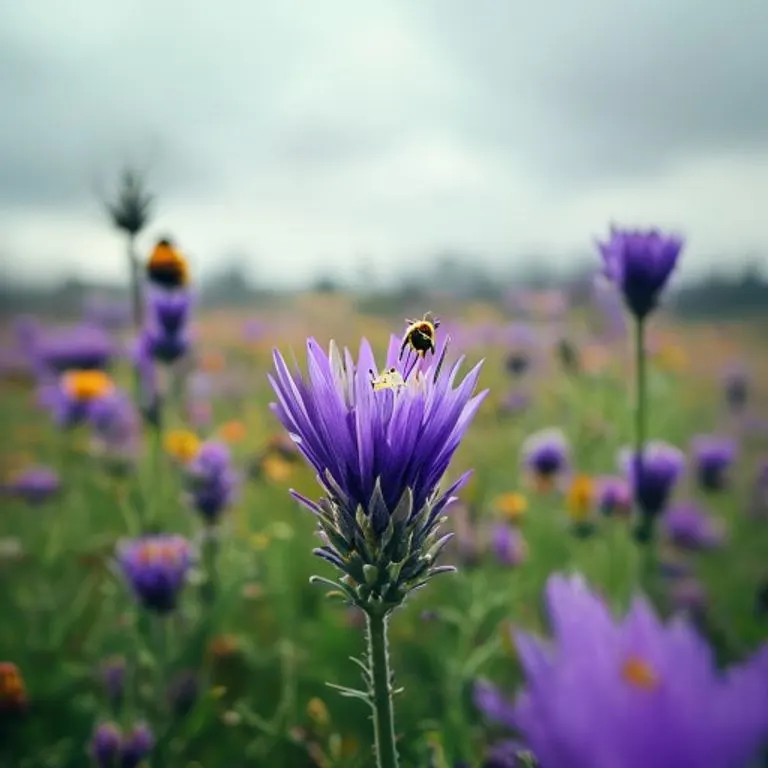
A bumblebee diligently pollinating wildflowers, a symbol of ecological health.
Despite their ecological significance, bumblebee populations are facing unprecedented declines globally. This crisis is a complex interplay of various anthropogenic factors, with habitat loss, climate change, diseases, and critically, the widespread use of pesticides, standing out as primary drivers. Understanding the intricate dynamics of these threats and implementing effective conservation strategies is paramount to safeguarding these vital pollinators and, by extension, the health of our planet.
This article delves into the multifaceted challenges confronting bumblebees, exploring the distinction between beneficial pollinators and parasitic species, analyzing the detrimental impact of modern agricultural practices, and highlighting the urgent need for comprehensive ecological protection and preservation initiatives. We will examine the scientific basis behind these issues and discuss sustainable solutions aimed at reversing the alarming trend of bumblebee decline.
Table of Contents
- The Indispensable Role of Bumblebees
- The Dual Nature of Bumblebees: Pollinators vs. Parasites
- The Pervasive Threat of Pesticides: A Double-Edged Sword
- Neonicotinoids: Systemic Impact on Pollinator Health
- Integrated Pest Management (IPM): A Sustainable Paradigm Shift
- Global Conservation Initiatives and Policy Frameworks
- Citizen Science and Public Engagement: Empowering Conservation
- The Far-Reaching Consequences of Bumblebee Decline
- Future Outlook: Strategies for Bumblebee Resilience and Ecosystem Health
The Indispensable Role of Bumblebees
Bumblebees are keystone species in many terrestrial ecosystems, particularly in temperate regions. Their robust bodies, covered in dense hair, allow them to forage in cooler temperatures and at higher altitudes than many other insect pollinators. This extended foraging window makes them invaluable for early spring and late autumn blooms, ensuring the continuity of pollination services throughout the growing season.
The unique ability of buzz pollination, or sonication, is critical for the reproduction of approximately 8% of flowering plants worldwide. Crops such as tomatoes, blueberries, cranberries, and potatoes rely heavily on this specific pollination mechanism. Without bumblebees, the yields of these crops would drastically decrease, impacting global food security and agricultural economies. Their role extends to wild flora, supporting the genetic diversity and health of natural plant communities, which in turn provides food and shelter for countless other species.
The Dual Nature of Bumblebees: Pollinators vs. Parasites
While the term "bumblebee" often conjures images of diligent pollinators, the reality of the genus Bombus is more nuanced. The vast majority of bumblebee species are indeed eusocial insects, forming colonies with a queen, worker bees, and males, all contributing to the crucial task of foraging and, consequently, pollination. These species are characterized by their ability to collect pollen and nectar, supporting their colony's growth and ensuring the reproduction of countless plant species.
However, within the broader bumblebee family, there exists a fascinating and ecologically distinct group known as cuckoo bumblebees, belonging to the subgenus Psithyrus. These species represent a form of social parasitism, a strategy where one organism exploits the social behavior of another to raise its offspring. Unlike their true bumblebee relatives, cuckoo bumblebees have evolved to forgo the typical colony-founding and foraging behaviors.
Cuckoo bumblebees lack a worker caste, meaning they do not produce their own foraging bees. Instead, a parasitic queen emerges from hibernation and seeks out an established nest of a host bumblebee species. Upon locating a suitable colony, she infiltrates the nest, often engaging in a struggle with the host queen, which she may kill or subdue. Once in control, the parasitic queen lays her eggs, and the unsuspecting host worker bees are then coerced into raising the cuckoo bumblebee offspring, providing them with food and care.
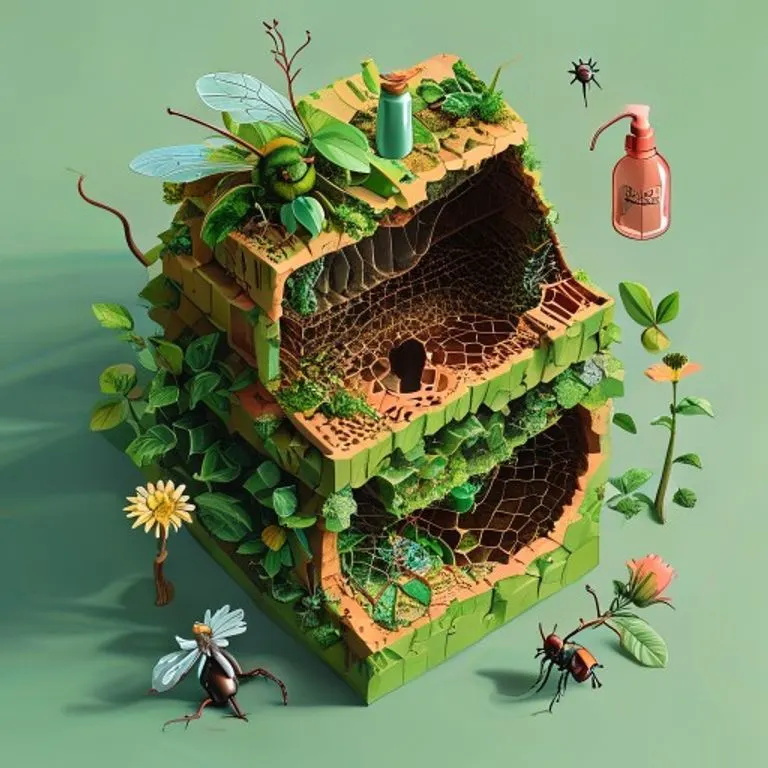
An illustrative depiction of the multiple dangers threatening bumblebee colonies.
This parasitic lifestyle means that cuckoo bumblebees do not contribute to pollination in the same way as true bumblebees. They do not actively collect pollen for their young, relying entirely on the labor of other species. From an agricultural perspective, farmers often perceive these parasitic species as a nuisance, as they consume resources from the host colony without providing the beneficial service of pollination.
This perception has historically contributed to broad-stroke approaches in pest control, inadvertently harming the very pollinators essential for crop production. The presence of cuckoo bumblebees highlights the complex interdependencies within natural ecosystems. While they may not be direct pollinators, their role in the ecosystem is still part of the natural balance, influencing host populations and contributing to evolutionary pressures. The challenge for conservation and agricultural management lies in distinguishing between these roles and implementing targeted strategies that protect beneficial species while managing perceived pests without causing collateral damage.
The Pervasive Threat of Pesticides: A Double-Edged Sword
The agricultural sector's reliance on pesticides to protect crops from pests and diseases has become a significant driver of ecological imbalance, particularly affecting pollinator populations. Historically, the motivation behind pesticide application was often to eliminate perceived threats, including parasitic insects like cuckoo bumblebees, which were seen as competitors for resources or simply undesirable elements in the agricultural landscape. However, the methods employed have frequently proven to be indiscriminate, leading to widespread collateral damage.
Many modern pesticides, especially those designed for broad-spectrum efficacy, do not differentiate between target pests and non-target organisms. This means that when applied to fields, these chemicals can kill or severely harm a wide array of insects, including the beneficial pollinating bumblebees and other wild bees that are crucial for crop yields. The intention to protect crops by eliminating parasitic species often results in the unintended destruction of essential pollinators, creating a paradoxical situation where the solution exacerbates the problem.
The impact of pesticides on bumblebees is not always immediate or lethal. Sub-lethal doses, while not directly killing the bees, can have profound and debilitating effects on their behavior, physiology, and reproductive capabilities. These effects include impaired navigation, making it difficult for bees to find their way back to the nest; reduced foraging efficiency, leading to insufficient food for the colony; and compromised immune systems, making them more susceptible to diseases and parasites. Over time, these cumulative effects can lead to colony decline and ultimately collapse.
The widespread and often indiscriminate use of pesticides disrupts the delicate ecological balance that has evolved over millennia. By attempting to control one aspect of the ecosystem (e.g., parasitic insects), agricultural practices inadvertently destabilize the entire system, leading to a cascade of negative consequences. This includes not only the decline of pollinator populations but also a reduction in overall biodiversity, decreased soil health, and long-term sustainability challenges for food production. The economic implications are also substantial. As pollinator populations decline, farmers may experience reduced crop yields, necessitating greater reliance on costly artificial pollination methods or facing significant financial losses. This creates a vicious cycle where the initial problem of pest management leads to a larger crisis of pollinator scarcity, underscoring the urgent need for a paradigm shift in agricultural practices towards more sustainable and ecologically friendly approaches.
Neonicotinoids: Systemic Impact on Pollinator Health
Among the various classes of pesticides, neonicotinoids have garnered significant attention and concern due to their systemic nature and documented adverse effects on pollinator health. Introduced in the 1990s, these insecticides are chemically similar to nicotine and act on the central nervous system of insects, leading to paralysis and death. Their systemic property means they are absorbed by the plant and distributed throughout its tissues, including pollen and nectar, making them toxic to insects that feed on these plant parts.
The widespread adoption of neonicotinoids, particularly as seed treatments, meant that entire crops could be protected from early-season pests. However, this also meant that pollinators, including bumblebees, were exposed to these chemicals from the moment they began foraging on treated plants. Numerous scientific studies have linked neonicotinoid exposure to severe declines in honeybee and bumblebee populations across the globe, leading to widespread alarm among scientists, conservationists, and the public.
The effects of neonicotinoids on bumblebees are multifaceted and often subtle, contributing to a gradual weakening of colonies rather than immediate mass mortality. Key impacts include:
- Impaired Navigation and Foraging: Even at sub-lethal doses, neonicotinoids can disrupt a bumblebee's ability to learn and remember routes, making it harder for them to find food sources and return to their nests. This leads to reduced foraging efficiency and, consequently, less food for the colony.
- Reduced Reproductive Success: Exposure to these pesticides can negatively affect queen bumblebees, reducing their egg-laying capacity and the viability of their offspring. This directly impacts the growth and long-term survival of bumblebee colonies.
- Weakened Immune Systems: Neonicotinoids have been shown to suppress the immune responses of bees, making them more vulnerable to diseases and parasites, such as the microsporidian parasite Nosema bombi.
- Behavioral Changes: Bees exposed to neonicotinoids may exhibit altered social behaviors, reduced communication within the colony, and a general decrease in activity levels, all of which compromise colony health.
- Synergistic Effects: The impact of neonicotinoids can be exacerbated when combined with other stressors, such as habitat loss, climate change, and other pesticides, creating a complex web of threats that further imperil bumblebee populations.
The scientific evidence regarding the detrimental effects of neonicotinoids has prompted regulatory actions in several regions. The European Union, for instance, implemented a near-total ban on the outdoor use of several key neonicotinoids in 2018, following extensive research highlighting their risks to pollinators. Other countries and regions have also begun to restrict or review the use of these chemicals, signaling a growing global recognition of the urgent need to protect pollinator health. Despite these efforts, the legacy of neonicotinoid use persists, and new systemic pesticides continue to be developed. Continuous monitoring, rigorous scientific assessment, and adaptive regulatory frameworks are essential to ensure that agricultural practices do not inadvertently undermine the ecological foundations upon which our food systems depend.
Integrated Pest Management (IPM): A Sustainable Paradigm Shift
Integrated Pest Management (IPM) represents a fundamental shift away from the reliance on broad-spectrum chemical pesticides towards a more holistic and sustainable approach to pest control. IPM emphasizes a combination of methods to manage pest populations in an economically sound and environmentally responsible manner. The core principle of IPM is to prevent pest outbreaks through ecological means and to use pesticides only when necessary, in targeted applications, and with careful consideration of their impact on non-target organisms, including pollinators.
Key strategies within IPM include:
- Biological Control: Utilizing natural enemies of pests, such as predators, parasites, and pathogens, to keep pest populations in check. This can involve introducing beneficial insects or enhancing existing populations.
- Cultural Practices: Implementing farming techniques that reduce pest problems, such as crop rotation, planting pest-resistant varieties, optimizing planting times, and improving sanitation.
- Mechanical and Physical Controls: Employing physical barriers, traps, or manual removal to prevent or reduce pest infestations.
- Habitat Modification: Creating diverse habitats that support beneficial insects and pollinators, such as planting hedgerows, wildflower strips, and cover crops.
- Chemical Control (as a last resort): When other methods are insufficient, using the least toxic and most targeted pesticides available, applied at the optimal time and dosage to minimize harm to non-target species. This includes avoiding systemic pesticides harmful to pollinators.
The adoption of IPM practices not only protects pollinators but also contributes to overall ecosystem health, reduces chemical residues in food and water, and can lead to long-term cost savings for farmers. It requires a deeper understanding of agroecology and a commitment to continuous monitoring and adaptation, but its benefits for biodiversity and sustainable agriculture are undeniable.
Global Conservation Initiatives and Policy Frameworks
Recognizing the severe threats facing bumblebees and other pollinators, numerous conservation organizations and initiatives have emerged globally, dedicated to protecting these vital insects. These efforts range from scientific research and habitat restoration to public awareness campaigns and policy advocacy. One prominent example is the Bumblebee Conservation Trust, founded in the UK, which exemplifies a concerted approach to addressing the crisis.
The Bumblebee Conservation Trust's primary objective is to protect and encourage the conservation of all bumblebee species, with a particular focus on those identified as endangered or critically threatened. Their work encompasses several key areas:
- Habitat Restoration and Creation: Working with landowners, farmers, and local communities to create and manage flower-rich habitats that provide essential food and nesting resources for bumblebees. This includes planting native wildflowers and reducing mowing frequency in certain areas.
- Scientific Research: Funding and conducting studies to better understand bumblebee ecology, population dynamics, and the specific impacts of various threats, including pesticides, climate change, and diseases. This research informs evidence-based conservation strategies.
- Public Engagement and Education: Raising awareness among the public about the importance of bumblebees and the threats they face. This involves educational programs, citizen science initiatives (e.g., bumblebee identification and monitoring schemes), and providing advice on how individuals can help.
- Policy Advocacy: Lobbying governments and policymakers to implement stronger regulations on pesticide use, promote pollinator-friendly farming practices, and protect vital habitats.
The impact of widespread pesticide use has been particularly devastating, leading to the disappearance of bumblebee species not only in the UK but also across North America and other parts of the world. This global phenomenon underscores the interconnectedness of ecosystems and the need for international cooperation in conservation efforts. The loss of even a few species can have ripple effects throughout an ecosystem, affecting plant reproduction, food chains, and overall biodiversity.
"The precautionary principle, widely adopted in environmental law, dictates that if an action or policy has a suspected risk of causing harm to the public or to the environment, in the absence of scientific consensus that the action or policy is harmful, the burden of proof that it is not harmful falls on those taking the action. This principle is often invoked in debates regarding pesticide use and pollinator health."
Beyond dedicated organizations, calls to action extend to various stakeholders, including farmers, agricultural businesses, governments, regulators, researchers, scientists, and the general public. Governments and regulatory bodies play a crucial role in establishing and enforcing policies that protect pollinators. This includes setting limits on pesticide use, promoting organic farming, and designating protected areas for biodiversity. International agreements and conventions, such as the Convention on Biological Diversity, also provide frameworks for global cooperation on pollinator conservation.
"Environmental Impact Assessments (EIAs) are mandated by law in many jurisdictions for projects that may have significant environmental effects. These assessments often include evaluations of potential impacts on biodiversity, including pollinator populations, and require mitigation measures to be proposed and implemented."
These legal and regulatory tools are vital for ensuring that development and agricultural practices consider their ecological footprint and actively work towards mitigating negative impacts on essential species like bumblebees. The ongoing challenge is to ensure these frameworks are robustly implemented and adapted to new scientific findings and environmental pressures.
Citizen Science and Public Engagement: Empowering Conservation
Citizen science initiatives have become increasingly vital in pollinator conservation, providing invaluable data and fostering public awareness and engagement. These programs empower individuals, regardless of their scientific background, to contribute to real-world research by collecting and submitting observations of bumblebees and other pollinators. This collective effort significantly expands the geographical and temporal scope of data collection, enabling scientists to track population trends, identify critical habitats, and assess the effectiveness of conservation interventions on a much larger scale than would otherwise be possible.
A delicate watercolor of a bumblebee on clover, highlighting nature's intricate beauty.
Examples of successful citizen science projects include bumblebee identification and monitoring schemes, where participants photograph and log sightings of different species, contributing to national and international databases. This data is crucial for understanding species distribution, phenology (timing of biological events), and responses to environmental changes. Beyond data collection, citizen science plays a powerful role in education and advocacy.
By actively participating, individuals gain a deeper appreciation for the ecological importance of bumblebees and the threats they face. This firsthand experience often translates into greater support for conservation efforts, changes in personal behaviors (e.g., planting pollinator-friendly gardens, reducing pesticide use), and increased pressure on policymakers to enact stronger environmental protections. Public engagement is also fostered through educational campaigns, workshops, and online resources that provide practical advice on how individuals can create pollinator habitats in their own gardens, balconies, or local communities.
The collective impact of these individual actions, when scaled up, can significantly contribute to the creation of a network of pollinator-friendly spaces, forming vital corridors for bumblebees and other beneficial insects. This bottom-up approach complements top-down policy interventions, creating a comprehensive strategy for ecological protection.
The Far-Reaching Consequences of Bumblebee Decline
The decline of bumblebee populations is not merely an ecological concern; it carries profound and far-reaching consequences for human societies and the planet as a whole. The most immediate and tangible impact is on agricultural productivity and food security. As mentioned, many economically important crops rely on bumblebees for pollination. A reduction in their numbers directly translates to lower crop yields, reduced quality of produce, and increased costs for farmers who may resort to manual pollination or other costly alternatives.
This can lead to higher food prices, reduced availability of certain fruits and vegetables, and increased vulnerability of food systems to shocks. Beyond agriculture, the decline of bumblebees threatens biodiversity. Wild plant species that depend on bumblebees for reproduction may experience reduced seed set and genetic diversity, making them more susceptible to diseases and environmental changes. This can lead to a cascade of effects throughout ecosystems, impacting herbivores that feed on these plants, and subsequently, the predators that rely on those herbivores.
The intricate web of life is interconnected, and the loss of a keystone pollinator like the bumblebee can unravel entire ecological communities. Furthermore, the aesthetic and cultural value of bumblebees is also diminished. These charismatic insects are a familiar and cherished part of natural landscapes, and their disappearance represents a loss of natural heritage. Their decline serves as a stark indicator of broader environmental degradation, signaling that our ecosystems are under severe stress due to human activities. Addressing bumblebee decline is therefore not just about saving a single group of insects, but about safeguarding the health and resilience of our planet's life support systems.
Future Outlook: Strategies for Bumblebee Resilience and Ecosystem Health
The future of bumblebee populations hinges on a concerted, multi-faceted approach that integrates scientific research, policy reform, agricultural innovation, and public participation. While the challenges are significant, there is growing recognition of the urgency and increasing momentum behind conservation efforts. Key strategies for fostering bumblebee resilience and improving ecosystem health include:
- Enhanced Habitat Creation and Management: Expanding and connecting pollinator-friendly habitats, such as wildflower meadows, hedgerows, and urban green spaces. This involves planting diverse native flora that provides continuous nectar and pollen sources throughout the bumblebee foraging season.
- Sustainable Agricultural Practices: Promoting and incentivizing the widespread adoption of IPM, organic farming, and other agroecological approaches that minimize pesticide use and enhance biodiversity on farms. This includes supporting farmers in transitioning to these methods.
- Robust Regulatory Frameworks: Implementing and strictly enforcing policies that restrict harmful pesticides, particularly systemic insecticides like neonicotinoids. This also involves regular review and adaptation of regulations based on the latest scientific evidence.
- Continued Scientific Research: Investing in studies to better understand bumblebee biology, disease dynamics, climate change impacts, and the effectiveness of various conservation interventions. This includes developing new monitoring techniques and predictive models.
- Public Education and Awareness: Sustained campaigns to inform the public about the importance of pollinators and how individuals can contribute to their conservation. This empowers communities to become active stewards of their local environments.
- International Cooperation: Fostering global partnerships and knowledge exchange to address transboundary threats and implement coordinated conservation strategies, especially for migratory species or those affected by global trade of agricultural products.
- Climate Change Mitigation: Addressing the root causes of climate change, which exacerbates many threats to bumblebees, through global efforts to reduce greenhouse gas emissions and promote renewable energy.
By combining these strategies, we can work towards a future where bumblebees not only survive but thrive, continuing their indispensable role in supporting healthy ecosystems and ensuring global food security. The preservation of bumblebees is a testament to our commitment to biodiversity and the long-term sustainability of our planet.
Fuente: Contenido híbrido asistido por IAs y supervisión editorial humana.