
Cuckoo Bumblebee Behavior: Morphology, Parasitism | Althox
The world of insects is a tapestry woven with intricate behaviors and remarkable adaptations, and among its most fascinating threads are the cuckoo bumblebees. These enigmatic insects, primarily belonging to the subgenus Psithyrus within the genus Bombus, represent a unique evolutionary path in the Hymenoptera order. Unlike their more familiar social bumblebee cousins, cuckoo bumblebees have abandoned the laborious tasks of nest building and foraging, opting instead for a life of social parasitism.
Their existence is intrinsically linked to the industriousness of other bumblebee species, upon which they rely for survival and reproduction. This parasitic lifestyle has driven significant evolutionary changes in their morphology, physiology, and behavioral repertoire, making them a compelling subject of scientific inquiry. Understanding the cuckoo bumblebee offers a window into the complex dynamics of interspecies relationships and the diverse strategies life employs to thrive.
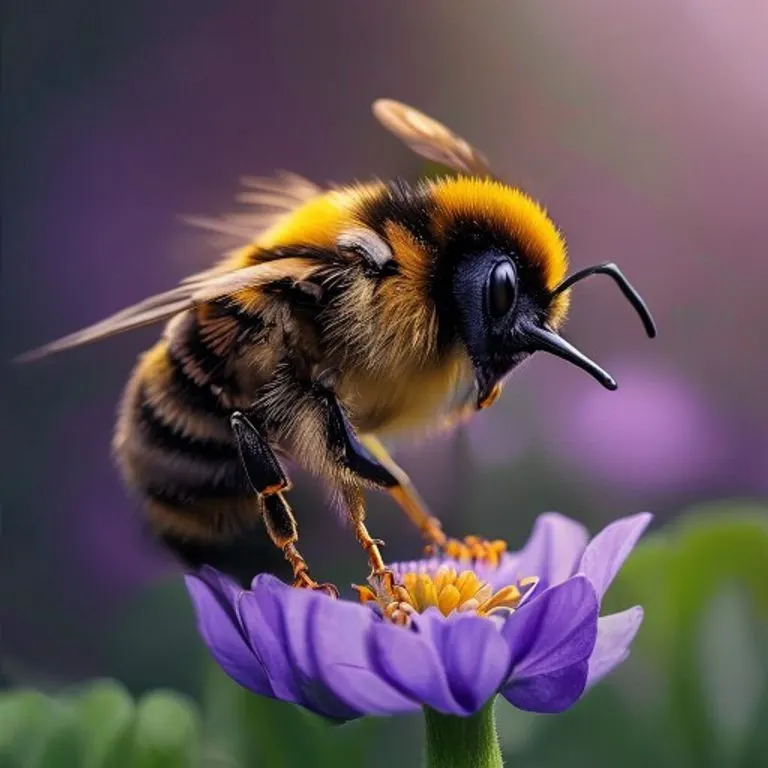
A cuckoo bumblebee, such as Bombus vestalis, subtly resting on a clover, illustrating its distinctive morphological features adapted for its parasitic lifestyle.
This comprehensive exploration delves into the distinctive morphology and peculiar behaviors that define cuckoo bumblebees. We will examine how their physical attributes have evolved to support their parasitic strategy, from their robust exoskeletons to their specialized mandibles and potent venom. Furthermore, we will unravel the intricate behavioral sequences involved in their usurpation of host nests, including the crucial role of chemical communication and the concept of the "false queen." By shedding light on these fascinating aspects, we aim to provide a detailed understanding of these remarkable insects, highlighting their ecological significance and the ongoing research efforts to comprehend their complex biology fully. The cuckoo bumblebee stands as a testament to the diverse and often surprising adaptations found within the natural world.
Table of Contents
- Introduction to Cuckoo Bumblebees: The Psithyrus Subgenus
- Evolutionary Journey: From Sociality to Parasitism
- Morphological Marvels: Adaptations for Usurpation
- The Art of Infiltration: A Queen's Ruthless Strategy
- Chemical Warfare: Pheromones and Subjugation
- Host Specificity and Co-evolutionary Dynamics
- Ecological Role and Conservation Status
- Research Frontiers: Unraveling Cuckoo Bumblebee Secrets
Introduction to Cuckoo Bumblebees: The Psithyrus Subgenus
Cuckoo bumblebees, scientifically classified under the subgenus Psithyrus within the genus Bombus, represent a fascinating deviation from the typical social life cycle observed in most bumblebee species. Unlike their eusocial relatives, Psithyrus species do not construct their own nests, collect pollen for their offspring, or establish worker castes. Instead, they are obligate social parasites, meaning they depend entirely on other bumblebee species (their hosts) to raise their young.
The term "cuckoo" aptly describes their reproductive strategy, drawing a parallel to cuckoo birds that lay their eggs in the nests of other species. This parasitic behavior is not merely a matter of convenience; it is a deeply ingrained evolutionary adaptation that has shaped every aspect of their biology, from their physical appearance to their complex behavioral patterns. The evolution of social parasitism in bumblebees is a subject of intense scientific interest, offering insights into the plasticity of social organization.
Evolutionary Journey: From Sociality to Parasitism
Historically, Psithyrus was considered a separate genus due to its distinct morphological and behavioral characteristics. However, molecular phylogenetic studies have firmly placed it as a subgenus within Bombus, indicating a common ancestry with social bumblebees. This classification highlights that social parasitism likely evolved from a social ancestor, representing a secondary loss of social behaviors rather than an independent origin.
Approximately 30 species of cuckoo bumblebees are recognized globally, each typically specializing in parasitizing one or a few closely related host species. For instance, Bombus vestalis, a well-studied cuckoo bumblebee, primarily targets nests of Bombus terrestris and Bombus lucorum. This host specificity suggests a co-evolutionary arms race, where parasites develop strategies to overcome host defenses, and hosts evolve counter-adaptations.
The life cycle of a cuckoo bumblebee queen begins similarly to a social bumblebee queen: emerging from hibernation in spring. However, instead of searching for a suitable nest site and initiating a colony, she embarks on a quest to locate an established host nest. This quest is fraught with danger, as the host colony will naturally defend itself against intruders. The success of the cuckoo bumblebee hinges on its ability to infiltrate, subjugate, and ultimately exploit the host workers.
The absence of a worker caste in cuckoo bumblebees is a defining feature. All offspring produced by a cuckoo bumblebee queen are reproductives: new queens and males. This stark contrast to social bumblebees, where the queen produces sterile workers before reproductives, underscores the fundamental difference in their ecological roles. The host workers are manipulated into foraging for the cuckoo's brood, effectively becoming unwilling foster parents.
Understanding the evolutionary pressures that led to this parasitic lifestyle involves considering factors such as resource availability, competition, and the costs and benefits of sociality. While building and maintaining a colony is energetically expensive and risky, parasitism offers a shortcut to reproduction, albeit with its own set of challenges related to host manipulation and defense. This intricate balance makes cuckoo bumblebees a prime example of evolutionary ingenuity.
Morphological Marvels: Adaptations for Usurpation
The parasitic lifestyle of cuckoo bumblebees has led to a suite of distinctive morphological adaptations that set them apart from their social counterparts. These physical traits are not merely superficial differences but are crucial for their survival and success in infiltrating and dominating host colonies. By examining these features, we can better understand the evolutionary pressures that have shaped their unique form.
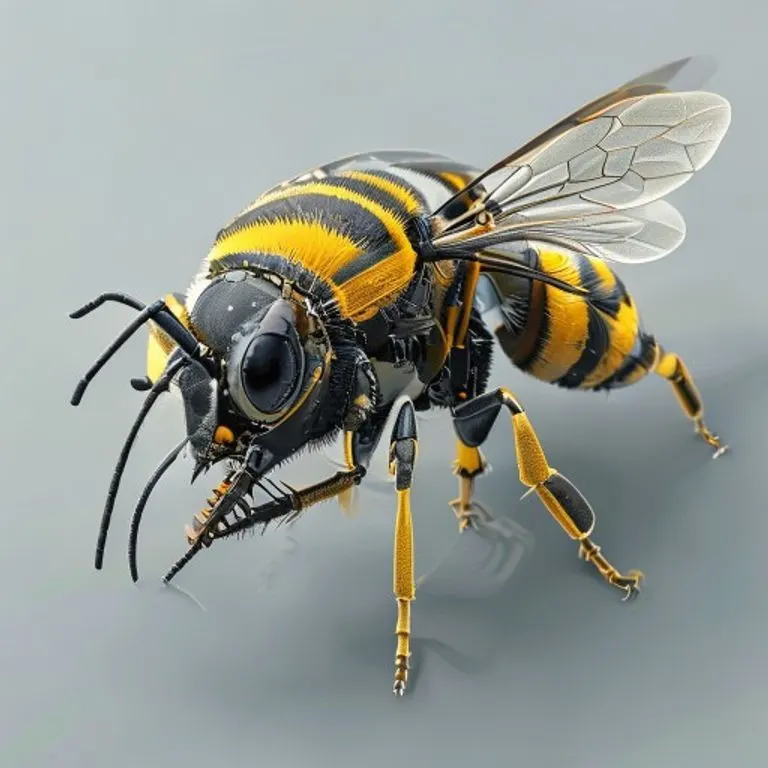
A close-up of a cuckoo bumblebee's head, revealing its strong mandibles and the base of its potent sting, essential for its parasitic lifestyle.
One of the most striking morphological differences is the absence of corbiculae, or pollen baskets, on the hind legs of cuckoo bumblebee females. Social bumblebee workers and queens possess these specialized structures, which are essential for collecting and transporting pollen back to the nest to feed their developing larvae. Cuckoo bumblebees, however, do not provision their own young; instead, they rely on the host workers to perform this task. Therefore, the corbiculae have been lost through evolutionary adaptation, as they are no longer necessary.
Cuckoo bumblebees generally possess a more robust and heavily sclerotized (hardened) exoskeleton compared to social bumblebees. This increased armor provides enhanced protection during the often-violent confrontations that occur when a cuckoo queen attempts to invade and subjugate a host nest. The initial entry into a foreign colony can involve aggressive physical interactions with host workers and the resident queen, making a tougher cuticle a significant advantage.
Their integument (outer covering) also tends to be less hairy and often appears shinier than that of social bumblebees. While social bumblebees are typically densely covered in soft, insulating hairs that help regulate body temperature and collect pollen, cuckoo bumblebees have reduced pilosity. This reduction in hair might contribute to a sleeker profile, potentially aiding in navigating tight nest spaces or making them less conspicuous to host workers. The coloration patterns of cuckoo bumblebees often mimic those of their host species, a form of Batesian mimicry that may help them avoid immediate aggression upon initial encounter.
The mandibles of cuckoo bumblebee queens are notably stronger and more sharply pointed than those of social bumblebee queens. These powerful jaws are essential tools for combat, enabling them to inflict damage on host workers and, crucially, to kill the resident host queen. The ability to physically overpower the host queen is a critical step in establishing dominance and taking over the nest. This adaptation underscores the aggressive nature of their parasitic strategy.
Furthermore, cuckoo bumblebee queens possess a more potent venom and a longer, more curved sting than their social counterparts. While all bumblebees can sting, the venom of Psithyrus species is specifically adapted for paralyzing or killing other bees. This enhanced venom delivery system is vital during the usurpation process, providing a chemical weapon to subdue resistant host individuals. The combination of strong mandibles and potent venom makes the cuckoo queen a formidable adversary.
Another subtle but important morphological trait is the slightly more pointed abdomen of cuckoo bumblebees. This shape might facilitate easier penetration into the host nest or offer a more streamlined form during aggressive encounters. The overall body size of cuckoo bumblebee queens is often comparable to or slightly larger than the queens of their host species, which can provide a physical advantage during direct confrontations. In summary, the morphology of cuckoo bumblebees is a testament to convergent evolution, where distinct lineages develop similar traits under similar environmental pressures. Their robust build, reduced hairiness, lack of pollen baskets, powerful mandibles, and potent venom are all finely tuned adaptations that enable their specialized life as social parasites.
The Art of Infiltration: A Queen's Ruthless Strategy
The life cycle of a cuckoo bumblebee queen is a masterclass in strategic usurpation, a process that begins with her emergence from hibernation. Unlike social bumblebee queens, who emerge early in the spring to establish their own colonies, cuckoo queens typically emerge later. This timing is critical, as they need to find host nests that are already established and have a nascent worker force capable of supporting a new brood.
Upon emergence, the cuckoo queen spends time foraging for nectar to build up her energy reserves. Her primary objective, however, is to locate a suitable host nest. The exact mechanisms by which cuckoo bumblebees locate host nests are not fully understood but are believed to involve olfactory cues, such as pheromones emitted by host queens and workers, as well as visual signals related to nest entrance activity. This search phase is highly energy-intensive and risky, as she is exposed to predators and environmental hazards.
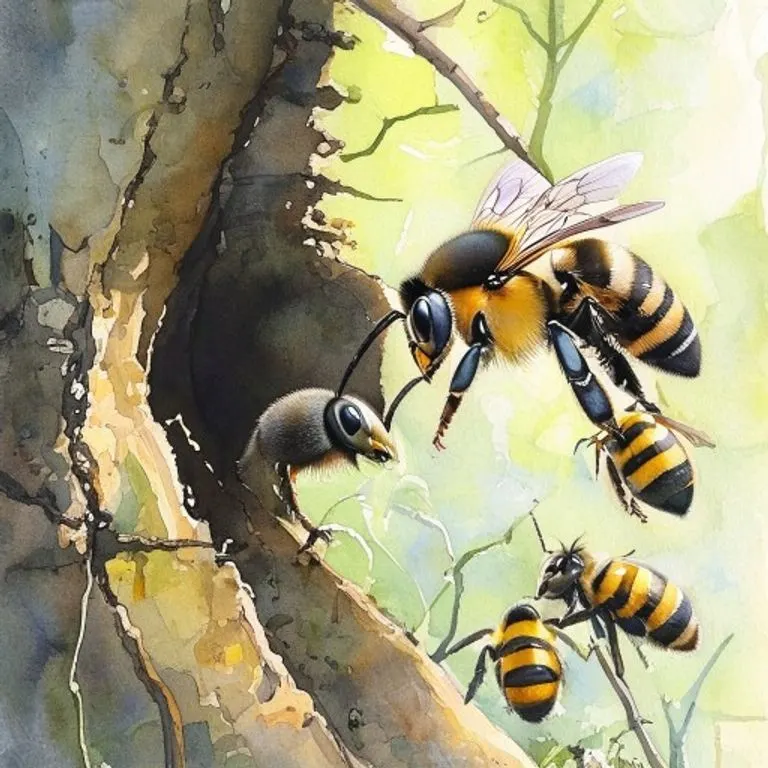
A cuckoo bumblebee cautiously approaching a host nest entrance, a critical and dangerous step in its usurpation strategy.
Once a host nest is located, the cuckoo queen must gain entry. This initial infiltration is often the most dangerous phase of the usurpation process. Host workers are naturally defensive of their colony and will attempt to repel intruders. The cuckoo queen, with her robust exoskeleton and powerful sting, is prepared for these confrontations. She may attempt to sneak in unnoticed, or she may engage in direct combat with any defending workers.
The ultimate goal of the cuckoo queen is to kill or subdue the resident host queen. This act is pivotal, as the presence of two queens would lead to conflict over resources and control. The cuckoo queen will actively seek out the host queen and engage in a fight to the death. Her stronger mandibles and more potent venom give her a significant advantage in these battles. Once the host queen is eliminated, the cuckoo queen can begin to assert her dominance over the remaining workers.
After successfully usurping the nest, the cuckoo queen assumes the role of a "false queen." She does not engage in foraging or nest maintenance. Instead, she lays her eggs directly into the host colony's brood cells, often after consuming or destroying some of the host's own eggs or larvae to make space. The host workers, now queenless and under the influence of the cuckoo queen, are compelled to care for the cuckoo's offspring as if they were their own.
The host workers continue to forage for pollen and nectar, feed the cuckoo larvae, and maintain the nest. The cuckoo queen's offspring develop into new cuckoo queens and males. Crucially, cuckoo bumblebees do not produce worker castes. This means that the entire parasitic generation consists of reproductives, ready to disperse and continue the cycle of usurpation in the following season.
The duration of the parasitic phase varies depending on the species and environmental conditions, but it typically lasts for several weeks. During this time, the cuckoo queen remains largely within the nest, laying eggs and maintaining control over the host workers. The host colony, deprived of its own queen and future worker production, eventually declines and perishes after the cuckoo's reproductives have emerged and dispersed. This highly specialized life cycle exemplifies an extreme form of resource exploitation. The cuckoo bumblebee has evolved to bypass the energetically demanding stages of colony founding and worker production, instead hijacking the established infrastructure and labor force of another species. This strategy, while successful for the parasite, comes at a significant cost to the host colony, often leading to its demise.
Chemical Warfare: Pheromones and Subjugation
The usurpation of a host nest by a cuckoo bumblebee queen is not solely a matter of physical prowess; it is also a sophisticated battle of chemical communication. Pheromones play a critical role in the social organization of bumblebee colonies, regulating everything from queen fertility to worker behavior. Cuckoo bumblebees have evolved to exploit and manipulate these chemical signals, effectively engaging in a form of "chemical warfare" to subjugate host workers.
Upon entering a host nest, a cuckoo queen faces the challenge of being recognized as an intruder. Social bumblebee queens produce specific queen pheromones that signal their presence, fertility, and dominance to their workers. These pheromones inhibit worker ovarian development and stimulate foraging behavior, maintaining colony cohesion and productivity. The cuckoo queen must either mask her foreign scent or mimic the host queen's pheromones to avoid detection and aggression.
Research suggests that cuckoo bumblebee queens are capable of secreting powerful pheromones that can effectively override or mimic the host queen's chemical signals. These pheromones are believed to have several functions. Firstly, they may help to confuse or pacify host workers, making them less aggressive towards the intruder. Some studies indicate that cuckoo queens produce compounds that are similar to those found in host queen mandibular glands, allowing them to blend in chemically. Secondly, and perhaps more importantly, these pheromones play a crucial role in the subjugation of host workers after the resident queen has been killed. Once the host queen is eliminated, the colony experiences a disruption in its chemical signaling. The cuckoo queen then steps in, emitting her own pheromones that effectively "reprogram" the host workers. These chemical messages induce a state of submission, causing them to accept the cuckoo queen and care for her brood.
Host Specificity and Co-evolutionary Dynamics
The relationship between cuckoo bumblebees and their hosts is a classic example of a co-evolutionary arms race. Over millennia, cuckoo species have evolved increasingly sophisticated methods of infiltration and manipulation, while host species have developed counter-adaptations to detect and repel parasites. This dynamic interaction drives evolution in both groups.
Host specificity varies among *Psithyrus* species. Some cuckoo bumblebees are generalists, capable of parasitizing several host species, while others are highly specialized, targeting only one or two closely related hosts. This specificity is often linked to the chemical mimicry capabilities of the cuckoo queen and her ability to overcome the immune responses or behavioral defenses of specific host species. For example, *Bombus bohemicus* primarily targets *Bombus lucorum*, showcasing a tight co-evolutionary bond.
Host defenses can include aggressive worker behavior, such as direct attacks on the invading cuckoo queen, or the ability to detect and remove foreign eggs or larvae. Some host species may also alter their nest architecture or colony size to reduce vulnerability. However, the cuckoo bumblebees' morphological adaptations (robust exoskeleton, potent venom) and chemical strategies (pheromonal mimicry, subjugation) often allow them to bypass these defenses, leading to successful usurpation. Understanding these intricate interactions is key to comprehending the ecological balance within bumblebee communities.
Ecological Role and Conservation Status
While cuckoo bumblebees are parasites, they are also an integral part of the ecosystem. Their presence can influence the population dynamics of their host species, potentially acting as a natural regulator. However, the decline of host bumblebee populations due to habitat loss, pesticide use, and climate change poses a significant threat to cuckoo bumblebees as well. Since they are obligate parasites, their survival is directly tied to the health and abundance of their hosts.
Conservation efforts for social bumblebees often indirectly benefit cuckoo bumblebees. However, specific conservation strategies may also be needed for certain rare *Psithyrus* species, especially those with high host specificity. Monitoring the populations of both host and parasite species provides valuable insights into ecosystem health and the complex web of interdependencies. The vulnerability of cuckoo bumblebees highlights the cascading effects of environmental degradation across trophic levels.
The ecological impact extends beyond simple population control. The presence of cuckoo bumblebees can influence the foraging behavior of host workers, potentially altering pollination patterns in certain areas. This subtle but significant role underscores the importance of every species, even parasites, in maintaining ecological balance. Researchers continue to study these interactions to better understand their broader environmental implications.
Research Frontiers: Unraveling Cuckoo Bumblebee Secrets
Current scientific research on cuckoo bumblebees continues to push the boundaries of our understanding of social parasitism. Advances in molecular biology, chemical ecology, and behavioral observation techniques are providing unprecedented insights into their intricate lives. Key areas of investigation include:
- Chemical Communication: Detailed analysis of the pheromones produced by cuckoo queens and how they manipulate host worker behavior. This involves identifying specific chemical compounds and understanding their physiological effects on host bees.
- Genetics of Parasitism: Exploring the genetic basis for parasitic traits, including morphological adaptations and behavioral strategies. Comparative genomics between *Psithyrus* and social *Bombus* species can shed light on the evolutionary pathways of social parasitism.
- Host-Parasite Co-evolution: Investigating the ongoing arms race between cuckoo bumblebees and their hosts, including the evolution of host defenses and parasite counter-adaptations. This often involves field studies and controlled laboratory experiments.
- Population Dynamics: Studying how cuckoo bumblebee populations fluctuate in response to host availability, environmental changes, and other ecological factors. This is crucial for understanding their conservation status and predicting future trends.
- Behavioral Ecology: Observing and analyzing the complex behaviors involved in host location, infiltration, usurpation, and interaction with host workers. This includes understanding the cues used by cuckoo queens to identify suitable nests and the mechanisms of dominance establishment.
These research efforts not only deepen our knowledge of cuckoo bumblebees but also contribute to broader ecological and evolutionary theories. The unique strategies employed by these insects offer valuable models for studying interspecies relationships, the evolution of sociality, and the impacts of environmental change on biodiversity. As technology advances, new tools like micro-CT scanning for morphological analysis and advanced chemical profiling will continue to unlock the secrets of these remarkable parasites, providing a more complete picture of their place in the natural world.
Fuente: Contenido híbrido asistido por IAs y supervisión editorial humana.


