
Spanish Commercial Code: Marine Insurance Explained | Althox
Marine insurance represents a cornerstone of global trade, providing a critical safety net against the inherent perils of the sea. In Spain, the regulatory framework governing this complex field is primarily enshrined within the Spanish Commercial Code, specifically in Book III, Title VII. This comprehensive section delineates the fundamental principles, scope, and operational mechanics of marine insurance contracts, ensuring clarity and legal certainty for all parties involved in maritime ventures.
Understanding these provisions is essential not only for legal professionals but also for shipowners, cargo owners, insurers, and anyone with a vested interest in maritime navigation and trade. The Code meticulously addresses various aspects, from what can be insured to the types of risks covered, the formation of contracts, and the rights and obligations of both the insurer and the insured.

A weathered compass resting on an antique nautical chart symbolizes the historical context and navigational challenges inherent in marine insurance.
This article delves into the intricacies of Title VII, offering a detailed analysis of its sections and articles. We will explore the general rules that govern marine insurance, the concept of insurable interest, how insurable value is determined, and the precise process of contract formation. Furthermore, we will examine the specific obligations and rights of both the insurer and the insured, shedding light on the mechanisms for loss and indemnification, including total, partial, and constructive losses, as well as the unique aspects of liability insurance.
The Spanish Commercial Code provides a robust framework that balances the interests of all parties, aiming to foster a secure and predictable environment for maritime commerce. By dissecting its provisions, we aim to provide a clear and authoritative guide to this vital area of commercial law.
Table of Contents
- General Provisions: Scope and Application (Articles 1158-1163)
- Insurable Interest: Defining the Stake (Articles 1164-1168)
- Insurable Value: Determining Coverage (Articles 1169-1172)
- Contract Formation: Perfecting the Agreement (Articles 1173-1175)
- Obligations and Rights of Parties: Insurer and Insured (Articles 1176-1185)
- Loss and Indemnification: Total, Partial, and Constructive Loss (Articles 1186-1199)
- Liability Insurance: Specific Provisions (Article 1200)
General Provisions: Scope and Application (Articles 1158-1163)
The initial sections of Title VII establish the foundational principles and the broad scope of marine insurance under Spanish law. These articles clarify which previous provisions of the Commercial Code apply and define the types of assets and liabilities that can be covered by such policies.
They also set out the default application of these rules, emphasizing that party stipulations generally take precedence, unless the rule is explicitly imperative. This flexibility allows for tailored insurance solutions while maintaining a baseline of legal protection.
Section 1158. Apply to the insurance referred to in this title, the provisions in Articles 512 and following up to 560, inclusive, except for those matters that the title regulate otherwise.
Section 1159. The rules of this Title shall apply in the absence of the stipulations of the parties, except in matters in which the rule is expressly imperative.
Section 1160. Marine insurance may cover:
1. ° A ship or vessel, fittings, and fixed or moving objects, regardless of where they are even under construction;
2. ° Goods or any other kind of property which may suffer risks of maritime, river or lake;
3. ° The value of freight and disbursements incurred by those organizing an expedition at sea, or
4. ° The responsibility of a ship or other object, for damages that may result against third parties as a result of use or navigation.
Section 1161. Generally, marine insurance are intended to indemnify the insured for loss or damage that may occur to the insured for the risks involved in a maritime adventure, river, lake, or inland waterways.
Section 1162. The adventure and its extent depend on what the parties stipulated in the insurance contract. However, in the absence of any stipulation to the contrary, including the risk understand the dangers arising or that may occur as a result of browsing or being the ship or vessel in port or in detention, including in this concept the dangers of weather conditions, fire, pirates, thieves, robbers, catch, shipwrecks, groundings, collisions, forced change of route, boarding, looting, seized by order of the administrative authority to order withholding foreign power, retaliation, and in general all acts of God occurring in the sea or other means. Any exceptions to the risks identified in the preceding paragraph shall be expressly stated in the policy.
Section 1163. In addition to the risks identified in the previous article, the parties may add to the insurance contract may face other risks that the insured, either while in port, dock, sea, rivers, lakes and canals, or when it is not a ship while it is in transit through other means of transport or in storage before or after an expedition ship.
Article 1160 is particularly significant as it outlines the broad categories of items and interests that can be insured. This includes not only the physical vessel and its components, but also the cargo, freight value, associated disbursements, and even the liability for damages to third parties. This expansive definition ensures that nearly every aspect of a maritime adventure can be financially protected.
Furthermore, Article 1162 details the default risks covered, ranging from natural perils like weather conditions and shipwrecks to human-induced dangers such as piracy and looting. It also allows for the inclusion of additional risks by mutual agreement, highlighting the adaptable nature of marine insurance policies to specific operational needs and environments. This flexibility is crucial in a dynamic industry like global maritime shipping.

A vintage still life of legal and nautical instruments underscores the meticulous legal framework governing commercial maritime activities.
Insurable Interest: Defining the Stake (Articles 1164-1168)
The concept of insurable interest is fundamental to all forms of insurance, and marine insurance is no exception. These articles define who can have an insurable interest and when this interest must be demonstrated. It ensures that only those who stand to suffer a financial loss from a maritime peril can take out a policy, preventing speculative insurance.
An insurable interest exists when a person has a legal or equitable relationship with the insured property or adventure, such that they would benefit from its safe arrival or suffer prejudice from its loss or damage. This principle is crucial for the validity and enforceability of the insurance contract.
Section 1164. Marine insurance can take anyone with an interest in conservation of the insured while running the risk of a maritime adventure, whether that interest directly affect their own property or to certain obligations in relation to the insured. It is understood that a person is interested in a maritime adventure when she is in any legal relationship or possession with respect to property subject to maritime adventure, and as a result of that relationship, that person may be affected with the preservation or good and timely arrival of the thing at the end of the adventure, or could be harmed by damage to or loss, or detention, or incurring a liability in respect of the thing, their damage, loss or theft during the time insured.
Section 1165. The insurer must justify its insurable interest at the time the loss occurs or damage to the insured.
Section 1166. Is void and of no insurance effected after the cessation of the risks if the time of its conclusion, the insured or who hired him, knew of the accident have occurred, or the insurer, the risks they have ceased.
Section 1167. When the insured must pass over custody or property of several people while they are running risks, insurance of goods means held on behalf of whom it may concern, unless the policy provides otherwise.
Section 1168. The benefit of insurance may be assigned or transferred before or after the accident occurred. The transferee will have all the rights that correspond to the transferor in the policy assigned. The assignment of insurance or the right to compensation shall be subject to the standards prescribed by this Code for the transfer of goodwill, as the person was how widespread the policy.
Article 1165 specifies that the insurable interest must be justifiable at the time of loss, not necessarily at the time the contract is concluded. This is a practical consideration given the dynamic nature of ownership and risk in maritime trade. Article 1166 addresses the principle of good faith, declaring an insurance contract void if either party knew the risks had ceased or an accident had occurred before the contract's conclusion.
The transferability of insurance benefits, as outlined in Article 1168, is a key feature, allowing the rights to compensation to be assigned or transferred. This flexibility is vital for transactions involving the sale of goods or vessels during a voyage, ensuring continuous coverage and facilitating commerce.
Insurable Value: Determining Coverage (Articles 1169-1172)
Determining the insurable value is critical for calculating premiums and indemnities. These articles provide guidelines for how the value of the insured object is established, distinguishing between agreed values and those determined by expert assessment or market prices.
The Code prioritizes the value stipulated in the policy by mutual agreement, presuming it to be true unless fraud is proven. This pre-agreed valuation simplifies the claims process and reduces potential disputes after a loss occurs.
Section 1169. In insurance on ship, the parties may mutually agree the value of the insured in the policy. It is presumed that this has been done, if it is expressly mentioned in the policy value for the insured. The insurer may, before the conclusion of the contract, that such valuation is made by a naval expert. Except where fraud is proven either party, the value stated in the policy and shall be deemed as the only true for all purposes of the contract excluding the valuation made of the insured for the sole purpose of determining whether the claim or does not constitute a constructive total loss or assimilated.
Section 1170. If the contract the parties have not entered a value for the subject-matter insured shall apply the provisions of Articles 532, 533 and 535 of this Code.
Section 1171. The sum insured in the transport of things may also comprise the value of them in the port where the expedition begins, all reasonable costs for them to get to your destination, including insurance premium. However, the sum insured may be up to the amount that can reasonably be obtained from the sale of things, if they come near the place of healthy destination. If any doubt about the selling price at the destination for loading sound, it may also be established by experts.
Section 1172. Can ensure the value of freight and disbursements incurred by those organizing a maritime expedition, and they can leave to recover for a maritime risk or otherwise expressly covered in the policy.
Article 1169 specifically addresses ship insurance, allowing for an agreed value in the policy. This agreed value is generally considered definitive, streamlining the claims process. However, the insurer retains the right to request a valuation by a naval expert before the contract is finalized, providing a mechanism for due diligence.
For cargo insurance, Article 1171 permits the sum insured to include not only the value of the goods at the port of origin but also reasonable costs to reach the destination, including the insurance premium. This comprehensive approach ensures that the insured is fully indemnified for their investment in the cargo. In cases of doubt regarding market value, expert assessment is also permitted.
Contract Formation: Perfecting the Agreement (Articles 1173-1175)
The formation of a marine insurance contract is a precise process, requiring clear acceptance and documentation. These articles detail the moment the contract is perfected, the necessary documentation, and how standard clauses are incorporated.
The emphasis is on written acceptance by the insurer, ensuring a verifiable record of the agreement. This formal approach minimizes ambiguity and provides a solid legal basis for the contractual relationship.
Section 1173. The marine insurance contract means perfected from the time the insurer express in writing their acceptance of the written proposal to hold insurance, as it has been made directly by the proposer or anyone on your behalf. Serve to justify the time the proposal was accepted, the annotations that the insurer has stamped on the proposal cover sheet or other document used to use between insurers, brokers and insurers, for the contract. Perfected the contract, the insurer shall issue as soon as possible the policy. You will also have the merit of policy, cover note or other document in practice use the insurer to indicate safe conditions have been accepted by him.
Section 1174. In insurance on goods or cargo need not be precise identification of the insured, it may be contracted on behalf of whom it may concern. When it comes to safety of ship and it is not in contract by the owner, the insurer shall specify in the policy or insurable interest relationship exists between the person to whom it extends the policy and the ship is secured. In any case, this is the date and time they begin to take risks on behalf of the insurer.
Section 1175. When insurance is governed by clauses forms provided by the insurer, or the use is known of the parties, the policy will be enough to make a mention of them, that such clauses are hereby incorporated into the contract. But if any doubt about the interpretation to be given to the specific rules incorporated, they are construed against the one who issued the policy.
Article 1173 clearly states that the contract is perfected upon the insurer's written acceptance of the proposal. This written acceptance can be documented through various means, including annotations on the proposal sheet or a cover note. The prompt issuance of the formal policy is also mandated, solidifying the agreement.
A notable provision in Article 1174 allows for cargo insurance to be contracted "on behalf of whom it may concern," which is highly practical in international trade where the ultimate owner of the goods may change during transit. This flexibility ensures continuous coverage regardless of ownership transfers, a key aspect of international trade and commerce.
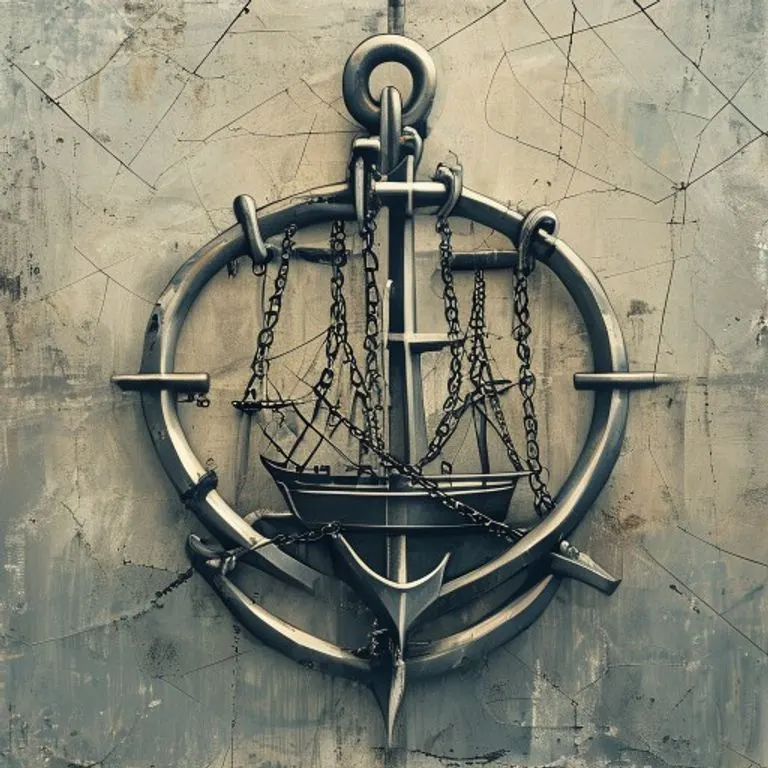
Intertwined chains and anchors forming a shield visually represent the protective legal framework of marine insurance.
Obligations and Rights of Parties: Insurer and Insured (Articles 1176-1185)
This section meticulously details the duties and entitlements of both the insured and the insurer. It covers the insured's obligation to disclose all relevant information, the proof required for a claim, and the insurer's responsibilities regarding various types of losses.
Transparency and good faith are paramount, with the insured expected to provide full and accurate information about the risks. Conversely, the insurer is bound to indemnify for covered losses, even those arising from the fault of the captain or crew, unless specifically excluded.
Section 1176. In the case of the obligations outlined in number 1. Of article 556, the insured must fully inform the insurer before a contract is in all circumstances concerning the risks and aims to ensure it is heard by the insured. Presumably all circumstances known to the insured that he can not ignore the ordinary course of business. Also, any relevant statement made by the risks to the broker or the insured to the insurer during the negotiations preceding the contract must be true.
Section 1177. To obtain compensation for a claim, the insured must demonstrate:
1. ° The or events that constitute it. Regarding the origin of the damage or expense, the insured should only list the events that presumably produced it;
2. ° The shipment of the insured, if any;
3. ° The insurance contract, and
4. ° The loss or impairment of the insured.
Section 1178. In case of accident, the insured may bring an action for failure to obtain compensation for damages suffered by the insured or the abandonment, to demand payment of the total sum insured in cases where this Code or the contract so allow.
Section 1179. The insured person may jointly promote the action of abandonment and breakdown, so that the latter stands in the first grant.
Section 1180. The insurer will be liable for any loss or damage resulting from maritime or other risks covered by the policy events. Also, if not expressly excluded, indemnify the insurer in addition:
1. ° For the contribution of the insured in general average, except if it comes from a risk excluded by insurance, and
2. ° for expenses incurred in order to prevent the object insured suffers damage or lessen its effects, provided the damage is avoided or reduced is covered by the policy. In any case, the costs can not exceed the indicated value of damage avoided.
Section 1181. The insurer is liable for loss or damage of the insured arising out of fault or misconduct of the captain or crew. It will not be compensated for loss or damage to the hull that comes from intent of the master, unless expressly stated.
Section 1182. The insurer is not liable for losses caused by delay, even one having its origin in a risk covered by the policy, unless expressly so provided.
Section 1183. Unless otherwise agreed, the insurer is not liable for ordinary filtration phenomena, breakage or wear, inherent vice or nature of the insured and other normal transport.
Section 1184. When the loss or damage of the insured comes from several causes, the insurer will be liable if the primary cause or factor is a risk covered by the policy. However, whatever the terms of the contract if it is not possible to establish which was the main cause or if several simultaneous determinants were among them any one that constituted a risk insured, the insurer liable for the damage under the terms stated by the policy.
Section 1185. Correspond to the insurer the burden of proving that the incident has occurred for an event or risk not covered by the policy.
Article 1176 imposes a strict duty of disclosure on the insured, requiring full information about all circumstances concerning the risks. This obligation extends to statements made during negotiations, emphasizing the importance of accurate representation. Failure to disclose material facts can invalidate the policy.
The insurer's liability, as detailed in Article 1180, extends to all maritime or covered risks. Importantly, it also includes contributions in general average and expenses incurred to prevent or mitigate damage, provided the damage itself would have been covered. This provision encourages proactive measures to protect insured property, aligning with the broader principles of risk management and mitigation.
Article 1181 highlights a unique aspect of marine insurance: the insurer's liability for losses or damages arising from the fault or misconduct of the captain or crew. This broad coverage reflects the realities of maritime operations, where human error can significantly contribute to perils. However, intent of the master is generally excluded unless explicitly stated.
Loss and Indemnification: Total, Partial, and Constructive Loss (Articles 1186-1199)
This extensive section defines the various types of losses and the procedures for claiming indemnification. It differentiates between total and partial losses, and further subdivides total loss into real/effective and assimilated/constructive categories. The concept of abandonment is also thoroughly explained.
Understanding these distinctions is crucial for both the insured, who must correctly classify their loss, and the insurer, who must assess the validity and extent of the claim. The Code provides clear criteria for each type of loss, ensuring a structured approach to indemnification.
Section 1186. The loss may be total or partial. Any losses not covered by the concepts of total loss or defined in the following articles shall be deemed a partial loss.
Section 1187. The total loss may be real or effective. It can also be assimilated or constructive. There will be real or actual total loss where the insured object is completely destroyed or so damaged, lost forever fitness for purpose for which it is intended, or when the insured is irretrievably deprived of it. All this is without prejudice to what has been stated in the policy.
Section 1188. If after a reasonable time, have not heard from a ship, is presumed effective and the total loss of cargo.
Section 1189. Unless the policy otherwise provides, there will be assimilated total loss when the subject-matter insured is reasonably abandoned either because the actual total loss appears inevitable or because you can not avoid the loss, without incurring any expenses that exceed the value of the object after the disbursement. Will be considered a total loss assimilated, especially when:
1. ° When the insured is deprived of the ship or goods due to a risk covered by the policy and is unlikely to recover or the cost of recovery exceeds the value of the vessel or goods after recovery;
2. ° When damage to a ship by an insured peril, be such that the cost of repairs exceeds the value of that ship, once repaired. In estimating the cost of repairs, no deduction shall be made by general average contributions to those repairs, by other interests. But take into account the costs of future salvage operations and of any future general average contribution would affect the ship to be repaired, and
3. ° When the cost of repair and for forwarding to their destination, they exceed the value on the date of arrival at your destination, whether it is damage to goods or cargo.
Section 1190. Unless otherwise provided, the total loss insurance covers both the assimilated total loss as the real or effective.
Section 1191. Unless the policy otherwise provides, the insurer is liable for all losses suffered by the insured during the coverage period, although the amount of all of them exceed the sum insured. But if a total loss following a partial damage not repaired, the insured may only demand compensation for total loss.
Section 1192. If the insured elects to claim a total loss, the insurer must notify its intention to relinquish. In the absence of such notice, the insurer may bring an action for failure.
Section 1193. If assimilated total loss, the insured shall within three months since he had actual knowledge that the loss had that character, to the insurer written notice of its intention to relinquish. The expression written communication also includes telegram, telex or other means to record, or provide a record of receiving the message sent. The notification to the insurer an abandonment action, substitutes for these effects to the notice of abandonment. The notice or application must indicate unequivocally the intention to relinquish the subject-matter insured unconditionally to the insurer.
Section 1194. The notice of abandonment is not required in the breakdown or accident, by its nature or magnitude, making it impossible for the insurer measures to recover the thing to rescue distressed or decrease the effects of the accident.
Section 1195. The abdication notice interrupts prescription of the actions of the insured against the insurer.
Section 1196. The acceptance of abandonment may be express or inferred from the conduct of the insurer. In any case, its effects can be traced back to the date of receipt of the notice of abandonment or notice of demand for abdication. The insurer may, in any case, waive the requirement of notice or warning respectively.
Section 1197. The acceptance of abandonment, as well as to give it the irrevocable, it means that the insurer recognizes its responsibility for the total amount insured.
Section 1198. The abdication accepted or upheld by a final ruling, the insurer transfers all rights and obligations of the insured in respect of the insured, by the mere operation of law. However, while not accepted the abandonment or final decision issued declaring it invalid, the insurer may recognize its obligation to compensate the total loss of the insured object and reject the transfer of ownership of the insured.
Section 1199. The insured has been privileged abandonment is subject to payment of the amount insured, in preference to any other credit can enjoy privilege over it, with the exception of claims on the ship referred to in Articles 844, 845 and 846 .
Article 1187 defines "real or effective total loss" as the complete destruction of the insured object, its permanent unfitness for purpose, or irretrievable deprivation. This is a clear-cut scenario where the asset is definitively lost. Article 1188 adds a presumption of total loss for a ship and its cargo if no news is received after a reasonable period, acknowledging the inherent uncertainties of sea voyages.
"Assimilated or constructive total loss," as described in Article 1189, is a more nuanced concept. It occurs when the insured object is reasonably abandoned because an actual total loss appears inevitable, or the cost of avoiding the loss would exceed the object's value after the expenditure. This includes scenarios where recovery costs or repair costs exceed the value of the ship or goods. The Code provides specific examples, such as when recovery is unlikely or repair costs surpass the repaired value.
The process of abandonment is critical for claiming constructive total loss. Article 1193 mandates a written notice of intention to relinquish within three months of the insured gaining knowledge of such loss. This notice unequivocally transfers the insured object to the insurer, who then assumes all rights and obligations related to it, as per Article 1198. This mechanism allows the insured to recover the full sum insured when the economic reality dictates that the loss is effectively total, even if the physical object still exists in some form.
Liability Insurance: Specific Provisions (Article 1200)
The final article in Title VII specifically addresses liability insurance, which covers damages caused to third parties. This type of insurance is crucial in maritime operations, where accidents can lead to significant third-party claims, such as environmental damage, collision with other vessels, or injury to non-crew members.
It clarifies the conditions under which the insured can claim indemnification for such liabilities, emphasizing that compensation is due only after the insured has actually paid the third-party damages. This "pay-to-be-paid" clause is common in liability policies and ensures that the insurer covers actual financial outflows rather than potential liabilities.
Section 1200. The insured in a liability insurance only entitled to compensation and reimbursement of expenses incurred, when it has paid compensation for damage to third. Notwithstanding the foregoing, the insured must notify the insurer of any claim ...
Article 1200 also imposes an obligation on the insured to notify the insurer of any claim made by a third party. This early notification allows the insurer to manage the claim, potentially negotiate a settlement, and prepare for any legal defense. This proactive communication is vital for effective maritime liability management and ensures that the insurer is not caught unaware by a significant claim.
In conclusion, Title VII of the Spanish Commercial Code provides a robust and detailed framework for marine insurance. It balances the need for comprehensive coverage against the complexities and inherent risks of maritime activities. From defining insurable interests and values to outlining contract formation and loss indemnification, the Code ensures a clear legal pathway for all parties involved in protecting their assets and liabilities at sea. The provisions reflect a deep understanding of maritime commerce, adapting legal principles to the unique challenges of ocean-going trade.
Source: Hybrid content assisted by AIs and human editorial supervision.


Comentarios