
Abies Alba: The Majestic Silver Fir | Althox
The genus Abies, commonly known as firs, encompasses a diverse group of coniferous trees belonging to the Pinaceae family. These magnificent trees are renowned for their stately appearance, aromatic foliage, and significant ecological and economic value across various ecosystems. Among the numerous species within this genus, Abies alba, often referred to as the silver fir or European silver fir, stands out as a prominent and historically important species native to central and southern Europe.
This comprehensive exploration delves into the intricate world of Abies alba and its broader genus, covering its botanical characteristics, geographical distribution, ecological significance, economic uses, and the challenges it faces in a changing world. Understanding these aspects is crucial for appreciating the role firs play in our natural environment and their contribution to human society.
Table of Contents
- Introduction to the Genus Abies
- Abies Alba: Distinctive Characteristics
- Taxonomy and Classification of Firs
- Geographical Distribution and Habitat
- Ecological Role and Importance
- Economic Uses of Firs
- Conservation Status and Challenges
- Conclusion: The Enduring Legacy of Firs
Introduction to the Genus Abies
The genus Abies comprises approximately 55 species, with about 33 considered primary species and the remainder often categorized as secondary species or subspecies. These conifers are predominantly found across the Northern Hemisphere, thriving in diverse environments ranging from the taiga zones of North America and Asia to the high mountain ranges of central and southern Europe, and even extending into Mexico and Guatemala. Their height can vary significantly, from modest 10-meter trees to towering specimens reaching up to 80 meters.
Firs are distinguished from other members of the pine family by several key morphological features. Their needle-like leaves are attached to the stem by a unique base resembling a small suction cup, leaving a circular scar when they fall. Another hallmark is their cylindrical cones, which stand erect on the branches, typically grouped near the top. Unlike spruce or pine cones that fall intact, fir cones disintegrate when mature, releasing their seeds. This characteristic makes them easily identifiable in forest settings.
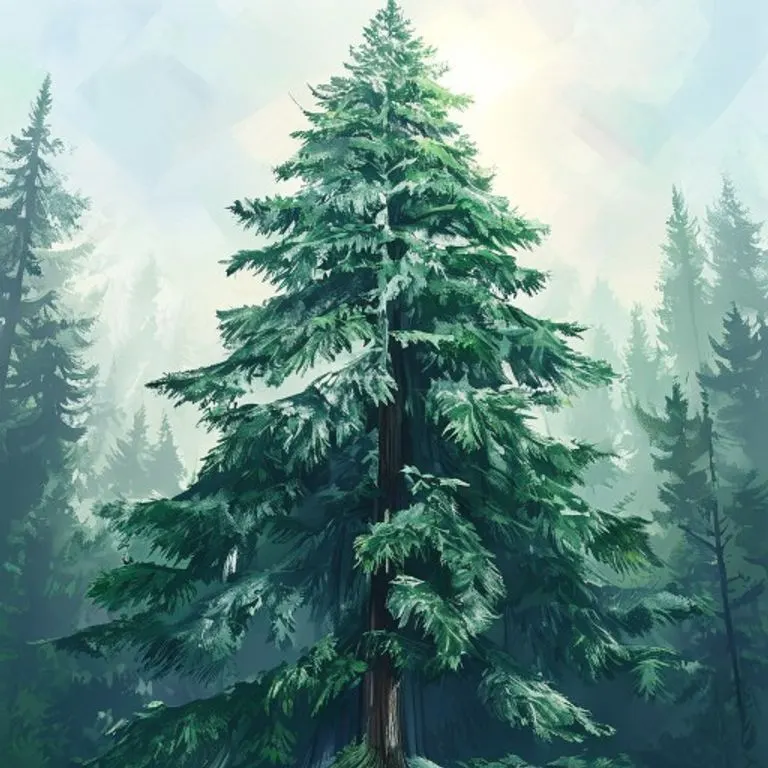
The majestic Abies alba, a symbol of European forests, showcasing its characteristic upright cones and silvery foliage.
Abies Alba: Distinctive Characteristics
Abies alba, the silver fir, is a large evergreen coniferous tree native to the mountains of Europe, from the Pyrenees east to the Balkans and north to Normandy. It is one of the tallest and most long-lived European trees, capable of reaching heights of 40 to 60 meters, and occasionally up to 70 meters, with a trunk diameter of up to 1.5 meters. Its lifespan can extend for several centuries, with some specimens living over 500 years.
The common name "silver fir" derives from the distinctive silvery-white bands of stomata on the underside of its needles. These needles are flattened, dark green above, and typically 1.8 to 3.0 cm long and 2 mm wide, with a blunt or notched apex. They are arranged spirally on the shoots but twisted at the base to lie in two flattened rows. The bark of young trees is smooth and grayish-white, becoming fissured and darker with age. The resin blisters on the bark are a notable feature, releasing aromatic resin when punctured.
The cones of Abies alba are cylindrical, 10 to 17 cm long and 3 to 4 cm broad, green when immature, ripening to grayish-brown. They stand erect on the branches and, like all firs, disintegrate at maturity to release winged seeds. This disintegration is a key feature distinguishing firs from other conifers like spruces, which drop their cones whole. The species identification often relies on the size and arrangement of leaves, cone morphology, and whether the cone bracts are long and extended or short and hidden.
Taxonomy and Classification of Firs
The genus Abies is a member of the Pinaceae family, which also includes pines, spruces, larches, and cedars. Firs are closely related to cedars (genus Cedrus). The classification within Abies is complex, with botanists often dividing the genus into several sections based on morphological and genetic characteristics. These sections help to group species with shared evolutionary histories and geographical distributions. Below is a summary of the commonly recognized sections and some representative species, including Abies alba.
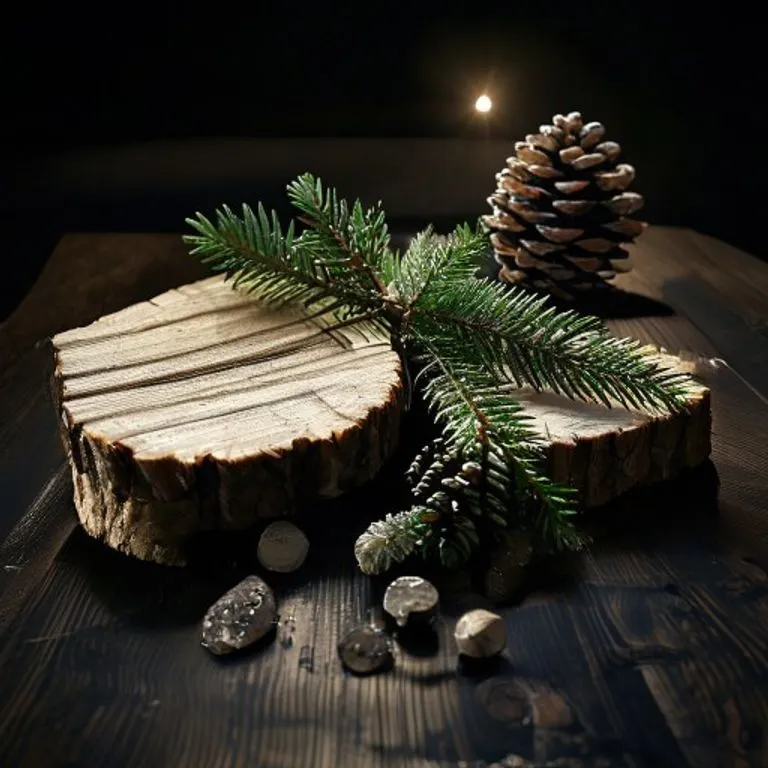
The intricate patterns of fir wood, reflecting its growth history and potential for various applications.
- Section Balsamea: Predominantly found in the taiga zones of North America and boreal Asia. Includes species like Abies balsamea (Balsam Fir), Abies fraseri (Fraser Fir), Abies sibirica (Siberian Fir), and Abies koreana (Korean Fir).
- Section Grandis: Ranges from western North America to Mexico and Guatemala. Notable species include Abies grandis (Grand Fir) and Abies concolor (Colorado Fir).
- Section Abies: Covers eastern Europe, southern and central Asia Minor. This section includes Abies alba (Silver Fir), Abies nordmanniana (Caucasian Fir), and Abies pinsapo (Pinsapo Fir).
- Section Momi: Found in central and eastern Asia, including the Himalayas. Examples are Abies homolepis (Nikko Fir) and Abies firma (Japanese Momi Fir).
- Section Amabilis: Located in the mountains of the Pacific Northwest of North America and Japan. Features species like Abies amabilis (Pacific Silver Fir) and Abies mariesii (Maries' Fir).
- Section Pseudopicea: Sino-Himalayan mountains at high altitudes. Includes Abies spectabilis (Himalayan Fir) and Abies delavayi.
- Section Oiamel: Central Mexico at high altitudes. Contains species such as Abies religiosa (Sacred Fir) and Abies hickelii.
- Section Nobilis: Western USA at high altitudes. Examples are Abies procera (Noble Fir) and Abies magnifica (California Red Fir).
- Section Bracteata: Limited to the coast of California. Only species is Abies bracteata (Santa Lucia Fir).
Each section represents adaptations to specific climatic and geographical conditions, showcasing the remarkable evolutionary diversity within the genus. The identification of individual species often relies on subtle differences in needle morphology, cone characteristics, and bark patterns, making botanical expertise essential.
Geographical Distribution and Habitat
The genus Abies exhibits a wide geographical distribution across the Northern Hemisphere, primarily in temperate and boreal regions. Firs are typically inhabitants of mountainous areas, where they often form extensive forests or mixed stands with other conifers and broadleaf trees. Their preference for cooler climates and moist soils dictates their presence in specific altitudinal zones.
Abies alba, the silver fir, is a prime example of a European mountain species. Its natural range extends across the major mountain ranges of central and southern Europe, including the Alps, Carpathians, Pyrenees, Apennines, and the Dinaric Alps. It thrives in humid, cool environments, typically at elevations between 300 and 1,700 meters, though it can be found higher or lower depending on local climatic conditions. It prefers well-drained, deep, and moderately acidic to neutral soils.
Other fir species also demonstrate specific habitat preferences. For instance, the Balsam Fir (Abies balsamea) is characteristic of the boreal forests of eastern North America, adapting to cold winters and short growing seasons. The Grand Fir (Abies grandis) is found in the Pacific Northwest, favoring moist lowland to mid-elevation sites. These diverse distributions highlight the genus's adaptability to various ecological niches, playing critical roles in their respective biomes.
Ecological Role and Importance
Firs, including Abies alba, are keystone species in many forest ecosystems, contributing significantly to biodiversity, soil health, and hydrological cycles. Their dense canopy provides shade, moderating ground temperatures and reducing evaporation, which helps maintain soil moisture. The extensive root systems of firs also play a crucial role in stabilizing soils, particularly on steep slopes, thereby preventing erosion and landslides.

The intricate underground network of roots and fungi, vital for the health and resilience of fir forest ecosystems.
These trees provide essential habitat and food sources for a wide array of wildlife. Their dense foliage offers shelter for birds and small mammals, especially during harsh winters. The seeds, released from disintegrating cones, are a food source for various birds and rodents. Furthermore, the bark and needles are consumed by certain herbivores. The presence of firs also supports a complex web of insects, including specific species of moths and butterflies whose larvae feed on their foliage or cones.
Firs are also important for carbon sequestration, absorbing significant amounts of atmospheric carbon dioxide and storing it in their biomass and the soil. This makes them vital components in the global carbon cycle and efforts to mitigate climate change. Their role in maintaining forest health and resilience cannot be overstated, making their conservation a priority for ecological stability.
Economic Uses of Firs
Despite their ecological importance, firs also hold considerable economic value, primarily for their timber and as ornamental trees. The wood of most fir species is generally considered softer and less durable than that of some other conifers like pines or spruces. Consequently, it is often used for purposes where high structural strength or rot resistance is not paramount.
Common applications for fir wood include pulp production for paper manufacturing, plywood, and general construction, particularly for interior woodwork such as doors, door frames, and paneling. Because fir wood does not possess natural resistance to insects or decay when exposed to the elements, it is less suitable for outdoor applications unless treated. Untreated fir wood exposed outdoors typically lasts only 12-18 months, depending on climatic conditions.
Beyond timber, several fir species are highly prized as Christmas trees. The Caucasian Fir (Abies nordmanniana), Noble Fir (Abies procera), and Balsam Fir (Abies balsamea) are particularly popular choices. They are favored for their attractive, dense foliage, pleasant aroma, and their ability to retain needles well in dry indoor conditions, making them ideal for festive decorations. Abies alba is also used as a Christmas tree, especially in its native European range.
Many fir species are also cultivated as ornamental trees in parks and gardens. Their symmetrical growth habit, attractive foliage, and often colorful cones make them desirable landscape specimens. The Korean Fir (Abies koreana) and Fraser Fir (Abies fraseri) are notable for producing brightly colored cones even on relatively young trees, adding visual interest to horticultural settings. The resin from firs has also been historically used in various applications, including varnishes and traditional medicines.
Conservation Status and Challenges
Firs, like many forest species, face a range of conservation challenges driven by human activities and environmental changes. Habitat loss and fragmentation due to logging, agriculture, and urban development remain significant threats to many fir populations. While some species are widely distributed and relatively secure, others, particularly those with restricted ranges or specific habitat requirements, are more vulnerable.
Climate change poses an increasing threat to firs. Changes in temperature and precipitation patterns can alter their optimal growing conditions, pushing species to higher altitudes or latitudes, or making them more susceptible to drought and heat stress. Increased frequency and intensity of wildfires, often linked to climate change, also represent a major risk, especially for species in drier regions.
Pests and diseases are another critical concern. For example, the balsam woolly adelgid has severely impacted Fraser fir populations in the southeastern United States. Air pollution, particularly acid rain, has historically damaged fir forests in parts of Europe, including stands of Abies alba, by altering soil chemistry and weakening trees, making them more vulnerable to secondary infections.
Conservation efforts for firs include sustainable forest management practices, protected area designation, and research into disease-resistant varieties. Reforestation projects often incorporate native fir species to restore degraded habitats and enhance forest resilience. Understanding the genetic diversity within fir populations is also crucial for long-term conservation strategies, ensuring adaptability to future environmental shifts. For more insights into environmental challenges, consider exploring the complexities of the climate crisis.
Conclusion: The Enduring Legacy of Firs
The genus Abies, with its numerous species including the iconic Abies alba, represents a vital component of global forest ecosystems. From their distinctive morphological features, such as their unique needle attachment and disintegrating cones, to their profound ecological roles in providing habitat, stabilizing soils, and sequestering carbon, firs are indispensable to the health of our planet. Their economic contributions, ranging from timber and pulp to their beloved role as Christmas trees and ornamental plants, further underscore their value to human society.
As we navigate an era of rapid environmental change, the conservation of fir species becomes increasingly critical. Protecting these majestic trees from threats such as habitat loss, climate change, and invasive pests requires concerted efforts in sustainable forestry, habitat restoration, and scientific research. By understanding and valuing the intricate biology and ecological significance of firs, we can ensure their enduring legacy for future generations, maintaining the beauty and functionality of the world's coniferous forests. Learn more about biodiversity and its urgent solutions.
Fuente: Contenido híbrido asistido por IAs y supervisión editorial humana.


Comentarios