
Single National Disability Rating: Central Nervous System Assessment | Althox
The assessment of disability, particularly concerning the central nervous system (CNS), is a complex and critical process that demands rigorous scientific and legal frameworks. In Colombia, Decree 917 of 1999 establishes the Single National Manual for Disability Rating, providing a standardized methodology for evaluating functional impairments. This comprehensive guide ensures consistency and fairness in determining the degree of disability, which has profound implications for individuals' rights, benefits, and quality of life.
This article, the second part of a detailed exploration, delves into the specific criteria outlined in Chapter XI of the Decree, focusing on the intricate evaluation of the central nervous system. Understanding these guidelines is paramount for medical professionals, legal practitioners, and affected individuals alike, as it clarifies how various neurological conditions, from brain pathologies to spinal cord injuries and cranial nerve dysfunctions, are assessed for their impact on overall person impairment.
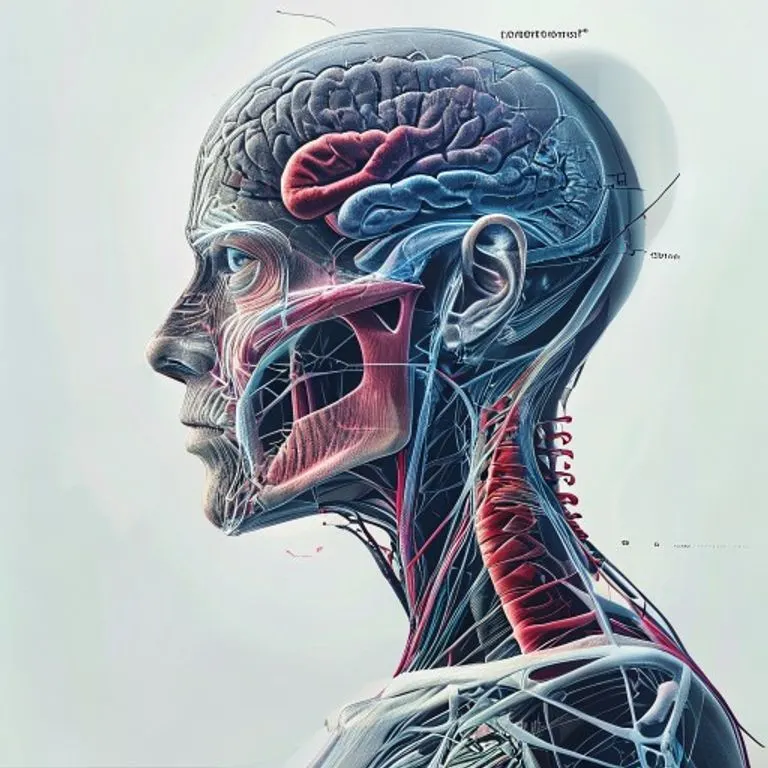
The intricate neural network symbolizes the profound complexity involved in neurological disability assessment.
The assessment process is not merely a clinical diagnosis; it involves a meticulous analysis of how neurological deficits translate into functional limitations in daily life. Special attention is given to the dynamic nature of many neurological conditions, which often present as evolutionary processes rather than static states. This requires evaluators to consider the potential for progression or improvement, ensuring a holistic and accurate rating.
Table of Contents
- Chapter XI: Central Nervous System Evaluation
- Brain Pathology Assessment Criteria
- Sensory and Motor Disturbances
- Communication Disorders
- Alterations of Complex and Integrated Brain Functions
- Emotional Disturbances
- Altered Consciousness
- Episodic Neurological Disorders
- Traumatic Brain Injury (TBI) Assessment
- Movement and Posture Disorders
- Brain Tumors
- Brain Lesions Causing 40% Deficiency
- Spinal Cord Pathology Assessment Criteria
- Cranial Nerves Assessment
Chapter XI: Central Nervous System Evaluation
The evaluation of the central nervous system under Decree 917 of 1999 is a meticulous process designed to identify and quantify the functional limitations arising from neurological conditions. A key challenge in this assessment is the potential for inducement or simulation of signs and symptoms by the patient, which can obscure or magnify underlying pathologies. Therefore, evaluators must employ objective measures and clinical expertise to differentiate genuine impairments from feigned ones.
It is crucial to recognize that the degree of deficiency in the nervous system is rarely static. Many conditions are evolutionary, meaning their impact can change over time. This necessitates a dynamic approach to assessment, often involving follow-up evaluations to track progression or regression of symptoms. The chapter specifically directs attention to three primary areas for analysis: the brain, the spinal cord, and the cranial nerves, each with its unique set of evaluation criteria.
11.2 Brain Pathology Assessment Criteria
For the purpose of classifying deficiency due to brain pathology, the manual outlines six main criteria. These criteria cover a broad spectrum of neurological functions, reflecting the brain's multifaceted role in human physiology and behavior. It is important to note that when multiple types of deficiencies manifest from brain pathology, the various degrees of deficiency are not simply added or combined. Instead, the highest value of impairment typically represents the overall deficit, preventing an overestimation of the total disability.
The criteria are as follows:
- Sensory and motor disturbances.
- Alterations in communication.
- Alterations of complex and integrated functions of the brain.
- Emotional disturbances.
- Altered consciousness.
- Episodic neurological disorders.
For example, if a patient presents with altered communication due to brain damage (aphasia) rated at 18.0%, altered complex functions at 8.0%, and altered consciousness at 25.0%, the overall deficit would be 25.0%. This is because the highest individual impairment is taken as the global deficit, rather than a simple sum (51.0%) or a combined value, which recognizes that some impairments might overlap or be secondary to a primary, more severe deficit.
11.2.1.1 Sensory and Motor Disturbances
Muscle disorders and secondary deformities resulting from neurological injury are primarily reflected in a loss of function. These are not measured separately but are rated according to the established criteria for restriction of movement and loss of muscle strength found in Chapter I of Book I of this Manual. This ensures a consistent approach across different types of physical impairments.
Spasticity, a common motor disturbance in CNS conditions, is evaluated using the criteria outlined in Table 11.5. If spasticity affects the upper extremities, a value is assigned based on parameters for "use of upper extremity." For lower extremities, the assessment considers "poise and posture." Pain, being subjective and variable, is assessed indirectly by considering the affected dermatome, resulting limitations, antalgic positions, and responses to improvement efforts. For a deeper understanding of pain assessment, Chapter II, focusing on the Peripheral Nervous System, should be consulted.
11.2.1.2 Communication Disorders
Deficiencies in communication are assessed by considering disturbances to the central mechanism of language, encompassing comprehension, storage, and production. These manifest as conditions such as aphasia, dysphasia, agraphia, alexia, or acalculia. The evaluation not only considers the patient's ability to understand language but also their capacity to produce intelligible and appropriate symbolic language, reflecting a comprehensive view of communication.
| Description | Global Communication Deficiency (%) |
|---|---|
| Can understand language and expression, but does so with difficulty. | 0.0 - 9.9 |
| Can understand language but cannot speak properly. | 10.0 - 24.9 |
| Cannot understand language and therefore expresses unintelligibly or inappropriately. | 25.0 - 44.9 |
| Cannot understand or use language. | 45.0 - 50.0 |
11.2.1.3 Alterations of Complex and Integrated Brain Functions
These alterations refer to organic brain syndromes characterized by defects in orientation, comprehension, memory, and behavior. These cognitive and executive dysfunctions significantly impact an individual's ability to perform daily tasks and interact with their environment. The assessment criteria focus on the level of independence and supervision required by the individual.
| Criteria | Whole Person Impairment (%) |
|---|---|
| Can perform tasks of daily living. | 1 - 9.9 |
| Needs supervision. | 10.0 - 24.9 |
| Needs confinement. | 25.0 - 39.9 |
| Cannot take care of self. | 40.0 - 50.0 |
11.2.1.4 Emotional Disturbances
Emotional disturbances stemming from brain pathology are graded according to the specific criteria detailed in Chapter XII of the manual. This cross-referencing ensures that psychiatric and psychological impacts are assessed consistently, regardless of their underlying cause, whether primary mental health conditions or secondary to neurological damage. The evaluation considers the severity and pervasiveness of emotional dysregulation, mood disorders, and other affective changes.
11.2.1.5 Altered Consciousness
Alterations in consciousness are among the most severe manifestations of brain pathology, indicating significant neurological compromise. The manual provides clear categories for assessing the degree of impairment based on the level of consciousness, ranging from drowsiness to coma. These states reflect a continuum of reduced awareness and responsiveness, each carrying a substantial percentage of whole person impairment.
| Altered Consciousness | Whole Person Impairment (%) |
|---|---|
| Drowsiness | 15.0 - 29.9 |
| Stupor | 35.0 - 45.0 |
| Coma | 50.0 |
11.2.1.6 Episodic Neurological Disorders
Episodic neurological disorders, such as syncope, epilepsy, catalepsy, and narcolepsy, are characterized by intermittent symptoms that can significantly disrupt an individual's life. The assessment of deficiency for these conditions is primarily determined by the frequency and severity of the attacks, as well as their responsiveness to treatment. The manual categorizes these disorders into classes based on their impact and the presence of sequelae.
| Class | Description of Criteria | Global Deficit (%) |
|---|---|---|
| I | Controlled disease treatment or occasional occurrence (1 to 2 episodes per year). | 1.0 - 9.9 |
| II | Disease that causes frequently occurring episodes (more than two episodes per year), despite receiving appropriate treatment and no evidence of sequelae of brain function. | 10.0 - 24.9 |
| III | Disease that causes the occurrence of frequent episodes (more than two episodes per year), despite receiving appropriate treatment and evidence of sequelae of brain function. | 25.0 - 34.9 |
| IV | Disease that causes episodes occurring more than once per month, despite receiving appropriate treatment and evidence of impairment of brain function. | 35.0 - 45.0 |
A critical note for evaluating neurological and episodic deficiency is the importance of verifying that treatment has been well-administered and in sufficient doses, as confirmed by a specialized medical opinion. This ensures that the observed impairment is not due to inadequate management of the condition.
11.2.2 Traumatic Brain Injury (TBI) Assessment
The deficiency caused by the aftermath of a traumatic brain injury (TBI) is assessed according to the general criteria established in paragraph 11.2. This means that the various sequelae of TBI, such as cognitive deficits, motor impairments, communication problems, and emotional disturbances, are evaluated using the same framework as other brain pathologies. The comprehensive nature of these criteria allows for a thorough assessment of TBI's diverse impacts.
11.2.3 Movement and Posture Disorders
This category includes conditions that involve significant disorders of posture and movement, such as Parkinson's syndrome, ataxia, dyskinesias, tremor, rigidity, and dystonia. These conditions often lead to continuous alterations in an individual's movement, gait, or posture, severely impacting their functional independence. The assessment requires careful consideration of the clinical presentation and the patient's response to treatment.
For Parkinson's syndrome, specifically, the presence of significant rigidity, bradykinesia (slowness of movement), or tremor in two extremities, either alone or in combination, must be established. Crucially, it must be conclusively proven that the patient has been undergoing well-administered treatment with sufficient doses for a period of not less than six (6) months before a definitive qualification can be made. This ensures that the assessed impairment reflects the residual effects despite optimal medical management.
11.2.4 Brain Tumors
Brain tumors, by their nature and location, can cause a wide array of neurological deficits. Their impact on overall person impairment is assessed according to the criteria set out in Chapter VIII of the manual. This chapter likely provides specific guidelines for oncological conditions, considering factors such as tumor type, size, location, treatment effects, and resulting functional limitations. The interdisciplinary approach ensures that both the oncological and neurological aspects are comprehensively evaluated.
11.2.5 Brain Lesions Causing 40% Deficiency
Despite the general assessment values, the manual specifically describes certain neurological damages that, by their inherent severity and impact, are assigned a 40% deficiency. These conditions represent significant and often irreversible impairments that substantially limit an individual's capacity for independent living. This specific categorization streamlines the assessment for particularly severe cases, ensuring a consistent and appropriate rating.
- 11.2.5.1 Stroke and central nervous system sequelae of head trauma: When, after three months of the event, one of the following characteristics persists:
- Motor or sensory aphasia resulting in ineffective speech or communication.
- Significant and persistent disturbance of motor function in two extremities, resulting in an alteration of movement or gait and posture of the individual.
- 11.2.5.2 Parkinson's syndrome: When it involves two or more limbs with continuous movement impairment, despite being under well-administered treatment with the proper dosage and therapy for at least six months without improvement.

Vintage medical tools and texts underscore the historical and scientific rigor of medical evaluation.
11.3 Spinal Cord Pathology Assessment Criteria
Diseases of the spinal cord can lead to a wide range of impairments, often extending beyond direct motor or sensory deficits. Autonomic disturbances are common, including issues with sweating, circulatory phenomena, body temperature regulation, and trophic injuries. Secondary complications like urinary tract stones, osteoporosis, nutritional disorders, and psychological states also frequently arise and are valued according to their respective chapters in the manual, emphasizing a holistic assessment.
For assessing impairment due to spinal cord abnormalities, the following criteria are taken into account:
- Poise and posture.
- Using upper extremities.
- Breathing.
- Bladder function.
- Anorectal function.
- Sexual function.
When multiple types of deficiencies result from spinal cord pathology, the overall deficit is determined by combining the values of the individual impairments. This differs from brain pathology assessment, where the highest value often dictates the global deficit, reflecting the distinct ways in which these two parts of the CNS impact function.
| Criteria | Whole Person Impairment (%) |
|---|---|
| Posture and Poise: | |
| Stands upright but with difficulty walking. | 5.0 - 9.9 |
| Stands upright and walks alone on flat ground. | 10.0 - 19.9 |
| Stands upright but cannot walk. | 20.0 - 30.0 |
| Cannot stand or walk. | 50.0 |
| Breathing: | |
| Difficulty with exertion. | 5.0 - 9.9 |
| Has to limit ambulation. | 10.0 - 24.9 |
| Has to be in bed. | 25.0 - 40.0 |
| Has no spontaneous breathing. | 50.0 |
| Bladder Function: | |
| Cannot be contained when it is urgent. | 1.0 - 4.9 |
| Reflexes without voluntary control. | 5.0 - 9.9 |
| Poor reflexes without voluntary control. | 10.0 - 17.4 |
| No reflex and no voluntary control. | 17.5 - 30.0 |
| Anorectal Function: | |
| Limited voluntary control. | 1.0 - 2.4 |
| Reflex regulation without voluntary control. | 2.5 - 7.4 |
| Without regulation of reflexes and voluntary control. | 7.5 - 12.5 |
| Sexual Function: | |
| Mild difficulty. | 2.5 - 4.9 |
| Reflex function but not seen. | 5.0 - 7.4 |
| Unable to sexual function. | 7.5 - 10.0 |
| Using Upper Extremities: | |
| Some difficulty in hand and finger dexterity. | 1.0 - 9.9 (Non-dominant tip) / 1.0 - 4.9 (Dominant tip) / 2.5 - 9.9 (Both) |
| No hand and finger dexterity. | 5.0 - 14.9 (Non-dominant tip) / 2.5 - 9.9 (Dominant tip) / 10.0 - 19.9 (Both) |
| Serves only as auxiliary limb. | 15.0 - 19.9 (Non-dominant tip) / 10.0 - 14.9 (Dominant tip) / 25.0 - 35.0 (Both) |
| Has no functionality. | 20.0 - 30.0 (Non-dominant tip) / 15.0 - 20.0 (Dominant tip) / 40.0 (Both) |
11.3.2 Spinal Cord Injury with 40% Deficiency
Certain severe spinal cord conditions are automatically assigned a 40% deficiency due to their profound and widespread impact on bodily functions. These specific diagnoses reflect a level of impairment that significantly compromises an individual's independence and quality of life, warranting a standardized high rating. This ensures that the most debilitating spinal cord injuries receive appropriate recognition in the disability assessment process.
- 11.3.2.1 Spinal Cord Injury: Complete spinal section due to any cause.
- 11.3.2.2 Multiple Sclerosis with:
- Motor damage in two or more limbs.
- Visual or mental harm, according to the criteria applied in the chapters on organs of vision or psychiatric disorders.
- 11.3.2.3 Amyotrophic Lateral Sclerosis with:
- Evidence of significant bulbar commitment (affecting speech, swallowing, breathing).
- Impaired motor function of two or more limbs.
- 11.3.2.4 Polio Sequelae with:
- Persistent difficulty swallowing or breathing.
- Slurred speech.
- Impaired motor function of two or more limbs.
- 11.3.2.5 Myasthenia Gravis with:
- Major difficulty speaking, swallowing, and breathing despite adequate treatment.
- Major weakness of limb muscles despite being under properly controlled and managed treatment.
- 11.3.2.6 Muscular Dystrophy with: Impairment of motor function of two or more limbs.
- 11.3.2.7 Tabes Dorsal with:
- Crisis tabetica occurring more than once per month.
- Ataxic gait causing significant hesitant motion restriction, verified by persistent signs of alteration of the posterior columns of the spinal cord.
- 11.3.2.8 Syringomyelia with:
- Evidence of significant bulbar disorders.
- Impaired motor function of two or more limbs.
The fractured spine symbolizes the profound impact of spinal cord injuries on human mobility.
11.4 Cranial Nerves Assessment
The cranial nerves play vital roles in sensory perception, motor control of the head and neck, and autonomic functions. Impairments to these nerves can lead to a diverse range of symptoms, from loss of smell and vision to difficulties with facial expression, hearing, balance, swallowing, and speech. The manual provides specific deficiency values for abnormalities affecting each cranial nerve, allowing for a precise quantification of their impact.
For clarity and ease of reference, certain cranial nerves (Olfactory I, Optical II, Oculomotor III-IV-VI, and Auditory VIII), although also mentioned in the chapter on Sense Organs, have their deficiency values repeated in this chapter. This ensures that all relevant information for CNS assessment is readily available within this section, facilitating a more streamlined and comprehensive evaluation process for various pathologies.
| Cranial Nerve | Criteria | Global Deficiency (%) |
|---|---|---|
| I. Olfactory | Unilateral complete loss Bilateral complete loss |
0 3.0 |
| II. Optical | Unilateral complete loss Bilateral complete loss |
17.0 50.0 |
| III-IV-VI Oculomotor, Abducens, Trochlear (alone or in combination) | Diplopia in the upper fields of vision. Diplopia in the lower fields of vision. Diplopia on lateral gaze. Diplopia in all gaze positions (not compensable and forcing occlusion of one eye). |
4.0 9.0 7.5 11.5 |
| V. Trigeminal | Unilateral complete sensory loss Complete bilateral sensory loss Trigeminal neuralgia typically intractable (tic douloureux) Atypical facial neuralgia Unilateral complete motor loss Complete bilateral motor loss |
5.0 17.5 5.0 - 25.0 10.0 2.5 22.5 |
| VII. Facial | Complete loss of taste (very rare) Unilateral paralysis Bilateral paralysis |
3.0 7.5 22.5 |
| VIII. Auditory | Cochlear: Complete unilateral hearing loss Complete bilateral hearing loss Tinnitus Vestibular: Unilateral complete loss Bilateral complete loss Vertigo with imbalance: 1) Does not interfere with activities 2) Does not interfere with activities except those that cause danger to self or others (e.g., driving) 3) Does not interfere with daily living activities, needs help for simple tasks (e.g., self-care, walking, riding in a vehicle) 4) Can carry out daily living activities without assistance other than personal care 5) Can carry out daily living activities without assistance other than personal care and requires home confinement |
4.2 25.0 0.0 0.0 1.0 - 15.0 1.0 5.0 15.0 25.0 35.0 |
| IX - X - XI Glossopharyngeal, Vagus, Spinal | Alterations producing deficiency in swallowing and requiring: a) Semi-solid diet b) Liquid diet c) Tube feeding or gastrostomy Alterations causing weakness in speech: a) Can speak most of the time required b) Can speak a lot about many times c) Can speak some of the time required d) Can speak little many times e) Cannot speak |
10.0 15.0 30.0 2.0 5.0 10.0 15.0 20.0 |
| XII. Hypoglossal | Unilateral paralysis | 0.0 |
The detailed tables and criteria provided in Decree 917 of 1999 underscore the commitment to a thorough and equitable assessment of neurological disabilities. By offering clear guidelines for evaluating sensory, motor, cognitive, emotional, and autonomic functions, the manual serves as an indispensable tool for ensuring that individuals with central nervous system impairments receive accurate and fair disability ratings.
Fuente: Contenido híbrido asistido por IAs y supervisión editorial humana.


Comentarios