
Bee Biology: Pollination, Ecology, and Conservation | Althox
Bees, fascinating insects belonging to the superfamily Apoidea, play an indispensable role in global ecosystems and human agriculture. These winged creatures, closely related to wasps and ants, are primarily recognized for their crucial involvement in pollinating flowering plants and, for some species, their production of honey and beeswax. Their presence is a cornerstone of biodiversity, supporting the reproduction of countless plant species across diverse habitats worldwide.
With nearly 20,000 known species classified across seven to nine recognized families, the diversity of bees is astounding, and many more species are believed to exist yet undescribed. They are found on every continent except Antarctica, thriving in virtually every habitat that supports insect pollination and flowering plants. This extensive distribution underscores their adaptability and the pervasive nature of their ecological contributions.
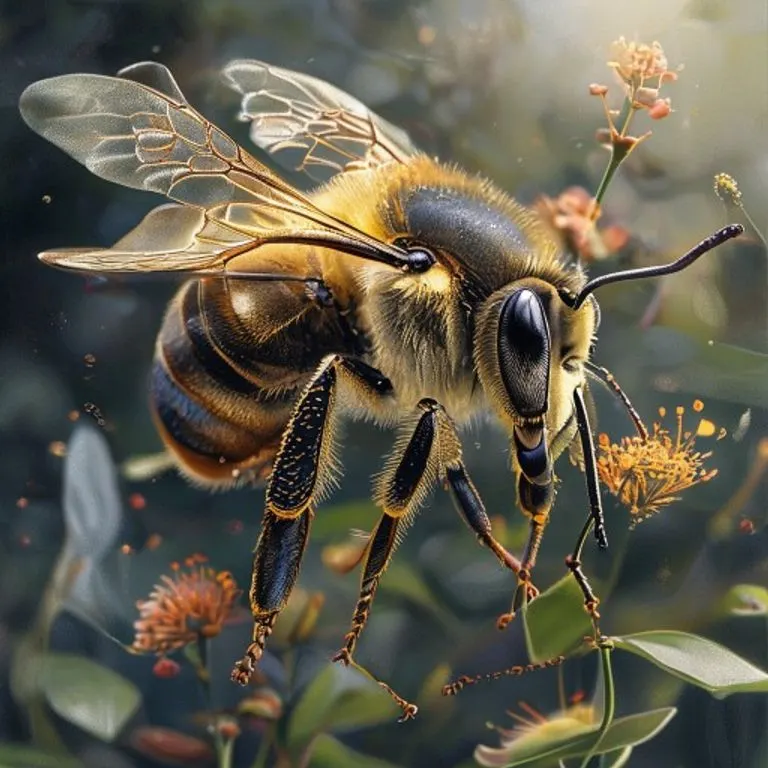
A thriving bee colony amidst a vibrant garden, symbolizing the critical ecological balance maintained by these industrious pollinators.
The fundamental biology of bees revolves around their specialized feeding habits. They are adapted to feed on nectar, which serves as their primary energy source, and pollen, which provides essential proteins and other nutrients. For most bee species, pollen is also a vital food source for their larvae, ensuring the next generation's development and survival.
Understanding the intricate lives of bees, from their anatomical adaptations to their complex social structures and the threats they face, is paramount for appreciating their value and for implementing effective conservation strategies. This article delves into the multifaceted world of bees, exploring their biology, ecological significance, economic impact, and the urgent challenges that demand our attention.
Table of Contents
- Bee Anatomy and Physiology
- The Vital Role of Pollination
- Honey and Beeswax Production
- Diversity Among Bee Species
- Threats to Bee Populations: Colony Collapse Disorder and Beyond
- Bee Adaptation and Evolution
- Conservation Efforts and Future Outlook
Bee Anatomy and Physiology
The anatomy of a bee is remarkably specialized for its lifestyle, particularly for foraging and pollination. A key feature is the long proboscis, a complex, cylindrical, and elongated "tongue" that allows them to extract nectar from deep within flowers. This specialized mouthpart is crucial for their energy intake.
Bee antennae typically consist of 13 segments in males and 12 in females, a common characteristic within the superfamily Apoidea. These antennae are highly sensitive, used for touch, smell, and even detecting air currents, aiding in navigation and communication within the hive or colony.
Bees possess two pairs of wings, with the posterior pair being smaller. While most bees are proficient flyers, some species have relatively short wings that hinder or prevent flight. In rare cases, certain bee species have such diminutive wings that they appear wingless, though this is uncommon. For instance, the Trigona bee, a small stingless species, has worker bees measuring approximately 2.1 mm (about 5/6 inch) long.
In contrast to the tiny Trigona, the largest known bee species is Megachile pluto, commonly known as Wallace's Giant Bee. Females of this leaf-cutter bee can reach an impressive length of 39 mm (approximately 1.5 inches). This vast size difference highlights the incredible morphological diversity within the bee family.
Many bees also have slightly hairy bodies with a small electrostatic charge. This charge is not merely a curiosity; it plays a crucial role in pollination by enhancing the adhesion of pollen to their bodies as they move from flower to flower. Female bees periodically pause from feeding and grooming to pack this collected pollen into specialized structures, such as the scopa, which are dense brushes of hair typically found on their legs or abdomen.
The Vital Role of Pollination
Bees are arguably the most important group of pollinators in ecosystems containing flowering plants. Their meticulous work ensures the reproduction of a vast array of flora, from wild plants to agricultural crops. While collecting nectar, bees can inadvertently pollinate, but those deliberately gathering pollen are significantly more efficient in this process.
The economic and ecological impact of bee pollination is immense. It is estimated that approximately one-third of the human food supply relies on insect pollination, with the majority of this being carried out by bees, particularly the domesticated European honey bee (Apis mellifera). This critical service extends beyond just food crops, supporting entire ecosystems by facilitating the reproduction of plants that form the base of many food webs.
In many countries, contract pollination has surpassed honey production as the primary economic driver for beekeepers. The increasing reliance on bees for agricultural productivity has led to practices such as migratory beekeeping, where colonies are transported to different regions to pollinate crops during their flowering seasons. This practice is crucial in areas where natural pollinator populations are insufficient or absent at specific times of the year.
The need for managed pollination has intensified due to factors like monoculture farming and the widespread decline of both wild and domestic bee populations. Without adequate bee populations, the pollination of edible flowers and fruit-bearing plants becomes challenging, leading to decreased yields and potential food scarcity. Farmers increasingly depend on beekeepers to sustain their production margins and meet the growing global demand for food.
Honey and Beeswax Production
While all bees are pollinators, not all produce honey in quantities significant for human consumption. The European honey bee is the most well-known species for its honey production, a trait that has led to its extensive cultivation by beekeepers worldwide. Beekeeping, or apiculture, is a demanding profession that requires specialized knowledge to ensure adequate honey production and the health of bee colonies.

Vintage beekeeping tools, essential for the careful cultivation and harvesting of honey and beeswax.
The quality and quantity of honey produced are heavily influenced by the availability and type of flowering plants. Beekeepers often select specific flower crops to obtain desired honey varieties, such as rosemary honey or chamomile honey. This careful management ensures not only a good yield but also distinct flavor profiles and nutritional properties.
It is crucial to distinguish between natural honey produced by bees and artificial or plant-based sweeteners that do not involve bees. Bee-produced honey is highly valued for its unique organoleptic characteristics and nutritional benefits, including medicinal properties, antibiotic compounds, remineralizing agents, and a rich array of aromatic compounds and hormones. These natural attributes make bee honey a preferred choice over its industrial counterparts.
Beyond honey, bees also produce beeswax, a versatile substance used in various industries, from cosmetics and pharmaceuticals to candle making. The intricate process of wax production by worker bees further underscores their economic value and the complexity of their biological functions.
Diversity Among Bee Species
The world of bees is incredibly diverse, encompassing a wide range of behaviors, habitats, and specialized feeding strategies. While the European honey bee is the most recognized, it represents only a fraction of the total bee population. The family Halictidae, for example, includes the most common types of bees in the Northern Hemisphere, often small and sometimes mistaken for wasps or flies.
Bees can be broadly categorized by their foraging behavior:
- Opportunistic Bees: Many bees are generalists, collecting pollen and nectar from a wide variety of plants. This adaptability allows them to thrive in diverse environments.
- Exclusive or Selective Bees: Other species are specialists, known as oligoleges, collecting pollen from only one or a few specific types of plants. This specialization often leads to co-evolutionary relationships with particular flora.
- Oil-Collecting Bees: A small number of plants produce nutritious floral oils instead of pollen, which are collected by specialized oligoleges.
- Vulture Bees: A unique subgroup of stingless bees (e.g., in the genus Trigona) has specialized to feed on carrion. These are the only known bees that do not rely on plant products for food, representing a remarkable adaptation within the order Hymenoptera.
The life cycle of many bee species involves a "provision mass," a mixture of pollen and nectar (or carrion in vulture bees) that is often thick but can be firm. This mass is stored in a small cell within a honeycomb or hive, where an egg is deposited on top. The cell is then typically sealed, and the adult bee and larva never directly interact, a system known as "mass provisioning."
Threats to Bee Populations: Colony Collapse Disorder and Beyond
Bee populations globally face significant threats, leading to widespread concern among scientists, environmentalists, and agricultural communities. The most prominent of these issues is Colony Collapse Disorder (CCD), a phenomenon characterized by the sudden disappearance of worker bees from a hive, leaving behind the queen, food stores, and nurse bees to care for the immature brood.
While CCD gained prominence in the mid-2000s, particularly affecting European honey bee populations in the U.S., the decline in bee numbers is a complex issue with multiple contributing factors:
- Pesticides: The widespread use of insecticides, especially neonicotinoids, has been identified as a major contributor to bee decline. While intended to control agricultural pests, these chemicals can directly kill bees or impair their navigation, foraging, and reproductive capabilities. Even sublethal doses can have devastating long-term effects on colony health.
- Habitat Loss and Fragmentation: Monoculture farming and urbanization lead to a reduction in diverse flowering plants, depriving bees of essential nectar and pollen sources. Loss of natural habitats also eliminates nesting sites for wild bee species.
- Parasites and Pathogens: Pests like the Varroa destructor mite and various viruses (e.g., Israeli acute paralysis virus) and fungi (e.g., Nosema ceranae) weaken bee immune systems and contribute to colony mortality. Research in 2007 suggested that a combination of a fungus and a virus played a significant role in the initial CCD outbreaks in the U.S.
- Climate Change: Shifting weather patterns, extreme temperatures, and altered flowering seasons can disrupt the delicate synchronicity between bees and their food sources, impacting their survival and reproductive success.
- Lack of Genetic Diversity: In managed honey bee populations, limited genetic diversity can make colonies more susceptible to diseases and less adaptable to environmental changes.
The consequences of these declines are far-reaching. A queen honey bee may lay 1,000 to 1,500 eggs per day during the feeding season to replace daily casualties, mostly workers dying of old age. However, in solitary and primitive social bees, reproduction rates are much lower, with females often producing fewer than 25 offspring in their lifetime, making these species particularly vulnerable to population pressures.
The indiscriminate nature of many insecticides is a critical concern. While some may target specific pests, they often harm non-target insects, including beneficial pollinators. There is also evidence suggesting that some pesticides can lead to resistance in pest species, creating a vicious cycle of increasing chemical use. Wild pollinators, such as bumblebees and solitary bees, often survive in refugia away from agricultural spraying but remain vulnerable to broader spray programs for mosquitoes or other pests.
A conceptual representation of Colony Collapse Disorder, illustrating the fragmentation and loss within bee populations.
Bee Adaptation and Evolution
Bees exhibit remarkable adaptive processes honed over centuries, allowing them to thrive in diverse ecological niches. Their evolutionary journey is marked by specialized behaviors and physiological traits that enable them to interact effectively with their environment, particularly with flowering plants.
A compelling example of bee adaptation comes from New Zealand, where three genera of native bees have evolved unique methods to open the flower buds of the native mistletoe, Peraxilla tetrapetala. These buds cannot open on their own; they typically require birds like the Tui and Bell Bird to touch the top of the mature bud, triggering a mechanism that causes the petals to suddenly spring open, granting access to nectar and pollen.
However, scientists observed native bees in Canterbury province stinging the top of the mistletoe shoots and then pushing with their legs to pop open the flower buds. This behavior allows the bees to harvest nectar and pollen, simultaneously pollinating the plant. This evolutionary process highlights how insects can develop complex adaptive strategies, even mimicking or exploiting the actions of other species for survival and resource acquisition.
Such adaptations are critical not only for the survival of the bee species but also for the conservation of the plants they pollinate, especially in cases like the mistletoe, which is declining in New Zealand. This intricate co-evolutionary dance underscores the delicate balance of ecosystems and the profound impact that even small creatures can have on their environment.
Despite these adaptations, bees face numerous natural challenges. They are prey for various insects like dragonflies, amphibians such as frogs, and birds like bee-eaters. Moreover, some flowers harbor predators like assassin bugs and crab spiders, which lie in wait to ambush unwary bees, demonstrating that life as a pollinator is fraught with peril.
Conservation Efforts and Future Outlook
Given the critical role bees play in both natural ecosystems and agricultural productivity, conservation efforts are more vital than ever. Addressing the multifaceted threats requires a comprehensive approach involving policy changes, scientific research, and public awareness.
Key strategies for bee conservation include:
- Reducing Pesticide Use: Promoting integrated pest management (IPM) practices, developing bee-friendly pesticides, and strictly regulating the use of harmful chemicals like neonicotinoids are crucial steps.
- Habitat Restoration: Creating and restoring diverse habitats rich in native flowering plants provides essential food sources and nesting sites for both wild and managed bee populations. This includes planting pollinator-friendly gardens, establishing wildflower meadows, and protecting natural areas.
- Supporting Beekeepers: Providing resources and education to beekeepers helps them maintain healthy colonies and manage threats effectively. This also includes supporting research into bee diseases and developing resistant bee strains.
- Public Awareness and Education: Informing the public about the importance of bees and how individuals can contribute to their conservation (e.g., by avoiding pesticides in gardens, planting native flowers) is essential for fostering a supportive environment.
- Research and Monitoring: Continuous scientific research is needed to better understand bee biology, population dynamics, and the impact of various stressors. Long-term monitoring programs help track population trends and assess the effectiveness of conservation interventions.
The decline of pollinator populations, particularly bees, poses a significant threat to global food security and ecological stability. While the problem is complex, collective action from governments, industries, farmers, and individuals can make a substantial difference. Protecting bees means safeguarding our food supply, preserving biodiversity, and ensuring the health of our planet for future generations.
The future of bees, and by extension, much of our natural world, depends on our commitment to sustainable practices and a deeper understanding of these remarkable insects. By prioritizing bee health and habitat, we can work towards a more resilient and biodiverse future.
Source: Hybrid content assisted by AIs and human editorial supervision.


